• KGS/USD = 0.01144 0%
  • KZT/USD = 0.00205 0%
  • TJS/USD = 0.10784 0%
  • UZS/USD = 0.00008 0%
  • TMT/USD = 0.28490 0%
  • KGS/USD = 0.01144 0%
  • KZT/USD = 0.00205 0%
  • TJS/USD = 0.10784 0%
  • UZS/USD = 0.00008 0%
  • TMT/USD = 0.28490 0%
  • KGS/USD = 0.01144 0%
  • KZT/USD = 0.00205 0%
  • TJS/USD = 0.10784 0%
  • UZS/USD = 0.00008 0%
  • TMT/USD = 0.28490 0%
  • KGS/USD = 0.01144 0%
  • KZT/USD = 0.00205 0%
  • TJS/USD = 0.10784 0%
  • UZS/USD = 0.00008 0%
  • TMT/USD = 0.28490 0%
  • KGS/USD = 0.01144 0%
  • KZT/USD = 0.00205 0%
  • TJS/USD = 0.10784 0%
  • UZS/USD = 0.00008 0%
  • TMT/USD = 0.28490 0%
  • KGS/USD = 0.01144 0%
  • KZT/USD = 0.00205 0%
  • TJS/USD = 0.10784 0%
  • UZS/USD = 0.00008 0%
  • TMT/USD = 0.28490 0%
  • KGS/USD = 0.01144 0%
  • KZT/USD = 0.00205 0%
  • TJS/USD = 0.10784 0%
  • UZS/USD = 0.00008 0%
  • TMT/USD = 0.28490 0%
  • KGS/USD = 0.01144 0%
  • KZT/USD = 0.00205 0%
  • TJS/USD = 0.10784 0%
  • UZS/USD = 0.00008 0%
  • TMT/USD = 0.28490 0%

Viewing results 49 - 54 of 148

May Day in Central Asia: From Soviet Parades to a Celebration of Unity

In Soviet times, May 1 and 2 were public holidays. May 1 was International Workers' Day, marked by large-scale parades celebrating the proletariat, while May 2 served as a day to recuperate before returning to work. Today, three of the five Central Asian republics have preserved the tradition of celebrating May Day, effectively marking the arrival of spring twice, once through Central Asian customs – Nauryz - and again through European ones. Workers of the world, unite! Coined by Karl Marx and Friedrich Engels in The Communist Manifesto, this famous communist slogan once appeared on the coats of arms of the Soviet Union and its republics. International Workers' Day became the living embodiment of this phrase. Celebrated on 1 May, May Day began as a European festival of spring but gained global significance through the labor movement. The Second International, formed at the 1889 International Workers Congress in Paris, called for an annual demonstration advocating an eight-hour workday. The date honors the U.S. general strike that started on 1 May 1886 and led to the tragic Haymarket massacre on 4 May. The date became a powerful symbol of working-class solidarity and a yearly tradition across large swathes of the globe. [caption id="attachment_31352" align="aligncenter" width="1174"] Soviet-era poster for International Workers' Day[/caption] Before the Bolsheviks came to power, political agitators in the Russian Empire used May 1 to call for change with slogans such as “Down with the Tsar” and “Give us freedom.” After the October Revolution, May 1 and 2 became official state holidays, with May Day becoming synonymous with International Workers' Day and mandatory parades. Unlike the more formal and solemn celebrations honoring the October Revolution, however, May Day events were often met with genuine enthusiasm. After the collapse The fall of the USSR brought about a widespread reevaluation of Soviet holidays. The celebration of the October Revolution on November 7 was widely discarded, but many post-Soviet republics retained May 1 as a public holiday, albeit with new interpretations and meanings. In Central Asia, Turkmenistan and Uzbekistan do not officially celebrate May 1. Turkmenistan has developed a distinct holiday calendar, while in Uzbekistan, May 1 is observed symbolically as the Day of Fountains. [caption id="attachment_31353" align="aligncenter" width="2560"] Day of Fountains, Tashkent; image: TCA, Stephen M. Bland[/caption] Though celebrations are more modest and it is no longer officially a day off, Tajikistan has retained the holiday’s Soviet-era name, International Workers’ Day. Some traditions, such as honoring outstanding workers, persist. Kyrgyzstan calls the holiday Labor Day, in line with its American equivalent. It is marked by festive events and activities organized by trade unions. Kazakhstan has taken a different approach, reimagining May Day as the Day of Unity of the People of Kazakhstan. The name reflects the country’s emphasis on stability and interethnic harmony, a model promoted by the Assembly of the People of Kazakhstan, an institution established on March 1, 1995, at the initiative of the country’s first president, Nursultan Nazarbayev. Since 2016, March 1 has also been celebrated as Thanksgiving...

How Orthodox Christians Celebrate Easter in Central Asia and Around the World

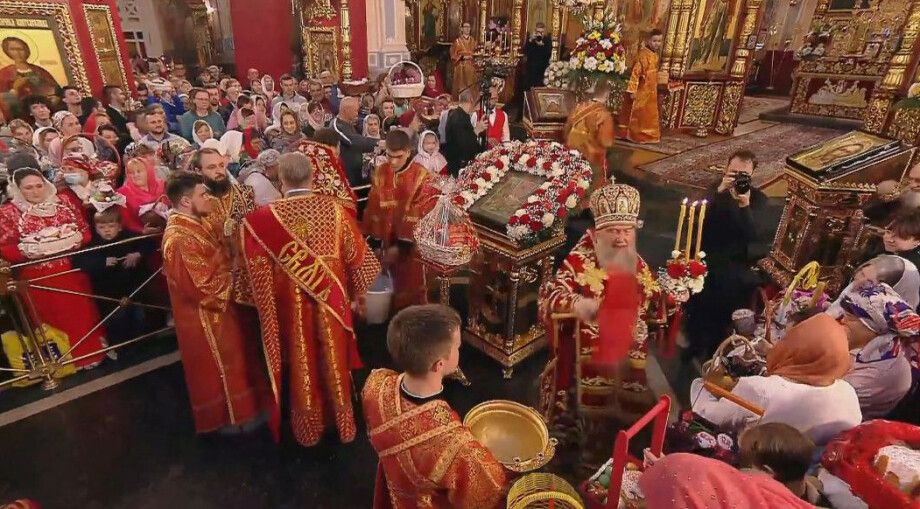
In 2025, Orthodox Christians will celebrate Easter on April 20. This central event in the Orthodox liturgical calendar is marked with solemnity and joy across Orthodox-majority countries such as Russia, Belarus, Georgia, Bulgaria, Greece, Romania, and others. In Central Asia, Orthodox Christian communities also observe the holiday, maintaining centuries-old traditions despite being religious minorities. Kazakhstan On the night of April 20, Easter services will be held in all Orthodox churches across Kazakhstan. According to the Semirechensk Metropolitanate, the Holy Fire from Jerusalem will be brought to the Ascension Cathedral in Almaty, where Metropolitan Alexander will lead the liturgy and Easter procession. The service will begin at 23:30 and will be broadcast live on the Metropolitanate's official YouTube channel. A ceremonial arrival of the Holy Fire is scheduled for 17:00 on Easter Sunday at the cathedral. Uzbekistan In Uzbekistan, the focal point of Easter celebrations is the Holy Dormition Cathedral in Tashkent. Each year, Metropolitan Vikenty of Tashkent and Uzbekistan brings the Holy Fire from Jerusalem. In 2024, he celebrated Easter Matins with Bishop Savvatiy of Bishkek and Kyrgyzstan. Earlier that year, Vikenty made another pilgrimage to the Holy Land to receive the flame. Tajikistan In Dushanbe, Easter is traditionally celebrated at St. Nicholas Cathedral. In 2024, dozens of worshipers, including members of the Russian diplomatic mission and the ambassador, attended the festive liturgy. Following the service, a traditional procession took place, and parishioners received blessings along with kulich (traditional Easter bread) and other Easter treats. Turkmenistan Turkmenistan is home to approximately 485,000 Orthodox Christians, around 9% of the population. The Russian Orthodox Church operates through 12 churches organized under a Patriarchal benefice. While official celebrations are relatively modest, traditional Easter practices are still observed, particularly in urban centers. Russia In Russia, Easter remains the most significant church holiday. Services begin on Saturday evening with a midnight vigil, followed by festive Matins and the Divine Liturgy. The faithful greet one another with “Christ is risen!” and respond “Truly risen!” In the morning, families gather around tables adorned with kulichi, paskha (a cheese dessert), and colored eggs, which are traditionally used for “egg battles.” Easter Traditions Worldwide Because Orthodox churches use the Julian calendar and most Western churches follow the Gregorian calendar, Easter dates typically differ. However, in 2025, both calendars align, and Easter will be celebrated on the same day. Traditions vary widely around the world. In Poland, congregants bring willow branches and blessed food to churches, and festivities continue with "Wet Monday," a water-splashing custom. Bulgarians dye eggs and enjoy family feasts. In Greece, fireworks mark the midnight celebration, and tables are filled with magiritsa soup and roast lamb. In France and Germany, the Easter bunny and chocolate eggs dominate the holiday. Italians serve colomba cakes and lamb dishes, while the British favor hot cross buns and organize egg hunts. In Spain and Poland, dyed eggs are used for games and decoration. In Australia, Easter is celebrated with countryside festivals and egg hunts. Sweden observes a four-day holiday beginning on...

Central Asia Launches Joint Initiative to Eliminate Tuberculosis by 2030

All five Central Asian nations have launched a regional campaign titled “Central Asia Free of Tuberculosis” with the ambitious goal of eliminating tuberculosis (TB), including drug-resistant strains, across the region by 2030, according to Turkmenportal. The initiative is led by the WHO Regional Office for Europe and supported by international health organizations. Health ministers and senior officials from Kazakhstan, Kyrgyzstan, Tajikistan, Turkmenistan, and Uzbekistan convened in Astana to formally launch the campaign and sign a joint declaration. The agreement outlines commitments to work closely with the World Health Organization (WHO), the Stop TB Partnership, the Global Fund, civil society organizations, and other partners. Over the past decade, the five countries have made significant strides in combating TB through the introduction of new treatments and improved disease surveillance systems. The new initiative aims to accelerate these efforts toward total eradication. Key Objectives of the Initiative Include: Testing Coverage: Ensure that at least 95% of all new and recurrent TB cases are diagnosed using rapid WHO-recommended diagnostic tools, which are already in place across the region. Treatment Expansion: Broaden access to shorter, injection-free treatments for drug-resistant TB, which have demonstrated success rates of over 85%. Vaccine Preparedness: Prepare national health systems for the rollout of new TB vaccines once they become available. Primary Healthcare Integration: Incorporate TB diagnosis and treatment into each country’s primary healthcare system, with support from WHO’s Primary Health Care Centre in Almaty. WHO Regional Director Dr. Hans Kluge commended the political leadership demonstrated by the Central Asian governments. He emphasized that the region is now closer than ever to achieving TB elimination but must sustain its commitment through continued investments and stigma-reduction efforts to ensure equitable access to care. The regional strategy is expected to yield significant results by 2027 and will serve as a framework for monitoring and accelerating progress toward TB elimination in Central Asia.

Celebrating Nauryz: A Timeless Tradition of Unity, Renewal, and Heritage in Central Asia

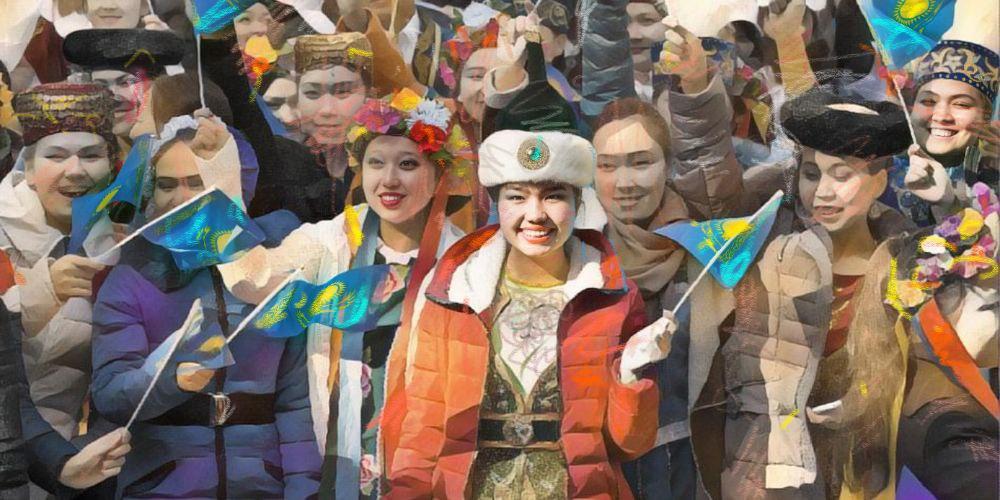
Nauryz is more than just a holiday - it is a symbol of spring renewal, harmony, and unity that has been celebrated by the peoples of Central Asia for centuries. Marking the arrival of the spring equinox, Turkic communities welcome the New Year with purification rituals, festive gatherings, and traditional games. While the holiday shares common roots across the region, each country celebrates it uniquely, reflecting its distinct cultural heritage. Nauryz has survived through the centuries, and despite the evolution of the celebration in the modern era, it continues to unite people through traditions. Kazakhstan In Kazakhstan, Nauryz is celebrated on a large scale, transforming cities and villages into festival grounds filled with folk rituals, sporting events, and cultural performances. The holiday begins with blessings from elders and family visits. At the heart of the festive table is Nauryz-kozhe, a traditional soup made from seven ingredients, each symbolizing key values in life. “Nauryz without Nauryz-kozhe is not Nauryz," Daniyar, 29, from Almaty, told The Times of Central Asia. "When I was a child, my grandmother told me that eating it would bring luck for the year. That’s why the whole family gathers around the table.” Beyond feasting, Nauryz is a time for competitions. Among the most popular are kokpar, an equestrian contest where riders traditionally competed for a goat carcass - now often replaced with a dummy version (serke), asyk atu, a traditional game of precision using sheep bones, and kazaksha kures, a national wrestling competition. “As a child, I always looked forward to this day because it was when I could see adults displaying strength and skill," Sanzhar, 25, from Taraz, told TCA. "These traditions are passed down through generations and strengthen our culture.” Ancient customs also come to life during the festival. People wear traditional Kazakh attire, exchange gifts, and partake in purification rituals. “When I put on a [traditional] Kazakh costume, I feel a deep connection with my ancestors. There’s something magical about this holiday - the aroma of freshly cooked kozhe, the sound of the dombra, the folk dances, and the spirit of unity. It’s a day to remember who we are and take pride in our culture,” said Aizhan, 40, from Astana. [caption id="attachment_29953" align="aligncenter" width="1200"] Nauryz celebration in Almaty; image: TCA[/caption] Kyrgyzstan In Kyrgyzstan, Nauryz represents renewal and rebirth. The celebrations begin with a cleansing ritual, where people clean their homes, courtyards, and even their minds, symbolizing a fresh start. Hospitality plays a central role, as it is customary to host and visit seven guests, symbolizing openness and strong social bonds. Like in Kazakhstan, Nauryz-kozhe is a staple of the festive table. However, Kyrgyz cuisine also features kuurdak, fried meat with potatoes and onions, and osh - also known as plov or palov - emphasizing the tradition of generous feasting. The holiday is further enriched by national sporting competitions, including horse races, wrestling (kuresh), ordo, a traditional strategy game, and arkan tartysh, a tug-of-war contest. “For us, Nauryz is more than just a holiday....

How Women in Central Asia Celebrate International Women’s Day

March 8, International Women’s Day, holds a special place in Central Asia. Over the years, the holiday has evolved from its Soviet-era roots into a modern celebration that blends tradition with contemporary interpretations. The Soviet Past: March 8 as a Day for Working Women During the Soviet Union, March 8 was more than a celebration of spring and femininity, it symbolized the struggle for women’s rights and equality. The day honored working women, with official ceremonies highlighting their achievements. State-run enterprises and organizations staged formal events and presented flowers and gifts to female employees, and media outlets published articles about the country’s outstanding women. The Transition Period: The 1990s Following the collapse of the Soviet Union, Central Asian countries began redefining their identities, which was reflected in how they marked March 8. The holiday took on a more personal and familial character, with less ideological emphasis. While state celebrations continued, they became more subdued. Men still gifted flowers and presents to women, but the political significance of the day gradually faded into the background. Modern Celebrations: Balancing Tradition and New Trends Today, March 8 in Central Asia is primarily a day to recognize women’s contributions and express gratitude. The holiday remains widely celebrated across Kazakhstan, Kyrgyzstan, Uzbekistan, Tajikistan, and Turkmenistan, though each country has developed its distinct traditions. Kazakhstan: Major cities host flash mobs, charity events, and cultural programs. In recent years, feminist activism has gained momentum, with some using the holiday to highlight gender inequality. “For me, March 8 is not just about receiving flowers, it’s a reminder that equality is not a privilege but a necessity,” Ainur, 24, from Almaty told TCA. Uzbekistan: The holiday remains warm and family-oriented. Women receive flowers, sweets, and gifts from colleagues and relatives, while government agencies organize concerts and celebrations. “My friends and I always celebrate March 8. It’s wonderful to receive gifts from my brothers, friends, and husband, but I wish there was more year-round appreciation for women,” Madina, 27, from Tashkent told TCA. Kyrgyzstan: Alongside traditional celebrations, women's organizations and activists hold marches and discussions on gender rights, reflecting a shift toward reinterpreting the holiday. “I participate in the women’s rights march every year because this day is not just about flowers; it’s about our opportunities and freedoms,” Gulzat, 23, from Bishkek told TCA. Tajikistan and Turkmenistan: March 8 remains an official holiday, but without any strong political agenda. “For me, this day is a time to gather with family, but I see that younger women are giving it a new meaning,” Zarina, 40, from Dushanbe told TCA. Changing Values and Perspectives Each year, debates over the significance of March 8 grow stronger. Some argue that it should remain a celebration of spring and femininity, while others emphasize its role in promoting gender equality. Regardless of interpretation, International Women’s Day remains an important occasion that unites different generations of women and reinforces the need for respect and support. Over time, the holiday in Central Asia has evolved from a Soviet...

Central Asia Ranks Among Least Free in Freedom House’s 2025 Report

Freedom House has released its 2025 Freedom in the World report, which evaluates political rights and civil liberties in 195 countries and 13 territories worldwide. Covering events from January 1 to December 31, 2024, the report is based on the principles of the Universal Declaration of Human Rights, emphasizing that freedom is best safeguarded in democratic societies. Countries are assessed on a 100-point scale, with higher scores reflecting greater political and civil freedoms. Finland topped the ranking with 100 points, followed by New Zealand and Sweden with 99 points each. At the bottom were Tibet (0 points), Syria, and South Sudan (1 point each). Central Asia: All Countries Remain 'Not Free' Despite variations in scores, all five Central Asian states remain near the bottom of the global ranking, reflecting ongoing restrictions on political participation, press freedom, and civil liberties. All of the countries of Central Asia remain classified as “Not Free”: Kazakhstan - 23 points (5 in political rights, 18 in civil liberties) Kyrgyzstan - 26 points (4 in political rights, 22 in civil liberties) Tajikistan - 5 points (0 in political rights, 5 in civil liberties) Turkmenistan - 1 point (0 in political rights, 1 in civil liberties) Uzbekistan - 12 points (2 in political rights, 10 in civil liberties)