• KZT/USD = 0.00218
  • TJS/USD = 0.10810
  • UZS/USD = 0.00009
  • TMT/USD = 0.29760
  • KZT/USD = 0.00218
  • TJS/USD = 0.10810
  • UZS/USD = 0.00009
  • TMT/USD = 0.29760
  • KZT/USD = 0.00218
  • TJS/USD = 0.10810
  • UZS/USD = 0.00009
  • TMT/USD = 0.29760
  • KZT/USD = 0.00218
  • TJS/USD = 0.10810
  • UZS/USD = 0.00009
  • TMT/USD = 0.29760
  • KZT/USD = 0.00218
  • TJS/USD = 0.10810
  • UZS/USD = 0.00009
  • TMT/USD = 0.29760
  • KZT/USD = 0.00218
  • TJS/USD = 0.10810
  • UZS/USD = 0.00009
  • TMT/USD = 0.29760
  • KZT/USD = 0.00218
  • TJS/USD = 0.10810
  • UZS/USD = 0.00009
  • TMT/USD = 0.29760
  • KZT/USD = 0.00218
  • TJS/USD = 0.10810
  • UZS/USD = 0.00009
  • TMT/USD = 0.29760
25 August 2026

Viewing results 7 - 12 of 141

Turkmenistan’s Digital Push Gains Ground Despite Tight Internet Controls

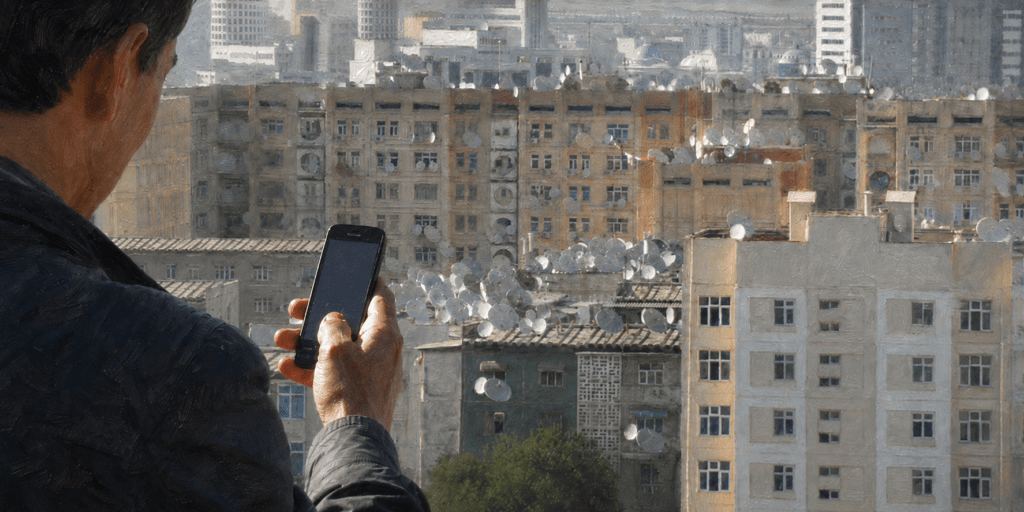
Turkmenistan remains one of the world's most tightly controlled online environments. Yet its state services portal now advertises more than 500 services, the country has more than 100,000 registered mobile-banking users, and the flagship city of Arkadag has launched a 5G network. The figures are official or state-linked and difficult to verify, and the scale remains modest by regional standards. Taken together, however, they point to a shift: digitalization is beginning to move beyond government rhetoric and into everyday administrative and financial life. A Shift That Is Hard to Measure Turkmenistan's digital transition is difficult to quantify. Official statistics are incomplete and independent checks are rare. That makes smaller, observable indicators - portal use, mobile-banking registrations, network launches, and infrastructure projects - especially useful. According to DataReportal, Turkmenistan had 3.53 million internet users in October 2025, equivalent to 46.1% of the population. Using the same source, internet access stood at 93.4% in Kazakhstan and 89.0% in Uzbekistan. Other estimates put Turkmenistan's rate lower, underscoring the uncertainty around even basic connectivity data. DataReportal also counted 5.24 million active cellular connections, representing 68.5% of the population, although a connection does not necessarily include mobile internet access. Social media use remains far more limited: the same report estimated 388,000 social media user identities in October 2025, or 5.1% of the population. Those figures coexist with severe controls. Human Rights Watch said in its World Report 2026 that internet access remains tightly controlled. The authorities have also seized and dismantled Starlink equipment and intensified internet blocking. However, targeted infrastructure projects are moving ahead. The 5G network launched in Arkadag in 2025 was implemented with Huawei and the Ministry of Communications and, according to official accounts, is intended mainly to support smart-city systems. The ministry says it is also developing a fiber-optic route toward Herat and a submarine cable with Azerbaijan to add international links and transit capacity. E-Government Moves Beyond the Legal Framework Turkmenistan launched its unified public services portal, e.gov.tm, in 2019. The Law 'On Electronic Government' came into force in July 2022, formally setting out how public bodies could provide services through information and communication technologies and exchange data electronically. The portal is available through a website and Android and iOS apps. It allows users to pay utility, communications, and education fees, book tickets, join the electronic queue for migration services, and submit applications to government agencies. Published service counts vary sharply. In April 2025, Orient referred to 46 services; in March 2026, the same publication said the portal offered more than 500. The reports do not explain the rise, but the larger figure appears to use a broader definition that includes informational pages and other functions, not only fully interactive services. In October 2025, President Serdar Berdimuhamedov approved the Concept for the Development of the Digital Economy for 2026-2028. A state program and implementation plan followed in January 2026. The documents call for wider use of digital systems across government and the economy, while separate work with the United Nations Development...


Turkmen Schools Introduce New Rules for Smartphone Use

Turkmen authorities have approved new regulations governing the use of personal mobile devices in educational institutions, introducing formal rules for smartphones, tablets, laptops, and other devices used by students and teachers. The document, prepared by the Ministry of Education, outlines how digital devices may be used in the learning process. Under the new rules, such technology may serve as a source of information and be used to access electronic libraries, educational platforms, and distance-learning tools. Schools have been assigned a number of responsibilities. Educational institutions must ensure access to essential digital services, specialized software, and data networks. They are also required to train staff in the use of modern technologies and provide students with methodological support in configuring devices for academic purposes. A separate section of the regulations addresses digital discipline and safety. Students are required to use devices exclusively for educational purposes and only with a teacher’s permission. During lessons, devices must be switched to silent or airplane mode. The document also prohibits taking photos or videos of participants in the educational process without their consent. The document says the new measures are intended to strengthen preventive work with students and parents, with a focus on protecting children’s moral and physical well-being. Oversight of compliance with the new regulations has been assigned to the relevant departments of Turkmenistan’s Ministry of Education.

Turkmenistan Sets New Rules for Mobile Devices in Schools

In 2020, Turkmenistan’s schools banned the use of mobile phones during classes. Now the government has introduced new rules regulating the use of portable devices in academic settings, seeking to use them as learning tools while addressing concerns about distraction and other potentially negative effects on students. A Ministry of Education order recognizes the value of mobile devices in education, saying they must provide access to learning resources, including multimedia content, and help students organize files that contain textbooks, courses, and other materials in electronic form. The devices must improve “the quality of educational management, especially in educational systems that do not have access to an internet connection,” the order says. However, the ministry order urges educational institutions to be aware of “the potential harm to students' health of small-screen mobile devices that limit the types and amounts of information,” the need to provide storage for mobile devices and the fact that bandwidth capacity decreases when a lot of users connect to the wireless network. It also mandates “ethical rules” that are designed to avoid disruption – setting devices to “silent” or “flight” mode and barring video, photo or audio recordings of students and teaching staff without their permission. The ministry issued the order on May 19 and the Ministry of Justice registered it in early June. In a report in March, UNESCO said that global monitoring showed that 114 education systems had a national ban on mobile phones in schools, representing 58% of countries worldwide. That was a significant increase over 40% in 2025 and just 24% in 2023, according to the U.N. cultural agency. “The growth reflects mounting concerns about declining attention in classrooms, cyberbullying, and the broader influence of digital environments on children,” UNESCO said. But it noted that the global picture was nuanced, with not all countries opting for full bans and instead establishing policies that govern the use of mobile devices in schools. The agency said that the various approaches to mobile device usage in schools show that “countries are still searching for the right balance between limiting distraction and teaching responsible technology use.” Turkmenistan’s new order applies to smartphones, tablets, laptops, smartwatches, and other personal electronic devices, and comes amid wider school digitalization efforts. The country maintains tight controls over internet access and online content.

Turkmenistan Looks to OpenAI as it Modernizes Education

Officials from Turkmenistan have met with OpenAI to discuss the use of artificial intelligence in the country’s education system. The London meeting between a delegation from Turkmenistan’s Ministry of Education and OpenAI, the company behind ChatGPT, took place during the Education World Forum 2026 this week, according to state media. The forum is a major annual gathering in which governments, the private sector, international NGOs, and others network and discuss ways of improving education systems. The meeting between ministry officials and OpenAI representatives addressed the “practical possibilities” of using AI in schools, the state-run Turkmenistan: Golden Age outlet reported. “The main focus was placed on two areas of cooperation: the use of AI to improve the quality of education and the development of AI literacy among schoolchildren, students, teachers, and administrative personnel,” the publication reported. During the meeting, Turkmenistan outlined the development of electronic educational platforms in the country’s education system, while OpenAI discussed possible pilot programs involving the use of ChatGPT Edu, an AI platform designed to protect user data, in selected academic institutions. They agreed to consider ways to build practical AI skills, such as hackathons in which students would team up to build a project or solve a problem in a limited time period. Turkmenistan’s government retains tight controls on society, and education is highly centralized. Traditional problems include teacher shortages and concerns that a range of restrictions were holding back student development. Even so, the country has embarked on a campaign to modernize the system and expand contacts with international institutions. Nurmuhammet Shyhlyev, vice-rector of the International University of Humanities and Development of Turkmenistan, was in Japan this month. He discussed initiatives including the establishment of Japanese language centers in Ashgabat's higher education institutions and joint research on robotics, green technologies, and other topics. In March, Education Minister Jumamyrat Gurbangeldiyev met Stefania Giannini, UNESCO assistant director-general for education, at UNESCO headquarters in Paris.

Healthcare Workers in Turkmenistan Reportedly Forced to Pay Mandatory Fees to Public Association

Turkmenistan does not allow independent public associations, and officially registered groups are reportedly funded through mandatory contributions collected from citizens, according to Chronicles of Turkmenistan. The publication says healthcare workers and students at medical institutions were required to pay annual membership fees to support the public association Ýaş Tebigatçy (Young Naturalist) Civil Society Organization. According to the report, the organization’s chairperson, Leyli Shymadova, appealed earlier this year to then-health minister Myrat Mammedov for assistance. Mammedov retired in February 2026. “Shymadova asked the minister to issue instructions requiring all employees of the ministry’s institutions and students of medical educational establishments to pay $5.72 as an annual contribution. The minister ordered that her request be fulfilled, as reflected in a document dated January 12,” the publication reported. The report also states that similar letters were sent to the Ministries of Education and Environmental Protection, and that employees of institutions under those ministries were likewise required to pay the requested amounts. “Public associations are non-profit organizations and should be financed through voluntary donations from individuals or organizations. But in Turkmenistan this is done coercively,” the publication’s authors wrote. The Ýaş Tebigatçy association was officially registered in September 2022.

Turkmenistan Introduces New Fines for Parents Over Children’s Misconduct

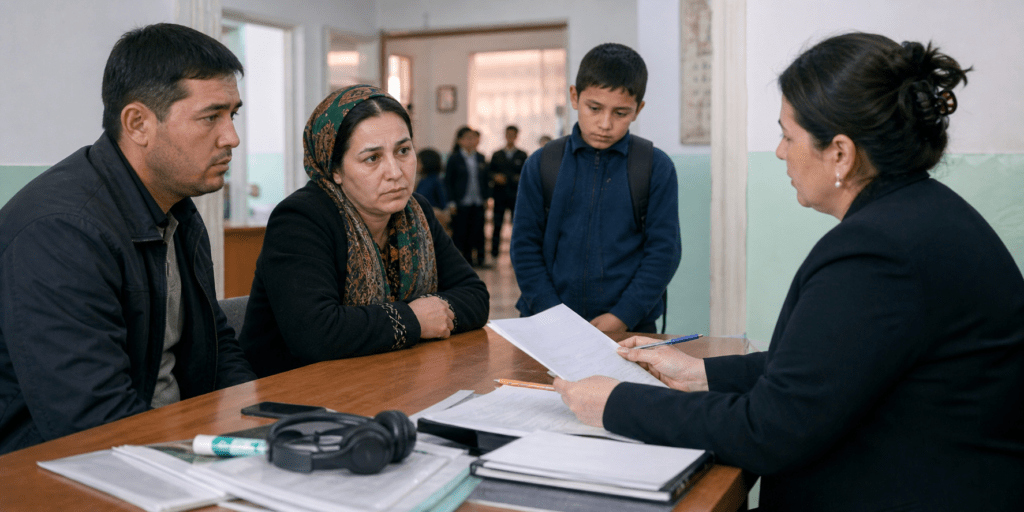
Turkmenistan has introduced new rules that tighten parental responsibility for children’s misconduct, while reports suggest that additional unofficial requirements are already emerging at the local level. The amendments to the administrative code, signed by President Serdar Berdimuhamedov, came into force on May 1. The updated legislation increases penalties for what is defined as “improper upbringing” and expands the range of situations in which parents of children under 16 can be held liable. In several cases, warnings have been eliminated entirely. Under the new rules, offenses such as drug use without a prescription or minor hooliganism now result in immediate fines of around $29. Penalties for traffic violations have risen from $11.6 to $14.5. The manufacture or possession of pyrotechnics can lead to fines ranging from $58 to $145, while smoking carries penalties of $29 to $58. Other sanctions have also been increased, including those related to alcohol and tobacco sales and various administrative violations. However, the implementation of the law appears to vary across regions. According to local sources, some authorities are interpreting the rules more broadly and introducing additional measures. In schools in the Lebap region, for example, there are reports of proposed fines for families if students arrive late to class ($29), possess smartphones or headphones ($290), or skip lessons. These measures have not been officially confirmed, and teachers in other regions say they have not received similar instructions. Some observers suggest the reports may be exaggerated or intended as a deterrent to improve discipline. Nevertheless, educators warn of potential corruption risks. Recorded violations could become grounds for informal payments, with smaller sums demanded instead of official fines, bypassing the state budget.