• KGS/USD = 0.01143 0%
  • KZT/USD = 0.00216 0%
  • TJS/USD = 0.10684 -0.28%
  • UZS/USD = 0.00008 0%
  • TMT/USD = 0.28571 0%
  • KGS/USD = 0.01143 0%
  • KZT/USD = 0.00216 0%
  • TJS/USD = 0.10684 -0.28%
  • UZS/USD = 0.00008 0%
  • TMT/USD = 0.28571 0%
  • KGS/USD = 0.01143 0%
  • KZT/USD = 0.00216 0%
  • TJS/USD = 0.10684 -0.28%
  • UZS/USD = 0.00008 0%
  • TMT/USD = 0.28571 0%
  • KGS/USD = 0.01143 0%
  • KZT/USD = 0.00216 0%
  • TJS/USD = 0.10684 -0.28%
  • UZS/USD = 0.00008 0%
  • TMT/USD = 0.28571 0%
  • KGS/USD = 0.01143 0%
  • KZT/USD = 0.00216 0%
  • TJS/USD = 0.10684 -0.28%
  • UZS/USD = 0.00008 0%
  • TMT/USD = 0.28571 0%
  • KGS/USD = 0.01143 0%
  • KZT/USD = 0.00216 0%
  • TJS/USD = 0.10684 -0.28%
  • UZS/USD = 0.00008 0%
  • TMT/USD = 0.28571 0%
  • KGS/USD = 0.01143 0%
  • KZT/USD = 0.00216 0%
  • TJS/USD = 0.10684 -0.28%
  • UZS/USD = 0.00008 0%
  • TMT/USD = 0.28571 0%
  • KGS/USD = 0.01143 0%
  • KZT/USD = 0.00216 0%
  • TJS/USD = 0.10684 -0.28%
  • UZS/USD = 0.00008 0%
  • TMT/USD = 0.28571 0%

Viewing results 7 - 12 of 6457

Opinion: What May 9 Means to a Generation Without War Memories

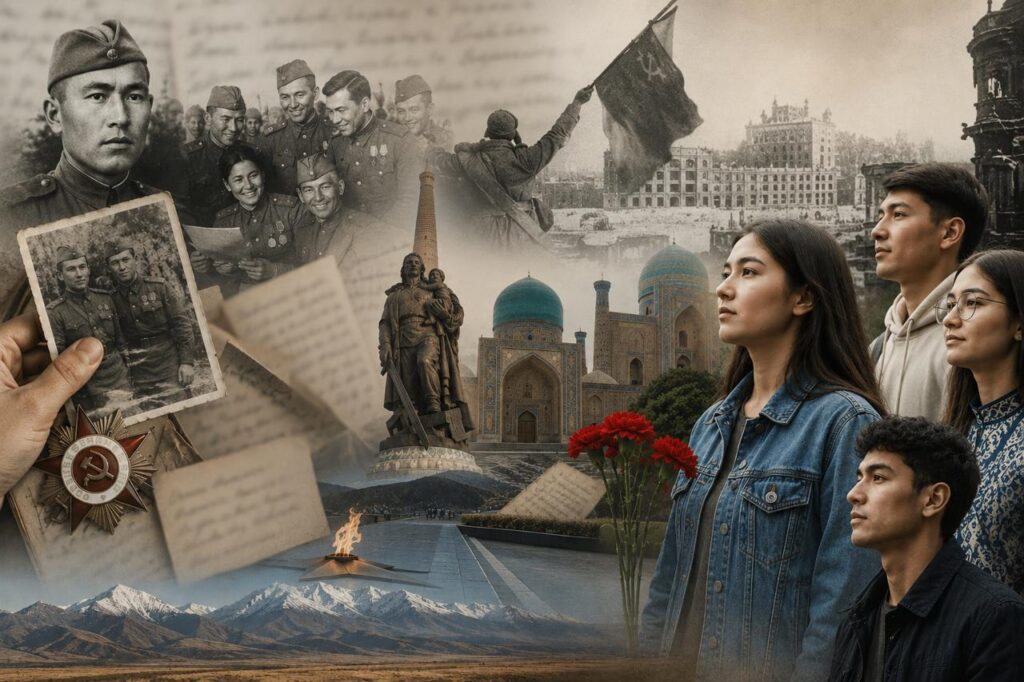
One evening, sitting beside my grandmother, we opened an old photo album, the kind with thick pages and photographs tucked carefully beneath thin plastic sheets. We turned the pages slowly. At one photograph, she stopped. It showed her as a young girl beside a close relative she rarely speaks about, a man who never came home from the war. The mood changed almost instantly. For her, May 9 is not simply a date. It belongs to a family story shaped by absence, grief, and survival. For me, it is inherited. For many people of my generation, May 9 is no longer a memory of war itself, but a memory passed down by those who lived closer to it. That distance is changing the meaning of Victory Day in Kazakhstan and across much of Central Asia. The day still carries enormous symbolic weight, but the link between public commemoration and private family memory is becoming less direct. What older generations remember, younger generations are increasingly asked to learn. What Remains for Those Who Remember For older generations, May 9 remains deeply personal. It is tied to lives shaped by loss, names repeated year after year, stories retold within families, and the enduring presence of those who never returned. The meaning of the day is not abstract for people who lived through the war or grew up in its immediate aftermath. It is part of their family history. In many households, remembrance is expressed less through public slogans than through quieter acts: visiting memorials, keeping photographs, passing down names, or sharing stories that do not need much explanation. For those generations, the past has not fully receded. It remains close to the surface of the present. A Generation That Learns, Not Remembers For younger people, the connection is often weaker and less detailed. The war may still be respected, but it is no longer remembered in the same way. It is encountered through family fragments, school lessons, monuments, ceremonies, and public language rather than through the direct emotional force of lived experience. This generational gap is visible in recent polling. A 2025 survey by the Center for Social and Political Research “Strategy,” based on 1,100 respondents across nine regions of Kazakhstan, found that 46% of people aged 18-24 knew someone in their family had participated in the war but could not recall any details. Another 33% had no information at all. Among respondents over 55, only 13% reported similar uncertainty. The same survey found that many respondents could not identify a significant historical figure connected to the war, while nearly one in five could not name a single wartime event. These gaps suggest more than a decline in historical knowledge. They point to a weakening personal connection to what was once a defining collective experience. When Memory Exists Without Experience As lived experience gives way to inherited knowledge, remembrance changes form. Historical events are preserved through families, schools, state ceremonies, monuments, and media, but the emotional connection becomes harder to sustain. A...

Dushanbe Students Face Expulsion for Driving Private Vehicles to University

Seven students in Dushanbe face possible expulsion for up to three years after police conducted raids targeting university students who arrived for classes in private vehicles. The inspections were announced by the city’s Interior Ministry department, which said officers from the department for the prevention of youth-related offenses conducted raids near universities in the capital and recorded seven cases of students arriving on campus in their own cars. “Under current legal regulations and an order issued by the Ministry of Education and Science of the Republic of Tajikistan, students are strictly prohibited from arriving at classes in private vehicles,” the statement said. “However, some students deliberately ignore this requirement in an attempt at self-display.” Police said the students attend institutions including Tajik National University, Russian-Tajik Slavonic University, the Academy of Public Administration under the President of Tajikistan, and the Tajik State University of Commerce. Authorities stated that case materials have already been forwarded to the Education Ministry and university administrations for further action. Under existing regulations, students who arrive at classes in private vehicles can be expelled for up to three years without the right to reinstatement. Similar incidents have occurred previously in Dushanbe. Earlier, Tajik National University student Fazliddin Bakhriev faced possible expulsion after arriving at the university in a Range Rover. No final decision in that case was publicly announced. The ban on students and schoolchildren using private cars has been in force in Tajikistan since 2017, and police regularly conduct raids near educational institutions to identify violations. Authorities justify the restrictions partly on safety grounds, arguing that young drivers are disproportionately involved in traffic accidents. Officials have also framed the issue as a social concern, saying that luxury vehicles parked outside schools and universities are viewed as displays of wealth and status that contradict principles of equality among students.

Kazakhstan’s Kapchagay Reservoir Reaches 98% Capacity

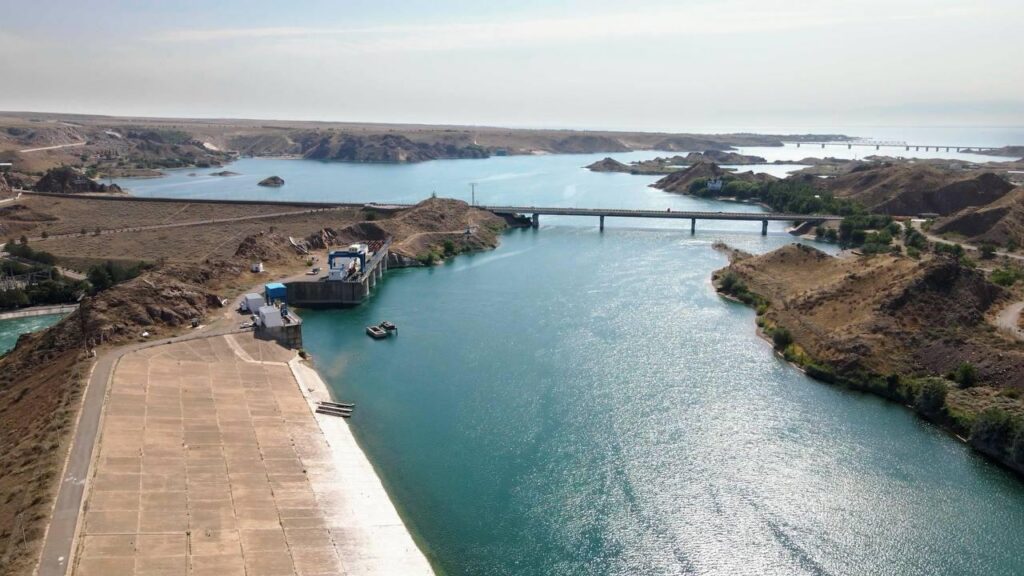
Kazakhstan’s Kapchagay Reservoir in the Almaty Region is now 98% full, holding 18.04 billion cubic meters of water, according to the Ministry of Water Resources and Irrigation. The reservoir collects water from the transboundary Ili River, which originates in China, and regulates water flow into Lake Balkhash, Kazakhstan’s largest lake. During the most recent non-growing season, approximately 4 billion cubic meters of water were released from the reservoir into Lake Balkhash. Officials say the near-full capacity of the reservoir will ensure sufficient irrigation supplies for agricultural land in the Akdala and Shengeldy rural districts of the Almaty Region. “We maintain constant communication with our Chinese colleagues on transboundary river issues, including the Ili River. Thanks to the coordinated efforts of the two countries, farmers in the Almaty Region have been provided with a stable supply of irrigation water for the third consecutive year,” said Seilbek Nurymbetov, chairman of the ministry’s Committee for Regulation, Protection, and Use of Water Resources. The Times of Central Asia previously reported that the Kapchagay Reservoir reached full capacity in August 2024 for the first time in a decade. Created in 1970 as an artificial lake stretching roughly 100 kilometers in length and up to 25 kilometers wide in some areas, the reservoir has a total capacity of more than 18 billion cubic meters of water. The reservoir was originally designed to regulate the flow of the Ili River before it reaches Lake Balkhash. Today, it also serves irrigation, fish farming, and recreational purposes. Located about an hour’s drive from Almaty, its beaches are a popular destination for tourists and local residents. Three of Kazakhstan’s major rivers, the Irtysh, Ili, and Emel, originate in China. The Ili River alone provides about 70% of the water flowing into Lake Balkhash. Located approximately 280 kilometers northwest of Almaty, Lake Balkhash is the world’s fifteenth-largest lake.

Kazakhstan Returns to National Ice Hockey Team World Championship Top Division

Kazakhstan’s men’s national ice hockey team has secured an immediate return to the top division of the IIHF Ice Hockey World Championship after winning the 2026 Division I, Group A tournament in Sosnowiec, Poland. Under the championship format, the two lowest-ranked teams in the top division are relegated each year, while the top two teams from Division I, Group A earn promotion. Kazakhstan and France were relegated from the elite division in 2025 and returned this May to compete for promotion back to the top tier. The Division I tournament, which began on May 2, featured Kazakhstan, France, Poland, Ukraine, Japan, and Lithuania. Kazakhstan entered the tournament under head coach Talgat Zhailauov, who was leading the national team at a World Championship for the first time. By May 7, Kazakhstan had moved to the top of the standings with victories over Lithuania (4-1), Japan (6-0), and Poland (3-2). The decisive match came against Ukraine, Kazakhstan’s closest challenger in the standings. Vsevolod Logvin opened the scoring for Kazakhstan before Ukraine equalized. In the second period, goals from Kirill Lyapunov and veteran forward Roman Starchenko gave Kazakhstan a 3-1 advantage, but Ukraine fought back to level the score once again. Ukraine then took the lead early in the third period before Batyrlan Muratov quickly equalized, sending the game into overtime. No winner emerged in extra time, and Muratov scored the decisive goal in the shootout to seal a dramatic 5-4 victory for Kazakhstan. The win lifted Kazakhstan to 11 points, leaving the team unreachable with one round remaining for Poland, Ukraine, and France, all of whom had seven points. “The guys are fantastic. I’m proud of them, and I think the whole country is proud of this team,” Zhailauov said after the match. “It was an extremely difficult game today. I wouldn’t say we were lucky, we simply had a little more skill.” The coach added that team selection had been based not on experience, but on players’ current form. “I believed in the younger players, and with every game they kept improving. It turns out the choice was the right one,” he said. Kazakhstan will play its final match of the tournament against France on May 8. The game will have no impact on Kazakhstan’s standing, while France must win in regulation time to keep its hopes of promotion alive. The Times of Central Asia previously reported that Kazakhstan had introduced a legal ban on the use of public funds to finance foreign athletes in team sports, including hockey.

No Tanks on Red Square as Moscow’s Victory Day Pull Fades in Central Asia

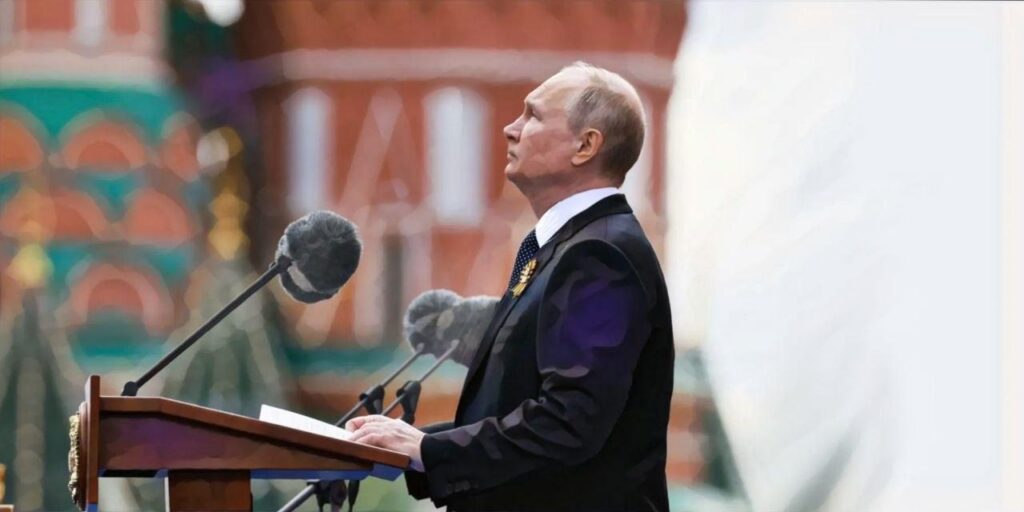
Russia’s Victory Day parade on May 9 is set to be more restrained this year, with tanks, armored vehicles, and missile systems absent from Red Square for the first time in nearly two decades. The Russian Defense Ministry cited the “current operational situation,” while the Kremlin blamed what it called Ukrainian “terrorist activity.” Russia also reported drone attacks aimed at Moscow in the days before the ceremony, and security around President Vladimir Putin has been tightened. The reduced scale of the parade carries a resonance beyond Russia. Victory Day remains one of the most emotionally charged dates in the post-Soviet calendar, including in Central Asia, where families still remember relatives who fought, died, or labored during World War II. But across the region, the holiday has increasingly been placed inside national calendars rather than left as part of Russia’s political script. The contrast with last year is sharp. In 2025, Moscow marked the 80th anniversary of Nazi Germany’s defeat with its largest Victory Day parade since the start of Russia’s full-scale invasion of Ukraine. Chinese troops marched on Red Square, Xi Jinping sat beside Putin, and foreign leaders attended from across Asia, Africa, Latin America, and the former Soviet space. Tanks, rocket launchers, missile systems, drones, and other military hardware rolled through the square. This year’s guest list is more limited. The Kremlin’s initial list of foreign delegations included leaders and senior figures from Belarus, Laos, Malaysia, Slovakia, the breakaway republics of Abkhazia and South Ossetia, and representatives from Bosnia and Herzegovina’s Republika Srpska. Attendance has also been hard to read. Earlier reports said Kazakhstan’s Kassym-Jomart Tokayev and Kyrgyzstan’s Sadyr Japarov were expected in Moscow, while the Kremlin’s initial published list of foreign guests did not include any Central Asian presidents. On May 8, however, Kazakh and Uzbek media reported that Tokayev and Uzbekistan’s Shavkat Mirziyoyev were traveling to Moscow for Victory Day events. The late confirmations complicate the picture, but they do not restore the full regional show of unity seen in the last two years, when all five Central Asian presidents were present at the Moscow parade. It does suggest, however, that Moscow’s political ownership of the date is less automatic than it once was. Victory Day, which commemorates the Soviet defeat of Nazi Germany in what Russia calls the Great Patriotic War, has long been one of the main rituals of modern Russian power. It draws large television audiences, fills public space with military symbolism, and presents the Kremlin as the guardian of a sacred national memory. The holiday speaks of sacrifice and family loss, but also of nationalism and state control over history. Putin has used that language repeatedly. On May 9, 2024, after appearing on Red Square in snowfall, he said Russia was going through a “difficult, milestone period,” and warned: “We will not allow anyone to threaten us. Our strategic forces are always in combat readiness.” In 2025, he used the 80th anniversary parade to link Soviet wartime memory to Russia’s current war, saying...

Business Leaders from Turkmenistan Talk Trade on U.S. Tour

Dozens of business executives from Turkmenistan and the United States have met in Washington amid efforts by the two countries to strengthen trade. The conference of the Turkmen American Business Cooperation Association, also known by its acronym TABCA, was held on Thursday, according to Turkmenistan’s embassy in the U.S. It said the association is a “new practical platform” for expanding economic ties, with a focus on small and medium-sized enterprises. Earlier this month, business leaders from Turkmenistan attended the SelectUSA Investment Summit, an event hosted by the U.S. Department of Commerce that was designed to connect investors, companies and experts from around the world. The investment forum was held in National Harbor, Maryland. Ambassador Esen Aydogdyyev of Turkmenistan, meanwhile, has been making contacts since he was appointed to his new post in Washington in March. On May 1, Aydogdyyev met S. Paul Kapur, U.S. Assistant Secretary of State for South and Central Asian affairs. On April 22, the Turkmen ambassador held talks with Patryk Łoszewski, an executive director of the International Monetary Fund. U.S. goods trade with Turkmenistan was $152.7 million in 2025, according to U.S. government data. U.S. goods exports to Turkmenistan last year were $113.3 million, up 43.6% from the previous year, and U.S. goods imports from Turkmenistan were $39.4 million, up 169% from 2024. While those numbers are relatively low compared to the volume of trade between the United States and its bigger trading partners, the annual percentage increase is notable. One of Turkmenistan’s biggest exports to the U.S. is fertilizer. Turkmenistan has major reserves of natural gas and oil, and the Central Asian country is working to diversify its trading partners. U.S. and other foreign companies are hoping for reforms in the highly controlled country that would make it a more attractive place to invest.