• KGS/USD = 0.01144 0%
  • KZT/USD = 0.00212 0%
  • TJS/USD = 0.10456 0.19%
  • UZS/USD = 0.00008 0%
  • TMT/USD = 0.28490 0%
  • KGS/USD = 0.01144 0%
  • KZT/USD = 0.00212 0%
  • TJS/USD = 0.10456 0.19%
  • UZS/USD = 0.00008 0%
  • TMT/USD = 0.28490 0%
  • KGS/USD = 0.01144 0%
  • KZT/USD = 0.00212 0%
  • TJS/USD = 0.10456 0.19%
  • UZS/USD = 0.00008 0%
  • TMT/USD = 0.28490 0%
  • KGS/USD = 0.01144 0%
  • KZT/USD = 0.00212 0%
  • TJS/USD = 0.10456 0.19%
  • UZS/USD = 0.00008 0%
  • TMT/USD = 0.28490 0%
  • KGS/USD = 0.01144 0%
  • KZT/USD = 0.00212 0%
  • TJS/USD = 0.10456 0.19%
  • UZS/USD = 0.00008 0%
  • TMT/USD = 0.28490 0%
  • KGS/USD = 0.01144 0%
  • KZT/USD = 0.00212 0%
  • TJS/USD = 0.10456 0.19%
  • UZS/USD = 0.00008 0%
  • TMT/USD = 0.28490 0%
  • KGS/USD = 0.01144 0%
  • KZT/USD = 0.00212 0%
  • TJS/USD = 0.10456 0.19%
  • UZS/USD = 0.00008 0%
  • TMT/USD = 0.28490 0%
  • KGS/USD = 0.01144 0%
  • KZT/USD = 0.00212 0%
  • TJS/USD = 0.10456 0.19%
  • UZS/USD = 0.00008 0%
  • TMT/USD = 0.28490 0%

Viewing results 919 - 924 of 5731

Tajikistan Reports New Militant Attack from Afghanistan; Chinese Citizens Killed

A deadly cross-border attack has once again drawn attention to the volatile security situation along the Tajik-Afghan border. Armed militants opened fire on foreign workers in Tajikistan, prompting sharp condemnation from Dushanbe and renewed calls for Kabul to enhance control over its border regions. According to the press center of Tajikistan’s State Committee for National Security (GKNB), the latest incident occurred on November 30 at approximately 6:45 p.m. near the village of Shodak, located in the rural village of Vishkharv, Darvaz district. The gunfire reportedly came from the Afghan village of Ruzvayak, in the Mohi Mai district of Badakhshan province. Militants targeted employees of the China Road and Bridge Corporation, a Chinese state-owned construction company. Two Chinese nationals were killed in the attack, and two others were wounded. This was not an isolated incident. On November 26, militants launched a similar cross-border assault in the Shamshiddin Shohin district, resulting in the deaths of three Chinese employees of the Shokhin-SM company and injuring another. Both attacks originated from Afghanistan’s Badakhshan province, raising serious concerns among Tajik authorities about what appears to be a growing pattern of cross-border violence. Despite ongoing efforts to enhance security, Dushanbe acknowledged continued attempts by armed criminal groups to destabilize the situation. “The Tajik side, expressing deep concern, strongly condemns these alarming actions by criminal groups and calls on the current authorities of Afghanistan to take timely and effective measures,” read a statement from the Border Troops press center. The GKNB stated that additional measures are being implemented to strengthen border protection and ensure the safety of both Tajik citizens and foreign workers. Authorities also reported that the situation remains “stable and under control,” and that investigations are underway. In a separate statement, the Ministry of Foreign Affairs of Tajikistan condemned the attacks as “brutal actions by terrorist groups” and urged the Afghan authorities to guarantee the security of border areas. Official reactions followed from Kabul, Islamabad, and Tehran. Representatives of the Taliban (designated as a terrorist organization and banned in several countries) extended condolences to both Tajikistan and China. They asserted that the attacks were carried out by factions seeking to “create tension and mistrust between countries in the region,” and expressed willingness to cooperate in the investigation and information exchange. On December 1, President Emomali Rahmon convened an emergency meeting with the heads of Tajikistan’s law enforcement and security agencies. According to the presidential press service, Rahmon “strongly condemned the illegal and provocative actions of Afghan citizens,” called for tougher preventive measures, and instructed security forces to reinforce surveillance and control along the entire border zone.
Mirziyoyev Orders Crackdown on Pollution and Waste

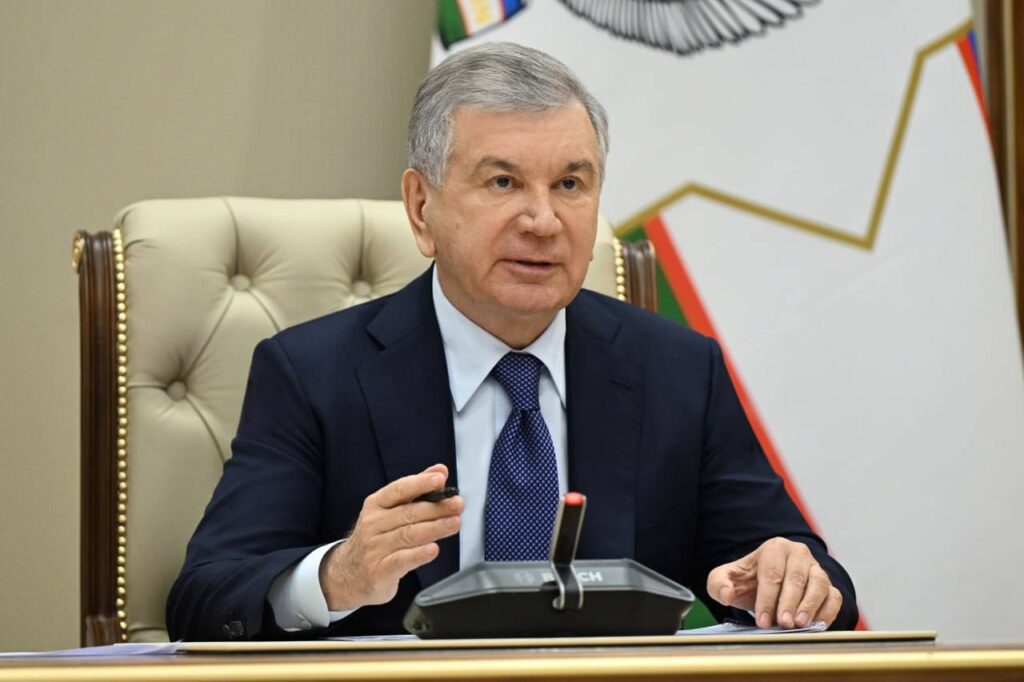
Uzbekistan is intensifying its environmental oversight as President Shavkat Mirziyoyev convened a high-level government meeting on December 1 to address mounting pollution, delays in waste-to-energy infrastructure, and preparedness for the winter season. The session highlighted the rising social and economic risks of air-quality deterioration in Tashkent, and chronic failures in waste management nationwide. Officials attributed recent spikes in air pollution in the capital not only to industrial emissions and construction activity but also to a severe cold anticyclone blanketing much of the country. This weather system caused high atmospheric pressure and temperature inversions, trapping fine particulate matter and inhibiting air circulation. In response, authorities launched inspections of construction sites, greenhouses, and vehicle emissions, while emergency measures, such as watering streets, cleaning canals, and activating fountains, were deployed to stabilize air quality. Mirziyoyev ordered regional officials to enforce stricter environmental compliance, eliminate violations promptly, and take proactive steps to prevent further degradation. He emphasized that growing public frustration demands “decisive and coordinated action” from all levels of government. Stalled Waste-to-Energy Projects Under Scrutiny Waste-to-energy development, a cornerstone of Uzbekistan’s sustainability agenda, also came under fire. Although $933 million in investment has been pledged, several regions have yet to launch projects. Existing facilities in Andijan, Namangan, Ferghana, Samarkand, Kashkadarya, and Tashkent continue to face critical infrastructure deficiencies, including inadequate roads, electricity, and water supply. Mirziyoyev instructed officials to remove these bottlenecks and ensure the nationwide rollout of waste-to-energy projects in 2026. The government has set a target of reducing household waste disposal areas by 50% by 2030. To date, 47 landfill sites have been closed and rehabilitated, restoring over 240 hectares of land for environmental use. Yet the majority of Uzbekistan’s 132 active landfills still lack protective barriers, green belts, and basic safety systems. The president ordered the transformation of these sites into “environmentally safe zones” and called for greater public engagement through environmental education. Starting in 2026, the government will allocate at least 150 billion soums annually from the state budget for this initiative. Hazardous Waste and Digital Tracking Industrial and hazardous waste management also remains underdeveloped. Processing rates have improved but still fall short of international norms. Mirziyoyev demanded a full inventory of hazardous waste generation and storage sites and directed each region to launch its own recycling or disposal initiatives. A unified digital platform will be introduced to monitor hazardous waste nationwide. Winter Readiness and Public Safety Winter preparedness was another major focus. Persistent issues with liquefied gas distribution prompted the president to order operational reforms and faster responses to citizen complaints. Authorities reported substandard repairs along 1,800 kilometers of power lines; the Prosecutor General’s Office will investigate, and the Energy Inspectorate has been tasked with strengthening oversight to ensure stable electricity supply during the winter. Mirziyoyev also called for updated fire-safety standards in residential buildings, including a ban on highly flammable façade materials. Presidential Decree and Long-Term Strategy The December 1 meeting followed a presidential decree issued on November 25 introducing emergency environmental measures and creating a special...

Kazakhstan Launches Michurin Orchard to Advance High-Tech Horticulture

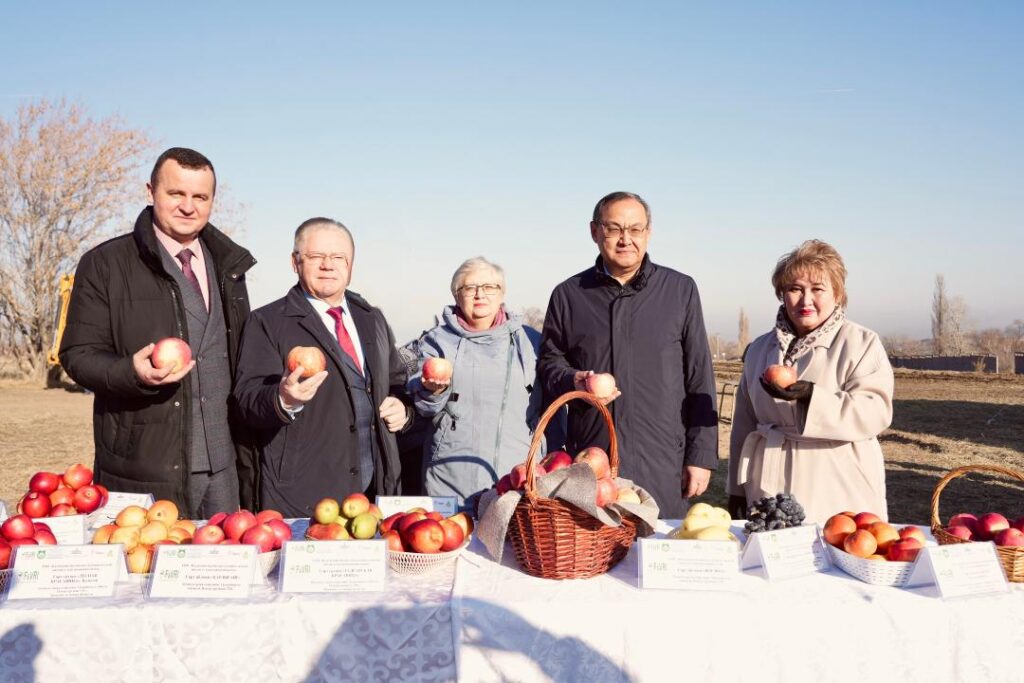
Kazakhstan has taken a significant step in modernizing its agricultural sector with the inauguration of the Michurin Orchard, a collaborative venture between the National Academy of Sciences of Kazakhstan and the Russian Academy of Sciences. The orchard, launched on December 1 in the village of Almalyk, Almaty region, will serve as a flagship platform for developing intensive horticulture and integrating science with high-value agricultural production. The initiative is part of the Kazakh-Russian Center for Advanced Technologies in the Agro-Industrial Sector, established in April 2025. Named after Ivan Michurin (1855-1935), a renowned Russian pioneer in plant selection, the orchard will operate as an open-air research and production site. Its core objectives include testing promising fruit and berry varieties, applying intensive horticultural techniques, and deploying water-, energy-, and resource-saving technologies. Initial plantings will focus on high-yield Russian apple cultivars adapted to Kazakhstan’s climate, along with pear, cherry, sweet cherry, plum, and a broad range of berries such as raspberry, honeysuckle, currants, sea buckthorn, and rose hips. Akhylbek Kurishbayev, President of the National Academy of Sciences of Kazakhstan, described the orchard as “a long-term investment in the development of Kazakhstan’s fruit growing industry.” He emphasized that the initial three-hectare planting represents the foundation of a new generation of resilient, high-productivity varieties capable of withstanding climatic stress. Kurishbayev noted that the Michurin Orchard will contribute to national breeding programs, build a sustainable raw material base for food processing industries, ranging from juices and concentrates to functional foods and help shift Kazakhstan’s agro-industrial model from raw-materials dependence to knowledge-intensive production. The orchard will also function as a live testing ground for horticultural technologies, from the selection of planting material to the delivery of premium fruit to consumers. Horticulture is emerging as a strategic growth sector within Kazakhstan’s agro-industrial complex. According to Deputy Minister of Agriculture Yerbol Taszhurekov, Kazakhstan’s apple orchards now span nearly 29,000 hectares, predominantly located in the southern regions of Almaty, Turkestan, Zhambyl, and Zhetisu. In Almaty and Zhetisu regions alone, apple orchards cover more than 2,400 hectares and include over 416,000 trees. In parallel, Kazakhstan is working to revive the iconic aport apple, a variety deeply intertwined with the country's botanical heritage and the city of Almaty, widely regarded as the ancestral home of the apple. Under a targeted 2024-2028 program involving private investors and specialized nurseries, the government aims to produce certified saplings and scale commercial aport cultivation. By 2027, Kazakhstan plans to plant 110 hectares of aport orchards.

Kazakhstan Proposes Digital Points System for Traffic Violations

Kazakhstan may introduce a digital points-based system to monitor and penalize traffic violations, enabling authorities to automatically identify repeat offenders, mandate retesting, and revoke driving licenses. The proposal was announced by Prosecutor General Berik Asylov during a recent meeting of the Law Enforcement Coordination Council. According to Asylov, noncompliance with traffic regulations remains a major cause of road accidents. He noted that 81% of those responsible for traffic accidents had previously been held accountable for multiple violations. For instance, in East Kazakhstan, one driver committed 32 infractions in a single year, including 13 speeding violations, before fatally crashing into oncoming traffic, killing himself and two passengers. A more striking case occurred in Almaty, where a driver with 72 violations over two years, including 30 for speeding, killed a pedestrian on August 30. To prevent such incidents, participants at the council meeting proposed the implementation of a digital points system that would automatically record repeat violations. Drivers who exceed a predetermined threshold would be required to retake their driving test. Chronic offenders would face temporary suspension of their driving privileges. Asylov also emphasized the need for stricter oversight in the issuance of driver’s licenses. “Cases of illegal acquisition of licenses will be considered a factor that increases the threat to society,” he stated. As previously reported by The Times of Central Asia, lawmakers have also proposed introducing mandatory psychological evaluations, dubbed the “idiot test”, for repeat offenders who systematically violate the same traffic rules.

Opinion: After the UN Gaza Resolution – Kazakhstan’s Potential Role

The implementation of any new approaches aimed at a rapid, peaceful resolution of the Middle East conflict, including the latest UN Security Council resolution, which authorizes the deployment of International Stabilization Forces (ISF), shows that the international community is once again reaching the limits of tools that rely solely on security measures, temporary control, and external administration. Even the most carefully calibrated political or administrative frameworks cannot produce sustainable results unless the ideological nature of the conflict, including its spiritual, historical, and value-based foundations, is changed. It is increasingly clear today that peace in the Holy Land requires not only diplomatic and humanitarian efforts, but also a deep dialogue between the religious and civilizational traditions of the region. In this context, the experience of Kazakhstan, which initiated the creation of a unique collective mechanism for religious reconciliation, deserves particular attention. After lengthy discussions, the UN Security Council approved the U.S.-proposed resolution to form an international stabilization force in Gaza. That means authorizing external actors - for the first time through a UN-mandated transitional authority - to participate in Gaza’s administrative and security arrangements. Thirteen countries supported the resolution, with only Russia and China abstaining. This step creates a new legal reality: the international community now holds a formal mandate to support Gaza’s security, humanitarian access, and reconstruction. Yet the resolution raises another question: will this become the foundation for lasting peace, or merely another temporary structure that keeps the situation under control without changing its essence? The U.S.-Israeli planning model - widely discussed in reporting - proposing dividing Gaza into "green" and "red" zones, reflects an approach in which security replaces reconciliation. Historical cases, such as Bosnia and Lebanon, suggest to many analysts that such strategies rarely lead to sustainable stability. Territorial divisions, from Bosnia to Lebanon, tend to freeze conflicts rather than resolve them. The Palestinian enclave risks becoming an example of a “permanent transitional zone,” where military stability exists without political resolution or trust. In the future, a divided Gaza could face humanitarian collapse, intensified radicalization, and deep fractures in how the Islamic world perceives the West, especially if European troops are deployed. All this underscores a key point: without addressing the ideological and religious dimensions of the conflict - as many experts argue - territorial schemes remain temporary. The conflict in the Holy Land cannot be resolved solely with demarcation maps and international mandates. Breaking the deadlock requires more than another control mechanism; it requires a new architecture of reconciliation. And it must engage the roots of the conflict, including religious thinking, historical grievances, and cultural trauma, rather than its surface-level manifestations. Kazakhstan can play a unique role here. It is not just a new participant in the Abraham Accords, but a country with remarkable political, diplomatic, and spiritual legitimacy. It enjoys the trust of the Islamic world, maintains stable relations with Israel, is perceived by the West as a neutral partner, and has a successful record of coordinating great-power and regional actor efforts, such as the Astana process on...

Icy Relations Between Pakistan and Afghanistan Threaten Central Asian Trade Plans

On November 25, the Afghan authorities accused Pakistan of a new round of airstrikes in eastern Afghanistan. The bombing killed nine children and a woman, injuring several others. The attacks are the latest escalation in rapidly worsening tensions between Islamabad and the Taliban-led government in Kabul, with key border crossings currently closed, and Afghan refugees being expelled from Pakistan. At the heart of the crisis is Pakistan’s claim that Kabul is providing support to the Tehrik-e-Taliban Pakistan (Pakistani Taliban, or TPP), a militant group seeking to topple Pakistan’s government and impose its strict interpretation of Islamic law. The fallout may ripple beyond bilateral relations, with significant consequences for Central Asian trade, particularly the Pakistan-Afghanistan-Uzbekistan plan for a Trans-Afghan railway. The planned 647-kilometer line is set to connect the northern Afghan city of Mazar-e-Sharif with Peshawar in Pakistan. When combined with existing infrastructure, this will mean that trains can travel from southern Uzbekistan all the way to the Pakistani ports of Gwadar and Karachi, granting landlocked Uzbekistan and Afghanistan a long-sought gateway to the Indian Ocean. But mounting instability, along with Islamabad’s willingness to shut borders as leverage, may now place the project in serious jeopardy. “The moment a state weaponizes geography, every financier in Tashkent, Moscow, or Beijing prices in risk, delays commitments, and quietly explores alternative alignments,” Anant Mishra, Marie Skłodowska-Curie Research Fellow at the International Centre for Policing and Security at the University of South Wales, told The Times of Central Asia. So, what are the prospects for salvaging the Trans-Afghan railway? How can Pakistan and Afghanistan de-escalate? And what does this turmoil mean for Central Asia’s wider economic ambitions? A sudden frost On July 17, Uzbekistan’s Transport Minister Ilkhom Makhkamov, Pakistan’s Railway Minister Muhammad Hanif Abbasi, and Afghanistan’s acting Public Works Minister Mohammad Esa Thani signed an agreement to conduct a feasibility study for the proposed railway. Many hoped the railway would presage a new era of fraternal relations between Central and South Asia. “Civil society, the intelligentsia, media, and business community of Pakistan have been loudly calling for intimate trade relations with the Central Asian Republics,” Khadim Hussain, Research Director at the Centre for Regional Policy and Dialogue (CRPD), Islamabad, told TCA. For Uzbekistan, which has aggressively pursued diversification of trade routes to reduce reliance on transit through Iran and Kazakhstan, the project promised a cheaper, faster corridor to global markets. According to Nargiza Umarova, Head of the Center for Strategic Connectivity at the Institute for Advanced International Studies, University of World Economy and Diplomacy in Tashkent, the trans-Afghan is one of two high-priority transport projects, along with the China-Kyrgyzstan-Uzbekistan railway – work on which began in April 2025. But the ink had barely dried on the July accord when tensions between Afghanistan’s Taliban government and Islamabad began escalating, throwing the ambitious railway into doubt. [caption id="attachment_40211" align="aligncenter" width="1600"] Uzbek passenger and freight trains parked in Andijan; image: TCA, Joe Luc Barnes[/caption] In early October, Pakistan launched an airstrike in Kabul targeting the leader of the...