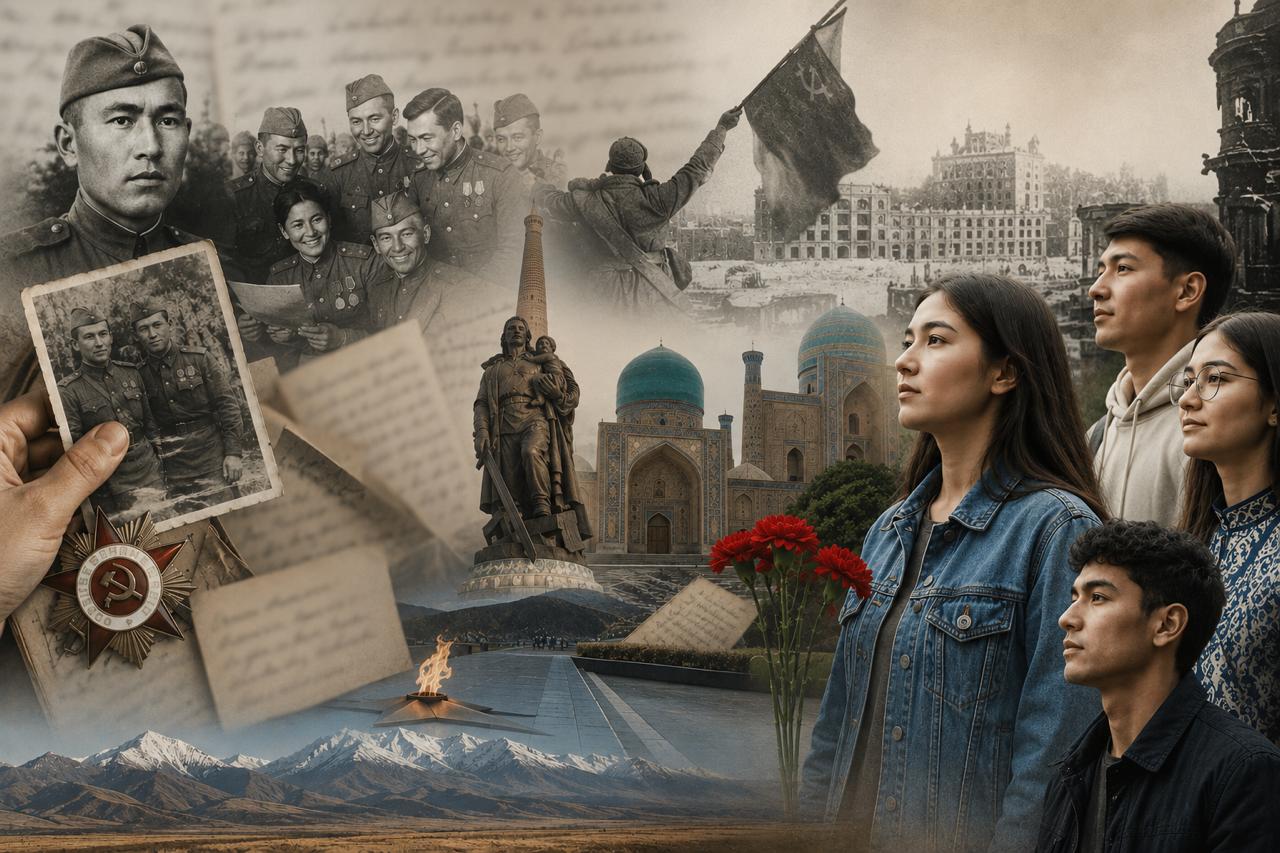
One evening, sitting beside my grandmother, we opened an old photo album, the kind with thick pages and photographs tucked carefully beneath thin plastic sheets. We turned the pages slowly. At one photograph, she stopped. It showed her as a young girl beside a close relative she rarely speaks about, a man who never came home from the war.
The mood changed almost instantly. For her, May 9 is not simply a date. It belongs to a family story shaped by absence, grief, and survival. For me, it is inherited. For many people of my generation, May 9 is no longer a memory of war itself, but a memory passed down by those who lived closer to it.
That distance is changing the meaning of Victory Day in Kazakhstan and across much of Central Asia. The day still carries enormous symbolic weight, but the link between public commemoration and private family memory is becoming less direct. What older generations remember, younger generations are increasingly asked to learn.
What Remains for Those Who Remember
For older generations, May 9 remains deeply personal. It is tied to lives shaped by loss, names repeated year after year, stories retold within families, and the enduring presence of those who never returned. The meaning of the day is not abstract for people who lived through the war or grew up in its immediate aftermath. It is part of their family history.
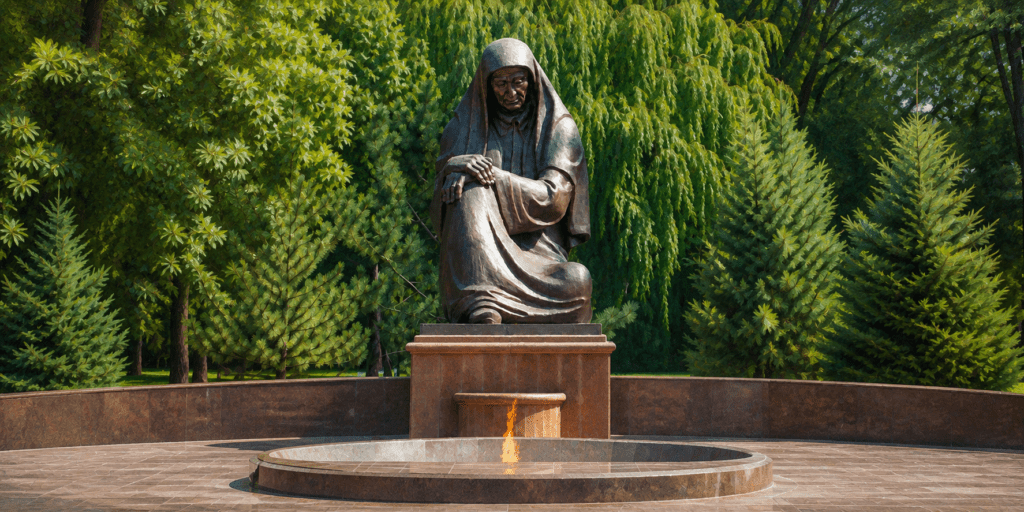
In many households, remembrance is expressed less through public slogans than through quieter acts: visiting memorials, keeping photographs, passing down names, or sharing stories that do not need much explanation. For those generations, the past has not fully receded. It remains close to the surface of the present.
A Generation That Learns, Not Remembers
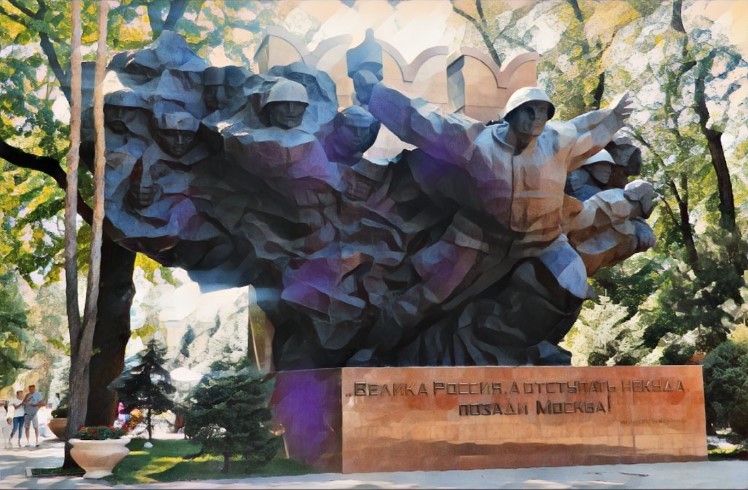
For younger people, the connection is often weaker and less detailed. The war may still be respected, but it is no longer remembered in the same way. It is encountered through family fragments, school lessons, monuments, ceremonies, and public language rather than through the direct emotional force of lived experience.
This generational gap is visible in recent polling. A 2025 survey by the Center for Social and Political Research “Strategy,” based on 1,100 respondents across nine regions of Kazakhstan, found that 46% of people aged 18-24 knew someone in their family had participated in the war but could not recall any details. Another 33% had no information at all. Among respondents over 55, only 13% reported similar uncertainty.
The same survey found that many respondents could not identify a significant historical figure connected to the war, while nearly one in five could not name a single wartime event. These gaps suggest more than a decline in historical knowledge. They point to a weakening personal connection to what was once a defining collective experience.
When Memory Exists Without Experience
As lived experience gives way to inherited knowledge, remembrance changes form. Historical events are preserved through families, schools, state ceremonies, monuments, and media, but the emotional connection becomes harder to sustain. A story that once belonged to a grandparent becomes, for a younger person, something partly personal and partly institutional.
The same research found that only around 56-58% of younger respondents expressed a strong desire to preserve the memory of the war at both family and state levels, compared with more than 80% among older generations. That does not mean young people reject the past, but it suggests that the past reaches them differently.
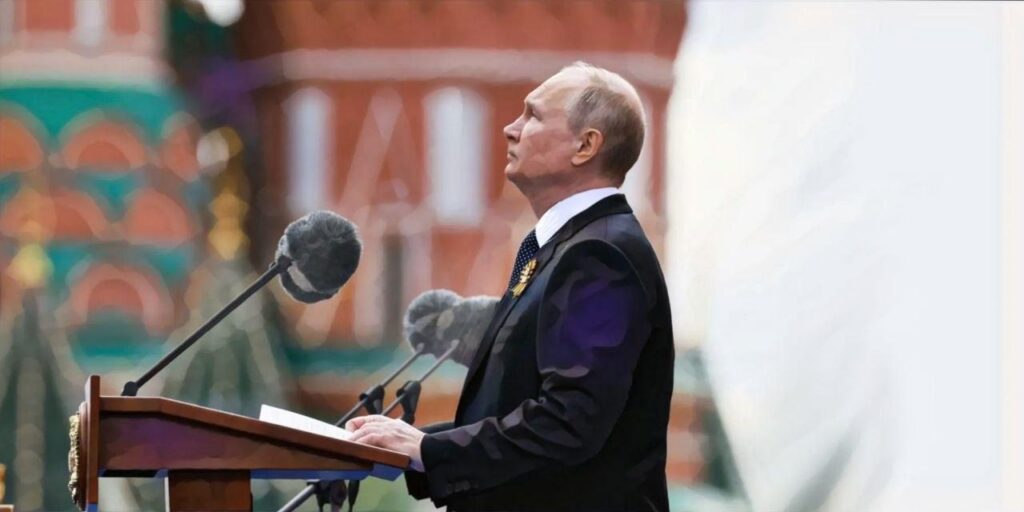
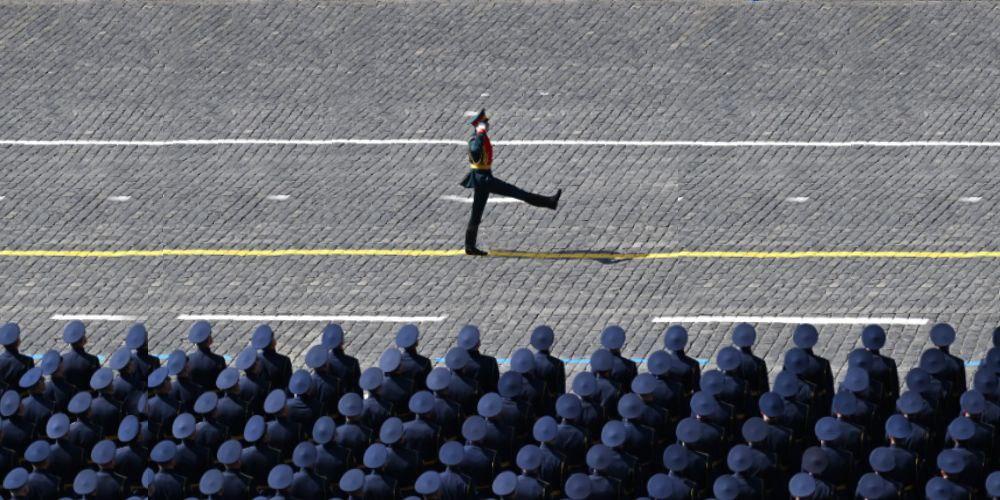
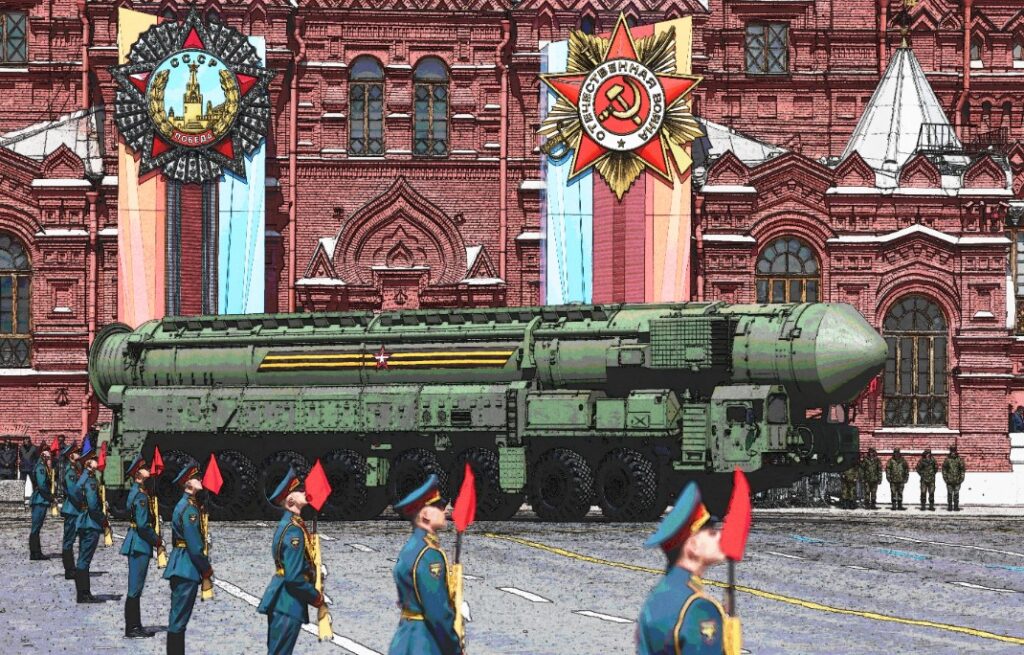
As direct family memory weakens, public institutions play a larger role in shaping how the war is remembered. This can give the past continuity, but it can also make remembrance feel more formal and less intimate. The date remains important, yet its meaning is increasingly filtered through public narratives rather than family experience.
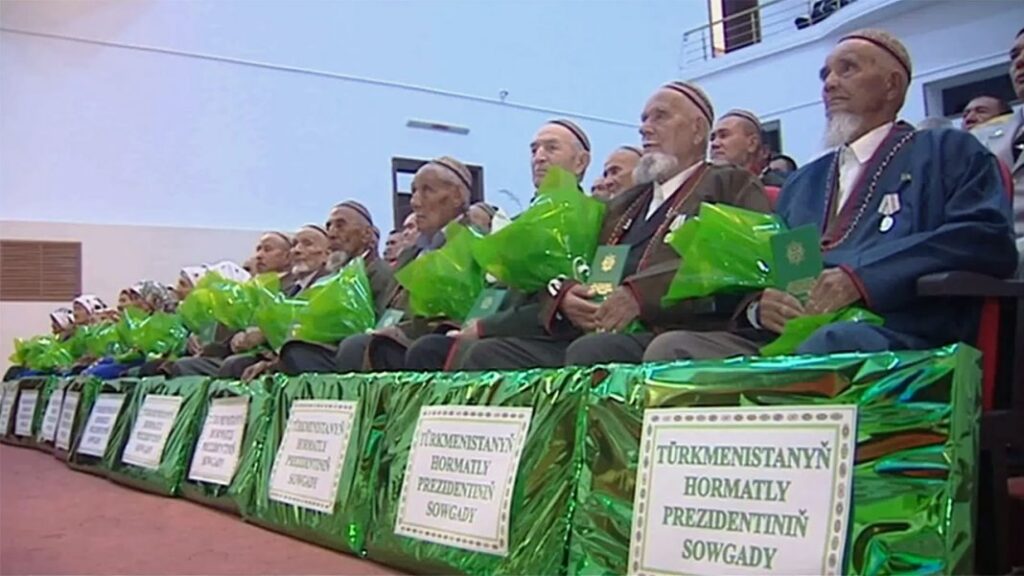
This is not unique to Kazakhstan. Across Central Asia, May 9 remains a major commemorative date, but its meaning is no longer uniform. For some families, it is still tied to direct loss. For younger citizens, it may be associated more with ceremonies, school events, official speeches, or stories that become less detailed with each generation.
What Memory Becomes
Memory does not simply disappear over time. It changes shape.
The war remains deeply rooted in the collective consciousness of Kazakhstan and much of Central Asia. It is associated with sacrifice, loss, victory, and national contribution. Yet the balance between those meanings is shifting. Public memory often centers on victory and the defeat of Nazi Germany, while the quieter language of personal grief can become less visible.
The legacy of the 20th century also remains complex. For some, the Soviet period is remembered through sacrifice, industrialization, education, and shared wartime endurance. For others, it is inseparable from repression, famine, deportation, and the denial of national histories. These competing memories shape how May 9 is understood today.
For younger generations, the result is not a single inherited memory, but several versions of the past: some personal, some public, and some incomplete. What they receive is not lived experience, but interpretation. The challenge is not only to preserve the date, but to preserve the human scale of what it once meant.
That is why the photograph in my grandmother’s album still matters. It is not only evidence of a family loss. It is a reminder that before memory becomes ceremony, history begins with individual lives. For those who remember, May 9 remains close to grief and survival. For those who come after, the task is to keep it from becoming only a symbol.
The views expressed in this article are those of the author and do not necessarily reflect the official policy or position of the publication, its affiliates, or any other organizations mentioned.