• KGS/USD = 0.01144 0%
  • KZT/USD = 0.00212 0%
  • TJS/USD = 0.10456 0.19%
  • UZS/USD = 0.00008 0%
  • TMT/USD = 0.28490 0%
  • KGS/USD = 0.01144 0%
  • KZT/USD = 0.00212 0%
  • TJS/USD = 0.10456 0.19%
  • UZS/USD = 0.00008 0%
  • TMT/USD = 0.28490 0%
  • KGS/USD = 0.01144 0%
  • KZT/USD = 0.00212 0%
  • TJS/USD = 0.10456 0.19%
  • UZS/USD = 0.00008 0%
  • TMT/USD = 0.28490 0%
  • KGS/USD = 0.01144 0%
  • KZT/USD = 0.00212 0%
  • TJS/USD = 0.10456 0.19%
  • UZS/USD = 0.00008 0%
  • TMT/USD = 0.28490 0%
  • KGS/USD = 0.01144 0%
  • KZT/USD = 0.00212 0%
  • TJS/USD = 0.10456 0.19%
  • UZS/USD = 0.00008 0%
  • TMT/USD = 0.28490 0%
  • KGS/USD = 0.01144 0%
  • KZT/USD = 0.00212 0%
  • TJS/USD = 0.10456 0.19%
  • UZS/USD = 0.00008 0%
  • TMT/USD = 0.28490 0%
  • KGS/USD = 0.01144 0%
  • KZT/USD = 0.00212 0%
  • TJS/USD = 0.10456 0.19%
  • UZS/USD = 0.00008 0%
  • TMT/USD = 0.28490 0%
  • KGS/USD = 0.01144 0%
  • KZT/USD = 0.00212 0%
  • TJS/USD = 0.10456 0.19%
  • UZS/USD = 0.00008 0%
  • TMT/USD = 0.28490 0%

Viewing results 2641 - 2646 of 5731

Russia and Tajikistan to Open Joint Industrial Park by 2030

Russia and Tajikistan are planning to establish a joint industrial park in Tajikistan by 2030, in a move aimed at significantly boosting bilateral trade. The announcement was made by the Russian Ministry of Industry and Trade in a recent statement. The industrial park, to be built in Tajikistan and managed by the Russian side, is designed to facilitate the entry of more Russian industrial companies into the local market. According to officials, the project seeks to increase trade between the two countries by 2.5 times within the next five years. The initiative is part of Russia’s national project on international cooperation and export, and participation will be open to companies from both Russia and other countries. Products manufactured at the site are expected to be sold not only within Tajikistan but also across neighboring countries in Central Asia. Details of the project were presented in Dushanbe by Artur Galiullin, Deputy Director of the Department for International Cooperation and Export Licensing. His remarks came during a visit to the Korgohi Machine Building Enterprise. As previously reported by The Times of Central Asia, Tajikistan has made substantial progress in shifting trade settlements with Russia to the ruble. According to Firdavs Tolibzoda, Chairman of the National Bank of Tajikistan, over 90% of trade transactions are now conducted in Russian currency, a sharp departure from 2021, when trade was evenly split between the ruble and the U.S. dollar.

Uzbekistan Attracts Over $8.7 Billion in Foreign Investment in First Quarter of 2025

Uzbekistan attracted more than $8.7 billion in foreign investment during the first quarter of 2025, marking a nearly 20% increase compared to the same period last year, according to President Shavkat Mirziyoyev's press service. The investment influx is being channeled into strategic sectors such as energy, metallurgy, chemicals, pharmaceuticals, transport, agriculture, water management, and public services. The government is placing particular emphasis on generating added value and creating new employment opportunities. By the end of the first half of the year, total foreign investment is projected to exceed $18 billion. For all of 2025, Uzbekistan aims to attract $42 billion in foreign investment and carry out 81 large-scale projects along with more than 8,000 small and medium-sized initiatives. In support of these goals, Mirziyoyev recently signed a decree aimed at bolstering production, exports, and entrepreneurship. Starting June 1, 2025, foreign nationals and stateless persons will be eligible to obtain a five-year residence permit by paying $200,000. An additional fee of $100,000 will apply for each accompanying family member, including spouses, children, and parents.

Moscow’s MGIMO University to Open Branch in Astana

The Moscow State Institute of International Relations (MGIMO), one of Russia’s most prestigious universities and the flagship institution of the Russian Ministry of Foreign Affairs, will open a branch in Astana in September 2025, according to Kazakhstan’s Ministry of Science and Higher Education. The Astana branch, known as MGIMO-Astana, will initially offer two undergraduate programs: World Mineral Resources and Energy Markets and Analysis and Modeling of Socioeconomic and Business Processes. Two master’s degree programs will also be available: Financial Economics and Financial Technologies and Multilateral Institutions and Management of Global Technological Development. Applicants will have the opportunity to apply for academic grants, though tuition-based enrolment will also be available. Instruction will be conducted by MGIMO professors from Moscow, complemented by local faculty trained in the university’s academic standards and methodologies. MGIMO-Astana will initially operate from the campus of the L.N. Gumilyov Eurasian National University, before moving to its own dedicated campus. Planning and design for the new facility are already underway. This will be MGIMO’s second international branch. Its first overseas campus, MGIMO-Tashkent, opened in Uzbekistan and currently offers six undergraduate and graduate programs, all taught by MGIMO faculty and tailored to the local academic landscape. As The Times of Central Asia previously reported, Cardiff University in Wales also plans to open a campus in Astana later this year, underscoring the Kazakh capital’s growing role as a regional hub for higher education.

Turkmenistan Launches Eco-Friendly Stone Paper Production

Turkmenistan has inaugurated its first-ever production of environmentally friendly stone paper, marking a milestone in the country’s industrial development. The initiative was launched in Ak Bugday etrap of Ahal province by the Derýa Ýoly Economic Society under the Ekoston brand. The facility has an annual production capacity of 5,500 tons. The company’s products attracted significant attention at an exhibition commemorating the 17th anniversary of the Union of Industrialists and Entrepreneurs of Turkmenistan. Stone paper is noted for its eco-friendliness, high durability, and broad range of applications. Manufactured from calcite and polymers without the use of toxic plasticizers, the production process does not involve water consumption, deforestation, or the emission of harmful gases. It also generates no wastewater, making the process both safe and environmentally sustainable. Experts report that the material begins to degrade under exposure to sunlight and rain within 10-12 months, without polluting the environment. Even when incinerated, stone paper produces no black smoke or toxic fumes, and the residue is recyclable. Moisture-resistant, tear-proof, and insect-repellent, the product is safe for contact with food, making it suitable for school notebooks, printed materials, packaging, and disposable tableware. The product meets international environmental safety standards and is positioned as a viable alternative to conventional paper in both everyday and industrial use. Alongside the stone paper initiative, other areas of applied science are gaining momentum in Turkmenistan, where local scientists have developed a rejuvenating gel derived from milk whey, rich in proteins, vitamins, and minerals. The gel is designed to improve the skin’s protein and moisture balance while promoting regeneration. Additionally, Turkmen researchers have pioneered a microencapsulation technology for camel thorn extract, a plant renowned for its medicinal qualities. This innovation holds potential applications in both the pharmaceutical and food industries.

Seismic Cities: Is Central Asia Prepared for a Major Earthquake?

The recent 7.7-magnitude earthquake in Myanmar, which claimed over 3,500 lives and caused structural failures more than 1,000 kilometers away in Bangkok, has once again highlighted the precariousness of life in seismically active regions. “Earthquakes happen on geological faults, which are often sited at the edges of mountain ranges.” Richard Walker, Professor of Tectonics at the University of Oxford told The Times of Central Asia. “Sadly, the edges of mountain ranges are often the best places to live, due to the presence of water and of land for farming.” All Central Asian capitals, except for Kazakhstan’s relocated capital Astana, are located on such terrain. This has historically made them vulnerable. The 1948 earthquake in Ashgabat destroyed almost the entire city; Tashkent suffered a similarly destructive event in 1966, and Almaty was wracked by twin blows in 1887 and 1911. Although no such catastrophic event has occurred in the last half century, the earth beneath the region continues to rumble restlessly. Two quakes in early 2024 left the residents of Almaty unnerved. Last week, on April 14, a 5.9 magnitude earthquake in Tajikistan caused the death of a young boy and damage to around thirty homes near the Chinese border. Though moderate, these tremors serve to remind residents of the active tectonics of the region and raise questions about the structural readiness of buildings and infrastructure should a stronger event occur. Botched Building After the 2023 earthquake on the Turkey-Syria border, which killed over 53,000 people in Turkey alone, authorities launched investigations into over a hundred individuals linked to the construction of buildings that did not withstand the tremors. Such stories were familiar to people who grew up in the Soviet Union. In the 1988 Spitak earthquake in Armenia, tens of thousands died in Leninakan (now Gyumri). Many of the casualties were put down to the collapse of identikit 9-storey tower blocks built in the Brezhnev era. These were designed to withstand a magnitude 7 earthquake; in the event, the 6.8 magnitude quake that struck Leninakan caused 72 out of 78 of these buildings to collapse. In a bitter irony, many older, pre-Soviet structures remained intact. One team of international inspectors blamed “very low construction standards and suspect joint details” in Leninakan for the scale of the disaster. Similar precast tower blocks to those that collapsed in Armenia can be seen across the former USSR. According to the Uzbek media, the Cabinet of Ministers estimated in 2023 that approximately 70% of private housing in the country failed to meet current earthquake resistance standards. “The 2023 earthquake in Turkey was a tragic reminder of the importance of strict compliance with building codes and continuous quality control of construction in seismic regions,” Daulet Sarsenbayev, director of the Kazakhstan’s National Scientific Center for Seismological Observations and Research, told TCA. “Such events provide valuable lessons for all countries, including Kazakhstan, in terms of the need to strengthen the regulatory framework, increase transparency in the construction industry, and invest in resilient infrastructure.” In response to the...

Meet the Kyrgyz Woman Behind the Vaccine Revolution

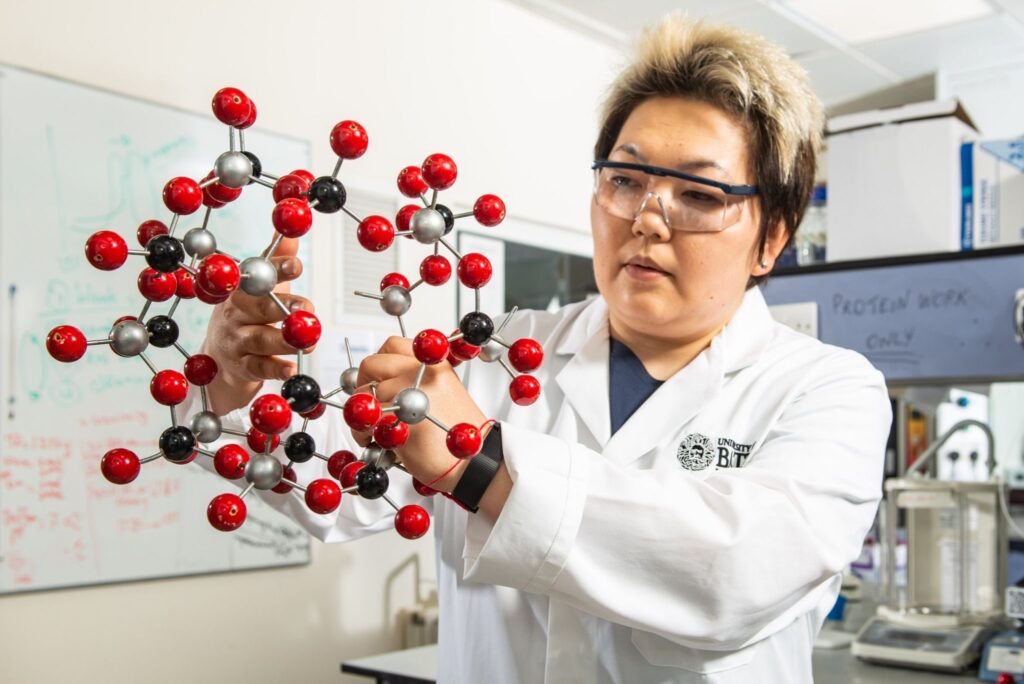
COVID-19 exposed numerous challenges humanity has yet to address, with one of them being directly related to tackling potential future pandemics. A key aspect of this is vaccines, which have to be transported in refrigerated units. This allows them to maintain their effectiveness and safety, the so-called "cold chain infrastructure" saving them from becoming unusable. This complex transportation requirement, however, results in millions of people missing out on potentially life-saving vaccines. But does it have to be this complicated? “Motherhood changes people, irreversibly. For me it was not just becoming a parent, but it also influenced the direction of my research,” Asel Sartbaeva wrote in her 2018 article, ‘Vaccines: The End of the Cold War?’ “When my daughter was only a few days old, I took her to the doctors to be vaccinated with the BCG vaccine (against tuberculosis). The doctor took the vaccine out of the fridge and administered it directly. That’s when I asked: ‘why must vaccines be refrigerated?’ and then the natural follow-up question, ‘can I help to make them stable at room temperatures?’” Born and raised in Kyrgyzstan, Asel Sartbaeva “currently wears several hats”, as her LinkedIn profile says. She is an award-winning interdisciplinary chemist, Reader in Chemistry (Associate Professor) at the University of Bath, and the first Central Asian to obtain a PhD from University of Cambridge. Sartbaeva is also the CEO and Co-Founder of EnsiliTech, a startup with a technology that allows vaccines and other biopharmaceuticals to be stored and transported at room temperature. EnsiliTech was launched in 2022 as a project at the University of Bath, and was built on over a decade of Sartbaeva’s research into ensilication – the technique of fitting vaccine components with a silica coat to stop them from spoiling outside of refrigerated temperatures. In December 2022, EnsiliTech successfully raised £1.2 million in an oversubscribed pre-seed funding round led by Science Angel Syndicate and the Fink Family Office with co-investment from QantX, Elbow Beach Capital, angel investors and Innovate UK. In 2023, the startup won a £1.7 million grant from the British government’s Department of Health and Social Care to develop the first thermally stable mRNA vaccine in the world, to combat Hantavirus, which is found in Asia and South America. In the same year, the new startup attracted their first customer, a Global Top 10 animal vaccine company based in the EU, which paid EnsiliTech to thermally stabilise three of their vaccines. Currently, Ensilitech is planning to licence their ensilcation technology to several customers and internally developing thermally stable vaccines and antibodies. Along with her scientific and business goals, Sartbaeva is also passionate about the wider participation and girls and the women’s empowerment movement. “We need to show girls that science isn’t boring and is a great choice for girls who have a natural passion for science,” she says. In 2021, Sartbaeva became the ambassador for UNICEF’s Girls in Science programme, launched in 2020 to empower 500 girls from new settlements and rural areas so they could excel...