• KGS/USD = 0.01144 0%
  • KZT/USD = 0.00212 0%
  • TJS/USD = 0.10456 0.19%
  • UZS/USD = 0.00008 0%
  • TMT/USD = 0.28490 0%
  • KGS/USD = 0.01144 0%
  • KZT/USD = 0.00212 0%
  • TJS/USD = 0.10456 0.19%
  • UZS/USD = 0.00008 0%
  • TMT/USD = 0.28490 0%
  • KGS/USD = 0.01144 0%
  • KZT/USD = 0.00212 0%
  • TJS/USD = 0.10456 0.19%
  • UZS/USD = 0.00008 0%
  • TMT/USD = 0.28490 0%
  • KGS/USD = 0.01144 0%
  • KZT/USD = 0.00212 0%
  • TJS/USD = 0.10456 0.19%
  • UZS/USD = 0.00008 0%
  • TMT/USD = 0.28490 0%
  • KGS/USD = 0.01144 0%
  • KZT/USD = 0.00212 0%
  • TJS/USD = 0.10456 0.19%
  • UZS/USD = 0.00008 0%
  • TMT/USD = 0.28490 0%
  • KGS/USD = 0.01144 0%
  • KZT/USD = 0.00212 0%
  • TJS/USD = 0.10456 0.19%
  • UZS/USD = 0.00008 0%
  • TMT/USD = 0.28490 0%
  • KGS/USD = 0.01144 0%
  • KZT/USD = 0.00212 0%
  • TJS/USD = 0.10456 0.19%
  • UZS/USD = 0.00008 0%
  • TMT/USD = 0.28490 0%
  • KGS/USD = 0.01144 0%
  • KZT/USD = 0.00212 0%
  • TJS/USD = 0.10456 0.19%
  • UZS/USD = 0.00008 0%
  • TMT/USD = 0.28490 0%

Viewing results 1585 - 1590 of 2871

New Measures to Boost Agriculture in Uzbekistan

On May 10, Uzbekistan President Shavkat Mirziyoyev was presented with proposed adaptations in agricultural practice and the more efficient use of land in the light of climate change. In Uzbekistan, 3 million hectares of pastural and agricultural land have been now degraded, and approximately 2 million hectares, salinized. According to experts, by 2030, water resources in the region are at risk of diminishing by almost 6 percent as a direct result of climate change. In response, Uzbekistan has developed a national program, for which over $294 million is anticipated in grant funding, to adapt agriculture to climate change and mitigate its impact. The initiative aims to improve the condition of 1 million hectares of agro-ecological landscape and degraded pastures in the Aral Sea region. Protective forest belts will be created in Karakalpakstan, as well as in Khorezm, Bukhara, and Kashkadarya regions and drought-resistant plants such as licorice, rose hips, and sesame, cultivated in areas where water is scarce. A center will be established to analyze and forecast climate change, and agrometeorological stations installed in five regions of the country. In cooperation with Italy, a further center with a nursery will be built for intensive seed cultivation alongside a farm for plants resistant to drought and salinity. Since the need to preserve water is particularly acute in areas surrounding the lower reaches of the river Amu Darya, subsidies are to be allocated for laser-leveling land in Karakalpakstan. Grain and rice producers will be reimbursed up to 100 percent of the fuel costs required to level land using a laser level, in a move to increase yields and reduce water consumption by 15-20 percent. The program also encourages farmers to build more greenhouses. In recent years, the spread of greenhouses has increased 2.6-fold, and the volume of produce grown in such, has more than tripled. The greenhouse sector currently provides 80,000 thousand permanent jobs and a further 70,000 seasonal posts. To increase the efficiency of greenhouse farms, the program proposes to reimburse greenhouse owners 50 percent of the costs of hiring qualified foreign agronomists, as well as up to 20 percent of the costs of coal heaters.
EU to Allocate €600,000 to Uzbekistan for Green Budgeting

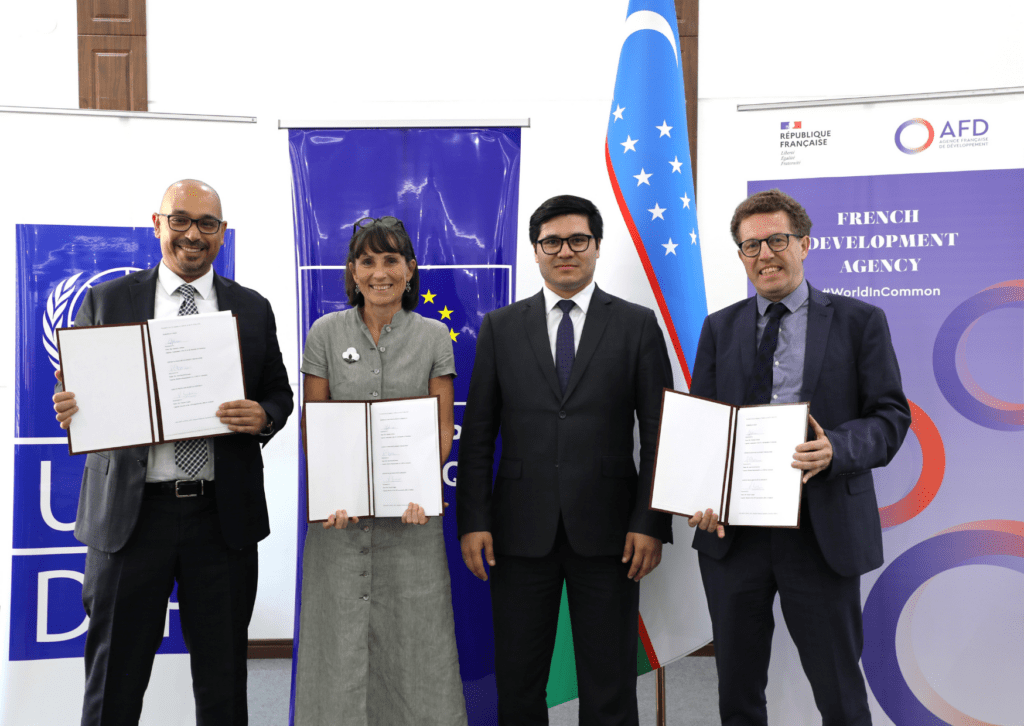
An agreement on financing a new project in support of green development in Uzbekistan was signed on May 6 by representatives of the French Development Agency (AFD), the European Union, and the United Nations Development Program (UNDP). According to the UNDP's press service, the project aims to assist the Uzbek government in financing green development across the country through the effective use of public finance, integrating green priorities into the budgeting process (green budgeting), and introducing innovative financial instruments to attract investments in green projects. The Ministry of Economy and Finance is expected to act as the cabinet-level partner in this project. Under the agreement, grant funds in the amount of €600,000 provided by the EU will be directed by AFD and the UNDP to provide technical assistance to the government under the project "Supporting Green Development Financing in Uzbekistan" for the period 2024-2026. The new project will build on the results and achievements of the previous joint initiative by AFD and the UNDP to introduce budgeting methodologies and practices based on the Sustainable Development Goals (SDGs), which were successfully implemented in 2022-2023. At that time, the Ministry of Economy and Finance was supported in designing and developing methodologies based on international best practices, conducting research and capacity building of national partners in the field of SDGs and green budgeting. Key results of that project included climate budget labeling -- implemented for the first time in Uzbekistan -- and the presentation of its results in the "Budget for Citizens" publication.

Reporters Without Borders Downgrades State Of Press Freedom in Uzbekistan To “Very Serious”

The international agency Reporters Without Borders (RSF) published its annual Press Freedom Index on May 3, World Press Freedom Day. The report draws attention to the dire state that reporting in Uzbekistan is in. Uzbekistan fell by 11 places in the global ranking, relegated to 148th out of 180 countries. RSF staff downgraded their rating of the state of freedom of speech in Uzbekistan from "severe" to "very serious”. “Following the 2016 death of President Islam Karimov, circumstances have only barely improved for the media, and criticizing those in power remains very complicated,” reads RSF's introduction to the Uzbekistan section of the report. To compile the index, RSF graded the state of media freedom in 180 countries around the world using five different indicators: political, legal, economic, social and security. Uzbekistan ranked 157th on the political indicator, which is 20 places lower than last year. For the legal indicator the result is similarly disappointing, a fall of 17 places. The country ranked 143rd in the economic indicator, which is 9 places lower than last year. The security indicator also worsened by 9 places. Only in the social indicator did Uzbekistan's position rise, by two places to a still-lowly 145th. RSF describes the political context in Uzbekistan as one where the authorities wield a great deal of control over the media -- and also over a large group of bloggers with close ties to the government. RSF also mentions in the report that officials don’t hesitate to exert economic pressure or attempt to corrupt or influence journalists. “The growth of independent media is also largely hampered by laws and regulations that restrict their funding, especially by foreign-based organizations that support a free press,” reads an assessment from the economic section. In its socio-cultural section, RSF notes that topics that aren't covered in official mass media are highlighted on social media, including on platforms like Russia’s Odnoklassniki, Facebook and Telegram. Some groups are said to share information about government corruption on these platforms. The report also points out that the last of the journalists who have been imprisoned, some for as long as 20 years, have now been released, but they have not been cleared of wrongdoing. Bloggers are still being threatened or arrested -- as was the case with Otabek Sattoryi, the founder of the YouTube channel “Xalq Fikri” (People’s Opinion). He was sentenced to six and a half years in prison in May 2021 on false charges of defamation and extortion. Journalists who tried to cover his trial were physically assaulted or unjustly persecuted. The crackdown on reporters covering demonstrations to support the republic of Karakalpakstan remaining autonomous shows the government's determination to silence all dissent. A report by Amnesty International published in April stated that the United Nations Working Group on Arbitrary Detention concluded that Otabek Sattoryi’s detention was unjustified, and called for his release. Of Uzbekistan's fall in the Press Freedom Index, a journalist from the BBC Uzbek Service, Ibrat Safo, wrote on his Facebook page: "[A] sharp drop... I’m...

Uzbek Citizens Warned of New Entry Rules to Kazakhstan

In a statement issued on 8 May, the Ministry of Foreign Affairs of Uzbekistan recommended that citizens of Uzbekistan have all necessary documentation in place in advance of entering Kazakhstan. The new rules will apply to Uzbek citizens wishing to cross the Uzbek-Kazakh border, and in adherence to Russian-Kazakh agreements, onwards to Russia. Uzbek citizens are warned that more rigorous checks will be conducted by Kazakh authorities to ensure that entrants have no prior violations of migration and other legislation of the Russian Federation or unpaid fines. In the absence of sound documentation, the Kazakh authorities will have the right to prevent citizens of Uzbekistan from entering or leaving Kazakhstan. Earlier this month, following the introduction of more stringent security controls at all of Kazakhstan’s airports on 1 May, Tajikistan’s Foreign Ministry likewise recommended its citizens to check their documents prior to leaving for Kazakhstan

Favorable Water Volumes Forecast for Uzbekistan’s Amu Darya and Syr Darya Rivers

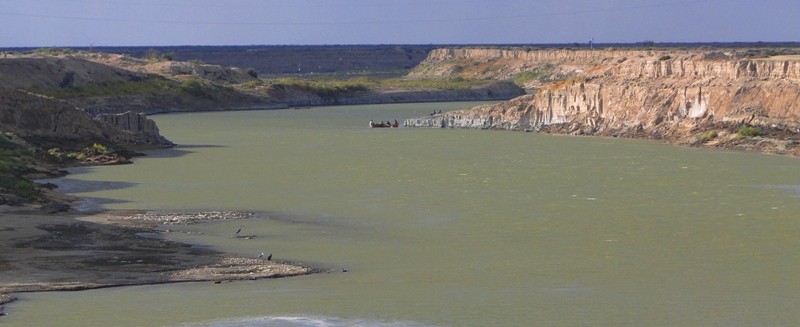
 According to the news agency UzA, Uzbekistan's Minister of Water Management Shavkat Hamroyev told a parliamentary hearing that watersheds from the Amu Darya and Syr Darya rivers are forecast as favorable this year. The announcement was made in response to Muqaddas Tirkasheva, a member of the lower house of parliament, who inquired, "water limits are agreed with Central Asian countries every year. Today, when we meet with voters, they often refer to the water shortage. There are concerns about whether the construction of the Qosh Tepa canal will affect the water of Amu Darya. How does this year's forecast volume of water in the Amu Darya, Syr Darya, Zarafshan rivers  compare to previous years? What measures are being taken to ensure guaranteed water supply to economic sectors?” Minister Hamroyev continued, "there are agreements among five countries regarding water allocations. Our recent meeting in Shymkent addressed reservoir water levels. Due to this year's precipitation, it's anticipated that water levels in the Amu Darya and Syr Darya rivers will match last year's levels. Projections suggest 85–90% water in the Syr Darya and 90–95% in the Amu Darya compared to historical averages. Our reservoirs currently hold 1.5 billion cubic meters more water than last year."

Victory Day Comes in Central Asian Countries Without Much Pomp, but Plenty of Feeling

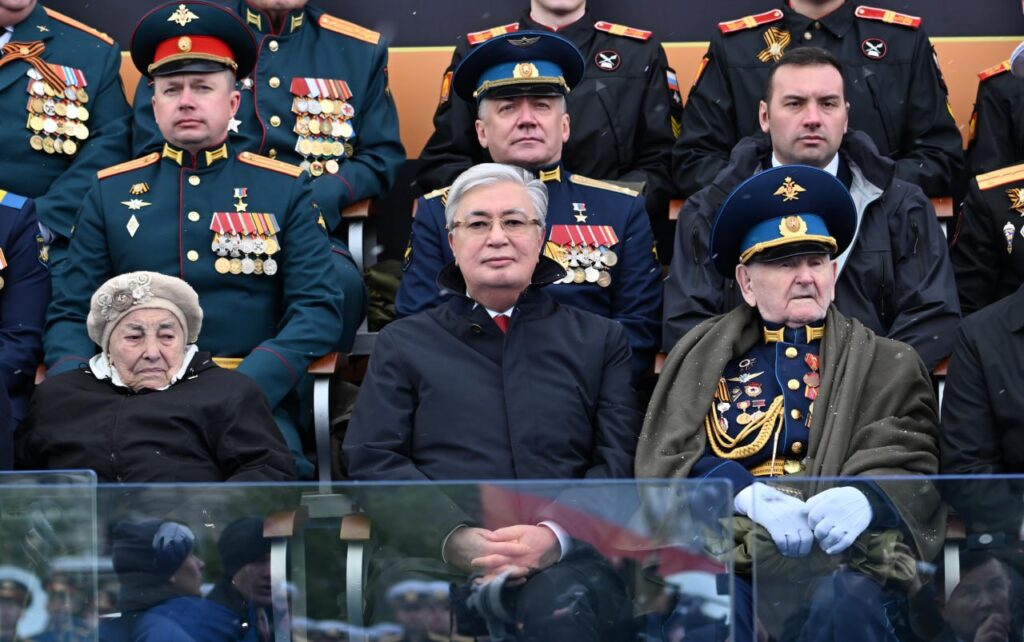
This year, as in previous years, the attitude toward Victory Day celebrations in Central Asian countries serves as an important political marker. The leaders of Kazakhstan, Kyrgyzstan, Tajikistan and Turkmenistan are scheduled to attend the Victory Day parade in Moscow on May 9. The leaders of Belarus, Cuba, Laos and Guinea-Bissau will also take part in the celebrations. The absences of the presidents of Uzbekistan, Armenia and Azerbaijan are particularly noticeable in that list. It's noteworthy that the Russian press is commenting on the different stances taken by the Central Asian countries in an extremely negative way -- deliberately agitating discord between Russia and the region. It's even been stated that Victory Day has been "canceled" in the region. Such are the broadcasts taking place against a backdrop of analysts' opinions: that in the coming decades, Central Asian countries won't be able to break the ties that bind them to their former Soviet master, as the economic dependence on Russia is only growing. This is especially true for Kazakhstan, as the lion's share of Kazakhstan's oil goes through Russian pipelines to Europe. In addition, a project increasing the transshipment of Russian hydrocarbons to China through Kazakhstan is in the works. However, contrary to the opinion of Russian tabloids, the Central Asian countries remain reverent and respectful of the cultural institution that is Victory Day. Most residents of the republics are proud of their fathers and grandfathers who fought on the fronts of World War II. In particular, for several years in a row, Kazakhstan has maintained a leading role in terms of doling out state budget payments to veterans of World War II. According to statistics, the size of a lump-sum social payment commemorating Victory Day in Kazakhstan, where 148 veterans live, averages $3,800. In Tajikistan there are 24 surviving veterans of World War II, and their payments amounted to $2,200-$2,300. Veterans in Uzbekistan received about $1,500, and in Belarus, Azerbaijan and Kyrgyzstan, about $1,100 apiece. Russia's 12,500 surviving veterans in Russia will receive the least -- the equivalent of only $107. To be sure, Kazakhstan has not held military parades in honor of the holiday for a year. That move is explained by the need to save money. This spring, unprecedented floods -- which affected almost half of the country -- have pushed President Kassym-Jomart Tokayev's administration to tend towards being thrifty and instead fund humanitarian aid and reconstruction. According to the Ministry of Defense of Kazakhstan, the parade requires spending about 4 billion tenge ($9 million) -- such a huge sum of money can be spent more impactfully on providing housing for the victims. Along with large-scale, WWII-related festive events in Kazakhstan, other important projects, such as international forums, have been canceled. Nevertheless, in his speech, President Tokayev not only congratulated veterans, but also emphasized the need to prepare for the 80th anniversary of the May 1945 victory, which is scheduled to be widely celebrated next year. In Uzbekistan, May 9 is considered a Day of Remembrance, but...