• KGS/USD = 0.01144 0%
  • KZT/USD = 0.00216 0%
  • TJS/USD = 0.10456 0%
  • UZS/USD = 0.00008 0%
  • TMT/USD = 0.28490 0%
  • KGS/USD = 0.01144 0%
  • KZT/USD = 0.00216 0%
  • TJS/USD = 0.10456 0%
  • UZS/USD = 0.00008 0%
  • TMT/USD = 0.28490 0%
  • KGS/USD = 0.01144 0%
  • KZT/USD = 0.00216 0%
  • TJS/USD = 0.10456 0%
  • UZS/USD = 0.00008 0%
  • TMT/USD = 0.28490 0%
  • KGS/USD = 0.01144 0%
  • KZT/USD = 0.00216 0%
  • TJS/USD = 0.10456 0%
  • UZS/USD = 0.00008 0%
  • TMT/USD = 0.28490 0%
  • KGS/USD = 0.01144 0%
  • KZT/USD = 0.00216 0%
  • TJS/USD = 0.10456 0%
  • UZS/USD = 0.00008 0%
  • TMT/USD = 0.28490 0%
  • KGS/USD = 0.01144 0%
  • KZT/USD = 0.00216 0%
  • TJS/USD = 0.10456 0%
  • UZS/USD = 0.00008 0%
  • TMT/USD = 0.28490 0%
  • KGS/USD = 0.01144 0%
  • KZT/USD = 0.00216 0%
  • TJS/USD = 0.10456 0%
  • UZS/USD = 0.00008 0%
  • TMT/USD = 0.28490 0%
  • KGS/USD = 0.01144 0%
  • KZT/USD = 0.00216 0%
  • TJS/USD = 0.10456 0%
  • UZS/USD = 0.00008 0%
  • TMT/USD = 0.28490 0%

Viewing results 433 - 438 of 2886

Dushanbe Hosts Central Asia-Russia Summit and CIS Heads of State Meeting

Dushanbe has become the center of Eurasian diplomacy this week as it hosts the “Central Asia-Russia” summit alongside the meeting of the Council of CIS Heads of State. Over two days, leaders from across the region are set to discuss security, economic ties, transport infrastructure, energy cooperation, and new models of regional integration. The inaugural "Central Asia-Russia” meeting took place in Astana in October 2022, focusing on counterterrorism, support for small and medium-sized enterprises, and initiatives in energy, industry, and digitalization. Analysts note that the current summit does not duplicate the functions of existing integration frameworks such as the Eurasian Economic Union (EAEU) or the Collective Security Treaty Organization (CSTO). Instead, it complements them by offering a more flexible and pragmatic platform for dialogue. “The Central Asia-Russia format has the potential to become not just a venue for political signaling, but an instrument for the rapid implementation of infrastructure and regulatory solutions,” said Alibek Tazhibaev, Director of the Center for Eurasian Monitoring. He noted that the region has become a natural zone of industrial cooperation and logistics for Russia, with mutual economic interdependence deepening under the pressure of sanctions. Among the key priorities being discussed are the development of North-South and East-West transport corridors, Russian gas transit through Kazakhstan, and the construction of new energy facilities. In 2024, trade turnover between Central Asian countries and Russia totaled $44.7 billion, an increase of 11.3% from the previous year. Tazhibaev also argued that Central Asia could emerge as an independent “Eurasian hub” if it transitions from a simple transport corridor to a region that integrates added value. “Central Asia can offer a ‘door-to-door’ logistics service if it builds digital gateways, assembly warehouses, and unified logistics standards. This would help retain profit margins and manage standards within the region,” Tazhibaev said. CIS: Pragmatism and New Initiatives The second major component of Dushanbe’s diplomatic agenda is the summit of the Commonwealth of Independent States (CIS). Despite persistent criticism, the CIS continues to serve as a relevant platform for cooperation. Taisiya Marmontova, Associate Professor at Astana International University and Director of the Institute for Regional Integration Studies, noted that the CIS has “preserved a space for dialogue and joint projects after the collapse of the USSR.” According to the CIS Executive Committee, the combined GDP of member states is growing at an average annual rate of 4.5%, while internal trade has risen by 40% over the past five years. Kazakhstan remains a key player, with trade turnover with CIS countries reaching $37.3 billion in 2024, including $4.3 billion in services. During the summit, leaders are expected to consider several initiatives proposed by Kazakh President Kassym-Jomart Tokayev, including the creation of a “CIS+” dialogue format and the launch of the “Commonwealth Fair” intergovernmental program. The first such fair is scheduled to take place in Taraz in 2026. Member states have also agreed on the Strategy for Transport Corridor Digitalization, the Strategy for Scientific and Technological Development until 2035, and a new Concept for Construction Pricing. “Integration...
Environmental Review of Sea Breeze Uzbekistan Resort at Charvak Still in Progress

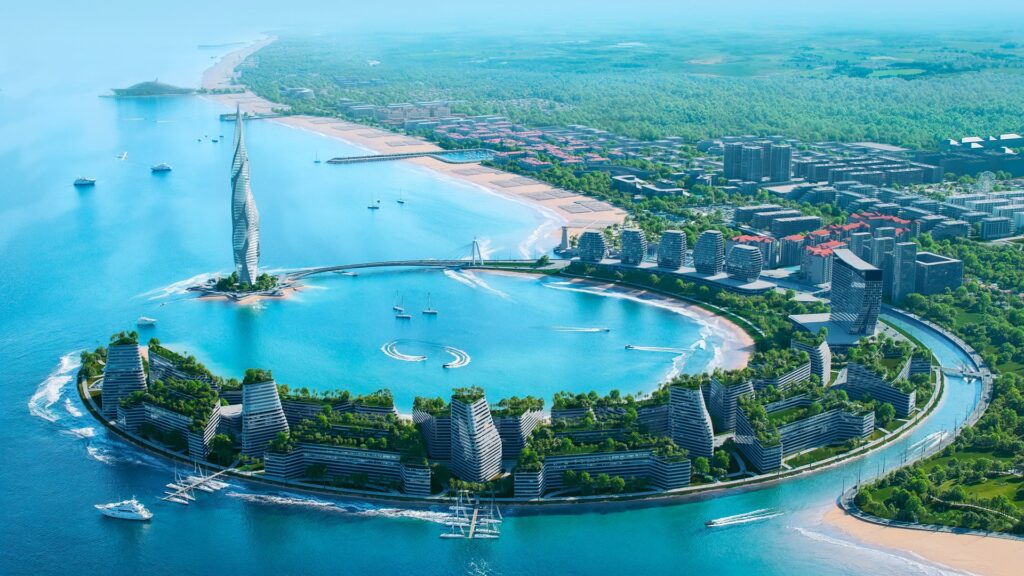
The environmental review for the multi-billion-dollar Sea Breeze Uzbekistan resort on the shores of the Charvak Reservoir is still in progress, Spot.uz reported, citing the press service of Sea Breeze Uzbekistan. According to the company, initial site preparations, including land clearing and waste removal, are underway. “As for the environmental assessment, this process is not yet complete. We are awaiting the results and remain open to any inquiries from the Ministry of Ecology, Environmental Protection, and Climate Change of Uzbekistan,” the company said in a statement. Emin Agalarov, president of Azerbaijan’s Agalarov Development and the main investor behind the project, addressed the status of construction in a recent interview. He noted that the primary challenges involve infrastructure, specifically access to water, gas, and electricity. “We have gone a long way to secure our project and make sure that nothing will be discharged into the environment. Wastewater will be collected in special facilities. Ecology is a fundamentally important issue. We are now going through all the required procedures in Uzbekistan, at Charvak,” Agalarov said. As previously reported by The Times of Central Asia, Agalarov plans to develop Sea Breeze Uzbekistan as a $5 billion all-season tourist complex spanning 500-700 hectares along Charvak Lake in the Tashkent region. The project is set to include hotels, villas, swimming pools, sports and leisure zones, retail spaces, restaurants, and a bridge linking both sides of the reservoir. The resort is also expected to host cultural events, festivals, and concerts year-round. Despite mounting public scrutiny and criticism from environmental activists, the Uzbek government has approved the project. In August, Prime Minister Abdulla Aripov signed Cabinet Resolution No. 490, granting Sea Breeze Uzbekistan LLC a 25-year direct lease on 577 hectares of land for development. Environmental experts note that the results of the ecological review will be pivotal in determining the project's future, as Charvak remains one of Uzbekistan’s most vital freshwater and recreational assets.  

Opinion: Uzbekistan’s Winds of Change – A Blueprint for Renewable Energy Transformation in Central Asia

For much of its post-Soviet history, Uzbekistan’s energy system has been defined by natural gas. Its abundant domestic reserves provide a cheap and reliable source of electricity generation, export revenues, and industrial growth. However, this reliance has come at a cost, including vulnerability to fossil fuel volatility, carbon emissions inconsistent with global climate commitments, and an energy profile increasingly at odds with international investment trends. Today, a new landscape is emerging in Uzbekistan’s energy sector. The vast steppes and desert plateaus of the Karakalpakstan and Navoi regions have emerged as some of the most promising areas for wind turbines and energy sector development. This transformation could redefine not only Uzbekistan’s energy security but also the regional energy map of Central Asia. A Decade in the Making: From Pilot to Pioneer This story begins in 2020, when the United Arab Emirates’ renewable energy developer Masdar signed an agreement to construct the Zarafshan Wind Farm in the Navoi region. Initially, this was not a pilot project, as its proposed capacity was about 500 MW, making it the largest wind project among the Central Asian countries at the time. Its symbolism pulsed with an energy no less powerful than the current itself. For Uzbekistan, which had no operating commercial wind capacity, the project marked a significant shift from concept to execution. The Zarafshan Wind Farm reached financial close in 2020, commenced construction in 2022, and was officially inaugurated in December 2024 by Uzbekistan’s President Shavkat Mirziyoyev. Developer reports describe it as one of the largest operational wind farms in Central Asia. It represented a step forward toward sustainability and a message of resolve for energy resilience. In a region where fossil fuels still dominate, Uzbekistan has positioned itself as a regional leader in large-scale wind energy production.. Scaling Beyond Zarafshan: Kungrad and Nukus The breakthrough at the Zarafshan Wind Farm signaled the dawn of a larger journey. Subsequently, Saudi Arabia’s ACWA Power, a giant in renewable energy, agreed to set up the Kungrad Wind IPP. This project includes a transformative complex of three 500 MW wind farms with a total capacity of 1.5 GW of power generation. According to project plans, it will also be accompanied by a 300 MW battery energy storage system (BESS) and roughly 1,450 kilometers of new transmission infrastructure. This single project surpasses Uzbekistan’s earlier renewable efforts and, when completed, will represent one of the most significant clean energy undertakings in the region. Similarly, the Nukus II wind farm-plus-storage project, which secured financing from the Asian Development Bank (ADB) and other partners in mid-2025, seeks to expand renewable energy use, reduce reliance on fossil fuels, cut greenhouse gas emissions, and strengthen energy security. It includes building and operating a 200 MW wind power plant, a 100 MWh battery storage system, a 44 km transmission line, and an upgrade of the 220 kV Beruniy substation. This integration of renewables with flexible storage represents a new phase of Uzbekistan’s energy transition, one where renewables are not simply added to the grid...

Long-Distance Swimmers from Central Asia Cross Mediterranean Strait Together

Fueled by thoughts of family, country, and just reaching dry land, two men from Central Asia swam across the Strait of Bonifacio from the French island of Corsica to the Italian island of Sardinia, an open water route of about 15 kilometers whose varying winds and currents sometimes add to the challenge for ultramarathon swimmers. Askar Ospanov, a 66-year-old Kazakhstani, and Shavkat Musinov, a 42-year-old Uzbekistani, drew mental strength from each other even though they didn’t speak much while swimming in wetsuits for nearly eight hours on Sept. 26. The leader of their group was Rinat Mustafin, a 46-year-old swimmer from Russia who had crossed the strait in 2019 and prepared his friends for their Mediterranean feat. They were assisted by a support boat. “The sea that day was challenging — with strong currents and waves — but we stayed coordinated and focused,” Musinov, a Tashkent businessman, said this week. “What united us was the shared feeling that we were doing something meaningful, not only for ourselves but also for our region.” Musinov and Ospanov were the first people from their countries to swim across the Strait of Bonifacio, a challenge that isn’t overseen by a governing body but has won international recognition over the years. The World Open Water Swimming Association has listed it as one of the world´s top 100 island swims. While the Strait of Bonifacio is among the shorter ultramarathon distances for swimmers (the English Channel, for example, is a cold water challenge of about 33 kilometers), conditions can add to the difficulty level. “The two relatively close opposite coasts and the seabed with an average depth of 50 meters, which in any case does not exceed 100 meters, mean that the winds and currents that are channeled increase their intensity,” the association says. “The crossing is often characterized by non-linear trajectories and more or less demanding waves.” Musinov said he met Ospanov’s son, Galym, in the Sahara Desert during the Marathon des Sables ultramarathon in 2023, and they bonded while traversing 250 kilometers together across the Sahara Desert in Morocco. The Uzbek athlete later met the elder Ospanov – Musinov calls him “Asqa aga” with respect and affection – and described the Kazakhstani swimmer as an emblem of determination and discipline. Musinov and Mustafin, the Russian swimmer, kept the same pace as Ospanov so they could stay together. Ospanov said on Instagram that “team captain” Mustafin set the route. They ended up swimming nearly 17 kilometers because of the pull of the currents. “Shavkat swam second, occasionally looking back to check on me, while I tried to draft behind him,” said Ospanov, a former government worker. “Twice — at the 6 km and 11 km marks — Rinat gave me CrampFix just in time, helping me when I got a leg cramp (vinegar, as it turns out, can interrupt the body’s cramp reflex). You live and learn!” CrampFix, which contains vinegar, is a supplement that relieves muscle cramps. Jellyfish are also a hazard in the...

S. Paul Kapur Confirmed as U.S. Assistant Secretary for South and Central Asian Affairs

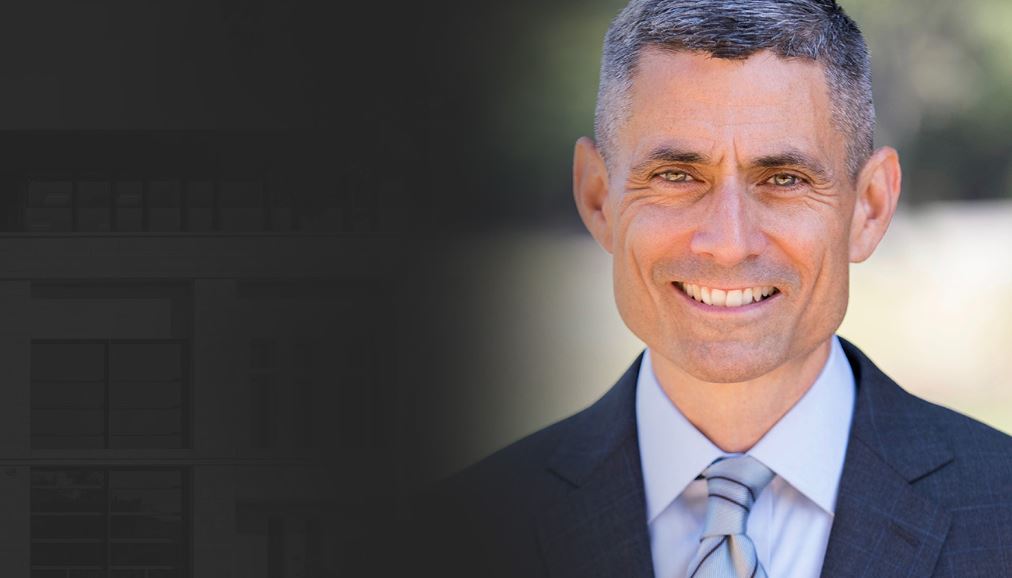
The U.S. Senate has confirmed political scientist S. Paul Kapur as Assistant Secretary of State for South and Central Asian Affairs to lead the State Department bureau that oversees relations with Afghanistan, Pakistan, India, Sri Lanka, Bangladesh, Nepal, Maldives, Bhutan, and the five Central Asian republics. The position carries responsibility for guiding U.S. diplomacy across the region, coordinating security and development strategy, and advising on policy toward regional powers such as China and Russia. Kapur, 56, is an Indian American scholar known for his work on nuclear deterrence and South Asian security. He was born in New Delhi to an Indian father and an American mother, but grew up in the United States. After studying the region in graduate school, he pursued an academic career, earning a doctorate in political science from the University of Chicago and a bachelor’s degree from Amherst College. Kapur taught at Claremont McKenna College and Stanford University before joining the U.S. Naval Postgraduate School, where he is a professor of national security affairs and runs U.S.–India strategic dialogues for the Department of Defense. Paul Kapur, a seasoned academic and security specialist, now takes a post that places him at the center of Washington’s engagement with Kazakhstan, Kyrgyzstan, Tajikistan, Turkmenistan, and Uzbekistan. His confirmation fills a key regional portfolio in the Trump administration, which may shape how the United States approaches Central Asia within its broader regional strategy. Kapur’s portfolio covers both South and Central Asia, but his confirmation has been closely watched in the five republics that straddle the heart of Eurasia. Central Asian governments and business leaders are eager to see whether the new Assistant Secretary will continue Washington’s traditional emphasis on security partnerships or shift toward deeper economic and investment ties. Kapur brings a distinguished scholarly pedigree and deep expertise in international security. He has written extensively on nuclear deterrence, South Asian security, and great-power competition. While much of his work focuses on India, Pakistan, and U.S. grand strategy, he has also examined how India manages its relationships with larger powers such as the United States and China - an enduring middle-power dynamic. That perspective is particularly relevant to Kazakhstan, an emerging middle power, and to Central Asia acting collectively, which is seeking to balance Russian and Chinese influence. During his confirmation hearing, Kapur emphasized that U.S. engagement in Central Asia will focus on advancing the sovereignty and territorial integrity of the regional states. He noted that, if confirmed, he would leverage the C5+1 framework and bilateral partnerships to pursue cooperation in areas such as energy, critical minerals, counterterrorism, combating transnational crime, and developing physical and digital infrastructure. His remarks reflected a commitment to strengthening regional independence and stability while deepening practical cooperation with the United States. For Central Asian governments, Kapur’s arrival comes at a time of shifting geopolitics. Russia’s war in Ukraine has unsettled long-standing assumptions, while China’s Belt and Road Initiative continues to expand Beijing’s economic influence. The United States has not always prioritized matching these dynamics. However, Kapur’s testimony...

Putin in Tajikistan for CIS Summit Amid Migration Tensions

When President Vladimir Putin arrives in Dushanbe on 8 October for his first state visit, Tajikistan will briefly become the focal point of regional diplomacy. Currently holding the rotating chair of the Commonwealth of Independent States (CIS), Dushanbe is preparing to host both the CIS Heads of State Council and the second Russia–Central Asia summit. For Moscow, Central Asia has remained a priority since the invasion of Ukraine, and the visit highlights what is at stake for both Russia and its host. Tajikistan depends heavily on Russia for security, trade, and employment opportunities for its citizens, but relations have been tested by the aftermath of the March 2024 Crocus City Hall attack, which exposed the fragility of migration-driven economics and the risk of renewed extremism. An Old Relationship Tested by New Tensions Russia and Tajikistan have been closely entwined since the collapse of the Soviet Union. Putin has already made twelve trips to Tajikistan since taking office, and this will be his first with state‑visit status. Security cooperation remains the backbone of the relationship. Russia’s 201st military base in Tajikistan - formerly the 201st motor rifle division and now Moscow’s largest overseas facility - has long been billed as a shield along the Afghan frontier; the two sides continue to coordinate through the CSTO (Collective Security Treaty Organization), and within the SCO (Shanghai Cooperation Organization) framework. Trade between the two nations has expanded despite sanctions headwinds. On the eve of the visit, presidential aide Yuri Ushakov said bilateral turnover rose by more than 17 % in the first seven months of 2025, and reached about US$1.5 billion in 2024. Russia accounts for over 22 % of Tajikistan’s foreign trade. Meanwhile, more than 1.2 million Tajik citizens work in Russia, making up about 16 % of all foreign workers there. They remitted US$1.8 billion back home last year, roughly 17 % of Tajikistan’s GDP. This symbiosis means that the two leaders routinely discuss labor migration and social issues alongside security and trade. Yet the relationship has been strained by a wave of xenophobia following the Crocus City Hall attack, which killed 145 people, which the Russian authorities accused militants from Tajikistan of perpetrating. As previously reported by The Times of Central Asia, following the arrest of four Tajik suspects, Central Asian migrants in Russia have faced arson attacks, beatings, and boycotts of their businesses. Russian law enforcement has launched aggressive street inspections and created special units to check hostels and businesses frequented by Central Asians. Even long‑time Tajik residents with Russian citizenship have reported menacing phone calls and threats. In the wake of the attack, diaspora leaders urged compatriots not to leave their homes, and the Tajik interior ministry publicly rebutted Russian media reports, stating that three of the four suspects named were not involved. Those pressures hit a country heavily reliant on remittances. The World Bank’s 2025 update estimates that money sent home by migrants accounted for 49 % of Tajikistan’s GDP in 2024. Since the start of the Ukraine war, Russian politicians and media have become increasingly hostile toward Central Asian migrants, leading Moscow to deactivate all foreign‑owned SIM cards and...