• KGS/USD = 0.01144 0%
  • KZT/USD = 0.00211 0%
  • TJS/USD = 0.10515 0.48%
  • UZS/USD = 0.00008 0%
  • TMT/USD = 0.28530 0%
  • KGS/USD = 0.01144 0%
  • KZT/USD = 0.00211 0%
  • TJS/USD = 0.10515 0.48%
  • UZS/USD = 0.00008 0%
  • TMT/USD = 0.28530 0%
  • KGS/USD = 0.01144 0%
  • KZT/USD = 0.00211 0%
  • TJS/USD = 0.10515 0.48%
  • UZS/USD = 0.00008 0%
  • TMT/USD = 0.28530 0%
  • KGS/USD = 0.01144 0%
  • KZT/USD = 0.00211 0%
  • TJS/USD = 0.10515 0.48%
  • UZS/USD = 0.00008 0%
  • TMT/USD = 0.28530 0%
  • KGS/USD = 0.01144 0%
  • KZT/USD = 0.00211 0%
  • TJS/USD = 0.10515 0.48%
  • UZS/USD = 0.00008 0%
  • TMT/USD = 0.28530 0%
  • KGS/USD = 0.01144 0%
  • KZT/USD = 0.00211 0%
  • TJS/USD = 0.10515 0.48%
  • UZS/USD = 0.00008 0%
  • TMT/USD = 0.28530 0%
  • KGS/USD = 0.01144 0%
  • KZT/USD = 0.00211 0%
  • TJS/USD = 0.10515 0.48%
  • UZS/USD = 0.00008 0%
  • TMT/USD = 0.28530 0%
  • KGS/USD = 0.01144 0%
  • KZT/USD = 0.00211 0%
  • TJS/USD = 0.10515 0.48%
  • UZS/USD = 0.00008 0%
  • TMT/USD = 0.28530 0%

Viewing results 439 - 444 of 2925

Russian Gas Exports to Central Asia Rise 15% Amid Growing Regional Demand

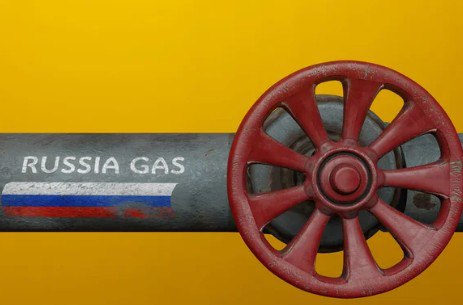
Russian natural gas exports to Central Asia increased by 15% in the first eight months of 2025 compared to the same period in 2024, Gazprom CEO Alexey Miller announced at the St. Petersburg International Gas Forum (PMG Forum 2025), according to TASS. Miller cited rapid economic growth across the region as the key driver of rising energy demand. He projected that Central Asia’s economy could expand by as much as 60% over the next five to six years, with natural gas playing a central role in meeting growing energy needs. “When we compare the first eight months of 2025 with the same period in 2024, the volume of Russian gas supplied to Central Asia, namely Uzbekistan, Kyrgyzstan, and Kazakhstan, rose by 15%. These are substantial volumes,” Miller said. Miller also pointed to the importance of major infrastructure initiatives, including projects under the Power of Siberia-2 megaproject, in expanding gas supply routes to the region. In 2024, Gazprom reported a doubling of gas exports to Central Asia between January and August. At that time, deliveries to Uzbekistan had reached maximum technical capacity through the Central Asia-Center pipeline, meeting peak demand typically seen during the coldest months of winter. The latest increase in exports highlights Central Asia’s growing strategic value to Russia as an energy market, as well as deepening energy cooperation between Moscow and the region.

Uzbekistan’s Akbar Juraev Takes Three Golds at World Weightlifting Championships

Uzbek weightlifter Akbar Juraev delivered one of the standout performances of the 2025 World Weightlifting Championships by claiming three gold medals in the men’s 110 kg class, breaking world records and asserting his dominance in the sport. The championships, held October 2–11 in Førde, Norway, drew nearly 500 athletes from 87 countries to compete under the auspices of the International Weightlifting Federation (IWF). On Day 9, the 110 kg division was one of the marquee finals, especially as two Uzbek Olympic champions – Juraev and Ruslan Nuridinov – faced off in the same category.  Juraev, 25, came in with a formidable résumé: already a world champion in 2021 and 2023, and an Olympic gold medalist from Tokyo 2020. After a near-miss at the 2024 Paris Games, where he took silver in the 102 kg class, Juraev said he was “back at my right weight” and hungry for redemption.  In Norway, Juraev delivered a flawless sequence. On his third snatch attempt he lifted 196 kg, setting a new world record in the snatch. He followed that with a 232 kg clean and jerk, reaching a combined total of 428 kg, also a world record. He even attempted 245 kg in the clean and jerk, later joking that he was “just messing around.” After the victory, Juraev said, “I am back at my right weight. I can eat properly, train properly. I feel good, very happy.” He added that last year’s Olympic disappointment still drives him: “That’s why I have silver and not gold.”  Juraev’s sweep of snatch, clean & jerk, and total golds made him a three-time world champion. Meanwhile, his compatriot Nuridinov, the 33-year-old veteran and Rio 2016 Olympic champion, also shone in Førde. He lifted 186 kg in the snatch and 228 kg in the clean and jerk, earning two bronzes (in clean & jerk and total) with a combined 414 kg. His performance underscored not only his own resilience but also Uzbekistan’s continuing dominance in the world of weightlifting.

Japan to Build Central Asia’s Largest Airport in Uzbekistan by 2028

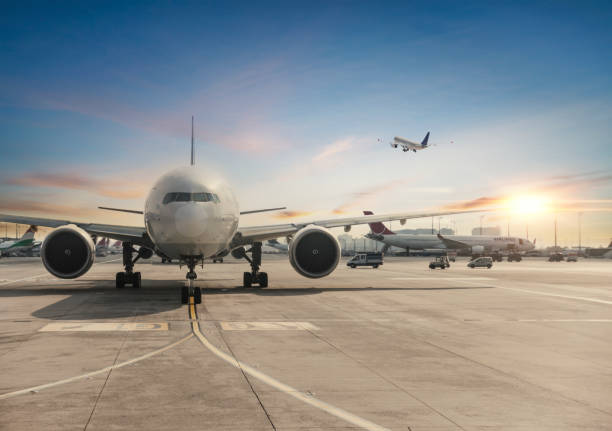
Japan’s Sojitz Corporation is set to launch one of Central Asia’s most ambitious infrastructure projects: the construction of a new international airport in Tashkent. According to Express Asia, construction will begin in 2025 and is expected to be completed by 2028, with a total project cost estimated at $1 billion. The airport will be developed through a public-private partnership (PPP) with Saudi Arabia’s Vision Invest. Japan’s investment is projected to reach several hundred million dollars. Once completed, the airport will have a capacity of up to 20 million passengers annually and support more than 40 take-offs and landings per hour, making it the largest aviation hub in Central Asia. Sojitz brings experience in airport development from projects in Japan’s Kumamoto and Okinawa prefectures, as well as on the Pacific island of Palau. In Uzbekistan, its activities extend beyond aviation: in partnership with Turkey’s Rönesans International, the company is planning an 800-bed hospital in Samarkand, a 1 GW wind power plant, and a 1.6 GW thermal power plant. Driven by consistent GDP growth of around 6% per year, Uzbekistan continues to attract Japanese investment, bolstered by favorable tax policies and a 15% corporate tax rate. The number of Japanese companies operating in the country has doubled over the past five years to 54. Among them, Toyota Tsusho, through Eurus Energy Holdings, is developing a 500 MW wind power project, while Marubeni is collaborating with UAE firms on a wastewater treatment facility. In 2024, President Shavkat Mirziyoyev met with a Japanese delegation led by Tadashi Maeda, Chairman of the Japan Bank for International Cooperation (JBIC), and representatives of Sojitz. The parties agreed on a three-year cooperation program with JBIC and a strategic roadmap with Sojitz for future projects in high-tech sectors. JBIC currently supports over $3.7 billion in joint ventures across Uzbekistan’s petrochemical, textile, energy, and infrastructure sectors. Sojitz also reaffirmed its commitment to expanding its footprint in the country, including its role in the Syrdarya II IPP project, one of Uzbekistan’s largest planned power generation facilities.

Clashes on Afghan-Pakistani Border Hinder Central Asian Trade Hopes

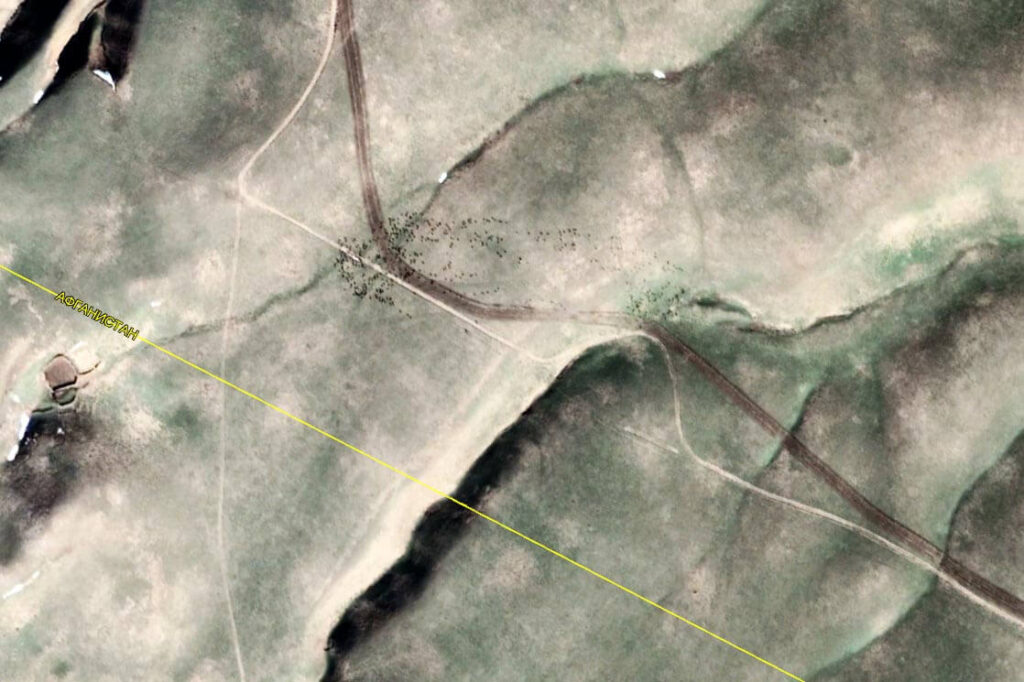
A recent surge in border fighting between Pakistan and Afghanistan is a reminder that Central Asian prospects for developing trade and energy networks through both those countries rest on fragile hopes for long-term security in the region.  Some of the worst clashes since the Taliban took power again in Afghanistan in 2021 appeared to have tapered off by Sunday. While both sides have professed their openness to dialogue, there was little sign of a sustained move to address grievances that have simmered for many years.  On Sunday, Pakistan accused Afghanistan of “unwarranted aggression” and said it had repulsed attacks by the Afghan Taliban and other armed groups at the border, inflicting heavy losses. On Saturday night, Afghanistan’s Ministry of National Defense said its military had conducted a “successful retaliatory operation” against Pakistani security forces following Pakistani ground incursions and airstrikes on Afghan soil.  The conflicting claims were difficult to verify. But the Afghan ministry said its military operation had ended, signaling that it did not intend to prolong this round of fighting. Pakistan, which closed border crossings, said it wanted good relations with its neighbor. The clashes come as Central Asian countries seek to diversify trade routes, looking to Afghanistan as a path to ferry goods to Pakistani seaports and onward to the Indian Ocean. Such a route offers an alternative to more traditional corridors that were disrupted after Russia’s full-scale invasion of Ukraine in early 2022.  But projects such as the Trans-Afghan railway, which is awaiting a feasibility study, depend on a stable political environment in a part of the world that is also prone to conflict. The TAPI natural gas pipeline project, which would connect Turkmenistan, Afghanistan, Pakistan, and India, is also vulnerable to regional instability.  Afghan Foreign Minister Amir Khan Muttaqi visited Pakistan’s chief rival, India, on October 9, just before the weekend escalation of border clashes.

Russia Seeks to Reassert Role at Central Asia Summit, but Kazakhstan and Uzbekistan Push Their Own Agendas

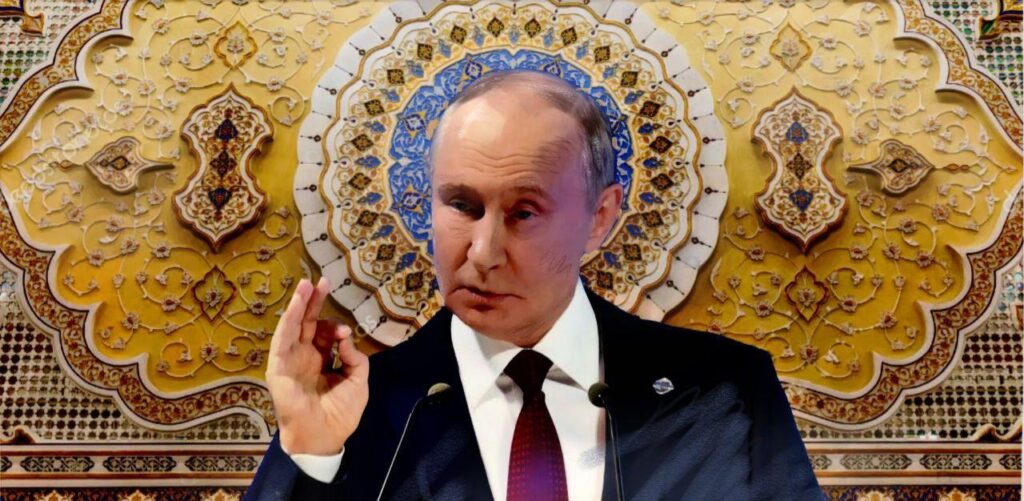
The second Central Asia-Russia summit, held ahead of the Commonwealth of Independent States (CIS) leaders’ meeting, reaffirmed the Kremlin’s continued intent to assert influence over the region. Russian President Vladimir Putin used the platform not only to signal discontent with the pace of economic integration but also to critique the Central Asian republics for what he portrayed as insufficient engagement in bilateral trade. Despite growing ties between Central Asian states and external partners, exemplified by the “C5+1” dialogue format that includes major powers such as the U.S. and China, Putin made clear that Russia does not view its influence in the region as diminished. Opening the summit, Putin took a veiled swipe at the “C5+1” initiative, which has gained traction in recent years. “I am in constant contact with each of the Central Asian presidents,” he said, before adding, “But I am sure that this multilateral format of communication is also very useful and has its obvious ‘added value’, so to speak.” By “added value,” the Russian leader appeared to suggest that multilateral engagement enables Central Asian states to present a more unified front in foreign negotiations, an approach that complicates Moscow’s ability to exert influence through bilateral channels. Putin also expressed dissatisfaction with the current levels of mutual trade and Russian investment in the region. While acknowledging that trade between Russia and Central Asia had surpassed $45 billion, he pointedly compared this figure to trade with Belarus, which exceeds $50 billion despite its far smaller population. “Our trade turnover with Belarus exceeds $50 billion. Let me remind you that Belarus has a population of 10 million. Uzbekistan already has nearly 40 million, Tajikistan over 10 million, and Kazakhstan more than 20 million. Can you imagine what a colossal resource this is?” Putin said. “This means there are strong prospects for expanding our economic relations.” Putin described Russia’s current $20 billion in regional investments as inadequate and called for increased engagement, but also tempered expectations surrounding major infrastructure and logistics projects championed by Astana and Tashkent, while positioning Russia as a central player in their development. He proposed integrating existing North-South and East-West corridors into a unified Eurasian logistics network supported by digital and transport services. “This will allow us to significantly increase international transport volumes through our common region,” Putin said. Kazakh President Kassym-Jomart Tokayev responded directly, updating figures presented by Putin and reaffirming Kazakhstan’s commitment to regional integration. He noted that Russia’s total trade with Central Asia exceeded $50 billion in 2024, with $28 billion in trade between Russia and Kazakhstan alone. Tokayev emphasized the strategic importance of transport cooperation with Russia, stating that “Russia is a key gateway for the region’s countries to global markets. Therefore, cooperation in the transport and logistics sector is a matter of heightened strategic importance.” [caption id="attachment_37343" align="aligncenter" width="1600"] Image: Akorda.kz[/caption] Tokayev outlined Kazakhstan’s existing transport infrastructure, eleven international corridors, including five rail and six road routes, that carry about 85% of land freight between Asia and Europe. Over 15 years, Kazakhstan has...

From Belt and Road to Backlash: Edward Lemon and Bradley Jardine Discuss China in Central Asia

As China invests billions in Central Asian oilfields, railways, and cities, the region’s response is anything but passive. In Backlash: China’s Struggle for Influence in Central Asia, Bradley Jardine and Edward Lemon document how Central Asians – from government halls to village streets – are responding to Beijing’s expanding footprint. The book provides a nuanced look at China’s engagement in Kazakhstan, Kyrgyzstan, Tajikistan, Turkmenistan, and Uzbekistan over the three decades since these nations gained independence. Drawing on more than a decade of fieldwork, Jardine and Lemon ask a timely question: can Beijing maintain its growing influence in an environment where local voices and interests are increasingly assertive? The Times of Central Asia spoke with the authors. TCA: Central Asia has become an increasingly strategic crossroads, rich in resources, young in demographics, and positioned between major powers. Yet China’s engagement appears far more ambitious than that of Western or regional players. In your view, what accounts for this asymmetry? Is it primarily a matter of geography and financial capacity, or has China been more politically and diplomatically attuned to Central Asia’s priorities than others? J/L: China’s dominance in Central Asia stems from both geography and political attunement. As we note in Backlash, Beijing views the region as an extension of its own security frontier, as both a buffer protecting Xinjiang and a potential source of terrorism. It has built deep ties through consistent, elite-level engagement since the 1990s. Its approach blends vast financial capacity with political instincts that resonate with local elites: prioritizing sovereignty, stability, and non-interference rather than the governance conditionalities that often accompany Western aid and investment. Through the Belt and Road Initiative, which was launched in the region in 2013, the Shanghai Cooperation Organization, which was established in 2001 with four Central Asian republics as founding members, and newer platforms like the China-Central Asia (C+C5) summit, China offers infrastructure, energy investment, and regime security in ways tailored to the needs of authoritarian partners. Unlike the episodic or values-driven engagement of Western actors, and with Russia’s attention increasingly divided, China’s steady, pragmatic diplomacy, backed by proximity and resources, has allowed it to entrench itself as the region’s indispensable power. TCA: China’s expanding presence across trade, infrastructure, and finance has reshaped Central Asia’s economic landscape. To what extent do these investments remain primarily commercial, and when do they start to carry political or strategic implications? How do local governments manage the risks of dependency or debt while pursuing development gains? J/L: China’s expanding economic footprint in Central Asia may be driven by trade and infrastructure, but the lines between commerce and strategy have become increasingly blurred. As we note in Backlash, Beijing’s investments, roads, pipelines, railways, and energy grids are rarely purely commercial. They create structural dependencies that bind Central Asian economies to China’s markets, finance, and technology. By 2020, roughly 45% of Kyrgyzstan’s external debt and more than half of Tajikistan’s were owed to China, while around 75% of Turkmenistan’s exports flowed to Chinese buyers. These imbalances give Beijing...