• KGS/USD = 0.01144 0%
  • KZT/USD = 0.00217 0%
  • TJS/USD = 0.10456 0%
  • UZS/USD = 0.00008 0%
  • TMT/USD = 0.28571 0%
  • KGS/USD = 0.01144 0%
  • KZT/USD = 0.00217 0%
  • TJS/USD = 0.10456 0%
  • UZS/USD = 0.00008 0%
  • TMT/USD = 0.28571 0%
  • KGS/USD = 0.01144 0%
  • KZT/USD = 0.00217 0%
  • TJS/USD = 0.10456 0%
  • UZS/USD = 0.00008 0%
  • TMT/USD = 0.28571 0%
  • KGS/USD = 0.01144 0%
  • KZT/USD = 0.00217 0%
  • TJS/USD = 0.10456 0%
  • UZS/USD = 0.00008 0%
  • TMT/USD = 0.28571 0%
  • KGS/USD = 0.01144 0%
  • KZT/USD = 0.00217 0%
  • TJS/USD = 0.10456 0%
  • UZS/USD = 0.00008 0%
  • TMT/USD = 0.28571 0%
  • KGS/USD = 0.01144 0%
  • KZT/USD = 0.00217 0%
  • TJS/USD = 0.10456 0%
  • UZS/USD = 0.00008 0%
  • TMT/USD = 0.28571 0%
  • KGS/USD = 0.01144 0%
  • KZT/USD = 0.00217 0%
  • TJS/USD = 0.10456 0%
  • UZS/USD = 0.00008 0%
  • TMT/USD = 0.28571 0%
  • KGS/USD = 0.01144 0%
  • KZT/USD = 0.00217 0%
  • TJS/USD = 0.10456 0%
  • UZS/USD = 0.00008 0%
  • TMT/USD = 0.28571 0%

Viewing results 523 - 528 of 2889

Uzbekistan President Urges SCO Reform and Regional Unity in Tianjin

On September 1, Uzbek President Shavkat Mirziyoyev participated in the regular meeting of the Council of Heads of State of the Shanghai Cooperation Organization (SCO), held in Tianjin, China, according to the presidential press service. The summit brought together leaders of member states to discuss the future of the organization, regional stability, and responses to global challenges. Opening the meeting, Chinese President Xi Jinping congratulated Uzbekistan on its Independence Day and commended the country’s progress under Mirziyoyev’s leadership. In his address, Mirziyoyev stressed the need for the SCO to adapt to a world marked by growing geopolitical tensions, a crisis of trust, and the weakening of multilateral institutions. He stressed that closer solidarity among SCO members is crucial for ensuring peace and stability in the region. Among his key proposals was the adoption of a declaration on multilateral partnership for nuclear security. The initiative is intended to enhance cooperation in the peaceful use of nuclear energy and support global non-proliferation efforts within the UN framework. Mirziyoyev also called for the resumption of interior minister-level meetings within the SCO, revisions to the existing agreement on combating organized crime, and the drafting of a new program to fight drug addiction, with targets extending to 2030. On Afghanistan, he proposed reviving the SCO-Afghanistan Contact Group to promote dialogue and launch socio-economic initiatives aimed at stabilizing the country. On economic cooperation, Mirziyoyev urged SCO member states to sign an agreement simplifying trade procedures and to develop new financial mechanisms to support industrial and infrastructure projects. He proposed the creation of a regional center for critical raw materials, a unified energy consortium, a network of venture capital funds for start-up development, and a digital portal to promote cross-border investment and connect businesses across the SCO space. Transport and connectivity featured prominently in his speech. Mirziyoyev advocated for the establishment of a “common transport space” and strengthening of the North-South and East-West corridors linking Central Asia with the Persian Gulf and Indian Ocean regions. He also called for the launch of regional platforms dedicated to climate adaptation and green technology development, alongside new initiatives in culture, education, and tourism to deepen people-to-people ties across the SCO.
Two Kyrgyz Citizens Shot Dead by Uzbek Border Guards Near Tripoint Frontier

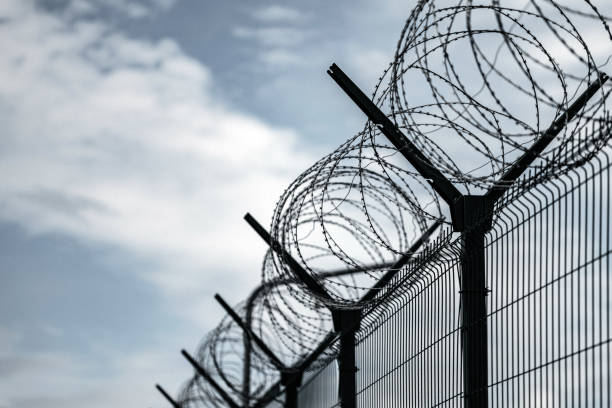
According to the Kyrgyz Border Service, two Kyrgyz citizens were shot and killed on August 15 near the junction of the Kyrgyz, Uzbek, and Kazakh borders after allegedly failing to comply with Uzbek border guards during an attempted detention. Their bodies were returned to Kyrgyzstan via the Baymak checkpoint, and authorities from both countries are conducting a joint investigation. The two men, residents of Aygyr-Zhal village in Kyrgyzstan’s Chatkal District, were reported missing on August 25. During bilateral consultations held three days later, the Uzbek authorities informed their Kyrgyz counterparts that on August 15, an Uzbek border patrol had encountered two unidentified individuals in the border zone. According to the Uzbek side, the men ignored orders to stop, prompting border guards to open fire. Both men sustained fatal injuries. On August 31, family members of the deceased traveled to Uzbekistan to identify the bodies, which were subsequently returned to Kyrgyzstan for forensic examination. Uzbek officials also expressed their readiness to return the men's belongings, including three horses and a tent. Authorities in both countries have confirmed that the incident will be subject to a formal investigation, with its findings to be made public. The shooting follows the resolution of a decades-long border demarcation process involving Kyrgyzstan, Uzbekistan, and Tajikistan. In March 2025, after nearly twenty years of negotiations, the three countries agreed on the official tripoint demarcation during talks in Dushanbe. While that agreement was hailed as a breakthrough in regional cooperation, the recent incident underscores the lingering sensitivities and security challenges along portions of the border.

Afghanistan Appeals for Quake Relief; Central Asia Likely to Help

Uzbekistan and Tajikistan, which border Afghanistan, have often taken the lead among Central Asian countries in providing relief to Afghan communities after deadly earthquakes. Once again, Afghanistan is desperately in need after a 6.0 magnitude earthquake killed at least 800 people and injured many more in the eastern part of the country late Sunday. The Taliban government has appealed for international aid to help survivors of the quake as Afghanistan struggles with other problems, including the legacy of decades of war, a cut-off of U.S. aid for medical and other services under the administration of President Donald Trump, and the return of many Afghan citizens who were expelled from neighboring Pakistan and Iran. The death toll is likely to rise because some villages that were hit by the quake are in mountainous areas that are difficult to reach, and bad weather has hindered rescue efforts. There was devastation across four eastern provinces in Afghanistan, including Nangarhar and Kunar, according to the United Nations. The U.S. Geological Survey said the epicenter of the earthquake was 27 kilometers east-northeast of the Afghan city of Jalalabad, which is Nangarhar’s provincial capital and lies near the border with Pakistan. President Kassym-Jomart Tokayev of Kazakhstan “expressed deep condolences to the leadership of Afghanistan in connection with the numerous human casualties as a result of the earthquake in that country,” the presidency said on Telegram. Uzbekistan and Tajikistan have provided humanitarian aid to Afghanistan after past earthquakes, including in 2022 and 2023, and have also helped with logistics as the United Nations and non-governmental groups transported relief supplies across their borders. Turkmenistan, which also shares a border with Afghanistan, has had involvement in such efforts as well. Central Asian countries have been building relations with Afghanistan in recent months, seeking to diversify trade routes while remaining concerned about security threats and other obstacles to stability. The Trans-Afghan Corridor construction project, for example, would provide easier access to Indian Ocean ports for regional countries. It would constitute a core railway that runs from Termez, southern Uzbekistan through Kabul, Afghanistan, and onward to Peshawar, Pakistan. Some Central Asian countries have expressed concern about human rights in Afghanistan, including the treatment of women and girls, but have not made the issue a centerpiece of their growing ties with the Taliban.

Central Asia Advances Agenda at Record-Breaking SCO Summit in Tianjin

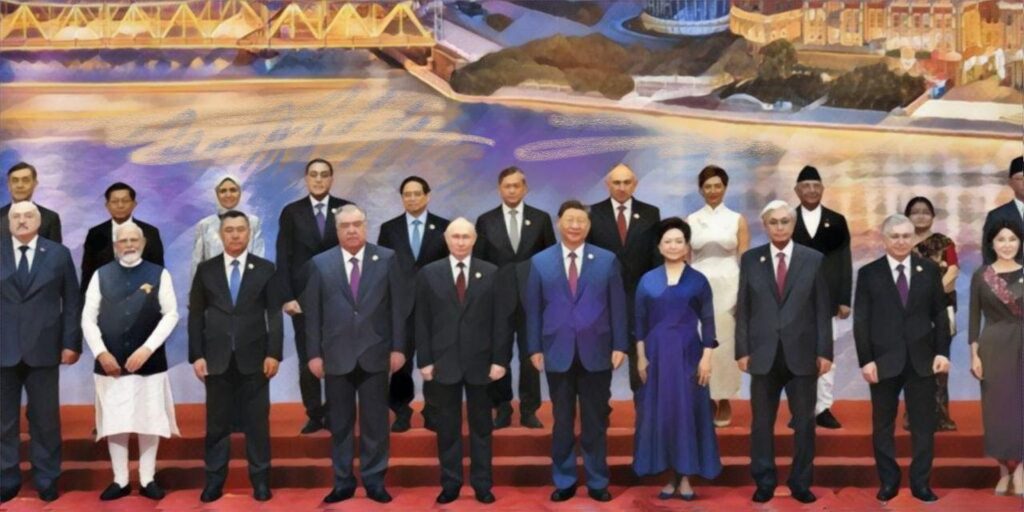
At the opening ceremony of the SCO Summit in Tianjin on August 31, Chinese President Xi Jinping, Russian President Vladimir Putin, and India’s Prime Minister Narendra Modi joined Central Asian leaders in a group photo. The Tianjin summit - China’s second time hosting the SCO and its “largest-ever” summit - was attended by all five Central Asian presidents alongside a host of key countries. In his welcome speech, Xi highlighted that the SCO now bears “greater responsibility” for safeguarding regional peace and stability, and said the summit was expected to produce a new 10-year development strategy. Xi proposed fast-tracking an SCO development bank, pledging 2 billion yuan ($280 million) in aid plus 10 billion yuan in loans to seed the fund. Xi also urged members to oppose a “Cold War mentality” and support an inclusive, multilateral trading system in a pointed rebuke to recent U.S. tariffs. Central Asian Leaders and Their Messages Kazakh President Kassym-Jomart Tokayev opened the summit for his delegation, thanking Xi and praising China’s “consistent policy aimed at strengthening security, stability, economic cooperation, and cultural ties within the SCO framework.” In his address, Tokayev marked the symbolic 80th anniversaries of the end of World War II, noting the value of unity and solidarity which he said the SCO embodies. Tokayev reaffirmed Kazakhstan’s support for a multipolar world order, respect for sovereignty, and mutually beneficial trade and investment, and pledged to keep combating the “three evils” of terrorism, separatism, and extremism. Beyond the opening remarks, Central Asian leaders used the summit to lay out their strategic priorities. Speaking at the heads-of-state meeting, President Shavkat Mirziyoyev of Uzbekistan called for further reform of SCO institutions and expansion of its dialogue partners. Mirziyoyev advocated for new cooperation mechanisms - a regional center for critical materials, a “Unified SCO Transport Space” linked to China’s Belt and Road Initiative, digital platforms, and green energy corridors - and proposed measures to boost intra-regional trade. Notably, Mirziyoyev urged the signing of an Agreement on Trade Facilitation, saying it “will give a boost to the growth of intra-regional trade within the SCO area.” In his closing remarks, he congratulated Kyrgyzstan’s Sadyr Japarov on assuming the SCO chairmanship for 2026, setting up the next summit. Tajik President Emomali Rahmon did not address the leaders’ meeting, but in a pre-summit interview, he highlighted China’s role in the SCO, crediting China with significant investment in Tajik infrastructure and energy, and welcoming Beijing’s proposal to locate an SCO Anti-Drug Center in Dushanbe. "We are confident that the center will make tangible contributions to strengthening regional cooperation and combating illicit drug trafficking," he stated. As a founding member, Rahmon stressed that the SCO’s top priority has long been Central Asian security and said that Tajikistan fully backs China’s Tianjin agenda, citing Beijing’s support for roads, tunnels, and power lines in Tajikistan. The incoming 2026 chair, Sadyr Japarov of Kyrgyzstan, met with Xi on August 31, reviewing plans to deepen all-around cooperation. Xi stated that China will fully support Kyrgyzstan in...

Marking 34 Years of Independence: Uzbekistan’s Past, Present, and Future

Uzbekistan declared its independence from the Soviet Union on August 31, 1991, during the final, turbulent months of the USSR's collapse. On that day, an extraordinary session of the Uzbek SSR Supreme Council in Tashkent adopted a Declaration of Independence and passed the law “On the Foundations of State Independence.” The same session resolved that September 1 would henceforth be celebrated annually as Independence Day. The move came just days after the failed Moscow coup attempt (GKChP) against Soviet leader Mikhail Gorbachev, and in the wake of Ukraine and Belarus declaring their own independence. Uzbekistan’s then-leader Islam Karimov moved swiftly to follow suit. At the time, Karimov served both as the leader of Soviet Uzbekistan and First Secretary of the Communist Party of Uzbekistan. He presided over the landmark session on August 31 and proposed September 1 as the national holiday. Shortly afterward, his administration began establishing the institutions of statehood, including a Ministry of Defense and a National Security Service, both created in early September 1991. Later that year, on December 29, a national referendum overwhelmingly supported independence, and Karimov was elected the first president of the new republic. Karimov’s position in 1991 was not without contradictions. Earlier that year, during a USSR-wide referendum in March, he had campaigned for the preservation of the Soviet Union. At the time, he reportedly warned Uzbeks: “Our rivers will run with milk if we stay within the Soviet Union, but if we leave it, our rivers will fill with blood.” For many Uzbeks, the first Independence Day came as a surprise. The declaration was made hastily, and the celebrations of September 1, 1991, were unlike the orchestrated commemorations seen in later years. According to Kursiv, citizens awoke to an unfamiliar atmosphere, karnay horns echoed through the streets, cars were spontaneously decorated, and celebrations broke out informally. “Citizens didn’t even know they had woken up in a new independent state,” one account recalled. Emotions ranged from pride and elation to confusion and concern. The post-Soviet transition proved challenging: economic hardship and shortages left some wondering whether independence had been a mistake. “People in the villages were very unhappy, a bit scared, and already wondering if independence was a big mistake,” wrote Bruce Pannier in 2016. At the time, Pannier, now a contributor to The Times of Central Asia, was traveling through Uzbekistan in 1992. Others remained hopeful, viewing independence as a long-awaited moment of self-determination. For older generations raised under Soviet rule, the sense of historic transformation was profound. Today, 34 years later, Independence Day remains Uzbekistan’s most important national holiday, marked by public ceremonies and official remembrances. The events of 1991 continue to shape national identity and memory. Islam Karimov is remembered by some as the founding father of the republic; a legacy still debated in public discourse. For those who lived through the early 1990s, memories of watching a new flag rise and hearing a new anthem are inseparable from the hardship and promise of the era. Journalist Aziza Qurbonova reflected...

Knowledge Day in Central Asia: What’s Changing in Schools This Academic Year?

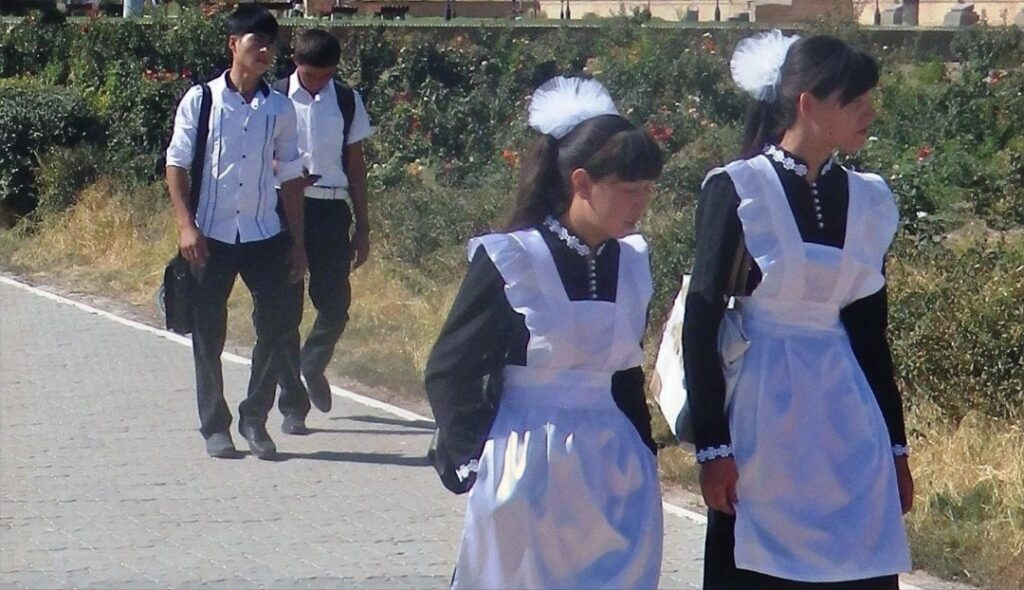
Secondary schools across Central Asia are embracing modern teaching methods and aiming to elevate the status of teachers, as the new academic year begins with a wave of reforms. Kazakhstan: AI in Classrooms and Teacher Protections In Kazakhstan, the academic year begins on September 2, as Constitution Day on the 1st is a national holiday. Over 370,000 first-graders are expected to enter school this year. As previously reported by The Times of Central Asia, significant reforms are underway in the country’s education system. Amendments to the Law “On the Status of Teachers” will shield educators from non-teaching duties and protect them from undue legal responsibility. President Kassym-Jomart Tokayev has emphasized that educators should not be held accountable for incidents involving children that occur outside school or due to parental negligence. New “personal safety” lessons will also be introduced across all educational levels, from kindergartens to colleges. These age-appropriate classes will cover topics ranging from water safety and interaction with strangers to cyberbullying, financial literacy, and legal awareness. Schools and colleges are also rolling out DosbolLIKE, an anti-bullying initiative piloted in 50 schools last year, designed to curb bullying in student communities. Artificial intelligence will be introduced into the curriculum via “Digital Literacy” and “Computer Science” classes. AI-focused online courses called Day of AI are now available for grades 1-11, with training programs also developed for teachers. Despite the construction of 1,200 new schools accommodating over a million students in recent years, the high birth rate continues to strain infrastructure. In Almaty alone, the shortage exceeds 34,000 school places. Uzbekistan: Ivy League Aspirations and Civic Values In Uzbekistan, school also starts on September 2, a customary date. The first lesson will be conducted under the motto: “In the name of the Motherland, in the name of the nation, in the name of the people!” According to the Ministry of Preschool and School Education, 738,000 first-graders will receive gifts from President Shavkat Mirziyoyev. An international school is set to open this September, initially enrolling 60 top-performing graduates of the 8th grade. The curriculum will include leadership and social activism training, with a focus on preparing students for admission to Ivy League universities. A nationwide talent identification and development program is also in development. The weekly Kelazhak Soati (“Hour of the Future”) class will debut this year, aiming to strengthen students’ moral values and encourage reflection on their future roles in society. Kyrgyzstan: Transition to 12-Year Education This academic year marks Kyrgyzstan’s official transition to a 12-year education system. The reform affects lesson structures, curricula, and textbooks. The transition, to be completed by 2028, includes the redistribution of students across grade levels. For example, third graders born in 2015 will skip to fifth grade, and sixth graders born in 2012 will advance to eighth grade. Further shifts are scheduled for the next two academic years. While the extended education model is expected to allow deeper learning and skills development, the transition period may cause confusion among students, parents, and educators. Adapting to new...