• KGS/USD = 0.01143 0%
  • KZT/USD = 0.00205 0%
  • TJS/USD = 0.10433 0.1%
  • UZS/USD = 0.00008 0%
  • TMT/USD = 0.28577 0%
  • KGS/USD = 0.01143 0%
  • KZT/USD = 0.00205 0%
  • TJS/USD = 0.10433 0.1%
  • UZS/USD = 0.00008 0%
  • TMT/USD = 0.28577 0%
  • KGS/USD = 0.01143 0%
  • KZT/USD = 0.00205 0%
  • TJS/USD = 0.10433 0.1%
  • UZS/USD = 0.00008 0%
  • TMT/USD = 0.28577 0%
  • KGS/USD = 0.01143 0%
  • KZT/USD = 0.00205 0%
  • TJS/USD = 0.10433 0.1%
  • UZS/USD = 0.00008 0%
  • TMT/USD = 0.28577 0%
  • KGS/USD = 0.01143 0%
  • KZT/USD = 0.00205 0%
  • TJS/USD = 0.10433 0.1%
  • UZS/USD = 0.00008 0%
  • TMT/USD = 0.28577 0%
  • KGS/USD = 0.01143 0%
  • KZT/USD = 0.00205 0%
  • TJS/USD = 0.10433 0.1%
  • UZS/USD = 0.00008 0%
  • TMT/USD = 0.28577 0%
  • KGS/USD = 0.01143 0%
  • KZT/USD = 0.00205 0%
  • TJS/USD = 0.10433 0.1%
  • UZS/USD = 0.00008 0%
  • TMT/USD = 0.28577 0%
  • KGS/USD = 0.01143 0%
  • KZT/USD = 0.00205 0%
  • TJS/USD = 0.10433 0.1%
  • UZS/USD = 0.00008 0%
  • TMT/USD = 0.28577 0%

Viewing results 55 - 60 of 935

AIIB Projects Win Awards as Uzbekistan Rises in Regional Infrastructure Finance

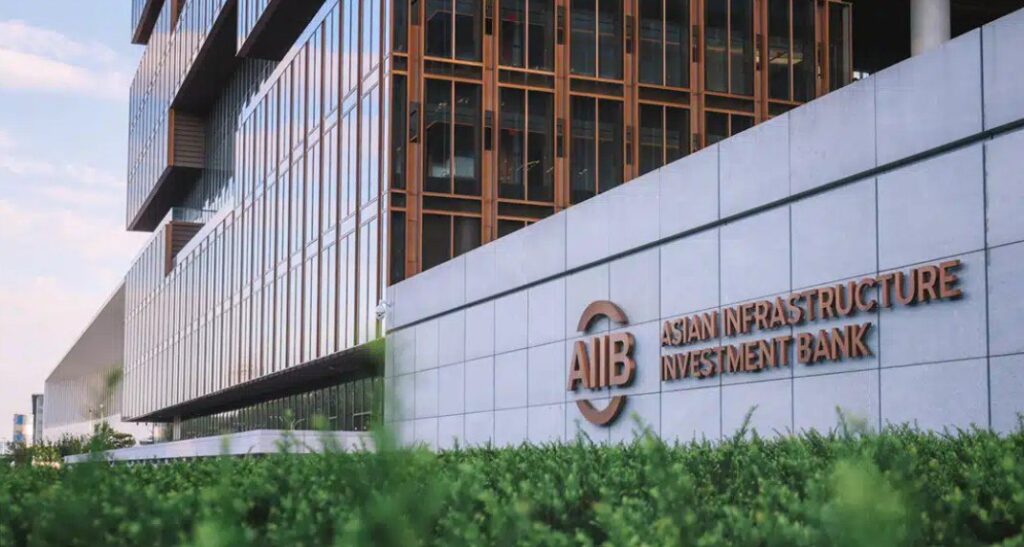
Three projects backed by the Asian Infrastructure Investment Bank (AIIB) were recognized at the Global Banking & Markets (GBM) Awards, Türkiye & Central Asia 2025, held in Istanbul. The accolades highlight AIIB’s expanding role in promoting commercially structured, investment-ready infrastructure projects in the region, a trend that is increasingly relevant for rapidly developing markets such as Uzbekistan. At the awards ceremony, the Antalya Airport Expansion (Aspendos) received the Transport Finance Deal of the Year award. The Nakkaş-Başakşehir Motorway was named Infrastructure Finance Deal of the Year, and Ronesans Holding’s debut $350 million Eurobond received the Blended Finance Deal of the Year award. Industry experts note that these projects reflect a broader shift toward blended finance and co-financing mechanisms in Turkey and Central Asia. These approaches are becoming increasingly important for Uzbekistan as it scales up infrastructure development and aligns new projects with international best practices. Uzbekistan is now one of AIIB’s fastest-growing markets, with investments spanning energy, transport, digital infrastructure, and regional connectivity. The country’s recent rise into AIIB’s top ten borrowers reflects both its need for stable long-term financing and its intent to structure major infrastructure initiatives according to global standards. Igor Popkov, Senior Investment Officer and Project Team Lead for the Antalya Airport project, said the awarded deals show how complex infrastructure financing is evolving. He noted that Türkiye remains AIIB’s second-largest borrower, with $6 billion in approved projects, while Uzbekistan is “rapidly climbing” the ranks. Development finance institutions, he added, continue to play a crucial role in making large-scale projects bankable and aligned with international norms. Observers also pointed to the growing use of instruments such as A/B loan structures, guarantees, and long-term project financing in Uzbekistan, where multiple AIIB-supported projects are under preparation or implementation. The GBM recognition follows the signing of a $500 million financing agreement between AIIB and the Government of Uzbekistan on November 28 to support the country’s Green and Resilient Market Economy Program. The initiative aims to help Uzbekistan transition to a more sustainable and climate-resilient economic model.

Revolut Blocks Top-Ups from Central Asian Bank Cards for EU-Based Users

Russian citizens residing in the European Union have reported being unable to top up their Revolut accounts using bank cards issued in Kazakhstan, Uzbekistan, and Tajikistan. According to Oninvest, at least five individuals encountered the same issue, with Revolut rejecting the transfers and stating that the cards used are “no longer supported.” Revolut’s customer support confirmed that as of December 1, the bank no longer processes top-ups from cards issued in Kazakhstan, Uzbekistan, and Tajikistan for users living in EU member states. The restriction is not temporary; the bank said similar transactions will not be accepted going forward. Notably, none of the banks in question are subject to international sanctions. Revolut attributed the change to internal policies and updated compliance requirements from international payment systems. These systems have reportedly classified Kazakhstan, Uzbekistan, and Tajikistan as high-risk jurisdictions for card-based top-up operations. The bank emphasized that the decision was mandated by its payment partners, not initiated by Revolut itself. Users also reported that top-up attempts through mobile apps of Central Asian banks resulted in error messages. However, Revolut advised that alternative methods, such as Apple Pay, Google Pay, and international bank transfers, remain available. Some customers based in France received a notification from Revolut stating that the platform will no longer accept card transfers from 52 countries. The list includes several countries where Russians relocated after 2022, such as Armenia, Georgia, Kazakhstan, Kyrgyzstan, Uzbekistan, Turkey, Serbia, and the UAE, as well as popular travel destinations like Thailand and Vietnam.

China’s Power Play in Central Asia’s Energy Sector

China is steadily expanding its influence in Central Asia’s oil and gas sector through multi-billion-dollar investments, long-term supply agreements, and a growing network of strategic partnerships. From Kazakhstan to Turkmenistan, Beijing’s state-backed companies are securing key upstream and midstream assets, financing new petrochemical and pipeline projects, and positioning themselves as indispensable players in the region’s resource development. This expansion is driven not only by China’s rising energy demand, but also by Beijing’s ambition to establish durable overland energy corridors that reduce reliance on maritime routes vulnerable to disruption. Central Asia’s existing and planned pipelines provide China with rare direct access to oil and gas fields across its western frontier, making the region a focal point of its broader energy-security strategy and a cornerstone of Beijing’s efforts to diversify supply while deepening political and economic footholds across Eurasia. Kazakhstan Eyes Chinese Investment Amid Lukoil Sanctions Kazakhstan may seek to transfer Russian company Lukoil’s stake in the offshore Kalamkas-Khazar oil and gas project to a new partner, with some industry channels, including the Telegram channel Energy Monitor, speculating about possible Chinese interest. Lukoil, which has been targeted by Western sanctions, is reportedly planning to exit Kalamkas-Khazar Operating LLP, a joint venture with KazMunayGas (KMG). Each company currently holds a 50% stake. Some commentators have suggested that a Chinese investor could step in, but no replacement has been officially confirmed. Seconded engineers from KMG Engineering are expected to be withdrawn from the project as of January 1, 2026, with several Kalamkas-Khazar staff members temporarily reassigned to other KMG subsidiaries until a new partner is confirmed. The project is considered highly promising, with earlier estimates citing reserves of 81 million tons of oil and 22 billion cubic meters of gas. New exploration has identified additional oil-bearing structures. A final investment decision (FID) worth more than $6.5 billion was originally expected by the end of 2025. However, U.S. sanctions against Lukoil have delayed progress. Located 120 km from the Kashagan field in the North Caspian Basin, the Kalamkas-Khazar block comprises the Kalamkas-More and Khazar fields. The site is situated in Kazakhstan’s Mangistau Region, 60 km from the Buzachi Peninsula. KazMunayGas Chairman Askhat Khasenov previously confirmed that production was expected to begin in 2028-2029, with peak output reaching four million tons annually. Lukoil was sanctioned by the UK on October 15, followed by the U.S., complicating ongoing negotiations. Despite this, major projects where Lukoil holds minority stakes, such as Tengiz, Karachaganak, and the Caspian Pipeline Consortium, have not been impacted. A Lukoil withdrawal would create a rare opening for China to secure its first significant offshore position in the North Caspian, a zone historically dominated by Western majors and Russian firms. Such an entry would represent a notable shift in Kazakhstan’s offshore partnership landscape. Beijing's Billion-Dollar Energy Deals in Kazakhstan In September 2025, President Kassym-Jomart Tokayev announced a series of energy deals with China valued at $1.5 billion. During his official visit to China, more than 70 commercial agreements totaling approximately $15 billion were signed, several...

Uzbekistan Plans Chemical Sector Expansion as Cotton Output Target Set at 4.5 Million Tons

On December 3, President Shavkat Mirziyoyev reviewed proposals to expand production, increase exports, and reduce costs in Uzbekistan’s chemical industry, according to a statement from the presidential press service. The government aims to double the size of the chemical sector by 2030, increase mineral fertilizer production by 1.5 times, and boost annual exports to $1 billion. Currently, 21 major projects worth $1 billion are underway, with an additional $4.5 billion in investments planned over the next three years. Officials noted that many of Uzbekistan’s large chemical plants still rely on outdated equipment, resulting in high energy consumption and limited competitiveness. For instance, energy costs account for up to 55% of the production price of nitrogen fertilizers. The introduction of energy-efficient technologies and expanded digital management systems was emphasized as a key strategy to reduce production costs across the sector. Despite strong global demand for chemical products and favorable logistics in neighboring markets, where potential demand is estimated at $1 billion, Uzbekistan has yet to fully tap into these opportunities. Officials proposed increasing domestic raw material processing to develop new products and at least double current export volumes. In 2025, new production lines for “green” mineral fertilizers, cyanide salts, potassium xanthate, and potassium sulfate began operating in the Tashkent, Navoi, and Jizzakh regions. In parallel, the government has set a target to produce 4.5 million tons of cotton next year. To support this goal, authorities have instructed officials to build strategic reserves of phosphorus fertilizers, maintain steady supplies of sulfuric acid to manufacturers, and begin issuing preferential loans to farmers for fertilizer purchases as soon as possible. Mirziyoyev underscored the chemical industry’s strategic role in the national economy, directing officials to ensure reliable domestic supply, enhance export capacity, and create new jobs in the sector. Uzbekistan’s textile industry has also experienced rapid growth. Since 2017, cotton yarn production has more than doubled, knitted fabric output has increased significantly, and garment manufacturing has expanded from under 1 billion units to over 3 billion. As a result, textile exports have risen from approximately $1.1 billion in 2016 to an estimated $2.8 billion in 2024.

Central Asia’s Digital Currency Ambitions: New Opportunities and Old Constraints

Central Asia is entering a period of accelerated financial transformation. Kyrgyzstan has launched one of the world’s first state-backed gold-backed stablecoin, USDKG, a digital asset fully backed by physical gold and issued under the direct supervision of the Ministry of Finance. Simultaneously, Kazakhstan is advancing one of the most mature central bank digital currency (CBDC) initiatives in the post-Soviet space: the digital tenge (national currency). Uzbekistan is developing its own digital economy framework, while Tajikistan and Turkmenistan are slowly initiating financial modernization. Amid these developments, Central Asia is emerging as a surprisingly bold laboratory for digital finance. This raises a pressing question: can the region develop a unified digital currency ecosystem that reduces dollar dependency, facilitates cross-border transactions, and enhances economic sovereignty? Strategic Logic of Digital Integration The idea of a regional digital currency is no longer utopian. Central Asia is one of the world's most significant hubs for cross-border remittances. In 2024 alone, migrants sent back a record $5.8 billion to Tajikistan (45% of GDP), approximately $15 billion to Uzbekistan, $2.9 billion to Kyrgyzstan, and $258 million to Kazakhstan. The current system is costly, slow, and heavily reliant on the dollar. Digital currencies could drastically reduce transaction costs for both migrant workers and businesses. In remote areas, where banking infrastructure is underdeveloped, cash still dominates. CBDCs could allow citizens to access state payment services directly, bypassing commercial banks. Digital finance also offers protection against external economic shocks, sanctions, and volatility. Coupled with the digitalization drives in Kazakhstan, Uzbekistan, and Kyrgyzstan, and regional integration ambitions, such as Uzbek President Shavkat Mirziyoyev’s proposal to create a Central Asian Community, conditions are forming for financial cooperation. Diverse National Models Approaches to digital currency vary significantly. Kazakhstan’s digital tenge, led by the National Bank, emphasizes institutional stability, security, and integration with existing banking systems. A full launch is expected by the end of 2025. Kyrgyzstan has taken a more unconventional route. Its USDKG stablecoin, built on the Tron blockchain and backed by gold, aims to assert financial autonomy. However, it raises concerns about transparency, sustainability, and the reaction of traditional banks. A gold-backed stablecoin also directly challenges dollar dominance. Crypto analysts such as Ryan Adams speculate that Washington may be monitoring Kyrgyzstan’s experiment closely, fearing it could inspire similar moves in India, China, and Brazil. Uzbekistan is advancing its digital economy cautiously. While its government maintains strict cryptocurrency controls, this regulatory clarity may lay groundwork for a CBDC, though it limits space for innovation. Tajikistan and Turkmenistan remain on the sidelines, but rising demographic pressures, migration, and logistics projects are nudging both toward digital finance. The lack of coordination among these models represents both an opportunity for experimentation and a barrier to integration. Key Challenges Despite growing momentum, the road to a unified digital architecture in Central Asia remains fraught. The first major obstacle is regulatory fragmentation. Digital currencies require legal reforms across currency legislation, taxation, customs, and anti-money laundering/counter-financing of terrorism (AML/CFT) protocols. At present, each state operates independently, making regional harmonization...

AIIB Provides $500 Million to Support Uzbekistan’s Green Economy Reforms

The Asian Infrastructure Investment Bank (AIIB) and the Government of Uzbekistan have signed a $500 million financing agreement to support the country’s Green and Resilient Market Economy Program, the Bank announced on November 28. The initiative is designed to accelerate Uzbekistan’s transition toward a greener, more resilient, and market-oriented economy through a comprehensive package of policy and institutional reforms. According to AIIB, the funding will assist the Uzbek government in strengthening the policy and governance frameworks necessary for low-carbon development, improved public-sector efficiency, and greater resilience to climate-related risks. The initiative falls under AIIB’s Climate-Focused Policy-Based Financing approach, which supports systemic reforms that have economy-wide climate impacts. The reforms backed by the new financing include measures to enhance efficiency and governance in the energy sector and state-owned enterprises, expand climate-responsive public procurement, and establish transparent systems for carbon-credit development and trading. The program also highlights the development of a robust Measurement, Reporting, and Verification (MRV) system to attract greater private capital for climate investments. “This operation reflects AIIB’s commitment to supporting Uzbekistan’s reform agenda through measures that can deliver lasting climate and economic gains,” said Konstantin Limitovskiy, AIIB’s Chief Investment Officer for Region 2 and Project and Corporate Finance Clients. He noted that the program is expected to foster conditions conducive to increased climate finance and stronger private-sector engagement in Uzbekistan’s green transition. The program is co-financed by the World Bank Group and is aligned with several national strategies, including Uzbekistan’s Strategy for Transition to a Green Economy for 2019-2030, its second Nationally Determined Contribution under the Paris Agreement, and the broader Uzbekistan-2030 development strategy. These frameworks stress clean energy, resource efficiency, and long-term economic resilience. AIIB projects that the reforms will generate substantial environmental and social benefits over time. More efficient resource use, the scaling up of clean energy solutions, and improved climate regulation are expected to reduce greenhouse gas emissions, enhance air quality, and strengthen the country’s capacity to withstand climate shocks. The adoption of cleaner technologies could also lower energy costs and improve living conditions, particularly for vulnerable communities. In a separate agreement earlier this year, AIIB provided a $71.1 million loan to Uzbekistan to modernize rural roads in Khorezm and Karakalpakstan. That project aims to enhance climate resilience and improve access to markets and public services for rural populations.