• KGS/USD = 0.01144 0%
  • KZT/USD = 0.00208 0%
  • TJS/USD = 0.10391 -0.48%
  • UZS/USD = 0.00008 0%
  • TMT/USD = 0.28571 0%
  • KGS/USD = 0.01144 0%
  • KZT/USD = 0.00208 0%
  • TJS/USD = 0.10391 -0.48%
  • UZS/USD = 0.00008 0%
  • TMT/USD = 0.28571 0%
  • KGS/USD = 0.01144 0%
  • KZT/USD = 0.00208 0%
  • TJS/USD = 0.10391 -0.48%
  • UZS/USD = 0.00008 0%
  • TMT/USD = 0.28571 0%
  • KGS/USD = 0.01144 0%
  • KZT/USD = 0.00208 0%
  • TJS/USD = 0.10391 -0.48%
  • UZS/USD = 0.00008 0%
  • TMT/USD = 0.28571 0%
  • KGS/USD = 0.01144 0%
  • KZT/USD = 0.00208 0%
  • TJS/USD = 0.10391 -0.48%
  • UZS/USD = 0.00008 0%
  • TMT/USD = 0.28571 0%
  • KGS/USD = 0.01144 0%
  • KZT/USD = 0.00208 0%
  • TJS/USD = 0.10391 -0.48%
  • UZS/USD = 0.00008 0%
  • TMT/USD = 0.28571 0%
  • KGS/USD = 0.01144 0%
  • KZT/USD = 0.00208 0%
  • TJS/USD = 0.10391 -0.48%
  • UZS/USD = 0.00008 0%
  • TMT/USD = 0.28571 0%
  • KGS/USD = 0.01144 0%
  • KZT/USD = 0.00208 0%
  • TJS/USD = 0.10391 -0.48%
  • UZS/USD = 0.00008 0%
  • TMT/USD = 0.28571 0%

Viewing results 79 - 84 of 944

Škoda Group Plans Joint Venture to Assemble Railway Vehicles in Uzbekistan

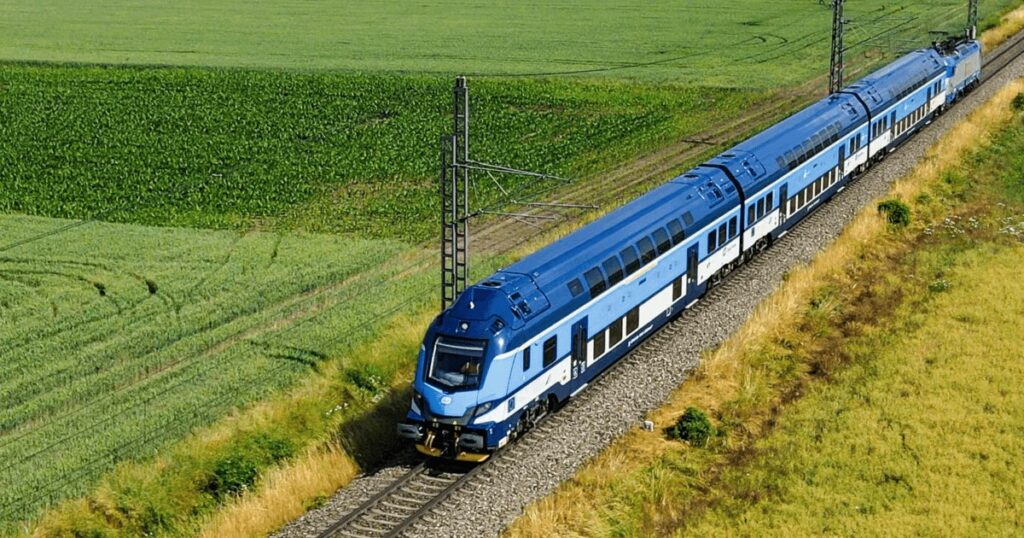
Czech manufacturer Škoda Group has announced plans to establish a joint venture in Uzbekistan to assemble railway transport vehicles, according to a statement from the company’s press service. The initiative was unveiled during President Shavkat Mirziyoyev’s official visit to Belgium on October 24, where he held a roundtable meeting with top European business leaders. Among the participants was Škoda Group CEO Petr Novotný, who described Central Asia as a highly promising market. Novotný presented the company’s strategic roadmap for entering Uzbekistan, backed by support from the European Commission and the European Investment Bank. The proposed joint venture will focus on three key areas: assembling railway vehicles under local conditions, providing long-term maintenance and repair services, and launching a Škoda Academy to train and upskill Uzbek specialists. “Each of the three areas represents a concrete step toward fulfilling the new Enhanced Partnership and Cooperation Agreement and the European Global Gateway strategy. We consider Uzbekistan to be a country opening up to new investments from European business partners. It has long been in our sights in terms of our strategic ambitions. We therefore very much welcome the opportunity to contribute to the development of sustainable transport, education, and technological modernization in the local market,” Novotný said. Škoda emphasized that the project aligns with Uzbekistan’s national goals to modernize its transport infrastructure and deepen partnerships with European industry. The company said that high-level discussions in Brussels underscored the strong potential for European technology and expertise to support the sustainable transformation of Uzbekistan’s railway sector.


Karakalpakstan to Become Data Center Hub Under Uzbekistan’s Digital Strategy

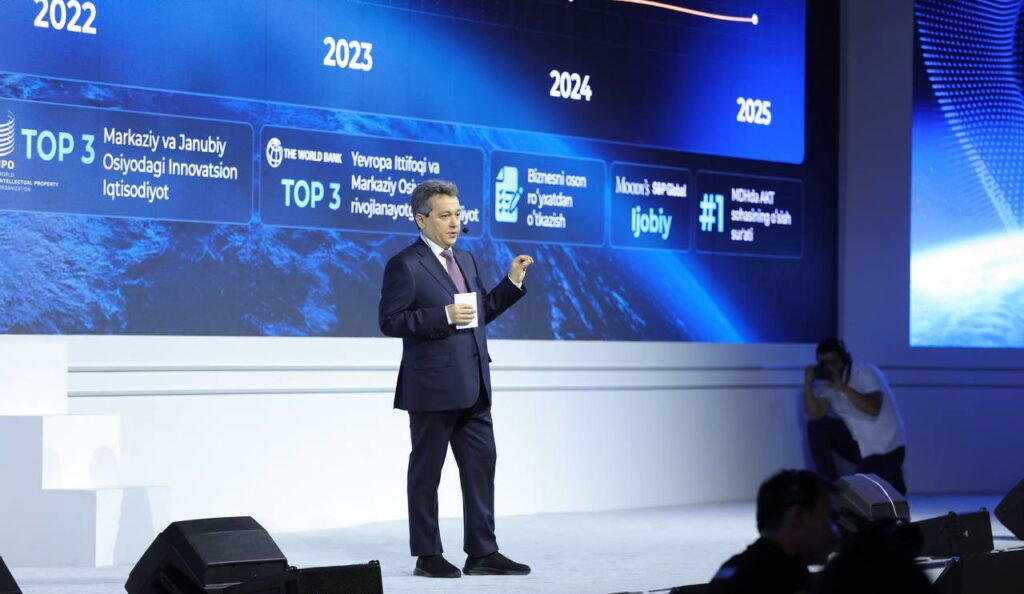
Uzbek President Shavkat Mirziyoyev has launched the second phase of the IT Park Uzbekistan innovation complex in Tashkent’s Mirzo-Ulugbek district, signaling a major advance in the country’s digital transformation agenda. Speaking to Uzbekistan 24, Minister of Digital Technologies Sherzod Xotamovich said the next stage of digital development will prioritize AI integration. Mirziyoyev has directed that AI technologies be embedded in the expansion of IT Park to foster a comprehensive national innovation ecosystem. The new phase of IT Park will accommodate AI-focused startups and modern data centers equipped with high-performance graphic processors capable of handling large-scale data processing. A flagship project is a 12-megawatt data center under construction by Saudi firm DataVolt, which is set to become the largest facility of its kind in Central Asia, purpose-built for AI applications. DataVolt intends to expand its investments in Uzbekistan, with the total capacity of future data centers expected to reach 500 megawatts. This would position Uzbekistan as a leading regional hub for data storage and processing. Mirziyoyev also identified Karakalpakstan as a strategic location for energy-intensive digital projects. He proposed transforming the region into a large-scale data center hub, offering major incentives to investors contributing more than $100 million. These include tax breaks and infrastructure support, as well as a preferential electricity tariff of five cents per kWh, significantly lower than the current average rate of about eight cents. Authorities are targeting global tech firms such as Google, Microsoft, Meta, and Amazon to establish data operations in Uzbekistan. The initiative is designed to strengthen the country’s position as a regional digital hub and accelerate the integration of AI across key sectors of the economy.

Kazakhstan’s Strong Bond Sale Anchors Regional Capital Markets

The Republic of Kazakhstan once again captured global investor attention with its highly successful sovereign bond issuance in October 2025, underscoring its status as Central Asia’s benchmark borrower. The Ministry of Finance sold a $1.5 billion five-year Eurobond at a record-low 4.412% yield, about 85 basis points above U.S. Treasuries, after attracting nearly $4.4 billion in orders from a geographically diverse investor base spanning Europe, the U.S., and Asia - almost three times oversubscribed. Strong Market Reception and Competitive Pricing This five-year issue achieved the lowest yield in Kazakhstan’s independent history and was one of the tightest-priced five-year sovereign bonds among investment-grade peers, pricing inside higher-rated Poland, and modestly above Qatar’s comparable five-year yield. The Finance Ministry credited the result to investors’ confidence in Kazakhstan’s macroeconomic management and fiscal credibility, strengthened by the country’s ongoing budget and tax reforms enacted in 2025. These measures have reinforced perceptions of policy discipline and institutional reliability, enabling Kazakhstan to secure funding at exceptionally low costs. June 2025: Dual-Tranche Success In June 2025, Kazakhstan executed a $2.5 billion dual-tranche Eurobond comprising a 7-year $1.35 billion note at 5.0% and a 12-year $1.15 billion note at 5.5%. Investor demand was exceptional, with orders roughly twice the issue size from global funds across Europe, the U.S., and Asia. The transaction priced tightly against comparable BBB sovereigns, reflecting market confidence in Kazakhstan’s low debt levels, ample reserves, and consistent reform momentum. Together, the June and October offerings have demonstrated Kazakhstan’s ability to tap international markets repeatedly in 2025 on favorable terms, even amid global volatility. Fiscal Strength and Ratings Support Kazakhstan’s strong market performance rests on a robust fiscal foundation and solid credit ratings. Fitch Ratings has affirmed Kazakhstan’s long-term foreign-currency issuer default rating at ‘BBB’ with a Stable Outlook, noting the country’s low government debt - around 25% of GDP - and substantial sovereign net foreign assets supported by the National Fund and foreign-exchange reserves. Combined reserves and National Fund assets total roughly $93 billion, equal to about 31% of GDP. S&P Global Ratings, which upgraded Kazakhstan’s outlook to Positive in August 2025, forecasts 5.5–5.6% GDP growth and has commended progress in deficit reduction and institutional reform. The agency noted that Kazakhstan’s new Budget and Tax Codes, along with tighter fiscal rules and improved oversight of quasi-fiscal activities, are expected to strengthen fiscal consolidation and institutional transparency. These reforms, together with the country’s moderate debt burden and substantial sovereign assets, have helped sustain investor confidence. Kazakhstan’s ability to issue Eurobonds at yields tighter than some A-rated peers demonstrates that credibility in practice, and market participants now view the country as the regional benchmark sovereign in Central Asia. Uzbekistan: Reform Progress, Higher Yields In February 2025, Uzbekistan raised roughly $1.5 billion equivalent through a multi-currency sovereign issue — a $500 million 7-year U.S. dollar tranche at 6.95%, a €500 million 4-year euro tranche at 5.1%, and a UZS 6 trillion 3-year local-currency note at 15.5%. Total demand reached about $4.2 billion, nearly 2.8 times oversubscribed, underscoring strong...

Central Asia Loses 14 Million Tons of Crops Annually Due to Poor Storage Infrastructure

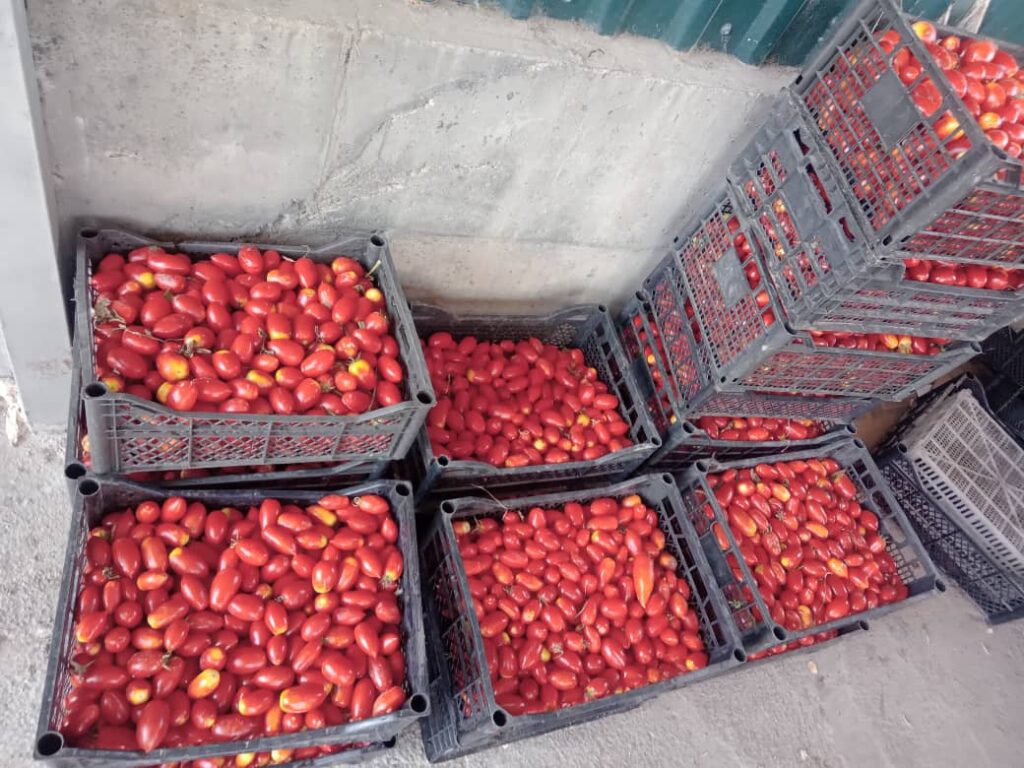
Each year, approximately 14 million tons of agricultural products are lost across Central Asia due to inadequate storage infrastructure, according to a recent analytical report from the Eurasian Development Bank (EDB). In Kyrgyzstan, Tajikistan, and Uzbekistan, so-called “dry warehouses” remain the norm. A significant share of produce is stored in facilities lacking the conditions necessary for long-term preservation. As a result, large volumes of crops spoil annually, especially during seasonal peaks. The EDB notes that Eurasian countries are entering a new logistics phase. The rapid growth of e-commerce and retail expansion is generating unprecedented demand for modern warehouse infrastructure. According to the bank’s projections, total demand for warehouse space in the region will double by 2040, surpassing 120 million square meters. Between 2020 and 2024, the region’s total warehouse space increased from 48 to 58 million square meters. Russia remains the dominant player, with around 53 million square meters of commercial and logistics space. Central Asian countries, however, continue to lag far behind. Crop losses peak during the autumn harvest and spring sales of residual stock. During these times, buffer storage and efficient transport logistics are critical. Without these, “farmers are forced to sell surpluses at the lowest price or throw them away,” EDB analysts warn. Experts identify the warehouse sector as a key driver of trade growth in Eurasia. Realizing this potential, however, will require coordinated action among governments, businesses, and international institutions. The report emphasizes the need for a unified institutional environment to enhance investment appeal and market transparency. “The region, which has long remained on the periphery of global logistics flows, is now shaping a new map of Eurasian logistics. In the coming years, the market will remain highly dynamic: more than 20 million square meters of new warehouse space is planned for commissioning, including 1.6 million square meters in Central Asian countries,” the report states. Kyrgyzstan serves as a case in point. In 2020, amid the COVID-19 pandemic, agriculture was the country’s only growing sector. Yet farmers struggled with oversupply, cabbage, in particular, had to be fed to livestock or discarded due to a lack of buyers and storage facilities. A similar situation unfolded with potatoes.

How Uzbekistan Plans to Lead Central Asia’s Digital Future – An Interview With the Minister of Digital Technologies

Uzbekistan’s ambitions to position itself as Central Asia’s digital powerhouse took center stage during ICT Week Uzbekistan 2025 this September - the country’s largest-ever technology forum, drawing more than 20 official delegations, 300 companies, and 20,000 participants from over 50 countries. With artificial intelligence and future technologies at its core, the event showcased how Tashkent aims to turn international partnerships into lasting investment, innovation, and talent pipelines. At the forefront of these efforts stands Sherzod Shermatov, Minister of Digital Technologies, who has overseen landmark initiatives extending IT Park incentives until 2040, launching the IT Visa for foreign specialists, and embedding AI education across Uzbekistan’s schools and universities. The Times of Central Asia spoke to Minister Shermatov to discuss how Uzbekistan plans to sustain investor confidence beyond ICT Week, prepare its workforce for an AI-driven economy, and balance rapid digitalization with data protection and national sovereignty. [caption id="attachment_37995" align="aligncenter" width="1280"] ICT Week 2025; image: The Ministry of Digital Technologies of the Republic of Uzbekistan[/caption] TCA: Uzbekistan showcased itself as a regional IT hub during ICT Week. What concrete steps will the Ministry take to ensure foreign investors and global tech firms remain engaged in Uzbekistan? Shermatov: In order to comprehensively stimulate and develop the activities of foreign investors and global technology companies in the Republic of Uzbekistan, a number of key preferences for IT Park residents have already been implemented. The Government of Uzbekistan has extended and reinforced the system of benefits and guarantees for foreign investors and IT Park residents, ensuring long-term stability and predictability of the investment climate. Among these measures, IT Park tax incentives have been officially extended until 2040, offering exemption from a range of taxes, a simplified foreign currency regime, and a 5% dividend tax for non-residents, provided that more than 50% of their revenue is generated from export activities. These reforms provide a reliable and attractive environment for both established global players and emerging startups. To further strengthen the country’s position as a regional digital hub, the Government has also introduced the IT Visa - a three-year visa designed for founders, investors, and foreign specialists of IT Park resident companies. The IT Visa facilitates simplified entry, residence, and employment procedures for international professionals and their family members, making Uzbekistan one of the most open and accessible markets for global technology talent. In parallel, a “One Stop Shop” service has been launched to streamline administrative procedures. It provides fast-track company registration, bank account opening, and work and residency permits, enabling investors and foreign specialists to begin operations in Uzbekistan with unprecedented efficiency. At the same time, the Ministry continues to expand cooperation between global technology partners and the national innovation ecosystem under the “ZERO Risk” and “Local to Global” mechanisms, as stated in the relevant decrees of the President of the Republic of Uzbekistan. These instruments create a foundation for long-term growth, stimulate venture financing, and support the international scaling of Uzbek startups. Also, comprehensive programs are being implemented to train highly qualified IT specialists to...

Open for Business: New Reforms Accelerate Investment in Uzbek Companies

Uzbekistan’s business sector is in a period of rapid transformation. The catalyst for this is the government's newest set of economic reforms, through which it is seeking to attract long-term investment. New legislation, targeted incentives for enterprises, and an influx of international partnerships are changing the way that companies operate and invest. A key part of this transformation is the government’s effort to create a more predictable and transparent regulatory environment. The World Bank has noted that Uzbekistan’s reform strategy is centered on expanding trade integration and accelerating the long-planned privatization of state assets. The country’s priorities include accession to the World Trade Organization, which has brought about legal adjustments designed to align Uzbek standards with global norms. Investor confidence has been encouraged by new policies that now make it easier to live and work in Uzbekistan. A five-year “golden visa” now makes it possible for foreign nationals who invest at least $250,000 to receive residency. This simplifies procedures for those developing long-term projects. Another focus for the government is financial liberalization. The International Monetary Fund recently noted that state ownership of banks is expected to fall to around 40 percent next year, which creates space for potential private lenders and foreign capital. Recent data suggests that these reforms are beginning to bear fruit. In the first quarter of 2025, Uzbekistan attracted about $8.7 billion in new foreign investment, according to figures published by UzDaily, with the total inflow this year projected to reach $42 billion. The Times of Central Asia has reported that over the past eight years, the country has absorbed more than $113 billion in foreign capital. These numbers highlight the nation's growing appeal to international investors. Alongside the surge in foreign activity, the authorities are developing policies to encourage domestic entrepreneurs. There are now more than 370,000 registered small and medium-sized businesses in Uzbekistan, which now receive more support from the government through simpler registration rules and targeted tax incentives. Private industrial parks in Tashkent and Samarkand are driving innovation in the textiles, IT and construction sectors, and creating prospective local jobs. The business community has taken notice of these reforms. At the Tashkent International Investment Forum in June, European delegates described Uzbekistan as a country “undergoing large-scale transformation”, with a growing array of opportunities for international investors. Guests in Tashkent praised efforts to increase transparency in business and cut back on beaurocracy. At the same time, they stressed the need to be consistent in their implementation across regions. Despite tangible progress, challenges remain. Inflation has remained high, and analysts continue to point to structural issues hampering growth. These include an underdeveloped financial system and a large informal economy. Foreign businesses operating in Uzbekistan are also advised to pay close attention to compliance and labor law as the legal environment evolves. Two of the government's priorities stand out in the short term. The first is the privatization of major state assets in the energy, transport and telecommunications industries -- part of the 2025 national economic program...