• KGS/USD = 0.01144 0%
  • KZT/USD = 0.00207 0%
  • TJS/USD = 0.10437 0.19%
  • UZS/USD = 0.00008 0%
  • TMT/USD = 0.28490 0%
  • KGS/USD = 0.01144 0%
  • KZT/USD = 0.00207 0%
  • TJS/USD = 0.10437 0.19%
  • UZS/USD = 0.00008 0%
  • TMT/USD = 0.28490 0%
  • KGS/USD = 0.01144 0%
  • KZT/USD = 0.00207 0%
  • TJS/USD = 0.10437 0.19%
  • UZS/USD = 0.00008 0%
  • TMT/USD = 0.28490 0%
  • KGS/USD = 0.01144 0%
  • KZT/USD = 0.00207 0%
  • TJS/USD = 0.10437 0.19%
  • UZS/USD = 0.00008 0%
  • TMT/USD = 0.28490 0%
  • KGS/USD = 0.01144 0%
  • KZT/USD = 0.00207 0%
  • TJS/USD = 0.10437 0.19%
  • UZS/USD = 0.00008 0%
  • TMT/USD = 0.28490 0%
  • KGS/USD = 0.01144 0%
  • KZT/USD = 0.00207 0%
  • TJS/USD = 0.10437 0.19%
  • UZS/USD = 0.00008 0%
  • TMT/USD = 0.28490 0%
  • KGS/USD = 0.01144 0%
  • KZT/USD = 0.00207 0%
  • TJS/USD = 0.10437 0.19%
  • UZS/USD = 0.00008 0%
  • TMT/USD = 0.28490 0%
  • KGS/USD = 0.01144 0%
  • KZT/USD = 0.00207 0%
  • TJS/USD = 0.10437 0.19%
  • UZS/USD = 0.00008 0%
  • TMT/USD = 0.28490 0%

Viewing results 115 - 120 of 956

Uzbekistan Aims to Cut Poverty Rate to 6% by End of 2025

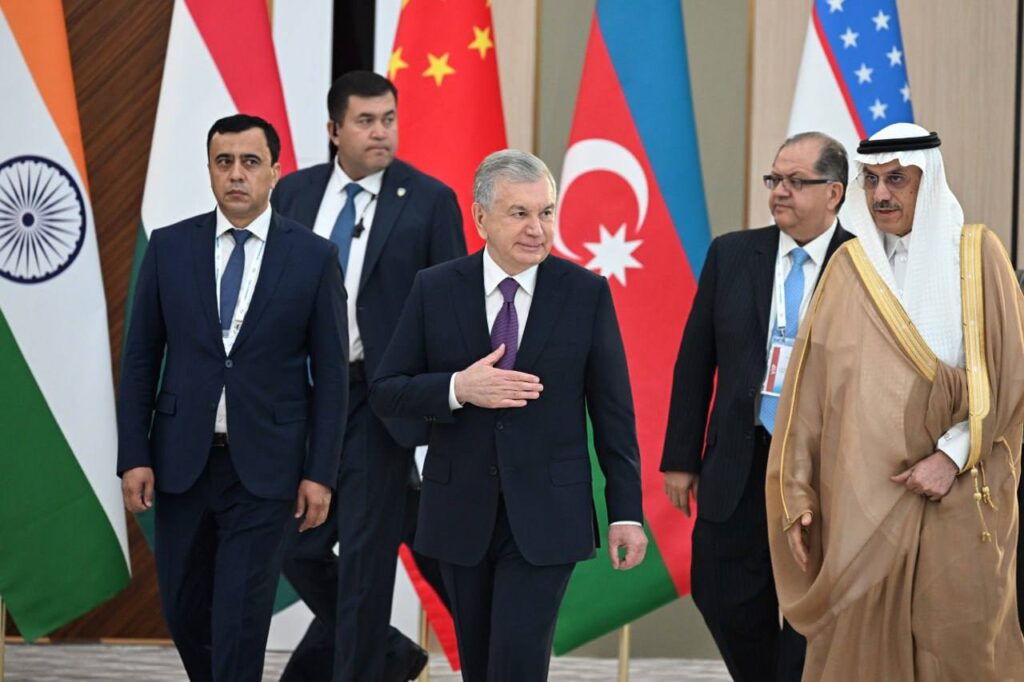
Uzbekistan aims to cut its national poverty rate to 6 percent by the end of 2025, President Shavkat Mirziyoyev announced at the opening of the third international forum From Poverty to Prosperity in Namangan on September 17. The forum brought together representatives from more than 30 organizations and approximately 200 experts, including Islamic Development Bank President Muhammad Al-Jasser, Asian Development Bank Vice President Yingming Yang, Japan International Cooperation Agency Senior Vice President Sachiko Imoto, United Nations Special Representative for Central Asia Kaha Imnadze, and World Bank Global Director for Poverty Reduction Luis Felipe López-Calva. Mirziyoyev warned that the world is entering a period of increasing instability, citing climate change, water scarcity, pandemics, and slowing economic growth. Since 2015, global economic growth has averaged just 3 percent annually, while the number of people living in poverty has risen from 650 million to over 800 million. In Uzbekistan, poverty reduction has become a national priority. Over the past eight years, government reforms have focused on human rights, employment, and income generation, supported by international institutions such as the World Bank and the United Nations. According to official data, 7.5 million people have been lifted out of poverty, bringing the national poverty rate down to 8.9 percent in 2024. “By the end of this year, we aim to reduce it further to 6 percent,” Mirziyoyev said. Uzbekistan’s economy has doubled in size in recent years, with per capita income projected to reach $3,500 by the end of 2025. Growth has been driven by targeted social programs, mahalla-based community initiatives, and land reforms. During the COVID-19 pandemic, more than 2 million families received social assistance, while the redistribution of 235,000 hectares of farmland provided an additional source of income for 800,000 families. “Every neighborhood is becoming a hub for business, and every family is seeing the benefits of prosperity,” Mirziyoyev said. He added that Uzbekistan is on track to halve poverty by 2030, in line with the UN Sustainable Development Goals, and could eradicate absolute poverty by the end of the decade. The president also called for a “new financial architecture” to mobilize global resources for sustainable development. He proposed hosting an international conference in Khiva in 2026, with the participation of donor organizations, financial institutions, and partner governments. “Uplifting human dignity through decent living conditions and poverty reduction lies at the heart of all our reforms,” he concluded.

Uzbekistan Advances Draft Law to Introduce Islamic Banking System

Uzbekistan has taken a major step toward diversifying its financial sector with the approval of a draft law on Islamic banking in its first reading. Lawmakers in the legislative chamber of the parliament, the Oliy Majlis, debated the bill during a session held on September 16. The initiative is part of the government's broader effort to expand access to financial services for citizens and businesses, attract foreign investment, and create new mechanisms for economic support. To this end, the draft proposes amendments to the Tax Code, Civil Code, and eight other laws. The bill formally introduces into legislation the concepts of Islamic banks, financial operations, standards, and investment deposits. It also outlines a licensing regime allowing for the establishment of either fully-fledged Islamic banks or Islamic “windows” within existing conventional banks. Permitted financial instruments will include murabaha, mudaraba, musharaka, wakala, and salam, contracts widely used in Islamic finance. Abrorkhoja Turdaliev, Deputy Chairman of the Central Bank, stated that the reforms go beyond removing legal barriers and are aimed at building the institutional foundations of Islamic finance. He highlighted the need to establish dedicated councils, audit bodies, and accounting systems to ensure compliance with Islamic financial principles. The bill also includes provisions for a special tax regime tailored to Islamic finance operations. Turdaliev noted that Islamic banking prohibits the charging of interest, the financing of activities forbidden under Islamic law, and excessive uncertainty in contracts. Instead, it emphasizes partnership and risk-sharing. To support this model, the draft law would eliminate restrictions that currently prevent banks from directly participating in trade or acquiring equity stakes in companies. Drawing on international experience from Malaysia, Turkey, the UAE, and neighboring countries, the proposed legal framework seeks to build a modern infrastructure for Islamic finance in Uzbekistan. “This law will provide legal grounds for establishing Islamic banks, Islamic windows, and microfinance institutions, thereby expanding access to alternative financial services and introducing new tools to support business,” Turdaliev said.

Wheels of Influence: China’s Electric Vehicle Push in Central Asia

As domestic competition intensifies and protectionist barriers rise in Western markets, Chinese electric vehicle (EV) manufacturers are increasingly looking outward. One region emerging as a key destination is Central Asia, where China’s green tech ambitions align with local efforts to modernize and decarbonize transport systems. From affordable passenger cars aimed at private drivers to electric buses transforming public transit, Chinese EVs are quietly gaining traction across Kazakhstan, Uzbekistan, Kyrgyzstan, and Tajikistan. Companies like Yutong are supplying e-buses for urban mobility, while fleets of electric taxis are beginning to appear in Dushanbe’s streets. This growing presence is more than just commercial - it signals a deeper shift in China’s regional engagement strategy, using clean technology as a vehicle for influence in a strategically contested space. There is an upward trend in the import of electric vehicles from China to Central Asia, particularly in Kazakhstan and Uzbekistan. In 2024, Uzbekistan imported over 24,000 EVs, with Chinese manufacturers accounting for a staggering 99.5% of all imports. This marked an increase of more than 8,000 units compared to 2023 - nearly a 1.5-fold growth in just one year. A similar surge is visible in Kazakhstan. In 2023, the country imported around 6,875 Chinese EVs, but by 2024, although official figures are yet to be released, industry reports indicate a 36-fold increase in the sales of Chinese EVs year-on-year. Drivers of Import: Policy and Perception The surge in EV imports into Central Asia is driven by a convergence of motivations from both China and the region’s domestic policies. On the supply side, the rapid influx of Chinese EVs reflects a blend of strategic export redirection by Chinese automakers and receptive policy environments in the region. Faced with mounting trade restrictions and increasing regulatory pressure in Western markets, Chinese EV producers are pivoting toward emerging economies to safeguard growth. Central Asia has become a promising destination due to its untapped consumer base. On the demand side, Central Asian governments are enacting supportive policies to accelerate the green transition, making EV imports more accessible. For example, Uzbekistan has removed both excise taxes and customs duties on imported electric vehicles, while Kazakhstan and Kyrgyzstan benefit from a Eurasian Economic Union ruling that extends duty-free EV imports until the end of 2025, creating a favorable environment for consumers and fleet operators. In addition to these policy frameworks, a growing positive perception of Chinese EVs has emerged across the region. Chinese manufacturers are seen as offering a combination of affordability and quality, a crucial advantage in price-sensitive markets like Central Asia. For consumers and taxi fleet operators, the appeal goes beyond the sticker price - electric vehicles are significantly cheaper to operate. Unlike gasoline-powered cars that require frequent oil changes and filter maintenance, EVs offer lower long-term operating costs, making them a practical and economically attractive choice. Beyond Exports: Assembling a Local Presence However, China’s electric vehicle expansion in Central Asia goes beyond exports - it increasingly involves local production through joint ventures and assembly plants. In Uzbekistan, the state-owned...

Afghanistan Launches Toti-Maidan Gas Project with Uzbek Support

Uzbekistan has reaffirmed its support for Afghanistan’s economic recovery by backing a long-term gas development initiative in Jawzjan province. According to ToloNews, work has officially begun on the exploration and extraction of the Toti-Maidan gas fields under a 25-year contract signed by Afghanistan’s Ministry of Mines and Petroleum with KAM Group and Uzbek firm Railcom. Speaking at the launch ceremony, Deputy Prime Minister for Economic Affairs Mullah Abdul Ghani Baradar said the project would help reduce Afghanistan’s dependence on imported gas and electricity, stem the outflow of foreign currency, and lay the groundwork for future gas exports. “This project sends a message to regional countries that Afghanistan is ready for investment,” he stated. Afghan Minister of Mines and Petroleum Hedayatullah Badri described the initiative as a new model of cooperation with Uzbekistan, elevating bilateral ties from historical proximity to a “new phase of modern economic cooperation.” The ministry noted that the Toti-Maidan fields cover 7,500 square kilometers and already contain around 30 wells. Uzbekistan’s Deputy Minister of Energy, Bakhtiyar Mohammad Karimov, emphasized the strategic significance of the agreement, highlighting the application of advanced technologies and adherence to environmental standards. He called the initiative the start of major bilateral energy cooperation. The Toti-Maidan project follows a series of energy agreements signed in August between Afghanistan’s state-owned utility company, Da Afghanistan Breshna Sherkat (DABS), and Uzbekistan’s Ministry of Energy. Those $243 million contracts, signed with Nego Energy and Uz Energy, include the extension of the 500-kilovolt Surkhan-Dasht Alwan transmission line, substation expansions in Arghandeh and Nangarhar, and upgrades to the Kabul-Nangarhar power corridor. Officials from both countries say these initiatives underscore a shared commitment to deepening energy and economic ties, even as Afghanistan continues to face serious political and humanitarian challenges.

Uzbekistan to Supply Electricity to Kazakhstan and Afghanistan in 2026

Uzbekistan will supply 900 million kilowatt-hours of electricity to Kazakhstan between March and December 2026, according to a statement by the Kazakh Ministry of Energy. The agreement was formalized on September 7 in Cholpon-Ata, Kyrgyzstan, during a trilateral meeting of energy and water authorities from Kazakhstan, Kyrgyzstan, and Uzbekistan. The meeting produced several protocols aimed at stabilizing the region’s water and energy balance. A key component includes coordinated water releases from Kyrgyzstan’s Toktogul Reservoir in exchange for electricity supplied by Kazakhstan and Uzbekistan to Kyrgyzstan. The parties also finalized transit arrangements for Russian electricity flowing to Kyrgyzstan via Kazakhstan’s grid. These measures are designed to ensure adequate irrigation for southern Kazakhstan during the next growing season and to maintain critical water levels in the reservoir. Kazakhstan’s Energy Minister Yerlan Akkenzhenov emphasized that the protocols include “specific figures, timelines, and prices,” underscoring that strict compliance with the agreed schedule is essential to maintaining stability in both electricity supply and water resource management. The electricity deal with Uzbekistan is expected to help offset power shortages in Kazakhstan’s southern grid during planned maintenance work at domestic power stations. Uzbekistan Supports Afghanistan’s Energy Sector In parallel, Uzbekistan has reaffirmed its commitment to supporting Afghanistan’s efforts to modernize its electricity infrastructure. The Uzbek Ministry of Energy reported that a high-level investment conference was recently held in Kabul, drawing officials from Afghanistan, Uzbekistan, Turkmenistan, and Tajikistan, along with representatives from international organizations and diplomatic missions. As part of the conference, a financial agreement was signed for the construction of new power transmission lines and substations with capacities ranging from 220 to 500 kilovolts. The project is slated for completion in the first quarter of 2027. Uzbekistan also pledged to assist Afghanistan in modernizing its power distribution networks, implementing smart metering technologies, and providing technical expertise to improve energy delivery and reliability.

EDB Estimates Central Asia-China Transport Connectivity Projects at $9 Billion

China has emerged as the principal investor in regional transport infrastructure, with analysts from the Eurasian Development Bank (EDB) estimating that cross-border projects linking Central Asia and China will require $9 billion in funding through 2035. According to the EDB, 12 projects valued at more than $9 billion are either underway or in the planning stages. These account for 17% of the $52.8 billion allocated to 90 transport corridor projects across Central Asia. The initiatives are expected to significantly boost trade and cargo flows with China, already the region’s largest trading partner. China-Kyrgyzstan-Uzbekistan Railway The most ambitious among them is the long-anticipated China-Kyrgyzstan-Uzbekistan (CKU) railway, a $4.7 billion project that will establish the first direct rail link between China and these two Central Asian states. Half of the funding will come from a Chinese concessional loan, while the remainder will be provided by a joint venture created to build and operate the railway. China will hold a 51% stake in the venture, while Kyrgyzstan’s contribution is valued at $575.75 million. On August 31 in Tianjin, Kyrgyz President Sadyr Japarov met with Chinese President Xi Jinping. Following the meeting, officials signed a letter of intent regarding China’s preferential loan to finance Kyrgyzstan’s share, according to the Kyrgyz presidency. The 523-kilometer railway officially broke ground on December 27, 2024, in Jalal-Abad, Kyrgyzstan. Once completed, the CKU will link Kashgar (China) with Torugart, Makmal, and Jalal-Abad (Kyrgyzstan), and Andijan (Uzbekistan). The line is projected to carry up to 15 million tons of cargo annually, significantly reshaping regional trade flows. Currently, Kazakhstan is the only Central Asian country with a direct railway connection to China. Kazakhstan’s Leading Role Kazakhstan leads Central Asia in cross-border infrastructure investment with China, accounting for $3.4 billion or 37% of the total. Key projects include: The modernization of the Dostyk-Moiynty railway section (836 km), scheduled for completion in 2025, which will increase freight capacity fivefold. Construction of the Ayagoz-Bakhty railway line and the launch of a third border crossing with China, aimed at further diversifying transit corridors. Regional Impact The scale and scope of these initiatives underscore the strategic importance of transport connectivity in China-Central Asia relations, particularly under the Belt and Road Initiative. By 2035, upgraded infrastructure is expected not only to enhance regional logistics and reduce transport bottlenecks but also to strengthen Central Asia’s position as a vital transit corridor between China and Europe, fostering deeper economic integration across the Eurasian continent.