• KGS/USD = 0.01144 0%
  • KZT/USD = 0.00207 0%
  • TJS/USD = 0.10437 0.19%
  • UZS/USD = 0.00008 0%
  • TMT/USD = 0.28490 0%
  • KGS/USD = 0.01144 0%
  • KZT/USD = 0.00207 0%
  • TJS/USD = 0.10437 0.19%
  • UZS/USD = 0.00008 0%
  • TMT/USD = 0.28490 0%
  • KGS/USD = 0.01144 0%
  • KZT/USD = 0.00207 0%
  • TJS/USD = 0.10437 0.19%
  • UZS/USD = 0.00008 0%
  • TMT/USD = 0.28490 0%
  • KGS/USD = 0.01144 0%
  • KZT/USD = 0.00207 0%
  • TJS/USD = 0.10437 0.19%
  • UZS/USD = 0.00008 0%
  • TMT/USD = 0.28490 0%
  • KGS/USD = 0.01144 0%
  • KZT/USD = 0.00207 0%
  • TJS/USD = 0.10437 0.19%
  • UZS/USD = 0.00008 0%
  • TMT/USD = 0.28490 0%
  • KGS/USD = 0.01144 0%
  • KZT/USD = 0.00207 0%
  • TJS/USD = 0.10437 0.19%
  • UZS/USD = 0.00008 0%
  • TMT/USD = 0.28490 0%
  • KGS/USD = 0.01144 0%
  • KZT/USD = 0.00207 0%
  • TJS/USD = 0.10437 0.19%
  • UZS/USD = 0.00008 0%
  • TMT/USD = 0.28490 0%
  • KGS/USD = 0.01144 0%
  • KZT/USD = 0.00207 0%
  • TJS/USD = 0.10437 0.19%
  • UZS/USD = 0.00008 0%
  • TMT/USD = 0.28490 0%

Viewing results 121 - 126 of 956

Russia’s Gasoline Export Ban: Limited Shock, Broader Lessons for Central Asia

Russia’s decision to prolong restrictions on gasoline exports has raised concerns in energy markets, but for Central Asia, the immediate fallout appears limited. The true significance lies in what the move reveals about structural dependencies, the role of the Eurasian Economic Union (EAEU), and the region’s long-term push to diversify energy supplies. Moscow Extends Ban On September 2, Russian officials confirmed that the government may prolong its gasoline export ban for oil producers into October, extending measures first introduced in late summer. Deputy head of the Federal Antimonopoly Service, Vitaly Korolev, told state media that the authorities were weighing a one-month extension beyond the current deadline of September 30. As reported by Reuters, the aim is to stabilize domestic fuel supplies following refinery outages and a seasonal spike in demand. Ukrainian drone strikes have also damaged key refineries, reducing Russia’s production capacity by an estimated 10–17%. The ban affects a relatively small share of Russia’s overall fuel output but highlights the state’s readiness to intervene in energy markets. Previous restrictions in 2023 and 2024 temporarily halted shipments to stabilize domestic prices. The latest decision reflects similar concerns: tightening inventories, growing demand from the agricultural sector, and pressure to prevent inflation ahead of winter. While Moscow insists the measure is temporary, traders and governments across post-Soviet space are watching closely. Russia remains one of the world’s largest fuel exporters, and even marginal policy changes can cause significant ripples. Fuel Security in Central Asia For Central Asia, the impact of the ban will be blunted by exemptions. As members of the EAEU, both Kazakhstan and Kyrgyzstan continue to import Russian gasoline without interruption. Kazakhstan’s Ministry of Energy issued a statement stressing that the country is self-sufficient, pointing to its refineries in Pavlodar, Shymkent, and Atyrau. “For countries that have signed the relevant intergovernmental agreement… these restrictions do not apply,” Minister of Energy, Yerlan Akkenzhenov, stated. Kyrgyzstan is highly dependent on Russian imports. However, according to Kyrgyzstan’s Ministry of Energy, the 1.6 million tons of fuel the country consumes annually, 93% of which is imported from Russia under intergovernmental agreements, will remain unaffected by the export ban. Since mid-summer, gasoline and diesel prices have climbed, driven by rising global oil benchmarks and repair work at several Russian refineries. Talks are already in progress to set revised supply volumes for 2026. Non-EAEU states face a different challenge. Uzbekistan sources fuel through state-brokered contracts with Russian companies, ensuring stability for now, but smaller private importers outside of these deals have reported difficulties accessing volumes. Late last year, the Chairman of Uzbekistan’s Central Bank warned that the country’s growing reliance on Russian fuel imports could increase vulnerability to supply shocks, which may translate into limited competition and rising prices. Tajikistan remains heavily dependent on Russian fuel through bilateral import agreements, and its virtually non-existent refining capacity makes it highly susceptible to external price fluctuations, a vulnerability underscored by seasonal diesel shortages and repeated spikes in domestic fuel prices. Turkmenistan, meanwhile, continues subsidizing its energy sector heavily:...

Uzbekistan’s Pharma Pivot: Strategic Gains or Growing Dependence on China

Since 2016, Uzbekistan has steadily deepened its partnership with China across multiple sectors. Energy, infrastructure, agriculture, and the digital economy have long been the pillars of this cooperation. Yet recent discussions showed that the pharmaceutical sector will be another critical area for cooperation in the long term. Much like renewable energy and critical minerals, the pharmaceutical sector is now viewed in Tashkent as a strategic domain where Chinese expertise and investment could accelerate development and add value to the domestic economy. The Compelling Logic of Partnership China's strength lies in its ability to produce high-quality, affordable medicines and distribute them globally at scale. For Uzbekistan - whose growing population and rising demand for advanced healthcare have placed pressure on its system - this makes China a natural partner. At present, the Uzbek pharmaceutical market remains heavily import-dependent: by the end of 2024, imported drugs accounted for 87% of retail sales in monetary terms and 63% in physical volume. This reliance not only exposes vulnerabilities but also highlights the untapped potential for local production. Recognizing this, Tashkent has moved to create favorable conditions for investment. The country has established specialized pharmaceutical Special Economic Zones (SEZ) such as Parkent-Pharm and Andijan-Pharm. These SEZs offer investors an attractive package of incentives, from exemptions on customs duties and VAT for raw materials and equipment, to a 20% preference in government procurement for local products. Such regulatory incentives, combined with a growing domestic market, have already begun to draw interest from Chinese pharmaceutical firms. Strategic Priorities Recently, Uzbekistan has signed a series of memorandums of understanding with Chinese firms such as Zhendong Health Industry, Guojo Medical Technology, and Langtian Pharma Group, signaling a stronger bilateral focus on the pharmaceutical sector. These agreements align closely with Uzbekistan’s strategic goal of building a robust domestic pharmaceutical industry with an emphasis on access to capital and technology, localization, and human capital development. One of Uzbekistan’s key priorities is securing access to capital and expertise. Without investment and collaboration with experienced companies, the state cannot establish modern laboratories and production facilities. In this regard, the Uzbek company, Ozwell, has signed an MoU with Zhendong Health Industry Group to jointly implement a modern pharmaceutical laboratory. The partnership involves a total investment of $9.5 million, with $4.5 million allocated toward creating a world-class laboratory facility and $5 million designated for establishing and scaling up a production complex. This agreement reflects Tashkent’s desire to tap into Chinese technical knowledge and experience, while simultaneously building domestic capacity and developing local talent in the long term. Another critical priority is the localization of drug production. By reducing dependency on imports, Uzbekistan is aiming to strengthen supply chain resilience, meet domestic demand, and create new opportunities for regional exports. In this regard, the MoU established with Langtian Pharma Group and Guojo Medical Technology is designed to investigate opportunities for domestic production while promoting technological collaboration and knowledge transfer within the pharmaceutical industry. The final priority is the development of human capital. In this regard, Uzbekistan...

Aliyev: SOCAR Begins Oil Project in Uzbekistan, Results Expected Soon

Azerbaijani President Ilham Aliyev has announced that the State Oil Company of Azerbaijan (SOCAR) has officially launched operations at an oil field in Uzbekistan. “SOCAR has already started work on an oil field in Uzbekistan, and the contract has been signed. We hope to hear good news within one to two years, and we all look forward to the announcement of a major oil discovery in Uzbekistan,” Aliyev said, as reported by Report. Aliyev also highlighted Azerbaijan’s longstanding energy partnership with Turkmenistan, noting that expanding cooperation to include Uzbekistan presents new strategic opportunities for regional development. Energy cooperation in Central Asia continues to deepen. In March 2025, Kazakhstan’s national oil company KazMunayGas and SOCAR agreed to increase oil transit volumes via the Aktau-Baku-Ceyhan route, reinforcing Azerbaijan’s growing role as a transit hub for Central Asian energy exports.

Uzbek Migrants Send Home $4.8 Billion in Q2 2025

Uzbekistan’s Central Bank has reported that migrant workers sent home $4.8 billion in remittances during the second quarter of 2025. This marks a 21.4% increase compared to the same period last year, although it represents a slowdown from the 38.6% recorded in 2024. The Central Bank attributed the increase to stable exchange rates in host countries, higher wages, and continued economic activity. However, the report also noted varied growth by region. Remittances from the Baltic states saw the sharpest rise, up 65.6% year-on-year, while transfers from the United States, Russia, and Europe increased more modestly by 10.3%, 23.7%, and 26.9%, respectively. Inflows from Asia remained relatively unchanged. At the start of the year, Uzbekistan’s Embassy in Russia urged its citizens working abroad to consider returning home to participate in the construction of New Tashkent, an ambitious capital expansion project, according to Podrobno.uz. The embassy noted that companies involved in the project could offer jobs to approximately 10,000 workers across 38 professions. Demand is especially high for concrete workers, plasterers, plumbers, electricians, and bricklayers. Officials emphasized that the project provides an opportunity to earn decent wages while contributing to national development. Since the collapse of the Soviet Union in 1991, Russia has remained the primary destination for labor migrants from Central Asia. Official Russian data suggests nearly four million citizens from Kazakhstan, Kyrgyzstan, Uzbekistan, Tajikistan, and Turkmenistan currently reside in Russia, alongside an estimated 670,000 undocumented migrants. Anti-migrant sentiment has intensified in Russia following the terrorist attack at Moscow’s Crocus City Hall on March 22, 2024. In response, the Russian authorities have tightened migration regulations and increased enforcement.

Uzbekistan and Chinese Biotech Firm Plan Joint Agri-Projects

Uzbekistan’s Deputy Minister of Investment, Industry and Trade, Ilzat Kasimov, met with representatives of China’s Xinjiang Huijia Biotechnology to discuss launching joint initiatives in agriculture and biotechnology, including the adoption of modern farming technologies. Following the talks, both parties agreed to deepen cooperation and pursue new projects in Uzbekistan’s agricultural and biotech sectors. Founded in 2021, Xinjiang Huijia Biotechnology is a leading Chinese producer of stevia and natural sugar substitutes. The company processes around 10,000 tons of stevia annually. Its sweetener products, plant-derived, significantly sweeter than sugar, and nearly calorie-free, are widely used across the food, pharmaceutical, cosmetic, and chemical industries. According to the ministry, cultivating stevia and developing sugar substitute production in Uzbekistan would allow the country to enter the rapidly growing global market for natural sweeteners, driven by increasing demand for healthier food options. This agro-biotech collaboration marks another step in the accelerating economic partnership between Uzbekistan and China. Bilateral trade reached approximately $14 billion in 2024, up from $13 billion the previous year, with both sides aiming to raise the figure to $20 billion in the near future. Chinese business activity in Uzbekistan has expanded significantly. As of early 2025, around 3,467 Chinese companies were operating in the country, an increase of over 1,000 from the previous year. Officials report that Chinese investment in Uzbekistan has grown fivefold since 2017, with a joint project portfolio exceeding $60 billion across sectors including energy, infrastructure, manufacturing, and smart agriculture.

24 Central Eurasian Startups Join Silicon Valley Programs

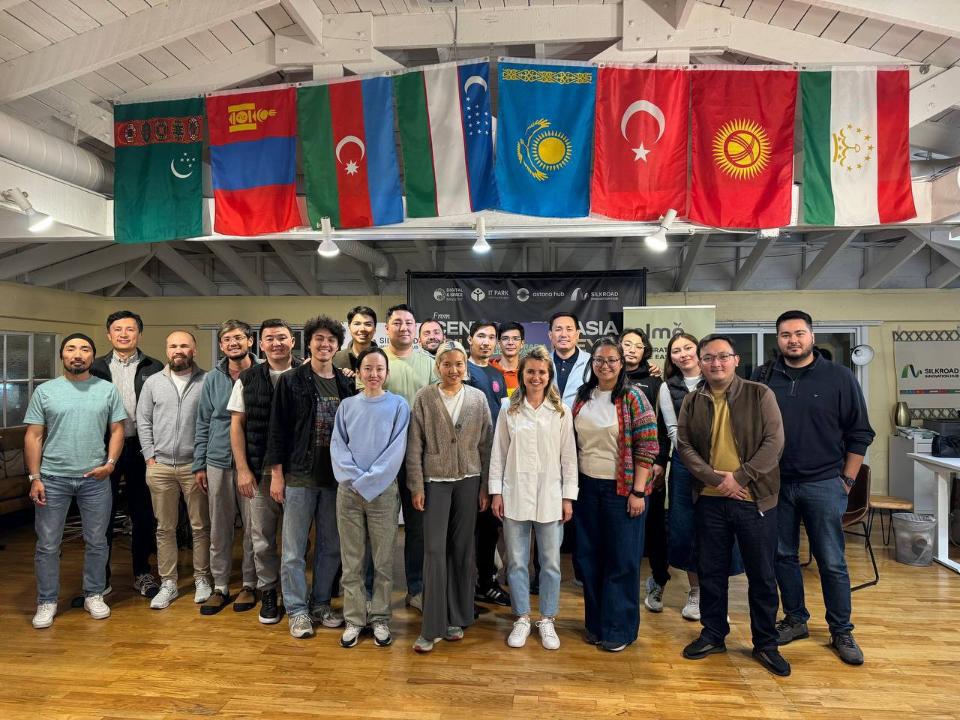
This fall, 24 startups from Central Eurasia and other regions will join the AlchemistX and Silicon Valley Residency programs, set to begin on September 3. The selected teams will gain direct access to the U.S. venture ecosystem, top investors, and leading technology companies. In 2025, a total of 225 startups from 20 countries applied, but only 24 were selected. Of these, 10 teams from Kazakhstan and Uzbekistan were accepted into the AlchemistX program, while 14 others, representing Qatar, the U.S., Singapore, Georgia, and Mongolia, joined the Silicon Valley Residency. “AlchemistX & Silicon Valley Residency is a strategic corridor linking Central Eurasia with Silicon Valley,” said Kazakhstan’s Minister of Digital Development, Zhaslan Madiev. He highlighted the importance of tangible results, noting that in 2024, 22 participating startups generated $380,000 in revenue within four months and secured $1.4 million in funding. Over the course of the four-month program, participants will receive mentorship from venture partners, attend workshops on U.S. market entry, and pitch their startups to investors at Demo Day. Teams will also have the opportunity to register their companies in the U.S. and become part of the Silkroad Innovation Hub, Kazakhstan’s official innovation outpost in Silicon Valley. “Silkroad Innovation Hub was created as a bridge between Central Eurasia and Silicon Valley, and today we see this mission becoming a reality,” said Asset Abdualiyev, the hub’s founder. The programs are organized by Astana Hub in partnership with IT Park Uzbekistan, Silkroad Innovation Hub, and Alchemist Accelerator, with the support of the digital development ministries of Kazakhstan and Uzbekistan, as well as regional venture funds. The participation of Kazakh and Uzbek startups in Silicon Valley underscores Central Eurasia’s growing presence on the global tech stage and offers new pathways for integration into the international innovation economy. At the first Central Eurasia at Silicon Valley conference held in October 2024, industry leaders projected that the region could give rise to major global IT companies within the next 10 to 15 years. Organizers cite the region’s untapped potential: a population of over 100 million, an average age of 27, and around 200,000 STEM graduates each year. With a maturing startup ecosystem, active universities, growing venture capital networks, and an international presence in Silicon Valley, Central Eurasia is poised to become a new tech frontier.