• KGS/USD = 0.01144 0%
  • KZT/USD = 0.00207 0%
  • TJS/USD = 0.10437 0.19%
  • UZS/USD = 0.00008 0%
  • TMT/USD = 0.28490 0%
  • KGS/USD = 0.01144 0%
  • KZT/USD = 0.00207 0%
  • TJS/USD = 0.10437 0.19%
  • UZS/USD = 0.00008 0%
  • TMT/USD = 0.28490 0%
  • KGS/USD = 0.01144 0%
  • KZT/USD = 0.00207 0%
  • TJS/USD = 0.10437 0.19%
  • UZS/USD = 0.00008 0%
  • TMT/USD = 0.28490 0%
  • KGS/USD = 0.01144 0%
  • KZT/USD = 0.00207 0%
  • TJS/USD = 0.10437 0.19%
  • UZS/USD = 0.00008 0%
  • TMT/USD = 0.28490 0%
  • KGS/USD = 0.01144 0%
  • KZT/USD = 0.00207 0%
  • TJS/USD = 0.10437 0.19%
  • UZS/USD = 0.00008 0%
  • TMT/USD = 0.28490 0%
  • KGS/USD = 0.01144 0%
  • KZT/USD = 0.00207 0%
  • TJS/USD = 0.10437 0.19%
  • UZS/USD = 0.00008 0%
  • TMT/USD = 0.28490 0%
  • KGS/USD = 0.01144 0%
  • KZT/USD = 0.00207 0%
  • TJS/USD = 0.10437 0.19%
  • UZS/USD = 0.00008 0%
  • TMT/USD = 0.28490 0%
  • KGS/USD = 0.01144 0%
  • KZT/USD = 0.00207 0%
  • TJS/USD = 0.10437 0.19%
  • UZS/USD = 0.00008 0%
  • TMT/USD = 0.28490 0%

Viewing results 127 - 132 of 956

Splitting the Flow: How Central Asia Can Bypass Russia in Internet Connectivity

In today’s world, reliable mobile communications and internet access are indispensable, and Central Asia is no exception. Digital infrastructure has become a core component of development across the region. Yet, the architecture of internet connectivity in Central Asia has been shaped not only by global technological progress but also by the geopolitical upheavals of the early 2020s, a decade already recognized as historically transformative. Recent developments have renewed focus on this issue. On August 13, Kazakhstan officially joined over 100 countries utilizing Starlink’s satellite internet services, following a June 12, 2025, agreement that confirmed SpaceX's compliance with national laws. The Kazakh Ministry of Digital Development emphasized that Starlink offers stable connectivity “even in the most remote and inaccessible areas,” expanding access to digital services for underserved populations. While Starlink’s rates are higher than local norms, 23,000 KZT ($42.50) a month for home users and 26,000 KZT ($48) for mobile users, the launch signals a broader shift in Kazakhstan’s internet policy. For decades, the country maintained strict control over online access. As late as 2019, the authorities blocked social networks during live streams by exiled oligarch Mukhtar Ablyazov. The 2020 pandemic further exposed infrastructure gaps, with students in remote areas forced to climb rooftops and trees for mobile signals. These stark images, along with a gradual political thaw, likely spurred the momentum for reform. Another catalyst is the war in Ukraine. A recent report by the Internet Society highlights Kazakhstan’s efforts to reduce reliance on Russian internet infrastructure and enhance regional digital resilience. Central Asia’s landlocked geography means it depends heavily on terrestrial fiber optic cables connected to countries with undersea landing stations. Approximately 95% of Kazakhstan’s international internet traffic flows through Russia, posing strategic vulnerabilities amid heightened geopolitical tensions. To address this, Kazakhstan is investing in low Earth orbit (LEO) satellite systems and exploring alternative terrestrial fiber routes, including a long-discussed cable under the Caspian Sea connecting to Europe. As of January 2024, Kazakhstan had 18.2 million internet users, 92.3% of the population, with average fixed-line speeds of 53.86 Mbps, ranking 94th globally, according to Ookla’s Speedtest Index. Uzbekistan Follows Suit Uzbekistan, the region’s second-largest economy, is also seeking to diversify its digital dependencies. In March 2025, Tashkent signed agreements with the European Union on a satellite internet project and the “Connectivity for Central Asia” program, both aimed at extending access to remote communities and modernizing digital infrastructure. These initiatives are part of the EU’s Global Gateway strategy. “By investing in digital connectivity, we are bridging gaps, creating opportunities, and ensuring that Central Asia has access to the benefits of the digital economy,” said European Commissioner for International Partnerships, Jutta Urpilainen. As of early 2024, Uzbekistan had 34.2 million mobile subscribers and 29.5 million internet users, an 83.3% penetration rate. Basic fixed-line internet packages cost 55,000 UZS ($4.40) per month for 6 Mbps daytime speeds; premium plans offer 50 Mbps for about $8. As reported by The Times of Central Asia, Starlink is expected to launch in Uzbekistan in 2026....
Uzbekistan and Afghanistan Sign $243 Million Power Transmission Deal

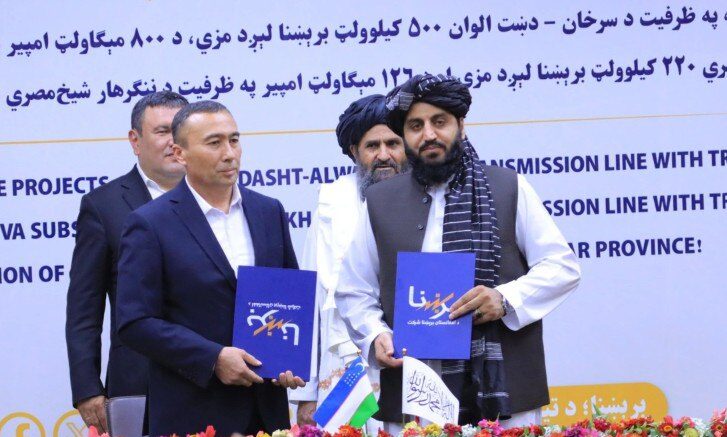
Afghanistan and Uzbekistan have signed four contracts worth $243 million aimed at expanding power transmission infrastructure and building new substations, according to Da Afghanistan Breshna Sherkat (DABS), Afghanistan’s state-owned utility company. The agreements were concluded between DABS and Uzbekistan’s Ministry of Energy, represented by Nego Energy and Uz Energy. Key components of the project include the extension of the 500-kilovolt Surkhan-Dasht Alwan transmission line, designed to carry up to 1,000 megawatts, the expansion of the Arghandeh substation to 800 megavolt-amperes (MVA), the construction of a new Sheikh Mesri substation in Nangarhar Province, and the extension of the 220-kilovolt Kabul-Nangarhar (Sheikh Mesri) line. The signing ceremony took place in Kabul and was attended by high-ranking officials, including Deputy Prime Minister for Economic Affairs Mullah Abdul Ghani Baradar Akhund, Head of the General Directorate of State-Owned Corporations Mawlawi Ahmad Jan Bilal, and members of the press. Describing the projects as “vital for ensuring reliable electricity services,” DABS CEO Dr. Abdul Bari Omar said the upgrades would support Afghanistan’s commercial, industrial, and agricultural development. Uzbekistan’s Minister of Energy, Jurabek Mirzamakhmudov, stressed that the initiative demonstrates “strong joint cooperation and continuous efforts by the leaders of the two friendly nations,” and pledged close collaboration on the implementation phase. In addition to the infrastructure deals, DABS also signed a separate long-term agreement with Uzbek companies to purchase electricity over a ten-year period, helping to stabilize Afghanistan’s power grid. As previously reported by The Times of Central Asia, DABS has entered into or prepared agreements for domestic energy generation projects totaling 1,070 megawatts over the past 11 months. Foreign partners are financing 70% of the estimated $1.01 billion investment. Afghanistan currently generates approximately 250 MW of electricity domestically and imports 800 MW from neighboring countries, Turkmenistan, Iran, Uzbekistan, and Tajikistan, at an annual cost of $250-280 million. Officials estimate national electricity demand at 6,000 to 7,000 MW, with the potential to reach 10,000 MW as industrial output grows.

Starlink Expected to Launch in Uzbekistan in 2026

The U.S.-based satellite internet provider Starlink is expected to begin operations in Uzbekistan in 2026, according to information published on the company’s official service availability website. Developed and operated by SpaceX, the aerospace company founded by Elon Musk, Starlink is designed to deliver high-speed internet access to underserved and remote areas around the world. Typical download speeds range between 50 and 250 megabits per second, making it an attractive option for regions with limited digital infrastructure. In neighboring Kazakhstan, Starlink officially launched earlier this month following a pilot phase during which the system primarily served rural schools. With the commercial rollout now complete, the service is available to all users across Kazakhstan, signaling Central Asia’s increasing integration into global next-generation connectivity networks. Meanwhile, Uzbekistan’s national space agency, Uzbekcosmos, has submitted a proposal to host the International Astronautical Congress in Samarkand in 2028. As part of the evaluation process, Christian Feichtinger, Executive Director of the International Astronautical Federation, recently visited Samarkand and Tashkent to assess infrastructure, security, and organizational capabilities. If successful, Uzbekistan’s bid could bring global space industry leaders and potentially Elon Musk himself, to the historic Silk Road city.

Opinion: Over the Past Eight Years, New Uzbekistan Has Absorbed Over $113 Billion in Foreign Investments

On the eve of the 34th anniversary of our country’s independence, the Executive Board of the International Monetary Fund finalized the 2025 consultations under Article IV of the IMF Agreement. The Fund’s main conclusion is that Uzbekistan’s economic outlook remains positive amid continued progress in the transition to a market economy. According to the published document, headline indicators are strong, including sustained growth, a reduced consolidated budget deficit, a narrower current account deficit, and an adequate level of international reserves. IMF staff note that the successful implementation of structural reforms supports a favorable baseline. Despite a high degree of uncertainty in global trade policy, the IMF projects real GDP growth will remain robust in the coming years. These trends reflect greater economic openness, ongoing industrialization, active investment policy, and measures designed to build the export potential of promising industries. The reform package - and the decisions already put into effect - aligns with available domestic resources and reserves, supporting long-term, sustainable development across the country and its regions. The commitment to irreversible market transformation allows Uzbekistan to combine targeted state support with space for private entrepreneurial initiative on the path to building a “New Uzbekistan.” In recent years, rising openness and growing investor confidence have driven a steady increase in capital formation. From 2017 to 2024, total foreign investment exceeded $113 billion, more than 80% of which comprised foreign direct investment and loans. Financing activity has been particularly strong in leading industries and the fuel and energy complex, accelerating industrialization in virtually every region. Deepening investment links with China, Russia, Germany, Turkey, Saudi Arabia, the Netherlands, the United States, the United Kingdom, and others is bringing advanced technologies and expertise, modern management practices, expanded localization, and stronger export capacity to priority sectors and regions. These resources are primarily directed to technological upgrades and modernization of existing facilities, as well as the creation of new production sites. Over the past eight years, investment programs have launched more than 96,000 projects worth about $100 billion, creating 1.8 million jobs. In 2024 alone, the value of commissioned projects was nearly eight times higher than in 2017, while the number of jobs increased by 2.6 times. Active involvement by the Head of State has been pivotal. Since the start of this year, visits and high-level events have produced 366 investment agreements totaling $75 billion. Roadmaps have also been approved for 222 projects worth about $45 billion. At the IV Tashkent International Investment Forum held in June, agreements were reached on investments exceeding $30 billion for 144 joint projects. In April 2025, on the sidelines of the 5th International Industrial Exhibition “INNOPROM. Central Asia” in Tashkent, 43 additional investment agreements were signed, with plans to attract a further $1 billion to the industrial sector. Uzbekistan has also intensified outreach to the international community about project opportunities. This year, Investors’ Day events took place in 13 foreign countries, drawing representatives of 700 well-known companies. More than 200 investment projects worth $6 billion were presented to potential...

Uzbekistan Targets Premium Global Brands with U.S. Cotton Imports

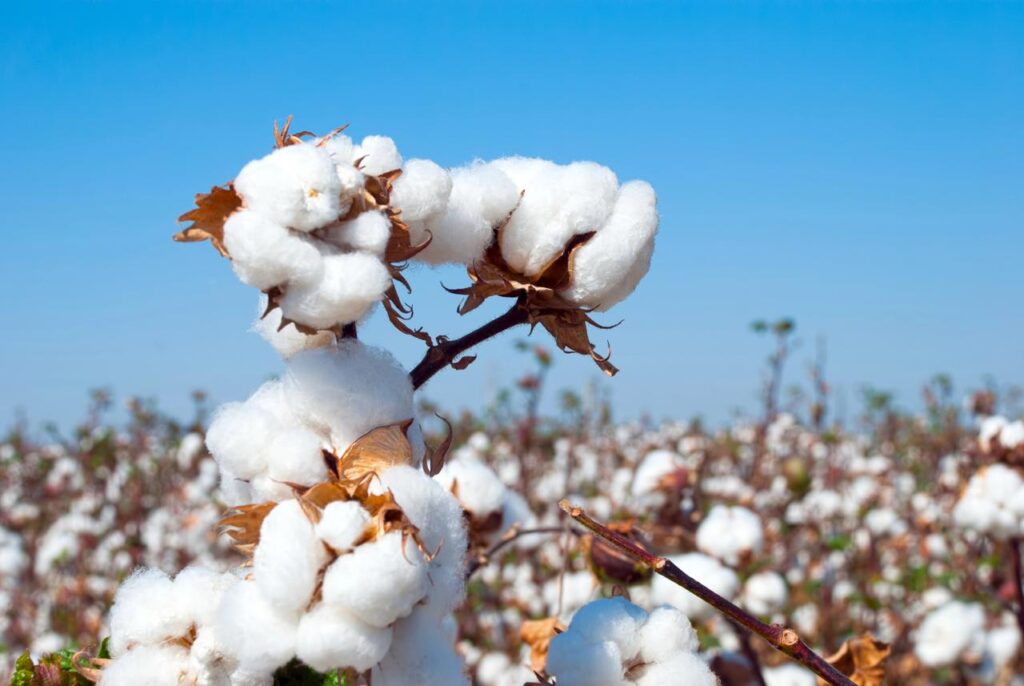
Uzbekistan, one of the world’s largest cotton producers, may begin importing cotton from the United States, a move that has prompted public debate. Inomjon Abdurakhmonov, Head of the Foreign Trade Department at the Ministry of Investment, Industry and Trade, explained that the decision is aimed at helping Uzbekistan secure a foothold in premium global markets and boost the reputation of its textile exports. A rapidly growing textile sector Over the past seven years, Uzbekistan’s textile industry has expanded dramatically. Since 2017, cotton yarn output has more than doubled from 412,000 to 970,000 tons, knitted fabric production has risen from 68,000 to 312,000 tons, and ready-made garment output has jumped from 960 million to 3.1 billion pieces. Exports have grown from about $1.1 billion in 2016 to $2.8 billion in 2024. This growth stems from a deliberate policy shift away from exporting raw cotton in favor of domestic processing. Today, 100% of the national harvest is used locally, feeding factories that now export finished goods to more than 50 countries. Why import cotton? Abdurakhmonov emphasized that imports would supplement, not replace, domestic supply. “Uzbek cotton is fully consumed domestically, but our factories still operate at about 75% capacity,” he said. “Premium-grade imports allow us to expand production and meet the strict quality standards of top global brands.” Similar strategies are used by other textile leaders such as Turkey, India, Vietnam, and China, all of which import high-grade cotton to meet market requirements. The U.S. advantage The plan focuses on importing Strict Middling, a high-grade U.S. fiber recognized for its consistency, strength, and sustainability credentials under the U.S. Cotton Trust Protocol. “For major brands like Levi’s, Ralph Lauren, Puma, and Gap, ‘Made with U.S. Cotton’ is not optional, it’s a prerequisite,” Abdurakhmonov explained. Such quality cannot easily be replicated in Uzbekistan’s climate, and producing comparable fiber locally would take at least five years. Financing the imports Purchases will be supported by the U.S. Department of Agriculture’s GSM-102 program, which offers credit guarantees and deferred repayment terms of 12-18 months. This allows Uzbek manufacturers to sell finished goods before paying for the raw cotton, covering up to 98% of the deal value. Long-term benefits While U.S. cotton costs 15-20% more than domestic fiber, it will be used selectively for contracts where premium quality is mandatory, with higher margins offsetting the expense. Beyond immediate production gains, Uzbekistan aims to enhance its global textile reputation and strengthen its position in supply chains. Preferential access under the EU’s GSP+ system has already nearly doubled exports to Europe, from $74 million to $140 million and similar results are expected from U.S. partnerships. “Importing U.S. cotton is not about shortages, it’s about credibility,” Abdurakhmonov said. “This strategy will secure our place in premium markets and create long-term opportunities for our economy.”

World Bank: Central Asia’s Growth to Slow but Remain Resilient

Central Asia is set to remain one of the world’s fastest-growing regions, although its economic momentum is expected to moderate in the coming years, according to the World Bank’s Spring 2025 Europe & Central Asia Economic Update. The region posted a growth rate of 5.5% in 2024, with projections of 5.0% for 2025 and 4.4% for 2026 as oil output normalizes in Kazakhstan, re-exports fade, and remittance inflows settle. The World Bank also revised its 2024 forecast upward by 0.8 percentage points, citing stronger-than-anticipated domestic demand. The forecasts incorporate data available through April 10, 2025. Country-Level Outlook Uzbekistan is forecast to grow by 6.5% in 2024, followed by 5.9% in both 2025 and 2026. Kyrgyzstan is expected to expand by 9.0% in 2024 and 6.8% in 2025. Tajikistan will grow by 8.4% in 2024 and 6.5% in 2025. Kazakhstan’s growth is projected to be more moderate, at 4.8% in 2024 and 4.5% in 2025. The World Bank attributes much of the region’s expansion to robust domestic demand, including household consumption, investment, and government spending, rather than export performance. Remittances continue to play a vital role in economic stability: they account for nearly 40% of GDP in Tajikistan, over 20% in Kyrgyzstan, and are critical in reducing poverty in Uzbekistan, where poverty rates would nearly double in their absence. Investment and Long-Term Prospects With investment comprising about 26% of GDP, Central Asia boasts one of the highest investment-to-GDP ratios among developing regions. This is largely driven by construction and large-scale infrastructure projects, particularly in the energy and transport sectors. However, the road to high-income status remains long. According to the Bank, based on current trajectories, it would take Kazakhstan and Turkmenistan approximately 40 years, Kyrgyzstan 70 years, and Uzbekistan and Tajikistan over 100 years to reach the high-income threshold of $14,005 in per capita income, a benchmark set for 2023. Risks and Policy Recommendations These forecasts are based on data available through April 10, 2025, and reflect persistent challenges stemming from the COVID-19 pandemic, ongoing cost-of-living pressures, and regional trade disruptions since 2022. To sustain momentum, the World Bank urges policymakers to pursue structural reforms and channel investment into productivity enhancements, technology adoption, and innovation. Without such efforts, growth could fall below potential in the years ahead.