• KGS/USD = 0.01144 0%
  • KZT/USD = 0.00205 0%
  • TJS/USD = 0.10429 0.29%
  • UZS/USD = 0.00008 0%
  • TMT/USD = 0.28490 0%
  • KGS/USD = 0.01144 0%
  • KZT/USD = 0.00205 0%
  • TJS/USD = 0.10429 0.29%
  • UZS/USD = 0.00008 0%
  • TMT/USD = 0.28490 0%
  • KGS/USD = 0.01144 0%
  • KZT/USD = 0.00205 0%
  • TJS/USD = 0.10429 0.29%
  • UZS/USD = 0.00008 0%
  • TMT/USD = 0.28490 0%
  • KGS/USD = 0.01144 0%
  • KZT/USD = 0.00205 0%
  • TJS/USD = 0.10429 0.29%
  • UZS/USD = 0.00008 0%
  • TMT/USD = 0.28490 0%
  • KGS/USD = 0.01144 0%
  • KZT/USD = 0.00205 0%
  • TJS/USD = 0.10429 0.29%
  • UZS/USD = 0.00008 0%
  • TMT/USD = 0.28490 0%
  • KGS/USD = 0.01144 0%
  • KZT/USD = 0.00205 0%
  • TJS/USD = 0.10429 0.29%
  • UZS/USD = 0.00008 0%
  • TMT/USD = 0.28490 0%
  • KGS/USD = 0.01144 0%
  • KZT/USD = 0.00205 0%
  • TJS/USD = 0.10429 0.29%
  • UZS/USD = 0.00008 0%
  • TMT/USD = 0.28490 0%
  • KGS/USD = 0.01144 0%
  • KZT/USD = 0.00205 0%
  • TJS/USD = 0.10429 0.29%
  • UZS/USD = 0.00008 0%
  • TMT/USD = 0.28490 0%

Viewing results 31 - 36 of 935

Uzbekistan’s International Reserves Hit Record $66.3 Billion

Uzbekistan’s international reserves surged in 2025, rising by $25.1 billion to reach a record $66.3 billion as of January 1, 2026, according to the Central Bank of Uzbekistan. This 61% increase compared to the start of the year was primarily driven by rising global gold prices, although foreign currency reserves also grew significantly. In December alone, gold and foreign exchange reserves increased by $5.08 billion, an 8.3% month-on-month gain. This marks the highest reserve level since the Central Bank began publishing official statistics in 2013. Gold remained the dominant contributor to the increase. According to the Central Bank, the value of gold in the country’s reserves rose by more than $4.23 billion in December, reaching $55.09 billion. The physical volume of gold holdings also expanded, growing from 12.2 million to 12.6 million troy ounces, an increase of 0.4 million ounces in just one month. Earlier in 2025, Uzbekistan’s gold strategy diverged from global trends. In September, the World Gold Council reported that Uzbekistan was the only country to record net gold sales. While most central banks were increasing their reserves, the Central Bank of Uzbekistan reduced its holdings during that period.

Uzbekistan Hosts 336 U.S. Companies

As of December 1, 2025, Uzbekistan is home to 336 enterprises with U.S. capital participation, according to data released by the National Statistics Committee. The figures reflect the growing presence of American businesses in Uzbekistan amid ongoing efforts to strengthen bilateral economic ties. Of the total, 146 are joint ventures, while 190 are fully foreign-owned enterprises. Tashkent city accounts for the majority, hosting 237 companies, a testament to its role as Uzbekistan’s primary financial and commercial hub. Tashkent region follows with 31 companies, while Samarkand region hosts 19. Other regions with U.S.-capital enterprises include Bukhara (8), Kashkadarya and Navoi (6 each), Fergana and Jizzakh (5 each), Andijan, Syrdarya, and the Republic of Karakalpakstan (4 each), Namangan and Khorezm (3 each), and Surkhandarya (1). The latest data comes amid a broader institutional push to enhance Uzbekistan-U.S. economic cooperation. In November 2025, the government launched the Uzbekistan-U.S. Business and Investment Council, a new platform aimed at deepening trade and investment ties. The initiative was formalized by presidential decree on November 12, following agreements reached during President Shavkat Mirziyoyev’s official visit to Washington for the C5+1 summit. In a further step to facilitate business and tourism links, Uzbekistan introduced a visa-free regime for U.S. citizens starting January 1, 2026, allowing stays of up to 30 days.

Kazakhstan Boosts Trade with Turkic States on Back of Rising Exports

Kazakhstan has significantly increased mutual trade volumes with member states of the Organization of Turkic States (OTS), primarily driven by a surge in exports. According to data from the first ten months of 2025, trade turnover with OTS countries rose by nearly 11%, Deputy Minister of National Economy Asan Darbaev announced at the Third General Assembly of the Union of Turkic Chambers of Commerce and Industry (TCCI) in Astana. The OTS includes Azerbaijan, Kazakhstan, Kyrgyzstan, Turkmenistan, Turkey, and Uzbekistan as full members. Hungary and Northern Cyprus hold observer status and contribute to deepening economic, cultural, and political cooperation across the Turkic world. “At the end of ten months of 2025, the volume of mutual trade between Kazakhstan and OTS countries reached approximately $10.4 billion, which is almost 11% higher than the same period last year,” Darbaev stated. He noted that this growth was largely due to a 16.6% increase in Kazakhstani exports to OTS member states, which totaled $7.6 billion. Imports from these countries to Kazakhstan amounted to $2.8 billion. The export surge was driven by increased shipments of copper and copper cathodes, crude oil, wheat, petroleum products, sunflower oil, and a range of metallurgical and agro-industrial goods. According to Darbaev, this indicates not only the continued strength of Kazakhstan’s raw materials sector but also the gradual diversification of exports with higher value-added products. Turkey, Uzbekistan, Kyrgyzstan, and Azerbaijan remain Kazakhstan’s principal trading partners within the OTS. Turkey leads with a trade turnover of $4.36 billion, followed by Uzbekistan at $3.88 billion. Trade with Kyrgyzstan reached $1.78 billion, while trade with Azerbaijan stood at approximately $390 million. During the assembly, Kazakhstan assumed the rotating chairmanship of the TCCI for the first time since the Union's establishment in 2019. The organization includes chambers of commerce and industry from Azerbaijan, Kazakhstan, Kyrgyzstan, Turkey, Uzbekistan, Turkmenistan, and Hungary. It serves as a key platform for advancing trade, industrial cooperation, investment, and technology exchange among member and observer states. Raimbek Batalov, chairman of the presidium of Kazakhstan’s National Chamber of Entrepreneurs “Atameken,” was appointed head of the TCCI for a one-year term. “The Turkic economic space today possesses all the prerequisites for a qualitative leap forward, scale, resources, an institutional foundation, and political will. Our shared goal is to convert this potential into sustainable production, investment, job creation, and improved living standards,” Batalov said. Delegates at the assembly identified priority areas for future cooperation, including the development of joint industrial projects, operationalization of the Turkic Investment Fund, reduction of trade and technical barriers, and enhanced transport and logistics connectivity. Previously, The Times of Central Asia reported that energy ministers from OTS countries had discussed key joint initiatives in December 2025 as part of ongoing regional collaboration.

Uzbekistan to Launch Islamic Finance Services in 2027

Uzbekistan plans to introduce Islamic finance services at a national level, with the first offerings set to launch in 2027. According to the updated draft of the Uzbekistan 2030 development strategy, at least three commercial banks are expected to provide Sharia-compliant financial services by the end of the decade. The strategy outlines the creation of a legal and institutional framework to support Islamic finance, beginning with one commercial bank in 2027 and expanding to three banks by 2029-2030. The initiative will be financed through the banks’ own resources, with the Central Bank designated as the lead regulatory authority. This initiative follows earlier legislative steps aimed at diversifying Uzbekistan’s financial system. In September 2023, the Legislative Chamber of the country's parliament, the Oliy Majlis, passed a draft law on Islamic banking in its first reading, a milestone in the country’s push toward financial innovation and inclusion. As previously reported by The Times of Central Asia, the draft legislation includes amendments to the Tax Code, Civil Code, and other legal statutes. It introduces formal definitions for Islamic banks, Sharia-compliant operations, investment deposits, and relevant regulatory standards. Central Bank Deputy Chairman Abrorkhuja Turdaliev has emphasized that the reforms go beyond removing legal obstacles. In comments to local media, he highlighted the need to establish institutional mechanisms, including specialized Sharia councils, audit and accounting frameworks, and a dedicated tax regime, to ensure the system functions in accordance with Islamic financial principles. In an interview with Spot, Turdaliev stated that the Central Bank expects up to ten Islamic banks to be operating in Uzbekistan by 2030. In addition, several traditional banks, including three state-owned institutions, are expected to launch Islamic “windows” to provide Sharia-compliant services alongside conventional products.

Kazakhstan’s MOST Ventures Invests in Uzbek Startup Bito, Valuing Company at $10 Million

Kazakhstan-based venture capital firm MOST Ventures has acquired a stake in Uzbekistan’s Bito, marking a significant cross-border investment in Central Asia’s growing tech ecosystem. The deal, completed in Tashkent on December 25 as part of a Bridge funding round, values the B2B software company at $10 million, a milestone that reflects rising investor confidence in Uzbekistan’s startup landscape. Bito is a business-to-business software-as-a-service (SaaS) company and a resident of Startup Garage, a leading Central Asian venture studio and accelerator. The company offers a digital ecosystem that integrates enterprise resource planning (ERP), financial technology, and artificial intelligence into a unified operating system tailored for small and medium-sized enterprises (SMEs). Its platform allows businesses to manage sales, finance, inventory, HR, payments, installment services, and analytics, all in one interface aimed at improving operational transparency and decision-making. The Bridge round represents a pivotal moment in Bito’s growth trajectory. The company reported that its valuation has tripled over the past ten months, though it has not disclosed the total amount raised. The investment will fund continued product development and regional expansion, with a primary focus on the Uzbek and Kazakh markets. As part of the transaction, Startup Garage partially exited its position in Bito. The accelerator played a crucial role in the company’s early-stage development, supporting product design, market entry, and initial scaling. Startup Garage founder Mukhammad Khalil said the deal highlights the increasing maturity of Central Asia’s startup ecosystem and its ability to attract institutional capital. “This transaction shows that companies in the region can secure funding based on strong fundamentals and sustainable growth,” he said. Bito founder Uchqun Tulavov called the investment a validation of the company’s strategic vision. “We are not simply building a product, we are setting a new standard for digital infrastructure for small and medium-sized businesses across the region,” he said. “The support of MOST Ventures confirms our direction as we integrate ERP, fintech, and AI into a unified operating platform.” Following the funding round, Bito plans to accelerate its regional footprint while consolidating its role as a leading B2B SaaS provider in Central Asia.

Uzbekistan and Kazakhstan Emerge as Top Investment Destinations in Eurasian Region

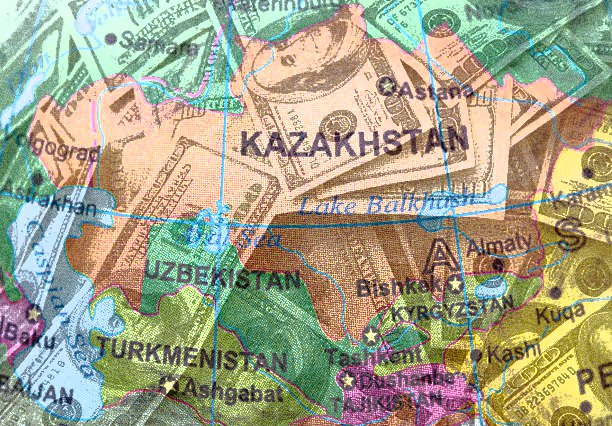
A new report from the Eurasian Development Bank (EDB) highlights a significant shift in investment flows within the Eurasian region, with Central Asia, particularly Uzbekistan and Kazakhstan, emerging as the primary recipients of foreign direct investment (FDI). Titled Investment Cooperation in the Eurasian Region Based on EDB Monitoring of Mutual Investments, the report provides a detailed analysis of mutual FDI trends across former Soviet republics (excluding the Baltic states) and Mongolia. Despite a global downturn in FDI, investment activity across the Eurasian region continues to grow. As of the first half of 2025, mutual FDI between member countries reached a record $48.4 billion, with private businesses driving the majority of the growth. Kazakhstan and Uzbekistan Take the Lead Kazakhstan has become a central player in regional investment. The country’s outbound investments total $3.25 billion, while inbound investments stand at $9.4 billion, accounting for 19.5% of all mutual FDI in the region. Notably, Kazakhstan’s investment in neighboring Uzbekistan rose by 60% over the past 18 months, driven primarily by construction projects. Uzbekistan is now the largest recipient of FDI in the Eurasian region, attracting over $10.7 billion in inbound investment, 22.3% of the regional total. The country also doubled its outbound investment in 2025 compared with the previous year, reaching $396 million. Uzbek companies invested heavily in manufacturing, which made up 85% of their foreign investment activity. Russia remains Uzbekistan’s largest investor, accounting for 90% of the total. Intra-Regional Investment on the Rise Intra-regional investment in Central Asia reached $1.3 billion in the first half of 2025, a 42% increase compared to 2023 and nearly triple the volume recorded in 2016. Kazakhstan remains the largest regional capital exporter, while Uzbekistan continues to lead as the main recipient. Roughly 80% of these intra-regional investments are concentrated in the construction, manufacturing, and financial sectors. Other Central Asian Economies Also Attract Investment Kyrgyzstan recorded $2.4 billion in incoming FDI, up 21% from 2023. The increase was largely driven by investments in manufacturing and energy. Tajikistan also saw modest growth, with mutual FDI from Eurasian countries reaching $530 million by mid-2025, up 3% compared to 2023. Russian investment continues to dominate, comprising 93% of the total and focusing on energy, telecommunications, and financial services.