• KGS/USD = 0.01144 0%
  • KZT/USD = 0.00210 0%
  • TJS/USD = 0.10523 0%
  • UZS/USD = 0.00008 0%
  • TMT/USD = 0.28571 0%
  • KGS/USD = 0.01144 0%
  • KZT/USD = 0.00210 0%
  • TJS/USD = 0.10523 0%
  • UZS/USD = 0.00008 0%
  • TMT/USD = 0.28571 0%
  • KGS/USD = 0.01144 0%
  • KZT/USD = 0.00210 0%
  • TJS/USD = 0.10523 0%
  • UZS/USD = 0.00008 0%
  • TMT/USD = 0.28571 0%
  • KGS/USD = 0.01144 0%
  • KZT/USD = 0.00210 0%
  • TJS/USD = 0.10523 0%
  • UZS/USD = 0.00008 0%
  • TMT/USD = 0.28571 0%
  • KGS/USD = 0.01144 0%
  • KZT/USD = 0.00210 0%
  • TJS/USD = 0.10523 0%
  • UZS/USD = 0.00008 0%
  • TMT/USD = 0.28571 0%
  • KGS/USD = 0.01144 0%
  • KZT/USD = 0.00210 0%
  • TJS/USD = 0.10523 0%
  • UZS/USD = 0.00008 0%
  • TMT/USD = 0.28571 0%
  • KGS/USD = 0.01144 0%
  • KZT/USD = 0.00210 0%
  • TJS/USD = 0.10523 0%
  • UZS/USD = 0.00008 0%
  • TMT/USD = 0.28571 0%
  • KGS/USD = 0.01144 0%
  • KZT/USD = 0.00210 0%
  • TJS/USD = 0.10523 0%
  • UZS/USD = 0.00008 0%
  • TMT/USD = 0.28571 0%

Viewing results 133 - 138 of 326

United States Supports Uzbekistan’s Methane Reduction Efforts

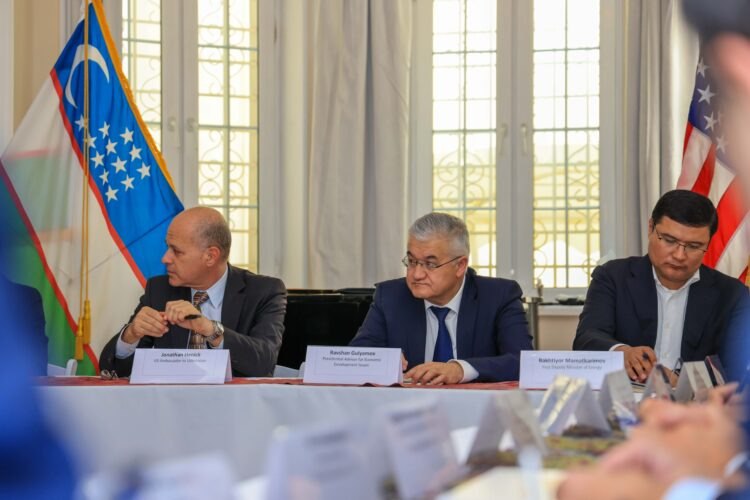
The U.S. Embassy in Uzbekistan reports that a joint project between GasGreen Asia LLC, a subsidiary of Maryland-based Climate Compass, and Uzbekistan’s national gas distribution company, Hududgazta’minot JSC, has been engaged in detecting and repairing natural gas leaks within the country’s national gas distribution system. This project contributes to the country’s green economy transition and commitments under the Global Methane Pledge. Climate Compass, LLC is a world leader in providing logistical and technical services for greenhouse gas emissions reduction projects. A Korean carbon finance company, Ecoeye Co., Ltd., is the principal investor of the project, which began in March 2023. Since the project’s inception, over 50,000 individual methane leaks have been identified, measured, and repaired, reducing over seven million tons of carbon dioxide equivalent emissions per year. The project has created more than 200 local jobs, including engineers, data specialists, and project managers, who received intensive training from American technical experts. The repairs have generated tens of millions of dollars in savings for Hududgazta’minot by preventing gas losses and contributing to significant environmental benefits. At the September 24 event highlighting the project’s significant achievements, U.S. Ambassador to Uzbekistan Jonathan Henick said: “The United States welcomes Uzbekistan’s commitment to a broad-based transition to a green economy. This project supports Uzbekistan’s efforts to attract foreign direct investment while reducing greenhouse gas emissions.” According to Henick, the United States strongly supported Uzbekistan’s decision to join the Global Methane Pledge in 2022, an initiative to reduce methane emissions worldwide. Methane reduction is critical to Uzbekistan’s efforts to meet its nationally determined contributions under the Paris Agreement on Climate Change. According to the United Nations Environment Program, methane emissions have accounted for approximately 30 percent of global warming and are an increasingly growing challenge. According to the “Methane in Central Asia: Emissions, Trends, Actions” report, Uzbekistan’s annual greenhouse gas (GHG) emissions remained largely stable and declined slightly over the past 15 years, ranging between 180 and 200 million tons of CO2-equivalent or 5 tons per person. The report says the country’s energy sector is responsible for 75–80 percent of GHG emissions, including 50 percent from fuel combustion and 25–30 percent from methane leaks in the coal, oil, and gas sectors, the equivalent of 50 million tons of CO2. Uzbekistan has successfully decoupled GHG emissions from economic growth and intends to reduce the specific GHG emissions per GDP by 35 percent by 2030 compared to the 2010 level.
Kazakhstan and Uzbekistan Agree To Establish Stations for Syr Darya Water Measurement

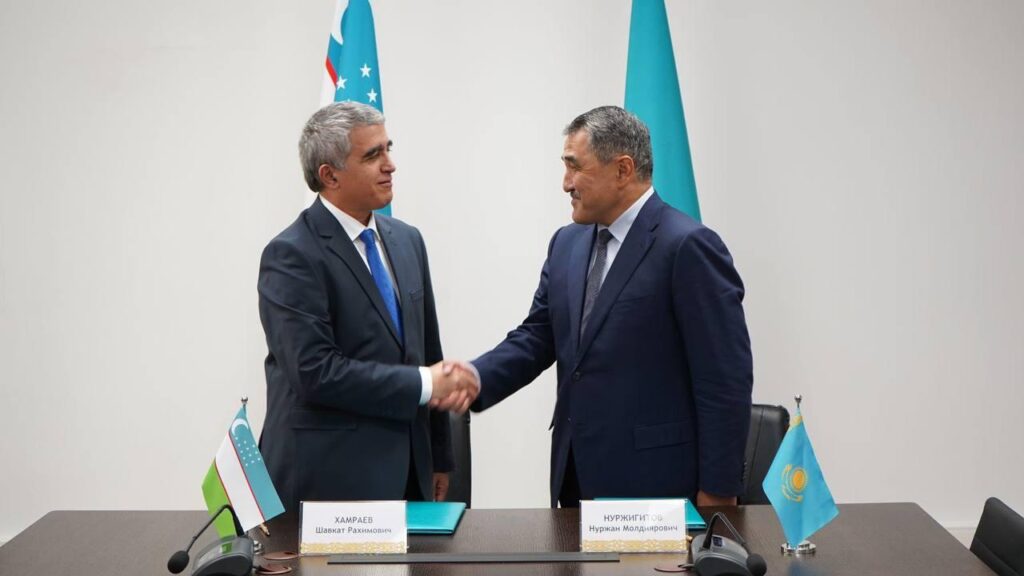
The press service of the Ministry of Water Management and Irrigation of Kazakhstan reports that Kazakhstan and Uzbekistan have agreed to install ten automated measuring stations in Syr Darya to accurately measure water resources. Shavkat Hamroyev, the Minister of Water Management of Uzbekistan, met with Nurzhan Nurzhigitov, his counterpart in Kazakhstan, with the two reportedly discussed automating measuring stations and digitizing water accounting in Syr Darya. Nurzhigitov emphasized that negotiations with international financial organizations and companies are in progress for the joint implementation of the project. The ministers also discussed the modes of operation of the Norin-Syr Darya cascade reservoirs for next year’s pre-irrigation season. “Many thanks to our colleagues from Uzbekistan for their active participation in the International Fund for Saving the Aral Sea (IFSA) meeting and the proposals voiced," Nurzhigitov stated. "Over the year, we have become convinced that our joint work produces positive results, so we intend to continue close bilateral cooperation. We have common views on many issues. This allows us to resolve most of the existing issues on a mutually beneficial basis.” In return, Hamroyev expressed Uzbekistan’s desire to strengthen cooperation within the IFSA. “Uzbekistan fully supports Kazakhstan’s chairmanship of the International Fund... We want to strengthen cooperation in this direction and work on joint projects. For example, preserving the ecosystems of the Syr Darya and Amu Darya basins, providing residents with quality drinking water, restoring small and local water bodies.” In addition, the parties discussed developing a regional strategy for the use of water resources. In May of this year, Hamroyev told a parliamentary hearing that watersheds from the Amu Darya and Syr Darya rivers are forecasted as being favorable this year.

Kazakhstan Chairs International Fund for Saving the Aral Sea

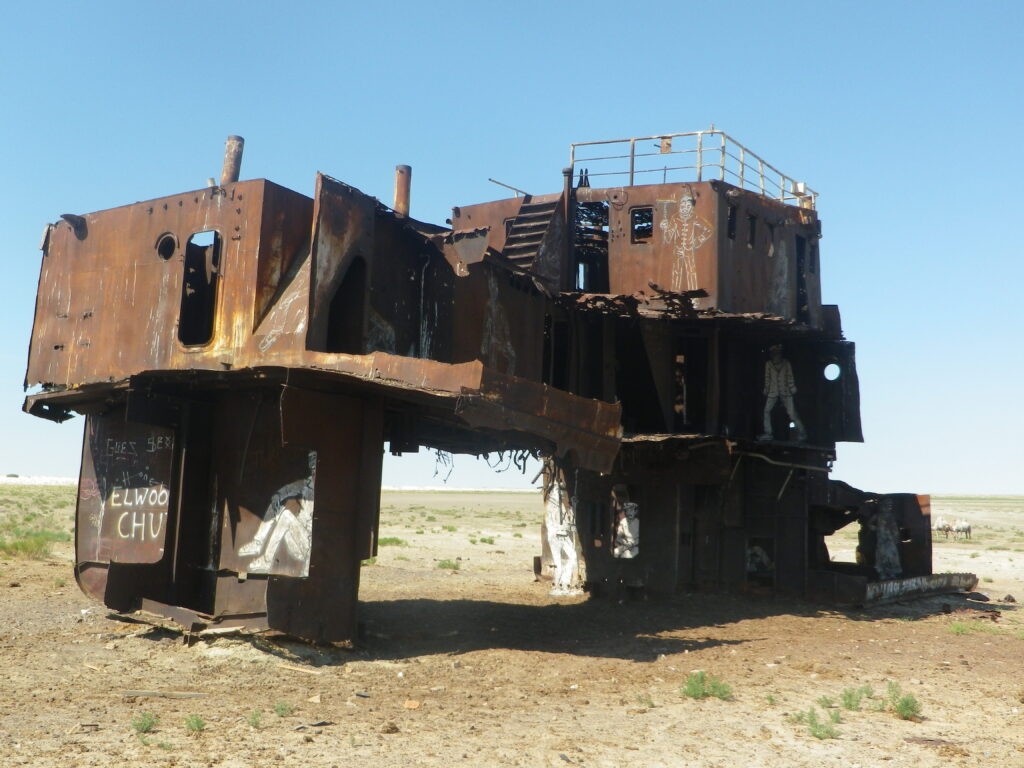
Since the beginning of 2024, 1.9 billion cubic meters of water have been sent to the North Aral Sea, raising its volume to 22 billion cubic meters. This announcement was made by Kazakhstan’s Minister of Water Resources and Irrigation Nurzhan Nurzhigitov  at the first meeting of the Board of the International Fund for Saving the Aral Sea (IFAS) on September 18, attended by delegations from  Kazakhstan, Tajikistan, Turkmenistan, Uzbekistan, and Kyrgyzstan ( as an observer country). The IFAS was established in 1993 to unite efforts by participating countries to mitigate the negative impact of the Aral Sea's desertification on the natural environment and the region's population. Discussions focused on progress on two large-scale projects: a program to assist the Aral Sea basin countries, and the Regional Environmental Protection Program for Sustainable Development in Central Asia, which aims to develop the principles of green economy and adaptation to climate change. The meeting commended Kazakhstan's commitment to working in close cooperation with other Central Asian states on preserving the Aral Sea and approved plans for work to be undertaken by the IFAS under President Kassym-Jomart Tokayev chairmanship from 2024-'26. "At the height of this year's irrigation period, up to 80 cubic meters of water per second flowed into the sea along the Syr Darya River, compared to only six cubic meters per second last year. In recent years, the volume of water in the North Aral Sea has been decreasing, but since the beginning of 2024, it has increased again and reached 22 billion cubic meters," stated Nurzhigitov. " To ensure a further increase -  we are strengthening water diplomacy and developing the second phase of the North Aral Sea conservation project." The North Aral Sea, the portion of the former Aral Sea fed by the Syr Darya River, split from the South Aral Sea in 1987–'88 when water levels dropped due to water diversion for agricultural use. According to the Kazakh Ministry of Water Resources, 75% of the flow of the Syr Darya River comes from Kyrgyzstan, 20% from Uzbekistan, and 5% from Kazakhstan.

Air Pollution Linked to One in Five Infant Deaths in Central Asia

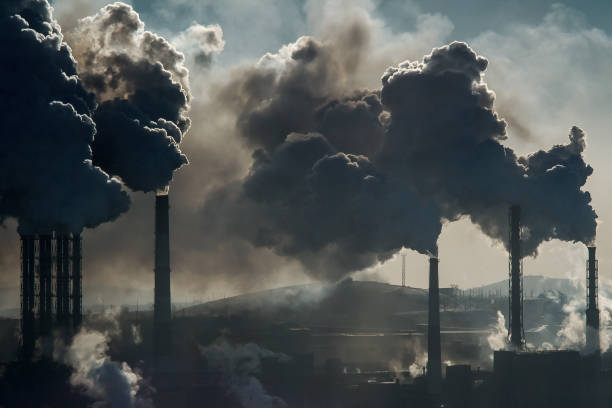
According to a report  by UNICEF, an estimated 6,441 children and teenagers died from causes attributable to air pollution in 23 countries across Europe and Central Asia in 2021. Statistics show that 85% of the children died in the first year of their lives, and one in five infant deaths were linked to air pollution. As stated in the report, “Most deaths were attributed to ambient and household fine particulate matter air pollution (PM2.5). And all of these deaths were preventable." In 2021, the region's children and teenagers lost more than 580,000 years of healthy life (DALYs) as a result of premature death and disability caused by air pollution. Compared to other environmental factors, including high temperatures, unsafe water, and poor sanitation,  polluted air has been found, by far, the most life-threatening. Exposure to PM2.5 air pollution is also associated with higher rates of miscarriage, early fetal loss, preterm birth, and low birth weight and in pregnant women, increases the risk of gestational diabetes, high blood pressure, and postpartum depression. By restricting fetal growth, air pollution can significantly increase the risk of disease, heart defects, pneumonia, asthma, eczema, allergies, and high blood pressure.   Even before birth, air pollution can harms a child’s lungs, brain, and organs, affecting cognitive development and raising the risk of respiratory diseases throughout the child's life. Since children breathe more air relative to their body weight, they absorb more pollutants than adults, and for this reason, newborns are especially vulnerable to pneumonia, a leading cause of infant death. Air pollution in Europe and Central Asia, especially from PM2.5 and PM10 particles, is mainly caused by the use of fossil fuels in homes, businesses, and institutions. Coal is especially harmful to children’s health. Energy sources vary between and within countries depending on power supplies and infrastructure. High levels of air pollution from the use of coal for residential heating in winter, coupled with the interaction of ambient air pollution with indoor air pollution in homes, schools, health care facilities, etc., are cited by UNICEF as the primary sources of exposure for children. UNICEF notes the importance of the region's governments and institutions focusing more attention and resources to air pollution prevention, energy efficiency, clean energy use, supporting clean air measures, and protecting children from exposure. The organization also emphasizes the need to develop air quality warning systems and corresponding action plans for schools and kindergartens in Europe and Central Asia. Last but not least, as a measure to improve air quality, UNICEF recommends enhancing data collection to better understand local pollution, campaigns promoting clean energy and energy efficiency in homes, and a strict smoking bans in indoor public spaces. High levels of air pollution observed in Central Asian countries is ongoing and the subject of several articles previously covered by The Times of Central Asia.

Climate Crisis May Drastically Reduce Production in Central Asia

Central Asia may face serious economic losses due to climate change, which may reach a 6.5% annual decline in production by 2060. These figures were announced by Bo Li, Deputy Managing Director of the International Monetary Fund (IMF), at the “New Economic Challenges for Long-Term Development” forum. According to Bo, the Caucasus and Central Asia region is particularly vulnerable to climate change. Soaring temperatures and increasing frequency of droughts and floods are reducing crops, destroying infrastructure, and lowering living standards. “According to IMF estimates, if no action is taken to slow down climate change, Central Asia will lose up to 6.5% of its output annually by 2060,” Bo said. He noted that possible losses could be reduced with joint actions such as reducing carbon emissions, transitioning to a green economy, and adapting to changing climate conditions. As an example, Bo noted the efforts of Kyrgyzstan, that has already started to increase electricity tariffs and reduce energy subsidies, allowing the country to adapt to climate challenges and create new jobs in the “green” sector. Many Central Asian countries are taking steps to reform the energy sector and introduce “green” technologies. For example, Kazakhstan is actively cooperating with several countries to develop renewable energy and reform the energy sector. One key example is the partnership with the United States under the USAID Power Central Asia program. This initiative supports Kazakhstan and other Central Asian countries in modernizing energy markets, introducing clean energy, and encouraging private investment in renewable energy. Uzbekistan is undergoing a major reform of its energy system to reduce subsidies and promote renewable energy. The country plans to increase the share of renewable energy to 25% by 2030, which includes solar and wind energy projects. These measures will help Uzbekistan improve energy efficiency and reduce carbon dioxide emissions. In Tajikistan, USAID is implementing the Power Central Asia program, which supports energy cooperation in the region and encourages using renewable energy to help reduce dependence on fossil fuels and modernize energy systems.

Uzbekistan’s Largest Glacier Melts by 20 Meters in 12 Months, Expedition Finds

BBC Uzbekistan has reported, quoting the country’s Hydrometeorology Research Institute, that at the beginning of August an expedition of Uzbek and German scientists trekked to the Pakhtakor glacier, situated in the eastern part of Uzbekistan. The study of the Pakhtakor glacier, which is extremely difficult to reach and located in the Bostonliq district of the Tashkent region, near the borders with Kyrgyzstan and Kazakhstan, started in July of last year. The latest expedition found that Uzbekistan's largest glacier tongue (an extension of a glacier or ice stream projecting seaward) had retreated by 20 meters in the last year. The surface of the ablation part (the initial part of the glacier where the ice melts faster) has melted by 3 meters. Pakhtakor is one of the largest glaciers feeding the Pskom River. There are about 140 large and small glaciers in the Pskom River basin, which has a total area of 128 square kilometers. According to the BBC report, after the collapse of the Soviet Union, studies of permafrost were rarely conducted in other Central Asian countries except Kazakhstan. Although there are few glaciers in Uzbekistan, they play an essential role in the ecosystem. In low-water years, glaciers provide up to 25% of the total flow. Maksim Petrov, the head of the Center for Glacial Geology at the Institute of Geology and Geophysics of Uzbekistan, says the country's glaciers are melting at different rates. “The melting rate is almost in line with the average rate in Central Asia. However, the melting rate in our mountains in the eastern part is not high, and the glaciers have melted only up to 20%. The glaciers in Surkhandarya have melted by 40%. The most catastrophic situation is in Kashkadarya — up to 70%,” Petrov said at a roundtable discussion held by Cabar Asia in May. Petrov added: “Large glaciers are breaking up and breaking into pieces. It seems the number of glaciers is increasing, but their area is shrinking.” Various scientists point out that the shrinking area of glaciers has yet to seriously affect the water balance in Central Asia, and the observed water shortage is mainly caused by population and industrial growth. But in 2015, German researchers warned that glaciers in the Tian Shan mountains, which play an essential role in maintaining the water cycle in the region, are rapidly melting. Half of the total ice mass is forecast to melt by 2050. “Today, Tian Shan is losing an amount of ice equivalent to twice the annual water consumption of all of Germany,” the 2015 study stated.