• KGS/USD = 0.01144 0%
  • KZT/USD = 0.00212 0%
  • TJS/USD = 0.10456 0.19%
  • UZS/USD = 0.00008 0%
  • TMT/USD = 0.28490 0%
  • KGS/USD = 0.01144 0%
  • KZT/USD = 0.00212 0%
  • TJS/USD = 0.10456 0.19%
  • UZS/USD = 0.00008 0%
  • TMT/USD = 0.28490 0%
  • KGS/USD = 0.01144 0%
  • KZT/USD = 0.00212 0%
  • TJS/USD = 0.10456 0.19%
  • UZS/USD = 0.00008 0%
  • TMT/USD = 0.28490 0%
  • KGS/USD = 0.01144 0%
  • KZT/USD = 0.00212 0%
  • TJS/USD = 0.10456 0.19%
  • UZS/USD = 0.00008 0%
  • TMT/USD = 0.28490 0%
  • KGS/USD = 0.01144 0%
  • KZT/USD = 0.00212 0%
  • TJS/USD = 0.10456 0.19%
  • UZS/USD = 0.00008 0%
  • TMT/USD = 0.28490 0%
  • KGS/USD = 0.01144 0%
  • KZT/USD = 0.00212 0%
  • TJS/USD = 0.10456 0.19%
  • UZS/USD = 0.00008 0%
  • TMT/USD = 0.28490 0%
  • KGS/USD = 0.01144 0%
  • KZT/USD = 0.00212 0%
  • TJS/USD = 0.10456 0.19%
  • UZS/USD = 0.00008 0%
  • TMT/USD = 0.28490 0%
  • KGS/USD = 0.01144 0%
  • KZT/USD = 0.00212 0%
  • TJS/USD = 0.10456 0.19%
  • UZS/USD = 0.00008 0%
  • TMT/USD = 0.28490 0%

Viewing results 157 - 162 of 1139

Daines, Gor, Meredov Launch C5+1 Talks on Next-Gen U.S.–Central Asia Ties

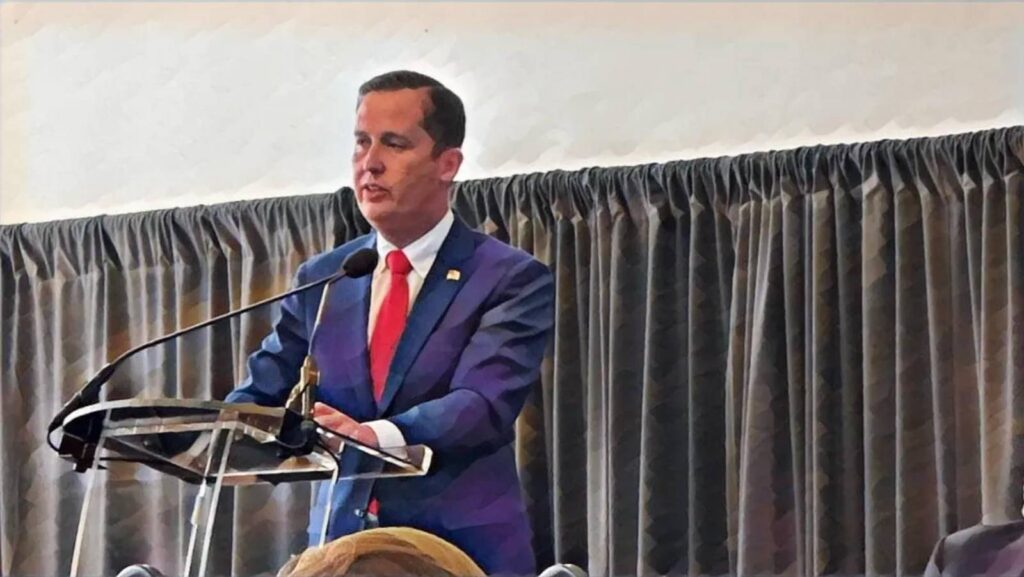
Washington, D.C. — The United States and the five nations of Central Asia – Kazakhstan, Kyrgyzstan, Tajikistan, Turkmenistan and Uzbekistan – marked a decade of partnership on Thursday with an opening panel at the C5+1 Tenth Anniversary Business Conference hosted by the U.S. Department of State. U.S. Senator Steve Daines (Montana), Sergio Gor, the newly appointed U.S. Special Envoy for South and Central Asia and Ambassador to India and Rashid Meredov, Turkmenistan’s Foreign Minister kicked things off with a bold forward-looking vision centered on deeper economic cooperation, net two-way investment flows, and a bolstered U.S. commitment to the region. Held at the Kennedy Center’s REACH campus, the session brought together senior U.S. officials, and Central Asian leaders and private sector companies to deepen a decade of growing cooperation, building on Trump’s transactional approach and first term achievements. Celebrating a Decade of Cooperation U.S. Senator Steve Daines, who moderated the session, not only praised the C5+1 platform’s record of achievements since 2015 but went further. He called the anniversary “a momentous occasion for our nations” to move forward in friendship and a sense of pragmatism, anchored in growing commerce, new investments, cultural exchange, and security cooperation. Daines emphasized that relations with the C5 countries are “vitally important for our national security and prosperity,” adding that the event aimed to pave the way for stronger, results-driven partnerships. Turning to the next speaker, Ambassador Sergio Gor, Daines offered unusually personal remarks, describing him as “truly one of the closest confidants of President Trump.” He noted that “Mr. Gor’s nomination demonstrates President Trump and his administration’s commitment to fostering closer ties between all of our nations.” Daines expressed eagerness to work with  “Sergio and the rest of President Trump’s team” to build upon the successes of previous US-Central Asian relations. U.S. Envoy Stresses Renewed Engagement In his address, Ambassador Sergio Gor,  underscored the administration’s renewed commitment to the region. He recounted that he and Deputy Secretary of State Christopher Landau had visited Kazakhstan and Uzbekistan just last week, praising the hospitality and partnership shown by both governments. Gor extended his appreciation to Kazakhstan, which he noted had “recently become a sponsor of the Kennedy Center,” and thanked Ambassador Richard Grenell for hosting the forum. Gor emphasized that “this President is making this partnership a top priority,” adding that the focus on the five Central Asian nations “is something that has been ignored in past administrations.” According to Gor, President Trump “has made a commitment and has instructed every individual here within the U.S. government to make sure [Central Asia] gets the priority that it deserves.” He emphasized the need to ramp up energy cooperation, open new trade avenues, and secure supply chains for critical minerals. “We are committed to further developing Central Asia’s vast mineral wealth and advancing critical-mineral security,” Gor underscoring C5+1’s shift from dialogue to deliverables and mutual cooperation. He also previewed the White House leaders’ meeting and dinner scheduled for later in the day, noting that several “historic deals” in commerce...

U.S. Secretary of State Marco Rubio Plans Visit to Central Asia in 2026

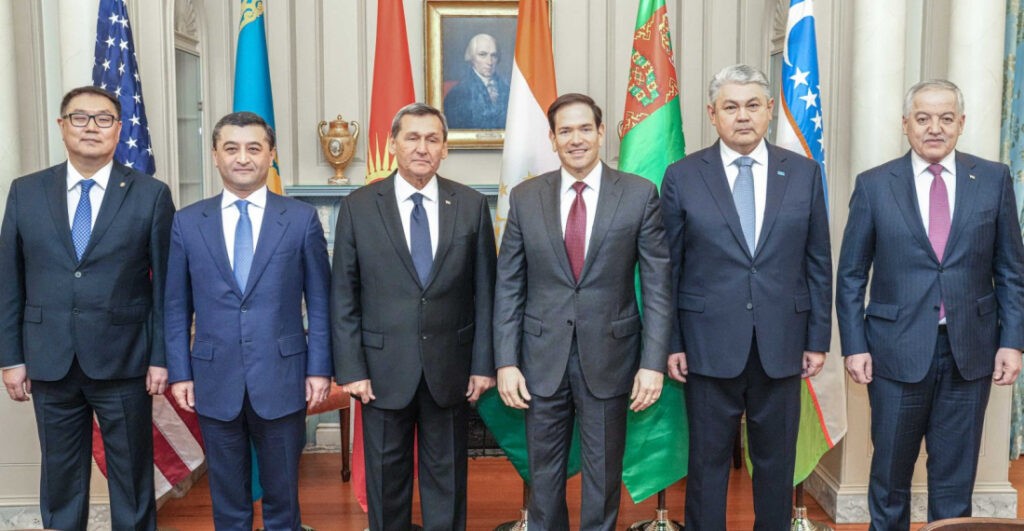
U.S. Secretary of State Marco Rubio announced on Wednesday his intention to visit all five Central Asian countries in 2026. Rubio made the statement during a meeting with the foreign ministers of Kazakhstan, Kyrgyzstan, Tajikistan, Turkmenistan, and Uzbekistan. The visit is part of a broader diplomatic initiative by U.S. President Donald Trump's administration to strengthen ties with the resource-rich region. Today, the presidents of the five Central Asian republics, Kassym-Jomart Tokayev (Kazakhstan), Sadyr Japarov (Kyrgyzstan), Emomali Rahmon (Tajikistan), Serdar Berdimuhamedov (Turkmenistan), and Shavkat Mirziyoyev (Uzbekistan), are scheduled to meet with President Trump in Washington. The summit is expected to focus on cooperation in the extraction of rare earth elements and other natural resources in Central Asia. Rubio emphasized the alignment of U.S. and Central Asian interests in promoting responsible and sustainable development of the extractive sector. “You are seeking to use the resources that God has blessed your countries with to create responsible development and diversify your economies,” he said at a reception hosted by the State Department. “I personally intend to visit in the coming year. All five [countries], so I know it would probably be a week-long trip. So we’ve got to work on that and make that happen together.” U.S. Deputy Secretary of State Christopher Landau stated that the invitation extended to Central Asian leaders is part of President Trump’s personal initiative to deepen engagement with the region. He highlighted broad opportunities for cooperation in business, investment, and strategic partnerships. Also speaking at the reception, Republican Senator James Risch said he intends to introduce legislation to repeal the Jackson-Vanik amendment, a Cold War-era law that restricts U.S. trade with non-market economies.

Deals, Not Declarations: U.S.–Central Asia Cooperation at Summit Crossroads

A landmark summit between the United States and the five Central Asian republics is scheduled for November 6 in Washington, D.C., bringing together the presidents of Kazakhstan, Kyrgyzstan, Tajikistan, Turkmenistan, and Uzbekistan. It will be the second leaders-level C5+1 meeting with a U.S. president—the first took place on the sidelines of the UN General Assembly in 2023—and the first time the format is hosted in the U.S. capital. The gathering also marks the 10th anniversary of the C5+1 diplomatic platform that connects Central Asia with Washington. The summit comes at a pivotal moment geopolitically; Russia remains consumed by its war in Ukraine, whilst China continues to expand its Belt and Road footprint across Eurasia. As the region’s strategic importance grows, both the United States and the Central Asian states see an opportunity to recalibrate their relationships, each approaching the meeting with distinct priorities and expectations. Washington’s Agenda: Critical Minerals and Connectivity For the United States, this summit is about converting diplomatic engagement into tangible deliverables. Officials want to see results in three main areas: critical minerals, regional connectivity, and security coordination. Congress and the administration view the region’s reserves of antimony, tungsten, uranium, and rare earth elements as essential to securing U.S. supply chains. During his October 2025 visit to Kazakhstan and Uzbekistan, Deputy Secretary of State Christopher Landau emphasized expanding cooperation on critical minerals and trade diversification. The Trump administration has prioritized these resources as part of a broader effort to reduce dependence on China. Trade routes are also in focus. The U.S. supports the Middle Corridor, a trans-Caspian route that links Central Asia with the South Caucasus and Europe. Infrastructure investments that bypass Russia are strategically important, and Washington wants to help harmonize customs and logistics to make that corridor more viable. These priorities form part of a wider push to anchor the region in transparent, market-based supply chains that connect Central Asia more directly with Western markets. Kazakhstan: Trade Normalization and Resource Investment Central Asia’s largest economy, Kazakhstan is expected to push for permanent normal trade relations with the U.S. The country still faces Cold War-era restrictions under the Jackson-Vanik amendment – as do Tajikistan, Turkmenistan, and Uzbekistan - with Astana long having viewed its repeal as a key milestone. That push has taken on new importance after Washington imposed a 25% tariff on Kazakh imports in mid-2025 - though Kazakh exports were exempted shortly thereafter - a move viewed by officials in Astana as inconsistent with efforts to expand economic cooperation. Kazakhstan is also looking to the U.S. for support in developing its mineral wealth. President Kassym-Jomart Tokayev’s government is actively mapping new rare earth deposits, and Washington has recently backed a private American bid to reopen Kazakhstan’s long-idle tungsten mine at Upper Kairakty, underscoring growing U.S. interest in Central Asia’s critical minerals sector. The two sides are also expanding industrial ties: in September 2025, Astana signed a $4.2 billion deal with U.S. rail manufacturer Wabtec to modernize Kazakhstan’s locomotive fleet and develop regional transport corridors...

Which Central Asian States Qualify as Middle Powers in 2025?

As global power shifts toward multipolarity, Central Asia’s states are emerging as active regional players. This article assesses which of the five republics—Kazakhstan, Uzbekistan, Turkmenistan, Kyrgyzstan, and Tajikistan—qualify as middle powers in 2025, based on economic strength, diplomatic reach, strategic capacity, and governance. Kazakhstan stands as the region’s only consolidated middle power, balancing fiscal stability, institutional reform, and multi-vector diplomacy. Uzbekistan is a rising aspirant, propelled by reforms but still reliant on external financing and centralized authority. The remaining states remain constrained by dependence and limited institutional depth. Together, they reflect a region increasingly capable of shaping, rather than merely absorbing, global and regional change. A comparative analysis of five Central Asian republics shows how far each has advanced toward this status. [vc_row][vc_column][vc_raw_html css=""]JTNDc3R5bGUlM0UlMEQlMEElMkYlMkElMjBCYXNlJTIwdGFibGUlMjBzdHlsaW5nJTIwJTJBJTJGJTBEJTBBLm1wLXdyYXBwZXIlMjAlN0IlMjBtYXgtd2lkdGglM0ElMjAxMDAwcHglM0IlMjBtYXJnaW4lM0ElMjAwJTIwYXV0byUzQiUyMHBhZGRpbmclM0ElMjAxNnB4JTNCJTIwY29sb3IlM0ElMjAlMjMwMDAlM0IlMjAlN0QlMEQlMEEubXAtdGFibGUlMjAlN0IlMjB3aWR0aCUzQSUyMDEwMCUyNSUzQiUyMGJvcmRlci1jb2xsYXBzZSUzQSUyMGNvbGxhcHNlJTNCJTIwJTdEJTBEJTBBLm1wLXRhYmxlJTIwdGglMkMlMjAubXAtdGFibGUlMjB0ZCUyMCU3QiUyMGJvcmRlciUzQSUyMDFweCUyMHNvbGlkJTIwJTIzMDAwJTNCJTIwcGFkZGluZyUzQSUyMDhweCUzQiUyMHRleHQtYWxpZ24lM0ElMjBsZWZ0JTNCJTIwY29sb3IlM0ElMjAlMjMwMDAlM0IlMjAlN0QlMEQlMEEubXAtdGFibGUlMjB0aGVhZCUyMHRoJTIwJTdCJTIwYmFja2dyb3VuZCUzQSUyMCUyMzAwMCUyMGNvbG9yJTNBJTIwJTIzZmZmJTNCJTIwZm9udC13ZWlnaHQlM0ElMjBib2xkJTNCJTIwcG9zaXRpb24lM0ElMjBzdGlja3klM0IlMjB0b3AlM0ElMjAwJTNCJTIwJTdEJTBEJTBBJTBEJTBBJTJGJTJBJTIwUmVzcG9uc2l2ZSUyMHN0YWNrJTIwb24lMjBzbWFsbCUyMHNjcmVlbnMlMjAlMkElMkYlMEQlMEElNDBtZWRpYSUyMCUyOG1heC13aWR0aCUzQSUyMDY0MHB4JTI5JTIwJTdCJTBEJTBBJTIwJTIwLm1wLXRhYmxlJTIwdGhlYWQlMjAlN0IlMjBkaXNwbGF5JTNBJTIwbm9uZSUzQiUyMCU3RCUwRCUwQSUyMCUyMC5tcC10YWJsZSUyQyUyMC5tcC10YWJsZSUyMHRib2R5JTJDJTIwLm1wLXRhYmxlJTIwdHIlMkMlMjAubXAtdGFibGUlMjB0ZCUyMCU3QiUyMGRpc3BsYXklM0ElMjBibG9jayUzQiUyMHdpZHRoJTNBJTIwMTAwJTI1JTNCJTIwJTdEJTBEJTBBJTIwJTIwLm1wLXRhYmxlJTIwdHIlMjAlN0IlMjBtYXJnaW4lM0ElMjAwJTIwMCUyMDEycHglMjAwJTNCJTIwYm9yZGVyJTNBJTIwMXB4JTIwc29saWQlMjAlMjMwMDAlM0IlMjAlN0QlMEQlMEElMjAlMjAubXAtdGFibGUlMjB0ZCUyMCU3QiUyMGJvcmRlciUzQSUyMG5vbmUlM0IlMjBib3JkZXItYm90dG9tJTNBJTIwMXB4JTIwc29saWQlMjAlMjMwMDAlM0IlMjBwb3NpdGlvbiUzQSUyMHJlbGF0aXZlJTNCJTIwcGFkZGluZy1sZWZ0JTNBJTIwNTAlMjUlM0IlMjBtaW4taGVpZ2h0JTNBJTIwNDJweCUzQiUyMCU3RCUwRCUwQSUyMCUyMC5tcC10YWJsZSUyMHRkJTNBJTNBYmVmb3JlJTIwJTdCJTBEJTBBJTIwJTIwJTIwJTIwY29udGVudCUzQSUyMGF0dHIlMjhkYXRhLWxhYmVsJTI5JTNCJTBEJTBBJTIwJTIwJTIwJTIwcG9zaXRpb24lM0ElMjBhYnNvbHV0ZSUzQiUwRCUwQSUyMCUyMCUyMCUyMGxlZnQlM0ElMjA4cHglM0IlMEQlMEElMjAlMjAlMjAlMjB0b3AlM0ElMjA4cHglM0IlMEQlMEElMjAlMjAlMjAlMjB3aWR0aCUzQSUyMGNhbGMlMjg1MCUyNSUyMC0lMjAxNnB4JTI5JTNCJTBEJTBBJTIwJTIwJTIwJTIwZm9udC13ZWlnaHQlM0ElMjBib2xkJTNCJTBEJTBBJTIwJTIwJTIwJTIwd2hpdGUtc3BhY2UlM0ElMjBub3JtYWwlM0IlMEQlMEElMjAlMjAlN0QlMEQlMEElMjAlMjAubXAtdGFibGUlMjB0ZCUzQWxhc3QtY2hpbGQlMjAlN0IlMjBib3JkZXItYm90dG9tJTNBJTIwMCUzQiUyMCU3RCUwRCUwQSU3RCUwRCUwQSUyRiUyQSUyMERlc2t0b3AlMjBkZWZhdWx0JTIwJTJBJTJGJTBEJTBBLm1wLXRhYmxlJTIwdGglMkMlMjAubXAtdGFibGUlMjB0ZCUyMCU3QiUyMGZvbnQtc2l6ZSUzQSUyMDEycHglM0IlMjAlN0QlMEQlMEElMEQlMEElMkYlMkElMjBCZWxvdyUyMDEwMjRweCUyMCUyQSUyRiUwRCUwQSU0MG1lZGlhJTIwJTI4bWF4LXdpZHRoJTNBJTIwMTAyNHB4JTI5JTIwJTdCJTBEJTBBJTIwJTIwLm1wLXRhYmxlJTIwdGglMkMlMjAubXAtdGFibGUlMjB0ZCUyMCU3QiUyMGZvbnQtc2l6ZSUzQSUyMDExcHglM0IlMjAlN0QlMEQlMEElN0QlMEQlMEElMEQlMEElM0MlMkZzdHlsZSUzRQ==[/vc_raw_html][vc_column_text css="" woodmart_inline="no" text_larger="no"] As global power shifts toward multipolarity, Central Asia’s states are emerging as active regional players. This article assesses which of the five republics—Kazakhstan, Uzbekistan, Turkmenistan, Kyrgyzstan, and Tajikistan—qualify as middle powers in 2025, based on economic strength, diplomatic reach, strategic capacity, and governance. Kazakhstan stands as the region’s only consolidated middle power, balancing fiscal stability, institutional reform, and multi-vector diplomacy. Uzbekistan is a rising aspirant, propelled by reforms but still reliant on external financing and centralized authority. The remaining states remain constrained by dependence and limited institutional depth. Together, they reflect a region increasingly capable of shaping, rather than merely absorbing, global and regional change. A comparative analysis of five Central Asian republics shows how far each has advanced toward this status. Economic Power Economic autonomy is a defining attribute of middle-power capability, enabling states to project influence, sustain policy independence, and finance external engagement. In Central Asia, dependence on Official Development Assistance (ODA) and remittances often reflects constrained fiscal capacity and limited domestic capital formation, while diversified, resilient economies underpin strategic autonomy. Key indicators—GDP per capita, credit ratings, debt sustainability, and export diversification—illuminate the region’s economic hierarchy. Kazakhstan stands as Central Asia’s only consolidated economic middle power. Resource-backed growth, a prudent fiscal regime, and a sovereign wealth fund (the National Fund of Kazakhstan) have anchored macroeconomic stability. With a “BBB” credit rating or equivalent from major agencies, Kazakhstan demonstrates sound debt management and policy credibility. Ongoing diversification efforts under the new economic policies—from renewables to financial modernization—aim to reduce hydrocarbon dependence and deepen integration into global supply chains. Its role as a trans-Caspian logistics hub enhances both strategic and commercial influence. Uzbekistan, by contrast, is an emerging frontier market propelled by post-2017 reforms in currency liberalization, taxation, and state-enterprise restructuring. Rapid GDP growth and expanding private-sector activity mark its trajectory toward fiscal autonomy, though continued ODA inflows averaging around $1.1 billion to 1.3 billion annually, primarily from the Asian Development Bank (ADB), the World Bank, and bilateral partners such as Japan, the United States, and the European Union, highlight its residual dependence on external concessional financing. To achieve genuine middle power status, Uzbekistan must roughly double its real economic output over the next decade, a scale of growth aligned with the shift...

UN Women and ACWA Power Partner to Advance Gender Equality in Uzbekistan

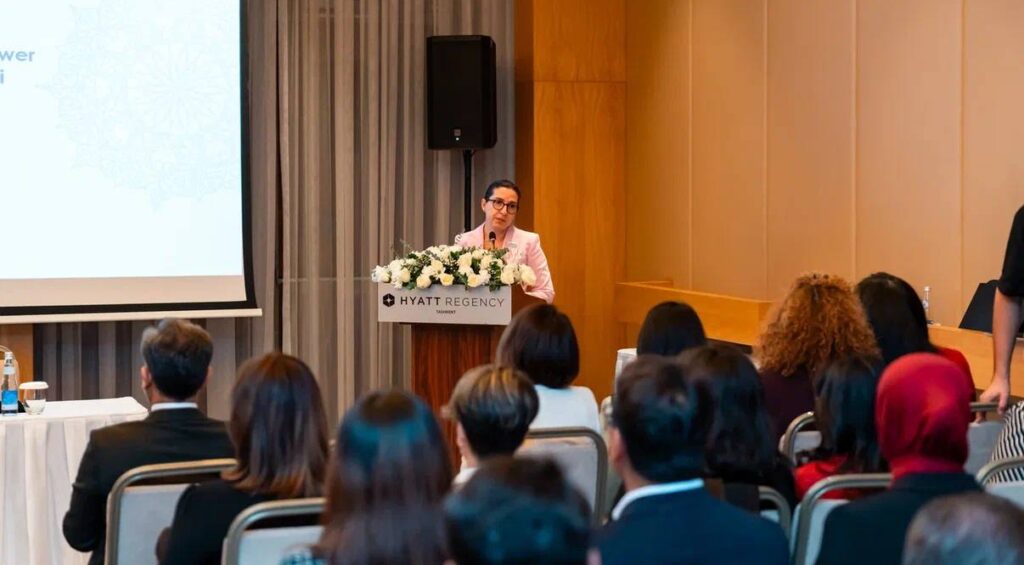
UN Women and ACWA Power Uzbekistan have signed a landmark agreement to promote women’s empowerment, marking the first-ever collaboration between a United Nations agency and a private company in Uzbekistan. As part of the 12-month partnership, ACWA Power will contribute $50,000 to support initiatives under UN Women’s Economic Empowerment (WEE) programme. The project seeks to strengthen women’s participation in education and the labor market through gender equality training, leadership development, and the launch of a pilot Gender Equality Curriculum at Shirin College. It also includes capacity-building in gender-based violence prevention and the organization of a national Women’s Empowerment Forum. [caption id="attachment_38684" align="aligncenter" width="1206"] Image: ACWA Power[/caption] UN Women, which officially began operations in Uzbekistan in May 2025, will provide technical expertise and training to support national gender equality goals. ACWA Power, Uzbekistan’s largest investor in renewable energy, will oversee project implementation and funding. The partnership aligns with Uzbekistan’s ongoing national reform agenda, particularly the Strategy for Achieving Gender Equality 2030 and the National Programme for Increasing the Activity of Women in Economic, Political, and Social Life (2022-2026). These initiatives aim to create equal opportunities and broaden women's participation in education, public service, and the economy. [caption id="attachment_38685" align="aligncenter" width="1206"] Image: ACWA Power[/caption] “Partnering with UN Women allows us to advance concrete initiatives that promote safer workplaces, fairer opportunities, and stronger representation of women in Uzbekistan,” said Dr. Jon Zaidi, Country General Manager of ACWA Power Uzbekistan. “By investing in training, curricula, and leadership development, we aim to help embed practices that benefit institutions, companies, and communities alike.” “This partnership demonstrates how private sector engagement can accelerate progress on gender equality,” added Ceren Guven Gures, Head of the UN Women Central Asia Liaison Office and Representative of the UN Women Kazakhstan Country Office. “With ACWA Power’s support, we will expand opportunities for women and strengthen protections in education and the workplace.”

Uzbekistan Introduces Visa-Free Travel for U.S. Citizens Starting January 2026

Uzbekistan will implement a visa-free regime for U.S. citizens beginning January 1, 2026, according to a presidential decree signed on November 3, 2025. The announcement was reported by UzA, the country’s official state news agency. Under the new policy, American citizens will be permitted to stay in Uzbekistan for up to 30 days without a visa from the date of entry. The measure aims to strengthen trade, economic, cultural, and humanitarian ties between the two countries, while also enhancing tourism. Since 2021, Uzbekistan has allowed visa-free entry for tourists aged 55 and older from the United States and several other nations, with a maximum stay of 30 days, according to Kun.uz. The expansion of this policy to include all U.S. citizens marks a major step in promoting bilateral travel and business engagement. The proposal to lift visa requirements for U.S. nationals was first introduced in May 2025 through a presidential decree focused on boosting foreign tourist inflows. The same document instructed the Ministry of Foreign Affairs to initiate negotiations with Washington on easing visa conditions for Uzbek citizens traveling to the United States. In a related development, the Uzbek government recently extended visa-free entry to citizens of six more countries, Bahrain, Qatar, Kuwait, Oman, Saudi Arabia, and Jordan, following a Cabinet of Ministers decision issued on October 21.