• KGS/USD = 0.01144 0%
  • KZT/USD = 0.00212 0%
  • TJS/USD = 0.10456 0.19%
  • UZS/USD = 0.00008 0%
  • TMT/USD = 0.28490 0%
  • KGS/USD = 0.01144 0%
  • KZT/USD = 0.00212 0%
  • TJS/USD = 0.10456 0.19%
  • UZS/USD = 0.00008 0%
  • TMT/USD = 0.28490 0%
  • KGS/USD = 0.01144 0%
  • KZT/USD = 0.00212 0%
  • TJS/USD = 0.10456 0.19%
  • UZS/USD = 0.00008 0%
  • TMT/USD = 0.28490 0%
  • KGS/USD = 0.01144 0%
  • KZT/USD = 0.00212 0%
  • TJS/USD = 0.10456 0.19%
  • UZS/USD = 0.00008 0%
  • TMT/USD = 0.28490 0%
  • KGS/USD = 0.01144 0%
  • KZT/USD = 0.00212 0%
  • TJS/USD = 0.10456 0.19%
  • UZS/USD = 0.00008 0%
  • TMT/USD = 0.28490 0%
  • KGS/USD = 0.01144 0%
  • KZT/USD = 0.00212 0%
  • TJS/USD = 0.10456 0.19%
  • UZS/USD = 0.00008 0%
  • TMT/USD = 0.28490 0%
  • KGS/USD = 0.01144 0%
  • KZT/USD = 0.00212 0%
  • TJS/USD = 0.10456 0.19%
  • UZS/USD = 0.00008 0%
  • TMT/USD = 0.28490 0%
  • KGS/USD = 0.01144 0%
  • KZT/USD = 0.00212 0%
  • TJS/USD = 0.10456 0.19%
  • UZS/USD = 0.00008 0%
  • TMT/USD = 0.28490 0%

Viewing results 247 - 252 of 1139

Russia’s Gasoline Export Ban: Limited Shock, Broader Lessons for Central Asia

Russia’s decision to prolong restrictions on gasoline exports has raised concerns in energy markets, but for Central Asia, the immediate fallout appears limited. The true significance lies in what the move reveals about structural dependencies, the role of the Eurasian Economic Union (EAEU), and the region’s long-term push to diversify energy supplies. Moscow Extends Ban On September 2, Russian officials confirmed that the government may prolong its gasoline export ban for oil producers into October, extending measures first introduced in late summer. Deputy head of the Federal Antimonopoly Service, Vitaly Korolev, told state media that the authorities were weighing a one-month extension beyond the current deadline of September 30. As reported by Reuters, the aim is to stabilize domestic fuel supplies following refinery outages and a seasonal spike in demand. Ukrainian drone strikes have also damaged key refineries, reducing Russia’s production capacity by an estimated 10–17%. The ban affects a relatively small share of Russia’s overall fuel output but highlights the state’s readiness to intervene in energy markets. Previous restrictions in 2023 and 2024 temporarily halted shipments to stabilize domestic prices. The latest decision reflects similar concerns: tightening inventories, growing demand from the agricultural sector, and pressure to prevent inflation ahead of winter. While Moscow insists the measure is temporary, traders and governments across post-Soviet space are watching closely. Russia remains one of the world’s largest fuel exporters, and even marginal policy changes can cause significant ripples. Fuel Security in Central Asia For Central Asia, the impact of the ban will be blunted by exemptions. As members of the EAEU, both Kazakhstan and Kyrgyzstan continue to import Russian gasoline without interruption. Kazakhstan’s Ministry of Energy issued a statement stressing that the country is self-sufficient, pointing to its refineries in Pavlodar, Shymkent, and Atyrau. “For countries that have signed the relevant intergovernmental agreement… these restrictions do not apply,” Minister of Energy, Yerlan Akkenzhenov, stated. Kyrgyzstan is highly dependent on Russian imports. However, according to Kyrgyzstan’s Ministry of Energy, the 1.6 million tons of fuel the country consumes annually, 93% of which is imported from Russia under intergovernmental agreements, will remain unaffected by the export ban. Since mid-summer, gasoline and diesel prices have climbed, driven by rising global oil benchmarks and repair work at several Russian refineries. Talks are already in progress to set revised supply volumes for 2026. Non-EAEU states face a different challenge. Uzbekistan sources fuel through state-brokered contracts with Russian companies, ensuring stability for now, but smaller private importers outside of these deals have reported difficulties accessing volumes. Late last year, the Chairman of Uzbekistan’s Central Bank warned that the country’s growing reliance on Russian fuel imports could increase vulnerability to supply shocks, which may translate into limited competition and rising prices. Tajikistan remains heavily dependent on Russian fuel through bilateral import agreements, and its virtually non-existent refining capacity makes it highly susceptible to external price fluctuations, a vulnerability underscored by seasonal diesel shortages and repeated spikes in domestic fuel prices. Turkmenistan, meanwhile, continues subsidizing its energy sector heavily:...
Paulo Bento Declines Offer to Coach Uzbekistan National Football Team

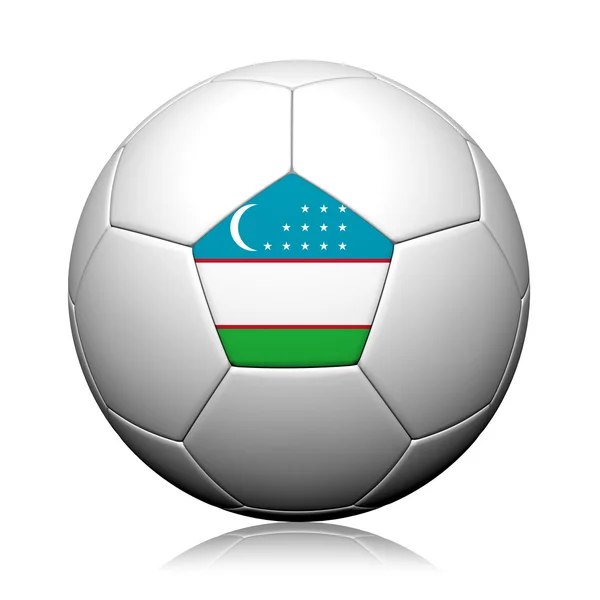
Portuguese football coach Paulo Bento has reportedly declined an offer to lead Uzbekistan’s national team, despite the country’s historic qualification for the 2026 FIFA World Cup. According to the Portuguese sports daily A BOLA, the 56-year-old coach turned down the proposal from the Uzbekistan Football Association, stating that the terms did not align with his current career plans. Bento, who was dismissed as head coach of the United Arab Emirates in March 2024, is still available on the international coaching market. His departure from the UAE team came as a surprise, particularly since the squad remained in contention for what could have been its first-ever World Cup appearance. Bento previously managed the Portuguese national team from 2010 to 2014, leading them through UEFA Euro 2012 and the 2014 FIFA World Cup. More recently, he coached South Korea at the 2022 World Cup in Qatar. Uzbekistan’s reported interest in Bento reflects the country’s broader ambitions to elevate its football program ahead of its World Cup debut in 2026. The national team secured qualification earlier this year, marking a landmark achievement. Officials have emphasized ongoing reforms within the country’s football infrastructure, with goals to professionalize the domestic league and enhance international competitiveness.

Uzbekistan Remembers Victims of Repression with Renewed Educational Focus

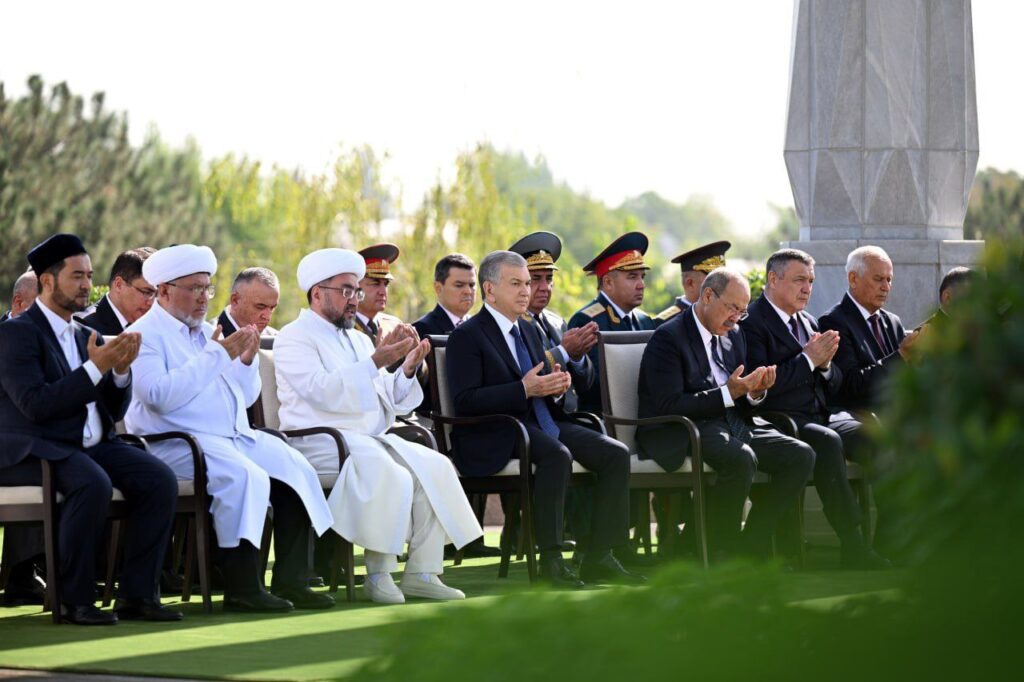
On August 29, a solemn ceremony was held at the Shahidlar Xotirasi alley in Tashkent to commemorate the Day of Remembrance for Victims of Repression, an annual event observed on the eve of Uzbekistan’s Independence Day. The event honored the memory of over 100,000 innocent citizens who suffered during waves of political repression. Thousands were executed on fabricated charges, while many others were exiled, leaving deep scars on families and communities. In recent years, Uzbekistan has taken steps to more fully acknowledge and document this painful history. More than 1,200 names of victims have recently been rehabilitated. The Museum of the Memory of Victims of Repression has been expanded with thousands of newly added archival documents, and regional museums dedicated to the memory of the repressed are being established across the country. A major development this year is the establishment of the State Museum of Jadid Heritage in Bukhara. The opening coincides with the 150th anniversary of Mahmudkhoja Behbudi, a key figure in the Jadid movement, an early 20th-century reformist movement that sought to modernize Muslim society through education, journalism, and national consciousness. Leaders of the Jadid movement, including Behbudi, Fitrat, Avloni, and Chulpon, were pioneers in opening secular schools, publishing newspapers, and founding institutions such as the Turkestan People’s University, now the National University of Uzbekistan. Nearly all of them fell victim to Stalin’s purges in the 1930s, and their works were banned for decades. Students from Turkestan who studied in Germany in the 1920s also became targets of repression. President Shavkat Mirziyoyev has commented: “If those young men had returned, they could have transformed society. It is important that our youth know and take pride in such examples.” Under Soviet rule, it was long taboo to acknowledge that a site near the Bozsu Canal in central Tashkent concealed a mass grave of intellectuals executed during Stalin’s purges. At the initiative of previous leader Islam Karimov, a memorial complex and museum were established on the site, and August 31 was officially designated as the Day of Remembrance. The Shahidlar Xotirasi Memorial, inaugurated on May 12, 2000, near the Tashkent TV tower, includes a park, a museum, and a rotunda featuring a symbolic jade tombstone inscribed in Arabic, English, and Uzbek: “The memory of those who died for their country will live forever.” Mirziyoyev has called for greater educational integration, through school curricula, media programming, and youth competitions. “Every year on the eve of Independence Day, we offer prayers in memory of our ancestors who gave their lives for freedom,” he said. “Their courage and sacrifice will always serve as an example for us.”

Mirziyoyev Bets on the SCO to Boost Uzbekistan’s Security and Economy

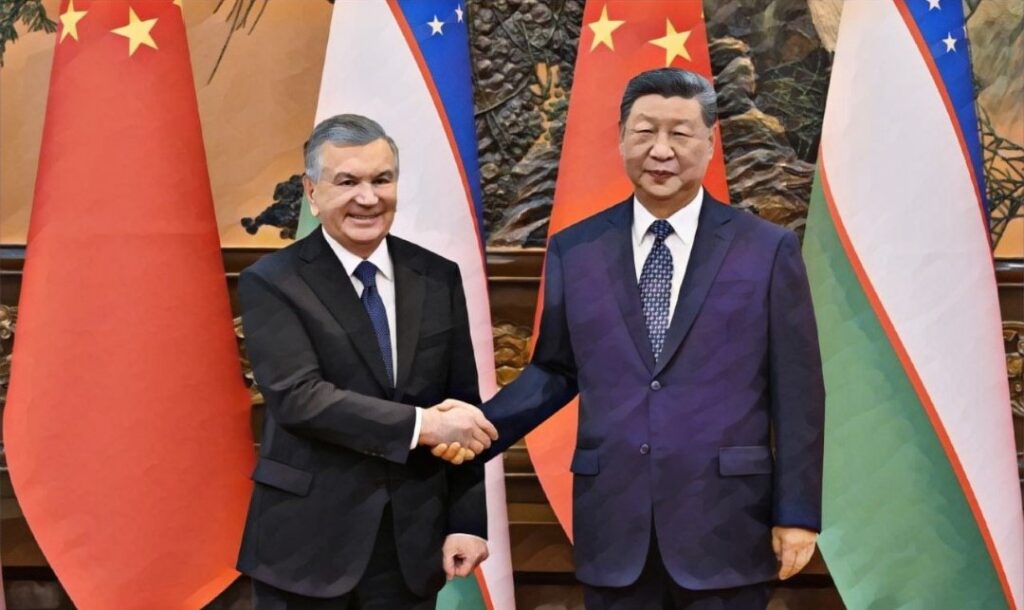
Tianjin, China - The recent Shanghai Cooperation Organization (SCO) summit drew wide attention as leaders from across Eurasia convened to emphasize the Organization’s growing importance. For smaller members, the meeting was a chance to show commitment to regional cooperation and alignment with the bloc’s major powers. Uzbekistan, under President Shavkat Mirziyoyev, stood out by using the platform to outline his intention to strengthen engagement within the SCO to advance both economic development and security. Mirziyoyev’s speech stressed solidarity in the face of global uncertainty, institutional renewal to improve effectiveness, and deeper cooperation in areas such as security and nuclear policy. He also endorsed expanding membership, particularly from the Global South, while presenting proposals to boost trade, logistics, and investment. These priorities are consistent with Uzbekistan’s ongoing strategy of aligning its national agenda with the SCO’s broader evolution into a forum with Eurasian and global relevance. Reinforcing Multilateral Solidarity Uzbekistan’s solidarity with the SCO has been in the making for years, as Tashkent aligns parts of its security and economic strategy with the Organization’s framework. In his latest address, Mirziyoyev emphasized the role of solidarity amid rising instability: “A systemic crisis of trust, the escalation of conflicts, the weakening of multilateral institutions, and the fragmentation of the global trading system are undermining the foundations of the international architecture of security and stability. In these circumstances, mutual understanding and solidarity among the SCO member-states are not only a valuable asset, but also the key to preserving peace in our vast region.” While Russia emphasizes the SCO’s role in fostering multipolarity and China focuses on resilient supply chains, Uzbekistan is leveraging the principle of solidarity to safeguard its national interests - reducing dependence on any single power. Uzbekistan is positioning itself within the SCO to align its domestic priorities with broader SCO agendas shaped by Russia’s focus on security and China’s emphasis on economic initiatives. Expanding Membership and External Engagement Mirziyoyev underscored the SCO’s “openness,” identifying expansion as central to its continued development. He welcomed greater engagement with new members and partners, though he did not specify particular regions. Uzbekistan’s growing cooperation with countries such as Iran and Saudi Arabia demonstrates how this vision of openness is taking shape in practice. Tashkent has actively supported Iran’s accession to the SCO and recently signed agreements on transport corridors that connect Central Asia to Iranian ports on the Persian Gulf, facilitating greater trade with Iran. In parallel, deepening ties with Saudi Arabia - particularly through ACWA Power’s renewable energy projects, now among Uzbekistan’s largest foreign-funded ventures - illustrate Uzbekistan’s broader engagement with the Global South in the areas of connectivity and investment. These moves parallel Russia’s and China’s efforts to expand the SCO’s influence beyond its founding region. For Uzbekistan, expansion offers new avenues for trade, energy cooperation, and investment partnerships, while reinforcing its image as a bridge-builder. By publicly supporting this process, Mirziyoyev signaled that Uzbekistan expects wider membership to enhance both the Organization’s and its own standing. Institutional Alignment with the SCO A...

After Afghan Quake, UNHCR Preps Relief Supplies at Uzbek Border

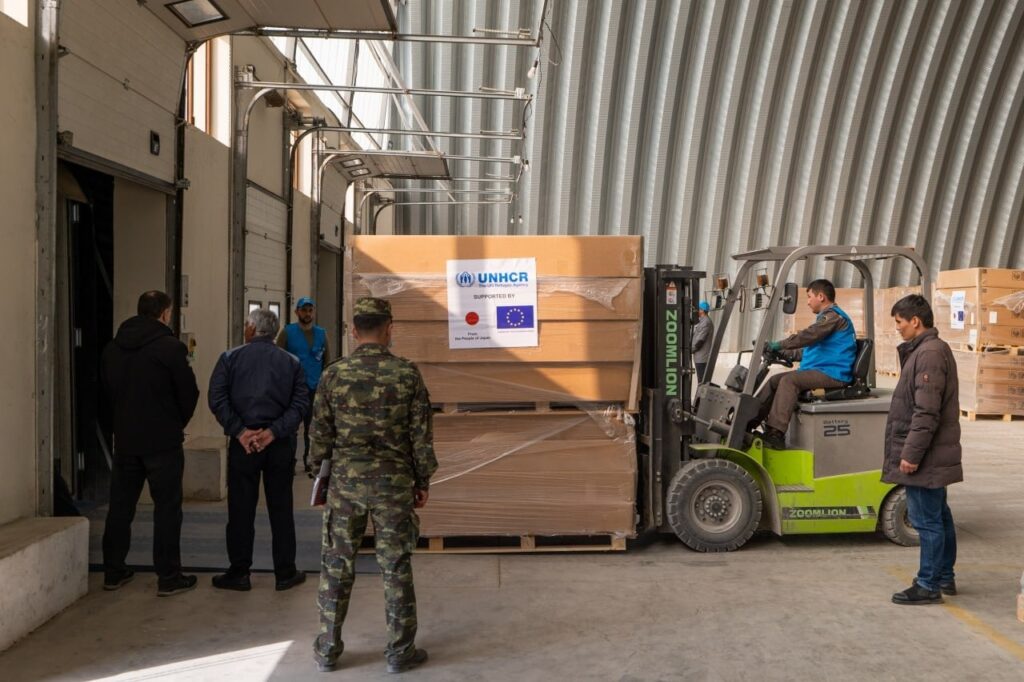
The border city of Termez, Uzbekistan, is becoming a logistics hub for some international efforts to provide aid to Afghanistan after an earthquake there killed more than 1,400 people and destroyed at least 5,400 homes. The United Nations refugee agency said on Tuesday it was drawing on its resources within Afghanistan and in the region after a 6.0 magnitude quake struck near the eastern Afghan city of Jalalabad on Sunday. It said health services in Afghanistan are “overwhelmed” and that the lack of basic infrastructure in hard-hit areas was complicating rescue efforts. “UNHCR is deploying prepositioned essential relief items from stockpiles in Kabul, including tents, blankets and solar lamps,” the agency said. “We are also assessing our emergency stockpiles in the region, including in Termez, Uzbekistan, to meet further needs.” Uzbekistan expressed condolences to Afghanistan and said it was ready to help. “We stand in solidarity with the brotherly people of Afghanistan during this difficult time and reaffirm our readiness to provide all possible assistance in overcoming the consequences of this tragic natural disaster,” Foreign Minister Bakhtiyor Saidov said. After several earthquakes hit the Herat area in western Afghanistan in 2023, UNHCR sent tents and other essential items to affected families from the agency’s warehouse in Termez in an effort coordinated with the Uzbek government. The British Red Cross said more than 2,000 people died in the Herat quakes. Termez, which is about 575 kilometers by road from Jalalabad, lies on the Amu Darya River that separates Uzbekistan from Afghanistan. Soviet forces deployed in the city during the war in Afghanistan in the 1980s, and NATO-led forces also used it as a logistics hub during efforts to help the Afghan government establish security after the fall of the Taliban in 2001. The Taliban returned to power in 2021. Hamdullah Fitrat, a Taliban spokesman, said on X on Tuesday that the death toll from the Jalalabad area quake had risen to 1,411, and that at least 3,124 people had been injured and 5,412 houses were destroyed. “Rescue operations continue across all affected areas today. In locations where helicopters could not land, dozens of commando forces were air-dropped to pull the injured from the rubble and move them to safer ground,” he said. The spokesman also said that “several countries have announced assistance, part of which has already been delivered to emergency relief committees for distribution to earthquake victims.” Britain, India, and China are among a number of countries that have pledged or offered aid to Afghanistan to help it cope with the disaster. Besides Uzbekistan, other Central Asian countries have sent aid to Afghanistan after past deadly quakes there.

“Ergenekon Is Not Just a Myth, It’s a Cultural Bridge”: An Interview with Artist and Designer Emre Erdur

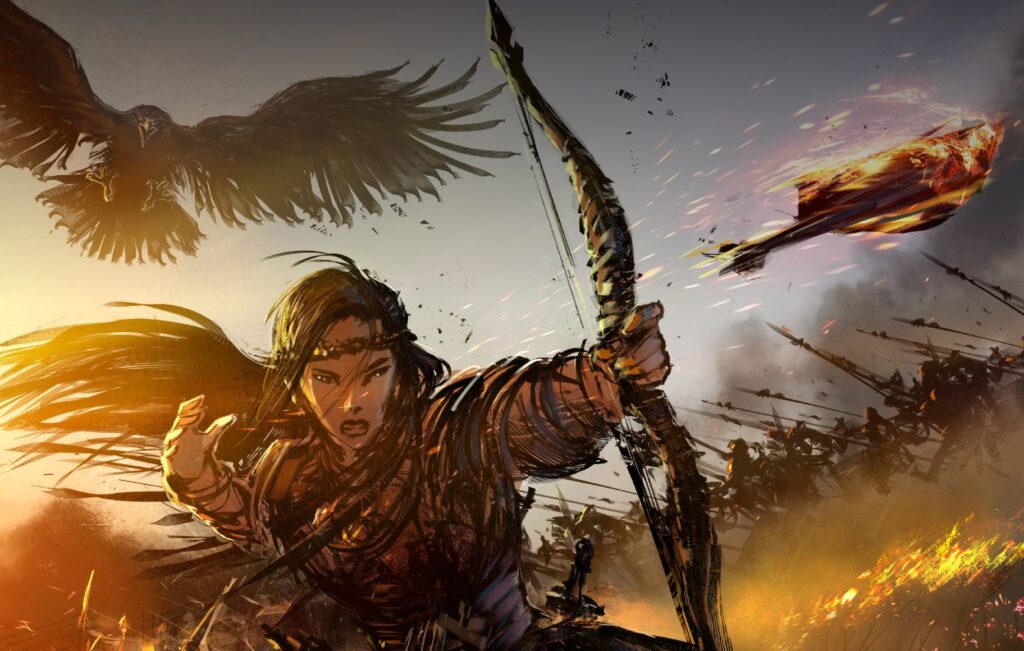
Today, comics and visual storytelling are increasingly going beyond entertainment. They are becoming part of a cultural dialogue, helping audiences reconnect with their roots. One such project is the graphic novel series The Legend of Ergenekon (Ergenekon Destanı), created by Turkish artist and designer Emre Erdur. The Legend of Ergenekon is a Turkic origin myth that tells of a people driven into a remote valley after defeat in battle, where they lived in isolation for centuries until a blacksmith forged a path through the surrounding mountains. Guided by a gray wolf, they emerged to reclaim their strength and expand across the steppe. In Central Asia, the story symbolizes resilience, unity, and renewal, often invoked as a metaphor for nations overcoming hardship to reassert independence and identity on the Eurasian crossroads. It resonates strongly in Kazakhstan, Kyrgyzstan, Turkmenistan, and Uzbekistan, where Turkic identity, language, and heritage are foundational. Born in Istanbul and trained as an architect at Mimar Sinan Fine Arts University, Emre Erdur worked for many years in the entertainment and design industries. Since 2019, however, he has dedicated himself to developing a multi-volume graphic novel series inspired by ancient Turkic history and mythology. His work was first presented at a festival in Taldykorgan. As part of his research, he visited the National Museum of Kazakhstan in Astana and collaborated with historian Assoc. Prof. Dr. Talgat Moldabay to ensure historical accuracy. [caption id="attachment_35647" align="aligncenter" width="1824"] Image: Emre Erdur[/caption] For Central Asia, Ergenekon Destanı is more than a creative project; it represents an effort to connect a shared heritage through the language of comics and popular culture. In an interview with The Times of Central Asia, Emre Erdur spoke about his inspiration, research, the role Kazakhstan plays in his work, and his plans for expanding this unique visual universe. TCA: You were born and educated in Turkey, yet you chose to dedicate yourself to wider ancient legends and Turkic history. When did you first feel drawn to this theme? Erdur: Yes, I was born in the westernmost corner of Turkic geography, but every individual in this world has cultural roots that reach out and nourish them. Naturally, as an artist, the desire to draw from and explore my own roots is an inner force. Although I was born and raised in Istanbul, you can find traces of our roots as far as Yakutia in Russia, Buryatia, Mongolia, the Altai, further south in East Turkestan, in the Gobi Desert, and even in Korea. None of these places feels separate from us; you can sense the connection. Of course, as a human being, every part of this world is valuable and fascinating; each region holds its own beauty and heritage. But there is also something called “national identity,” which is different from our individual identity. Our soul cannot be confined to this world; it knows no geography or race, it belongs beyond time and space. Yet during our lifetime on Earth, we do carry both national and individual identities, and defining them correctly...