• KGS/USD = 0.01144 0%
  • KZT/USD = 0.00216 0%
  • TJS/USD = 0.10456 0%
  • UZS/USD = 0.00008 0%
  • TMT/USD = 0.28571 0%
  • KGS/USD = 0.01144 0%
  • KZT/USD = 0.00216 0%
  • TJS/USD = 0.10456 0%
  • UZS/USD = 0.00008 0%
  • TMT/USD = 0.28571 0%
  • KGS/USD = 0.01144 0%
  • KZT/USD = 0.00216 0%
  • TJS/USD = 0.10456 0%
  • UZS/USD = 0.00008 0%
  • TMT/USD = 0.28571 0%
  • KGS/USD = 0.01144 0%
  • KZT/USD = 0.00216 0%
  • TJS/USD = 0.10456 0%
  • UZS/USD = 0.00008 0%
  • TMT/USD = 0.28571 0%
  • KGS/USD = 0.01144 0%
  • KZT/USD = 0.00216 0%
  • TJS/USD = 0.10456 0%
  • UZS/USD = 0.00008 0%
  • TMT/USD = 0.28571 0%
  • KGS/USD = 0.01144 0%
  • KZT/USD = 0.00216 0%
  • TJS/USD = 0.10456 0%
  • UZS/USD = 0.00008 0%
  • TMT/USD = 0.28571 0%
  • KGS/USD = 0.01144 0%
  • KZT/USD = 0.00216 0%
  • TJS/USD = 0.10456 0%
  • UZS/USD = 0.00008 0%
  • TMT/USD = 0.28571 0%
  • KGS/USD = 0.01144 0%
  • KZT/USD = 0.00216 0%
  • TJS/USD = 0.10456 0%
  • UZS/USD = 0.00008 0%
  • TMT/USD = 0.28571 0%

Viewing results 241 - 246 of 1148

Central Asia’s Cotton Harvest: Between Reform, Coercion, and Economic Strain

The 2025 cotton harvest is underway across Central Asia, revealing the region’s ongoing struggle to reconcile long-promised reforms with persistent coercion and deepening economic pressure. Once the crown jewel of Soviet central planning, cotton, long dubbed “white gold”, remains a politically sensitive and economically vital crop from Turkmenistan to Tajikistan. Turkmenistan: Forced Mobilization Persists In Turkmenistan, mass mobilization for the cotton harvest continues largely unchanged. Chronicles of Turkmenistan reported that during a September cabinet meeting, President Serdar Berdimuhamedov ordered all regions to begin picking on September 10. Just two days earlier, the Ministry of Health had instructed medical institutions to send doctors, nurses, orderlies, and even technical staff to the fields, each assigned a daily quota of 45 kilograms. In the town of Turkmenabat, hospital workers said doctors were expected to go to the fields immediately after overnight shifts. Those who refuse must hire substitutes at their own expense, paying about 50 manats ($14) per day. As a result, up to two-thirds of monthly salaries are spent covering these unofficial harvest duties. While younger staff are dispatched to the fields, older employees are left to maintain hospital operations with minimal support. Uzbekistan: Reform, but Lingering Coercion Uzbekistan, by contrast, has officially ended Soviet-style forced labor. The government abolished child and public-sector mobilization, scrapped state cotton quotas in 2020, and partnered with the International Labour Organization (ILO) to monitor the transition. In March 2022, the Cotton Campaign, a global coalition of rights groups, unions, and apparel brands, lifted its boycott of Uzbek cotton, citing the end of systemic forced labor. The campaign, which began in 2011, had gained the support of more than 330 global brands, including H&M and Zara. Yet coercion has not entirely disappeared. In a recent video published by Kun.uz, Dilfuza Tashmatova, deputy hokim (governor) for family and women’s affairs in the Surkhandarya region's Sariosiyo district, was seen berating mahalla (local governance body) employees for failing to recruit enough pickers. She demanded that each “women’s activist” find five to ten additional laborers, totaling 150 people, and threatened dismissal for non-compliance. “Are you even a woman? Shameless! Unscrupulous! If you don’t want to work, then leave!” she shouted from a cotton field. According to the U.S. Department of Agriculture, approximately 70% of Uzbekistan’s cotton is still harvested by hand, despite recent gains in mechanization. Labor shortages have plagued the past two harvests as fewer people are willing to take on the physically demanding work for low wages. Mahalla councils are often pressured to mobilize unemployed or low-income residents. Following public backlash, Uzbekistan’s Ministry of Poverty Reduction and Employment fined Tashmatova 20.6 million UZS (about $1,660) under Article 51 of the Administrative Code, which prohibits forced labor. From Soviet Monoculture to Market Reforms Uzbekistan’s long history of forced cotton labor dates back to its designation as the Soviet Union’s cotton monoculture. For decades, students, teachers, and medical staff were sent into the fields to meet state quotas. After independence, the system endured until international scrutiny spurred reforms. The ILO hailed...

Opinion: The Contact Group on Afghanistan – Central Asia Formulates a Regional Position

On August 26, special representatives on Afghanistan from Kazakhstan, Kyrgyzstan, Tajikistan, and Uzbekistan met for the first time in Tashkent. The meeting resulted in the creation of a permanent regional platform: the Contact Group on Afghanistan. This gathering was not only a continuation of commitments outlined in the joint statement from the most recent Consultative Summit of Central Asian heads of state, but also a step toward preparing for the next high-level format, scheduled for November in Tashkent. Formally, Turkmenistan was absent. Available information suggests the reasons were purely technical. Ashgabat was ready to join and expressed support for the results through its foreign ministry channels. The key outcome is that Central Asian states have, for the first time, shown their readiness to speak with one voice on an issue long shaped by competing external interests. This is not the start of forming a common position; that had already developed de facto in recent years. All Central Asian countries have supported trade and transit with Afghanistan, continued supplying electricity and food, and maintained working contacts with the Taliban, while avoiding extremes. The Tashkent meeting institutionalized this approach: parallel tracks have now shifted, cautiously, toward coordination. Informal unity has been formalized into a tool. Unlike external players, who often cloak interests in grand rhetoric, Central Asia acts openly and pragmatically. The logic is simple: whatever is done for Afghanistan is, in fact, done for oneself. That is the distinctive feature of the regional approach - no ideological cover, no attempts to reshape Afghanistan. Examples are straightforward. Electricity continues to flow even when payments are delayed - not as charity, but as an investment in security. A blackout in Afghanistan could trigger refugee flows and threats heading north. Exports of flour and fuel sustain Afghan markets but also expand outlets for Central Asian producers. Participation in trans-Afghan corridors is not a gift to Kabul but an opportunity for Central Asia to anchor itself in southern logistics routes. Ultimately, every step “for Afghanistan” is primarily for the region itself. If Kabul ignores basic rules, cooperation will simply stop. In politics, there are no eternal friends, only eternal interests. The new format does not yet imply collective pressure on the Taliban. Rather, it creates conditions for each country to conduct more substantive bilateral dialogue, but grounded in a shared position. Until now, Central Asia has mainly spoken to the Taliban about trade, transit, and infrastructure. The Contact Group now makes it possible to add another dimension: clarifying boundaries of what is acceptable on issues like extremism, border escalation, or water pressure. For now, “red lines” are unlikely, since the Taliban have not crossed them. The situation remains manageable, leaving room for constructive dialogue. Equally important, the Contact Group is not a threat or ultimatum. Coordination is meant to expand opportunities for dialogue, not limit them. In the long run, this could evolve into a sustainable C5+A format. Afghanistan would then be integrated into regional frameworks not as a problem to be managed, but as...

Uzbekistan to Transition to 12-Year School System

Uzbekistan is preparing to transition to a 12-year general education system, Deputy Minister of Preschool and School Education Sardor Radjabov announced in an interview with Uzbekistan-24. The change will incorporate preparatory classes into formal education, extending schooling from the current 11 years to 12. The revised structure will include three stages: One year of school preparation Four years of primary education (grades 1-4) Five years of general secondary education (grades 5-9) Two years of full secondary education (grades 10-11), which may be completed at general schools, academic lyceums, military schools, or technical colleges According to Radjabov, the reform aims to enhance educational quality and eliminate obstacles faced by Uzbek students applying to foreign universities. Currently, graduates are often required to complete a one-year foundation program abroad before qualifying for undergraduate studies. “This means our children lose a year,” he said. “If we implement the 12-year education system, students will no longer need to study foundation courses in several countries and will be able to enter undergraduate programs directly.” He added that aligning Uzbekistan’s education system with international standards would expand opportunities for graduates and narrow the gap between local and global academic systems. The reform builds on earlier changes to Uzbekistan’s school structure. In 2017, President Shavkat Mirziyoyev proposed the reinstatement of an 11-year general education framework, emphasizing its role in improving the connection between schools and colleges. Since then, most schools have operated under the 11-year model.

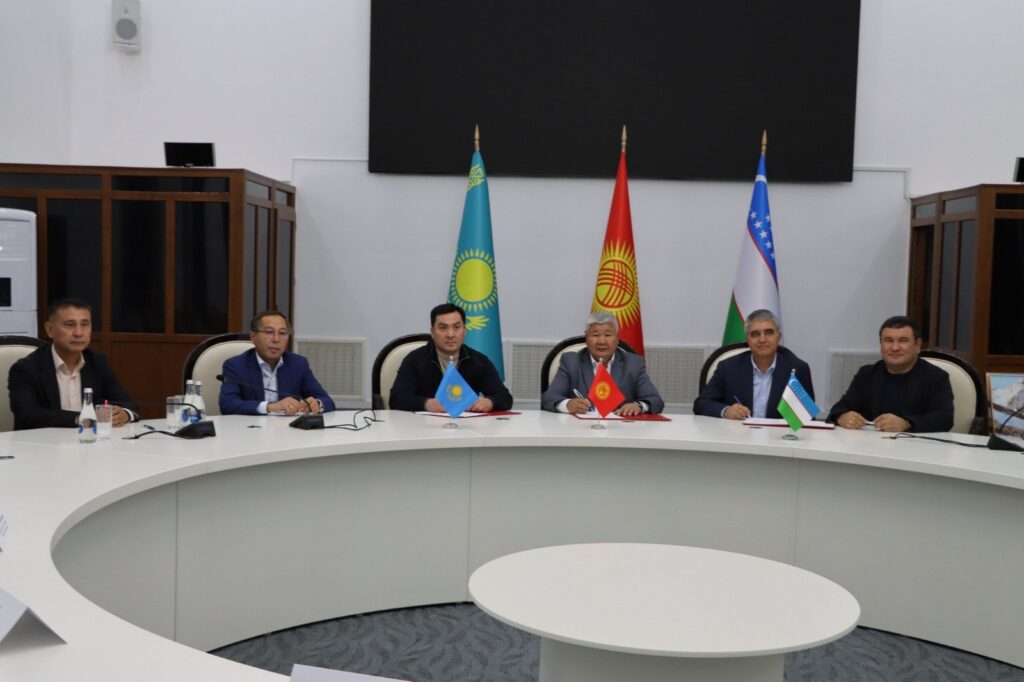
Kazakhstan, Kyrgyzstan, and Uzbekistan Agree on Joint Water and Energy Measures

Kazakhstan, Kyrgyzstan, and Uzbekistan have reached a landmark agreement on coordinated water and energy management, signaling a deepening commitment to cross-border cooperation amid growing seasonal and climate-related challenges. The agreement was formalized on September 7 in Cholpon-Ata, Kyrgyzstan, during a meeting of energy ministers and water management authorities from the three countries. The protocols define mutual obligations for water releases and electricity exchanges, with the goal of balancing the region’s energy needs and preserving critical water resources. Under the terms of the agreement, Kyrgyzstan will release water from the Toktogul Hydroelectric Power Plant (HPP) reservoir to downstream Kazakhstan and Uzbekistan. In return, Kyrgyzstan will receive electricity from both countries through spring 2026. According to the Kyrgyz Ministry of Energy, the arrangement is designed to optimize the use of water stored in Toktogul and to secure reliable electricity supplies for Kyrgyzstan during the 2025-2026 autumn-winter period. Regional Power Transit Agreements The protocols also include provisions for cross-border electricity transit: from Russia to Kyrgyzstan via Kazakhstan’s grid, and from Turkmenistan to Kyrgyzstan through Uzbekistan’s transmission network. The Toktogul HPP, situated on the Naryn River, a major tributary of the Syr Darya, is Kyrgyzstan’s largest power facility, generating roughly 40% of the country’s electricity. It serves a dual function: providing domestic energy and regulating water flows that are essential for irrigation in downstream Kazakhstan and Uzbekistan. In winter, Kyrgyzstan often increases power output from Toktogul to meet heating demand, but this can significantly lower reservoir levels, jeopardizing irrigation supplies the following spring. The new agreement is intended to reduce this risk by enabling Kazakhstan and Uzbekistan to supply electricity during peak winter months, allowing Kyrgyzstan to conserve water. Kazakhstan’s Ministry of Energy emphasized that the trilateral deal is crucial to maintaining water levels in Toktogul and ensuring sufficient irrigation for southern Kazakhstan during the next growing season. Broader Regional Energy Cooperation Separately, Kazakhstan and Uzbekistan signed an agreement for the supply of approximately 900 million kilowatt-hours of electricity between March and December 2026. The electricity is expected to cover anticipated shortages in Kazakhstan’s southern power grid and further underscores the growing interdependence of Central Asia’s energy and water systems.

Recipes for Broken Hearts: Bukhara Hosts Its First Contemporary Art Biennale

The heat of Bukhara’s old city does little to deter the crowds. Tourists squeeze through narrow lanes, pausing in the shade of centuries-old madrasas or beneath towering minarets. This September, the heart of the UNESCO Creative City of Crafts and Folk Art is hosting something new: the inaugural Bukhara Biennale of contemporary art. Running from September 5 to November 20, the biennale is already being hailed as one of Central Asia’s largest and most diverse art initiatives. Its title, Recipes for Broken Hearts, reflects both its ambition and tone, blending art, history, and community in a city long known for its spiritual and cultural heritage.   A Global Effort Rooted in Bukhara The Bukhara Biennale is commissioned by Gayane Umerova, Chairperson of the Uzbekistan Art and Culture Development Foundation, which has played a pivotal role in preserving and promoting the country’s cultural legacy. Artistic director Diana Campbell sees the biennale as a continuation of Bukhara’s historic role as a center of learning and exchange. [caption id="attachment_35919" align="aligncenter" width="900"] Isiriq (wild rue) is a traditional herbal medicine also widely used in purification rituals among Uzbeks. It is often burned or hung in homes to ward off misfortune and evil. In the installation, bunches of isiriq hanging from the roof appear to reflect this age-old custom; image: TCA, Sadokat Jalolova[/caption] “The heart’s creative power comes into view when we look to tenth-century Bukhara, a time and place that offer many ways of mending heartbreaks,” said Campbell. She referenced Bukhara’s legacy as the home of polymath Ibn Sina and a crossroads on the Silk Roads. “For more than a millennium, Bukhara has been a place where people gathered to seek knowledge, healing, and hope. We believe the city holds many extraordinary recipes in its heart.” The biennale unfolds in the newly developed Bukhara Cultural District, where restored monuments are paired with modern design, featuring contributions from architects Wael Al Awar and landscape designer Günther Vogt. From Jeddah to Bukhara: Palm Waste Becomes Structure A highlight of the biennale is the AlMusalla Prize-winning installation, a reimagined musalla, or prayer space, constructed entirely from palm tree waste. Originally built in Jeddah, the structure has been transported to Bukhara as a symbol of sustainability and reuse. [caption id="attachment_35922" align="aligncenter" width="1600"] AlMusalla Prize winning installation; image: TCA, Sadokat Jalolova[/caption] Christopher Blust, engineer at AKT II, explained the origins of the project: “We were inspired by the idea of courtyards as places of gathering. Even the Prophet Muhammad’s house in Medina began with a courtyard for prayer and community.” Equally important, he said, was the material itself. “Palm fronds are discarded and often burned. We asked: Why not return to how these were used centuries ago? We shredded them, pressed them into boards, and created structural timber. This is the world’s first project to use palm waste in this way.” Architect Nicolas Fayad of East Architecture Studio noted that their design was informed by Jeddah’s traditional materials, timber, mud, and stone, reinterpreted through modern technology. “Everything visible in...

Trump Reengages Central Asia Amid Tariffs and Rising Competition

In a bid that signals renewed U.S. interest in Central Asia, U.S. President Donald Trump on September 7, 2025, held what he described as a “great conversation” with Kazakhstan’s President Kassym-Jomart Tokayev. Earlier in the week, Trump also spoke over the phone with Uzbek President Shavkat Mirziyoyev, with both sides highlighting plans to expand their strategic partnership. Commentators have noted that Trump’s rhetoric and transactional approach to foreign policy in his second term create both challenges and opportunities for sustained U.S. engagement in the region. “Great Conversation” With Tokayev As he departed the White House for the U.S. Open men’s final, President Trump told reporters, “We had a great conversation,” though he offered no further details on the substance of the discussion. On Kazakhstan’s side, President Tokayev had reached out in July, expressing his openness to constructive trade talks following Trump’s imposition of 25% U.S. tariffs on Kazakh goods. In that July letter, Tokayev committed to “developing fair, predictable, and mutually beneficial trade relations.” He also emphasized his readiness for “constructive dialogue aimed at finding a rational solution.” The exchange reflects the broader importance of the U.S.–Kazakhstan relationship, which extends far beyond tariffs. Since 2017, the two nations have maintained an “enhanced strategic partnership,” covering trade, security, and energy cooperation. Kazakhstan is the world’s largest uranium producer and a leading supplier to U.S. nuclear power plants, while American firms such as Chevron and ExxonMobil are deeply invested in the country’s vast oil fields. Strategically located between Russia, China, and Europe, Kazakhstan offers Washington a critical partner in promoting regional stability and developing alternative trade corridors traditionally reliant on Russian land. By engaging closely with Astana, the U.S. strengthens its foothold in Central Asia while securing vital resources and supporting Kazakhstan’s multi-vector diplomacy. Strategic Outreach to Uzbekistan Earlier the same week, Trump and Uzbekistan’s Mirziyoyev agreed to broaden their strategic partnership across economic, security, and cultural domains, the Uzbekistan press office reported. According to the office, Trump praised Uzbekistan’s “irreversible reforms” aimed at modernizing its economy and improving living standards, while Mirziyoyev lauded what he termed the “impressive results of the domestic and foreign policy” of the U.S. administration. This extension of engagement to Tashkent comes against a backdrop of longstanding U.S. involvement in Uzbekistan, including trade under bilateral agreements since the mid-1990s and cooperation on border control and counter-terrorism programs. In late 2024, shortly before Trump’s second term began, Washington reaffirmed its support for Uzbekistan’s bid to join the World Trade Organization, with U.S. Trade Representative Katherine Tai announcing the completion of bilateral market-access negotiations. That same year, U.S. officials also underscored opportunities in critical minerals cooperation with Tashkent through the C5+1 diplomatic framework. Beyond trade and security, Uzbekistan is strategically important as Central Asia’s most populous nation and a key transit hub between China, Russia, and South Asia. Closer U.S.–Uzbek ties complement Washington’s regional engagement with Kazakhstan, creating overlapping partnerships that strengthen American influence, promote economic diversification, and reinforce stability across Central Asia. Why Now? Geopolitics, Tariffs, and Regional...