• KGS/USD = 0.01144 0%
  • KZT/USD = 0.00210 0%
  • TJS/USD = 0.10528 0%
  • UZS/USD = 0.00008 0%
  • TMT/USD = 0.28571 0%
  • KGS/USD = 0.01144 0%
  • KZT/USD = 0.00210 0%
  • TJS/USD = 0.10528 0%
  • UZS/USD = 0.00008 0%
  • TMT/USD = 0.28571 0%
  • KGS/USD = 0.01144 0%
  • KZT/USD = 0.00210 0%
  • TJS/USD = 0.10528 0%
  • UZS/USD = 0.00008 0%
  • TMT/USD = 0.28571 0%
  • KGS/USD = 0.01144 0%
  • KZT/USD = 0.00210 0%
  • TJS/USD = 0.10528 0%
  • UZS/USD = 0.00008 0%
  • TMT/USD = 0.28571 0%
  • KGS/USD = 0.01144 0%
  • KZT/USD = 0.00210 0%
  • TJS/USD = 0.10528 0%
  • UZS/USD = 0.00008 0%
  • TMT/USD = 0.28571 0%
  • KGS/USD = 0.01144 0%
  • KZT/USD = 0.00210 0%
  • TJS/USD = 0.10528 0%
  • UZS/USD = 0.00008 0%
  • TMT/USD = 0.28571 0%
  • KGS/USD = 0.01144 0%
  • KZT/USD = 0.00210 0%
  • TJS/USD = 0.10528 0%
  • UZS/USD = 0.00008 0%
  • TMT/USD = 0.28571 0%
  • KGS/USD = 0.01144 0%
  • KZT/USD = 0.00210 0%
  • TJS/USD = 0.10528 0%
  • UZS/USD = 0.00008 0%
  • TMT/USD = 0.28571 0%

Viewing results 499 - 504 of 1160

South Korea to Help Build Dry Ports in Uzbekistan’s Syrdarya and Jizzakh Regions

The Ministry of Transport of Uzbekistan announced on October 2 that it had signed a Framework Agreement with the Port Investment Department of the Ministry of Oceans and Fisheries of South Korea to jointly develop a feasibility study for the construction of dry ports and terminals in Uzbekistan’s Syrdarya and Jizzakh regions. According to the Uzbek ministry, the project will help improve the country's transport and logistics infrastructure. Creating inland terminals will be an important step towards increasing Uzbekistan's logistics independence and strengthening its role as the main logistics hub in Central Asia. The project is expected to significantly improve the country’s transport infrastructure and attract new investments to the Syrdarya and Jizzakh regions, supporting the goals of the "Development Strategy of New Uzbekistan for 2022-2026." The project is scheduled for completion in September 2025. As one of only two double-landlocked countries in the world (the other being Liechtenstein), Uzbekistan has to ship its exports over long distances through other landlocked countries — Kazakhstan, Kyrgyzstan, Tajikistan, Turkmenistan, and Afghanistan. In recent years, the government of Uzbekistan has made substantial progress in improving existing international transport corridors running through the country and in developing new corridors that will allow Uzbekistan to access the markets of the Eurasian Economic Union and European countries, Iran, Turkey, Afghanistan, Pakistan, India, and China.

Uzbekistan and South Korea Increase Flights Between Countries

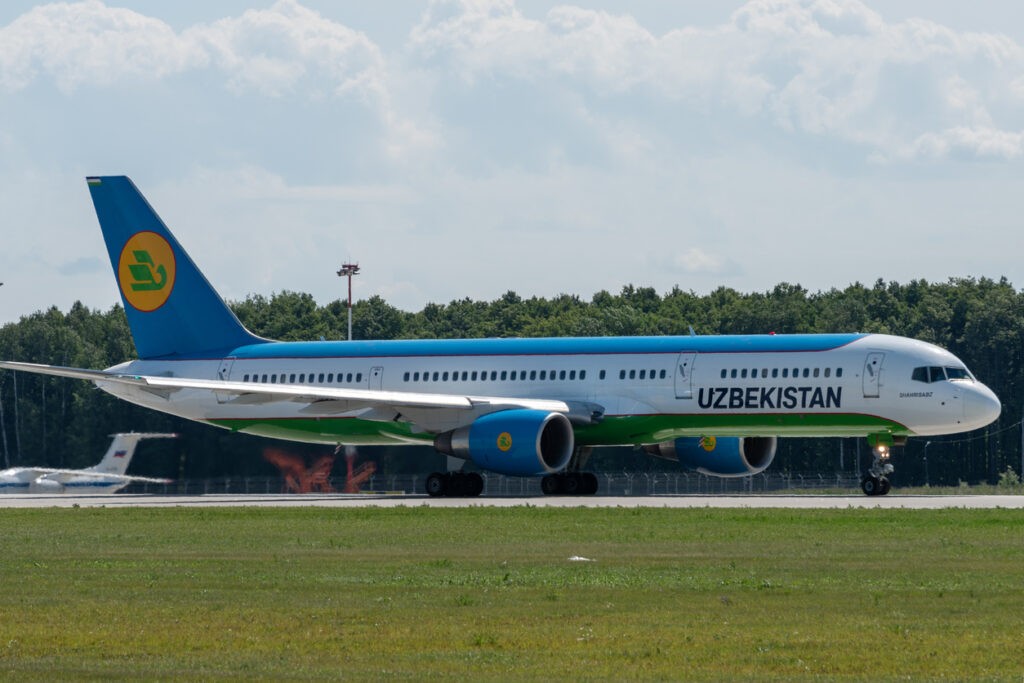
During talks in Seoul this week, Uzbekistan’s Ministry of Transport and South Korea’s civil aviation authority reached agreements to increase the number of regular flights between Uzbekistan and South Korea from the current 10 to 24 per week for airlines of each country, raising the total weekly number of flights to 48. According to the Uzbek ministry, airlines of both countries will operate up to 12 weekly flights between Tashkent and Seoul and up to four flights from South Korea’s regions to Tashkent. Up to four flights per week will be performed from Uzbekistan’s regions to Seoul, and there will be up to four weekly flights between Uzbekistan's regions and other South Korean cities. An agreement was also reached on the bilateral use of the Open Skies regime at the international airport of Jeju, the second-largest airport in South Korea, and Uzbekistan’s Samarkand airport for airlines of both countries. From the Uzbek side, flights between the two countries will be operated by the national air carrier, Uzbekistan Airways, and new airlines created by Uzbekistan — Qanot Sharq, My Freighter, and Air Samarkand. According to the Uzbek ministry, these agreements will help develop trade and economic relations between the two countries, increase bilateral passenger and cargo turnover, and attract Korean tourists to the historical cities of Uzbekistan. The Times of Central Asia earlier reported that South Korea is one of the most popular destinations for Uzbeks, both for work and studies. The Uzbeks occupy fifth place by size of the foreign diaspora in the country and number more than 69,000. In recent years, the government of Uzbekistan has established regulations for legal and safe labor migration to South Korea. At the start of 2024, the government announced its intention to attract 100,000 Uzbeks to work in South Korea.

Tashkent Teacher at Center of Political Debate Arrested for Second Violent Outburst

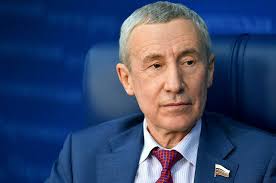
The Times of Central Asia previously reported that оn September 23, a teacher at a school in Tashkent’s Chilonzor district was filmed slapping a student when the child asked for the Russian language class to be taught in Russian. The Children’s Ombudsman of Uzbekistan, Surayyo Rahmonova, has begun an investigation into the incident. The spokesperson for Russia's Ministry of Foreign Affairs, Maria Zakharova, said that she was worried about the content of the video published online, and asked Uzbekistan to make a legal assessment of this incident. In response, Alisher Qodirov, the leader of Uzbekistan’s Milli Tiklanish (National Revival) party and deputy speaker of the lower house of parliament, urged Russia not to interfere in Uzbekistan's domestic affairs, commenting that “it would be better for [Russia] to deal with their own affairs [which are] full of problems than to deal with our internal issues." Russian Senator Andrei Klimov reponded to Qodirov’s statement, saying that “inter-ethnic relations are very delicate” between Uzbeks and Russians. He called the teacher’s actions “an offense, maybe more” and expressed bewilderment at Qodirov’s remarks. The teacher has since committed other offenses. On September 24, she went to her daughter’s school in another district of Tashkent, where she argued with the school administration and used physical force against the deputy director. When officers from the National Guard and the Interior Administration intervened to restore order, the teacher resisted their demands. She was later sentenced to seven days of administrative detention and fined.

Uzbekkosmos and NASA Unite for World Space Week Celebrations in Uzbekistan

The Uzbekkosmos agency has announced a series of events in celebration of World Space Week, which will take place in Uzbekistan from October 4 to 10. This global event, commemorated in nearly 100 countries, was established by a UN General Assembly resolution in 1999, recognizing the importance of space exploration. As part of the World Space Week festivities, Uzbekkosmos is launching several major initiatives. A key highlight is a special exhibition on space history at the Tashkent City Mall Trade and Entertainment Center, which will open its doors on October 4. In addition, on October 5 and 6, Uzbekkosmos, in collaboration with NASA, will host the NASA Space Apps Challenge 2024 hackathon. This event will take place at the Turin Polytechnic University in Tashkent, where over 200 young innovators, organized into approximately 40 teams, will showcase their creative projects.

The Ferghana Valley: Navigating Complex Challenges in Central Asia’s Most Volatile Region

The Ferghana Valley is one of Central Asia’s most fertile and densely populated areas, but it is also among the most volatile. Spanning Uzbekistan, Kyrgyzstan, and Tajikistan, this landlocked region has long been a hotbed of ethnic tension, water disputes, and political instability. These challenges are deeply rooted in the geography, history, and sociopolitical landscape, making the valley a key focal point for understanding broader regional dynamics in Central Asia.   Geographical Importance and Ethnic Diversity Nestled between the towering Tien Shan and Pamir Mountain ranges, the Ferghana Valley covers over 22,000 square kilometers. It is fertile land nourished by the Syr Darya River, making it a critical area for cultivating cotton, fruits, and vegetables. These natural resources have historically drawn diverse populations, creating a vibrant ethnic mosaic. The valley is home to Uzbeks, Kyrgyz, and Tajiks, as well as smaller ethnic groups. While ethnic Uzbeks form the majority, significant Kyrgyz and Tajik minorities inhabit border regions. The ethnic diversity of the Ferghana Valley is both a strength and a source of tension. Soviet-era border policies exacerbated these divisions by creating artificial boundaries that crisscrossed the valley, leaving behind ethnic enclaves — pockets of one nationality surrounded by the territory of another. These enclaves have complicated governance and territorial integrity, making border management a persistent challenge.   The Soviet Legacy and Border Disputes During Soviet rule, the Central Asian republics were organized under Stalin’s divide-and-rule strategy, which deliberately created complex borders to weaken local identities and prevent regional unity. The Ferghana Valley, divided among three Soviet republics, is a prime example of this approach. After the Soviet Union's collapse in 1991, the administrative boundaries became international borders overnight between Uzbekistan, Kyrgyzstan, and Tajikistan. The lack of clearly defined borders has sparked numerous conflicts over territory, water, and land. A notable clash between Kyrgyzstan and Tajikistan in 2021 resulted in over 40 deaths and the destruction of homes and infrastructure. Many disputes revolve around access to scarce resources like water and arable land. These issues have escalated into violent confrontations, leading to casualties and the displacement of local populations.   Water: A Scarce and Contested Resource Water is the lifeblood of the Ferghana Valley, but disputes over its allocation are a major source of tension. The valley depends heavily on irrigation for its agricultural productivity, and the Syr Darya River, along with its tributaries, plays a crucial role in supplying water to the region. However, the division of the valley among the three countries complicates water management. Uzbekistan, the most populous of the three, relies on the valley’s water resources for its cotton industry, a cornerstone of its economy. Meanwhile, Kyrgyzstan and Tajikistan, which control the headwaters of the Syr Darya, often use their upstream position to leverage water access. This dynamic has led to frequent disagreements over water usage. For instance, Kyrgyzstan has at times threatened to withhold water unless it receives compensation, either through payments or electricity.   Ethnic Tensions and Political Instability Ethnic tensions further complicate the Ferghana Valley’s already volatile...

Fallout From Assault on Tashkent Schoolboy Reaches Russian Foreign Ministry

On September 23 a teacher at a school in Tashkent's Chilonzor district slapped a student when the child asked for the Russian language class to be taught in Russian. The Children’s Ombudsman of Uzbekistan, Surayyo Rahmonova, has begun an investigation into the incident -- but not before news of the assault reached Russia. Maria Zakharova, the spokesperson for the Russian Ministry of Foreign Affairs, said that she was concerned about the content of a video of the slap that was posted on social media. “We have requested official clarification from the Uzbek side,” Zakharova commented. “The Uzbek side is urgently asked to give the media material a legal assessment and, if justified, to take action against the perpetrator of cruel treatment of the child. We are keeping this issue under the closest attention.” The leader of Uzbekistan’s Milli Tiklanish (National Revival) party and deputy speaker of the lower house of parliament, Alisher Qodirov commented on Telegram that “it would be better for [Russia] to deal with their own affairs [which are] full of problems than to deal with our internal issues. The violation of rights of an Uzbek child at a school in Uzbekistan will be investigated in accordance with Uzbek laws.” A vocal critic of Russian influence, earlier this year Qodirov proposed a ban on the provision of public services to persons who don’t speak the Uzbek, and the promotion of Soviet ideology and symbols in Uzbekistan.