• KGS/USD = 0.01143 0%
  • KZT/USD = 0.00205 0%
  • TJS/USD = 0.10433 0.1%
  • UZS/USD = 0.00008 0%
  • TMT/USD = 0.28577 0%
  • KGS/USD = 0.01143 0%
  • KZT/USD = 0.00205 0%
  • TJS/USD = 0.10433 0.1%
  • UZS/USD = 0.00008 0%
  • TMT/USD = 0.28577 0%
  • KGS/USD = 0.01143 0%
  • KZT/USD = 0.00205 0%
  • TJS/USD = 0.10433 0.1%
  • UZS/USD = 0.00008 0%
  • TMT/USD = 0.28577 0%
  • KGS/USD = 0.01143 0%
  • KZT/USD = 0.00205 0%
  • TJS/USD = 0.10433 0.1%
  • UZS/USD = 0.00008 0%
  • TMT/USD = 0.28577 0%
  • KGS/USD = 0.01143 0%
  • KZT/USD = 0.00205 0%
  • TJS/USD = 0.10433 0.1%
  • UZS/USD = 0.00008 0%
  • TMT/USD = 0.28577 0%
  • KGS/USD = 0.01143 0%
  • KZT/USD = 0.00205 0%
  • TJS/USD = 0.10433 0.1%
  • UZS/USD = 0.00008 0%
  • TMT/USD = 0.28577 0%
  • KGS/USD = 0.01143 0%
  • KZT/USD = 0.00205 0%
  • TJS/USD = 0.10433 0.1%
  • UZS/USD = 0.00008 0%
  • TMT/USD = 0.28577 0%
  • KGS/USD = 0.01143 0%
  • KZT/USD = 0.00205 0%
  • TJS/USD = 0.10433 0.1%
  • UZS/USD = 0.00008 0%
  • TMT/USD = 0.28577 0%

Viewing results 283 - 288 of 482

Launch of Flights Between Almaty and Nukus

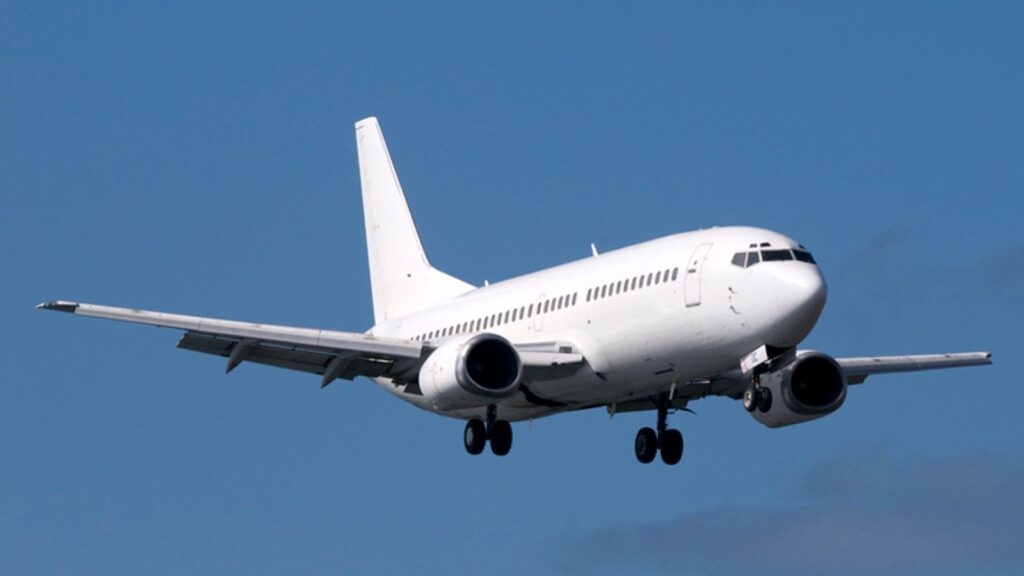
From 1 June, Uzbekistan Airways will begin operating regular flights between Almaty in Kazakhstan and Nukus, the main city of Uzbekistan’s north-western Karakalpak Autonomous Region. Flights on a 174-seat A320 aircraft, will operate twice a week, on Wednesdays and Saturdays. In welcoming the move, the Ministry of Transport of Kazakhstan said that the new air route would greatly enhance the development of trade, economic and business cooperation between Kazakhstan and Uzbekistan. The introduction of the flights will also benefit tourism, making it easier and quicker to visit the region’s renowned Savitsky Museum, home to one of the world’s best collections of Soviet art; the Muynak Ship Cemetery on the fast-disappearing Aral Sea, and the ancient city of Mizdakhan. The total number of international flights from Kazakhstan now stands at 567 per week on 121 air routes, including direct flights to 28 countries.  

Up to 300,000 Uzbeks Labor Migrants Expected to Return Home

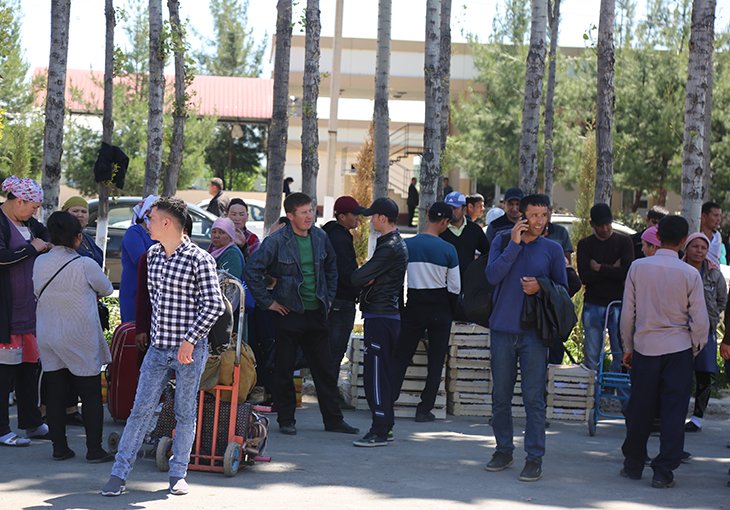
On May 10, an online meeting was held under the chairmanship of President Mirziyoyev on the issue of employment and mobilizing the internal capabilities of local industry. Mirziyoyev reiterated that the issue of employment and income of is of primary importance, and warned leaders at all levels that laxity in this regard will not be tolerated. Mirziyoyev also touched upon the issue of labor migration: 58,000 labor migrants returned between January and March of this year, followed by another 57,000 in April alone. Up to 300,000 people are expected to return by the end of the year, and the importance of providing them with gainful employment and helping them with social issues was emphasized. Officials were tasked with creating a single information platform on migration, helping compatriots working abroad who find themselves in difficult situations, and providing jobs for those returning.

The 2024 UN Asian Women’s Forum Begins in Samarkand

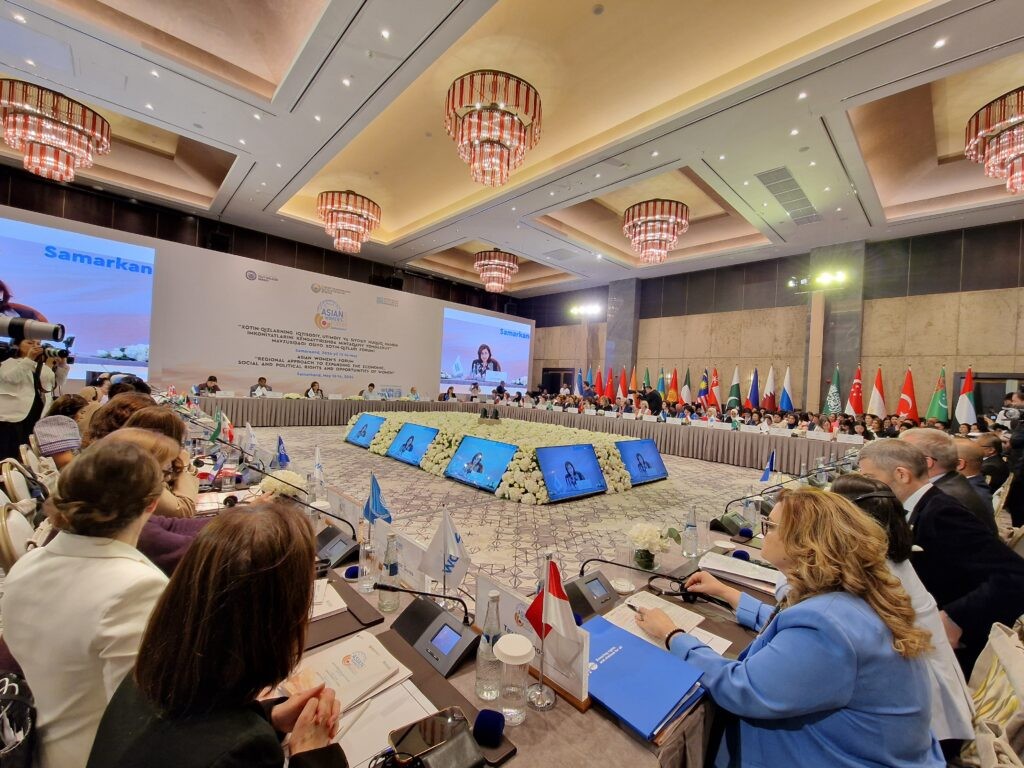
The United Nations' annual Asian Women’s Forum began in Samarkand today, this year dedicated to the topic of “Women’s economic, social and political empowerment”. The Forum brought together delegates from more than 30 countries, including female members of parliament from countries across Asia, heads of government, and senior female staff from 40 organizations. In one session, a representative of the UN in Uzbekistan, Jeren Guven, praised the country’s recent efforts to ensure gender equality, commenting: “We are pleased to note the positive changes in Uzbekistan regarding gender equality and the expansion of women’s rights, which is an important step towards creating a more inclusive and equal society." However, another session addressed factors still preventing women from accessing quality education, science and digital technologies. It was reported that in 2022, 32.1% of women between the ages of 15 and 24 worldwide were not in education, work, or vocational training. The corresponding figure for men was just 15.4%. This difference between the genders is still significantly higher in the countries of Central Asia. According to Forum delegates, institutional barriers -- including discrimination in the workplace, unequal distribution of unpaid care and household responsibilities, and lack of decent work opportunities -- are among the factors preventing girls from transitioning from school to work.

Uzbekistan Ranked Fifth for Number of Students Studying Abroad

According to Statista, based on UNESCO data, Uzbekistan ranked fifth globally in terms of the number of students studying abroad in 2021. Chinese and Indian students top the list. The number of Chinese students studying abroad was one million, and Indian students, 508,000. Vietnam, Germany and Uzbekistan are next on the list, with 137,000 students from Vietnam, 126,000 from Germany, 110,000 from Uzbekistan, 106,000 from France, 103,000 from the U.S., and 99,000 from Syria studying abroad. The U.S. has become the main country receiving foreign students, enrolling 833,000 in 2021, with Britain in second place with 601,000. The figures are part of the World Migration Report 2024. UNESCO has reported that international students numbered 2.2 million in 2001, and this had increased to 6.39 million by 2021.

Healing Properties of Uzbekistan’s Chashma Spring Draw Curious Tourists

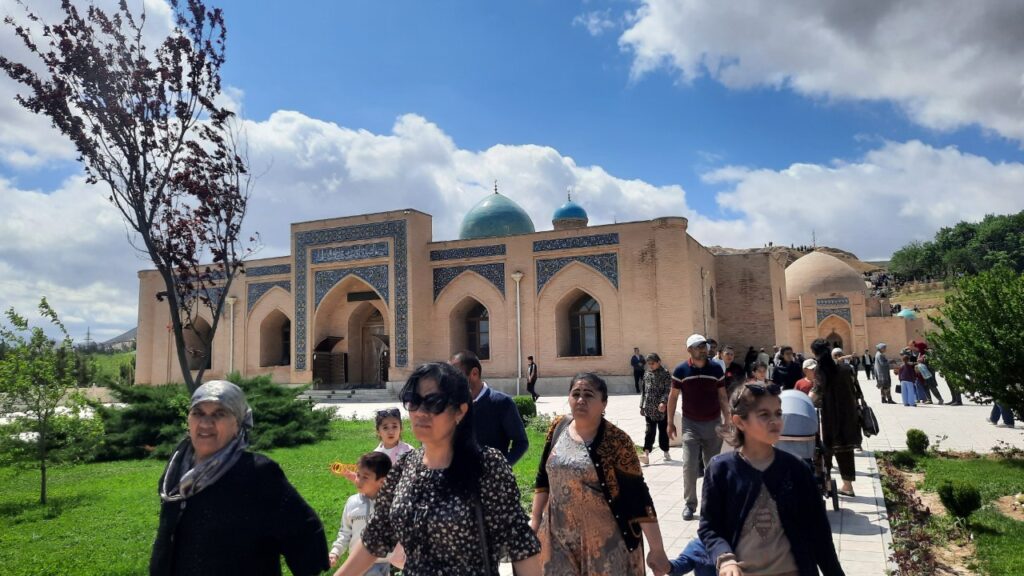
It’s Sunday morning, and a nice breeze is blowing. Due to favorable weather, many people are paying a visit to the Chashma complex in Nurota, in the Navoi region of Uzbekistan. The complex is one of the most visited holy places by Central Asian Muslims, and thousands of tourists from all over the world flock here every year. The Times of Central Asia decided to see how popular the tourist spot is. This historical complex includes the Chilustun Mosque, the Chashma Spring, the Panjab (Beshpanja) Well, the Panjvaqta Mosque, and Sheikh Abul Husan Nuri Mausoleum. The people of Nurota district mainly speak Tajik, in which the word Chashma means "holy spring."   In the 9th century, the Chilustun Mosque was built at Chashma; it was rebuilt in the 16th century during the rule of Amir Timur. The mosque, erected near the holy spring, has a dome-shaped sundial with cylindrical windows, which sits in the heart of the mosque. In addition, the art of wood carving and other examples of Central Asian national decoration were skillfully used in the construction of the mosque. Panjvaqta Mosque is located next to Chilustun. This mosque was built between 1570 and 1582 upon orders from Abdullah Khan II, the Emir of Bukhara. Today, the building consists of a large dome with two-sided porticos. All of its columns are made of mulberry and elm wood, and the base is made of marble. The main focus of visitors is the Chashma Spring. Local resident, Zilola Safarova has said that 40,000 years ago, a meteorite fell from the sky in this place and radiated light for a hundred days. As a result of the meteorite, a crater was formed and a holy spring with healing properties appeared. The people of Nurota believe this legend, and many are of the opinion that the name Nurota is related to this event. Chashma's water flows through thousands of kilometers of underground passages at a rate of 290 liters per second, and the temperature of its water remains constant in all seasons of the year at 19.5° Celsius. The spring's highest recorded flow rate was 400 liters per second. Furthermore, Chashma's water is said to have healing properties. It was found that it contains trace amounts of gold, which is said to be a cure for gastrointestinal diseases. It has long been known that iodine in water is a cure for goiters, and rare bromine is known as a cure for nervous disorders. Meanwhile, silver contained in the water ensures that its mineral composition is well preserved. Microbiologists say that this holy water contains 15 useful trace elements which have the ability to calm a person and may have a positive effect on the body. If one pays attention to the entire picture here, there are fish in the Chashma, which are called river marinka. These fish have an average lifespan of 17 years, and clean the streams from which spring water emerges out of sand. That sand ensures a moderate flow...

Buildings “Full of Tattoos:” Tashkent Mosaics, Newly Protected, Tell of a City’s Rebirth

In one Tashkent mosaic, Shirin, a protagonist in a Persian love poem that ends in tragedy, sits with flowing hair on a colorful carpet. Another mosaic in the Uzbek capital depicts the scientist Abu Rayhan al-Biruni with the planet Saturn overhead and flowing water below. The scientist holds the Tree of Life. The mosaic is located on Babur Street in the Yakkasaray district of Tashkent. Other images portray Soviet-era optimism – a young couple, a female irrigation engineer and corn and wheat, symbols of production and abundance. Tales of degraded heritage in Uzbekistan and elsewhere are familiar, but there are bright spots. In late March, the government designated about 160 mosaics on buildings in Tashkent and other regions as cultural heritage, meaning they are protected, officially at least, from being dismantled, painted over or covered with advertisements. The city’s subway art is also a source of pride. The state sees the images as a tourist draw, and Tashkent residents and other enthusiasts who have campaigned for their preservation are spreading the word. [caption id="attachment_17717" align="alignnone" width="1200"] Photo by Fotima Abdurakhmanova[/caption] A slick new website titled “Mosaics of Tashkent" offers information about more than 330 mosaics, documenting how artists and architects from across the Soviet Union and beyond put their stamp on the reconstruction of a city that was virtually leveled in a 1966 earthquake. Investigations are still underway to determine who made some of the mosaics. Many were dismantled or damaged over the years and not all of those remaining have government protection. “Each mosaic told its own story, gave emotions, diluted the gray landscape of high-rise buildings, marking the beginning of a new life and a new era,” says the website, which was created by Tashkent’s Department of Digital Development. The quake left hundreds of thousands without homes. One official toll put the number of dead at 15, though it was probably higher. [caption id="attachment_17718" align="alignnone" width="1167"] Photo by Fotima Abdurakhmanova[/caption] Some residential buildings with mosaics on their facades “look like a body which is completely full of tattoos,” Philipp Meuser, a German architect, said during a presentation at the Goethe-Institut in Tashkent last week. Meuser wrote a book about the Tashkent mosaics of the Zharsky brothers – Pyotr, Nikolai and Alexander. The three designers and decorators decorated hundreds of buildings in a city whose reimagined character was shaped by Soviet modernism, regional influences and some Western ideas about urban layout. Two of the brothers were born in France. The Zharskys started mosaic designs with a sketch, and the process was scaled up from there, Meuser said. In one method, colored tiles were pressed by hand into soft concrete that had been poured into a steel mold to create a mosaic. The survival of the art decades later testifies to the durability of the techniques. [caption id="attachment_17719" align="alignnone" width="1078"] Photo by Fotima Abdurakhmanova[/caption] Communism-extolling mosaics were an official art form across the Soviet Union, but the imagery of many of those which survive in Tashkent is not ideological. Geometric...