• KGS/USD = 0.01144 0%
  • KZT/USD = 0.00216 0%
  • TJS/USD = 0.10616 -0.19%
  • UZS/USD = 0.00008 0%
  • TMT/USD = 0.28530 0%
  • KGS/USD = 0.01144 0%
  • KZT/USD = 0.00216 0%
  • TJS/USD = 0.10616 -0.19%
  • UZS/USD = 0.00008 0%
  • TMT/USD = 0.28530 0%
  • KGS/USD = 0.01144 0%
  • KZT/USD = 0.00216 0%
  • TJS/USD = 0.10616 -0.19%
  • UZS/USD = 0.00008 0%
  • TMT/USD = 0.28530 0%
  • KGS/USD = 0.01144 0%
  • KZT/USD = 0.00216 0%
  • TJS/USD = 0.10616 -0.19%
  • UZS/USD = 0.00008 0%
  • TMT/USD = 0.28530 0%
  • KGS/USD = 0.01144 0%
  • KZT/USD = 0.00216 0%
  • TJS/USD = 0.10616 -0.19%
  • UZS/USD = 0.00008 0%
  • TMT/USD = 0.28530 0%
  • KGS/USD = 0.01144 0%
  • KZT/USD = 0.00216 0%
  • TJS/USD = 0.10616 -0.19%
  • UZS/USD = 0.00008 0%
  • TMT/USD = 0.28530 0%
  • KGS/USD = 0.01144 0%
  • KZT/USD = 0.00216 0%
  • TJS/USD = 0.10616 -0.19%
  • UZS/USD = 0.00008 0%
  • TMT/USD = 0.28530 0%
  • KGS/USD = 0.01144 0%
  • KZT/USD = 0.00216 0%
  • TJS/USD = 0.10616 -0.19%
  • UZS/USD = 0.00008 0%
  • TMT/USD = 0.28530 0%

Our People > Aliya Haidar

Aliya Haidar's Avatar

Aliya Haidar

Journalist

Aliya Haidar is a Kazakhstani journalist. She started her career in 1998, and has worked in the country's leading regional and national publications ever since.

Articles

Kazakhstan’s Evolving IT Sector and the Rise of AI

Kazakhstan is witnessing a surge in IT talent as specialists from Ukraine, Russia, and Belarus flock to the country. While this has intensified competition for local professionals, many Kazakh IT specialists are also seeking opportunities abroad. To better understand the current landscape, The Times of Central Asia spoke with Mazhit Berniyazov, founder of the travel startup Mego.tours, about the development of Kazakhstan’s IT industry. TCA: How long have you been working in IT, and how in-demand is this sector in Kazakhstan? Mazhit Berniyazov: My 16 years of experience in IT and related fields has given me a front-row seat to the sector's rapid development and transformation. I’ve worked in both dynamic startups and large companies, experiencing the benefits and challenges of each. Globally, IT is one of the most sought-after sectors, and its popularity continues to grow. In Kazakhstan, the demand for IT professionals has surged in recent years, driven by several factors. First, IT offers a wide range of career paths, making it appealing to people with diverse skills and interests—whether it’s software development, web design, cybersecurity, or data analytics. Second, training opportunities have expanded significantly, with numerous online courses, schools, and academies offering accessible and high-quality education, often bypassing the need for traditional higher education. Third, the IT industry’s dynamic and ever-evolving nature ensures constant demand for skilled professionals, adding to its appeal. The COVID-19 pandemic has also transformed the IT market. The rise of hybrid work models—combining remote and in-office work—has given professionals greater flexibility and freedom. This shift has broadened hiring pools, enabling Kazakh companies to recruit international talent, which, in turn, has heightened competition in the local labor market. TCA: What steps are needed to further develop Kazakhstan’s IT industry? Mazhit Berniyazov: Over the past two years, Kazakhstan has seen a significant influx of IT professionals from Russia, Belarus, and Ukraine. While many bring high levels of expertise, this migration has intensified competition for local specialists. Additionally, some migrant professionals accept lower salaries due to their circumstances, creating further challenges for Kazakh IT workers. This influx has a dual impact: it raises the overall level of the IT industry in Kazakhstan while also pushing local specialists to enhance their skills and adapt to the evolving landscape. Government support is crucial for the growth of the IT sector, yet Kazakhstan still lacks a clear strategy for leveraging its potential, especially in areas like artificial intelligence (AI). While initiatives exist to support IT development, there is no comprehensive roadmap for AI integration or sufficiently effective programs to attract investment and nurture startups in this field. Globally, AI is advancing rapidly, transforming industries such as healthcare, finance, logistics, and marketing. However, Kazakhstan is still in the early stages of crafting a national AI strategy. Challenges include limited public investment, a shortage of qualified specialists, and the absence of a robust regulatory framework. To compete internationally, Kazakhstan must implement a targeted program for AI development, including: • Encouraging scientific research and innovation • Supporting education and training initiatives •...

1 year ago

CSTO Leaders Tackle Regional Security, Nuclear Energy, and Afghan Border Concerns

Astana hosted a summit of the Collective Security Treaty Organization (CSTO), gathering heads of member states to discuss pressing regional and international issues. Kazakh President Kassym-Jomart Tokayev chaired the session of the CSTO Collective Security Council. Attendees included Belarusian President Alexander Lukashenko, Kyrgyz President Sadyr Japarov, Russian President Vladimir Putin, Tajik President Emomali Rahmon, and CSTO Secretary-General Imangali Tasmagambetov. In his address, President Tokayev highlighted the CSTO’s pivotal role in maintaining peace and stability in Eurasia. “Amid modern challenges, the CSTO consistently demonstrates its relevance as a guarantor of security for all member states. Our coordinated actions, mutual trust, and support strengthen our collective ability to tackle complex and large-scale tasks. The CSTO is not merely a military partnership but a unique mechanism that unites our efforts and resources to safeguard sovereignty and territorial integrity,” Tokayev stated. CSTO’s Response to Kazakhstan’s 2022 Crisis Tokayev reflected on the CSTO’s rapid deployment in January 2022, when Kazakhstan faced unrest over rising gas prices, which escalated into violent confrontations. Within 24 hours, CSTO forces were deployed to stabilize the situation. Russian troops secured strategic facilities in Almaty, while Kazakh forces restored order, marking a critical demonstration of the organization’s operational capability. Putin Unveils "Oreshnik" Missile System Russian President Vladimir Putin addressed ongoing tensions with Ukraine, signaling the potential use of the Oreshnik medium-range ballistic missile system in response to Western-supplied long-range missiles targeting Russian territory. According to Putin, the Oreshnik has the destructive power of nuclear weapons, and can penetrate heavily fortified targets. “The temperature of the striking elements reaches 4,000 degrees. At the explosion's epicenter, everything is reduced to elementary particles, essentially turning to dust,” he explained. Putin also announced that serial production of the missile had begun, with several units ready for deployment. Kazakhstan’s Nuclear Power Project Discussions also turned to Kazakhstan’s plans to build its first nuclear power plant. Tokayev has proposed an international consortium, and Putin expressed Russia's willingness to participate through Rosatom, emphasizing its extensive experience with international collaborations. “Rosatom is ready to work with specialists from other countries,” Putin remarked, leaving the door open for multilateral cooperation. Armenia’s Absence and CSTO’s Future Noticeably absent from the summit was Armenian Prime Minister Nikol Pashinyan, following Armenia’s decision to freeze its CSTO membership earlier this year. Yerevan cited concerns over its sovereignty as the reason for the suspension. Secretary-General Tasmagambetov remained optimistic about Armenia’s return, calling it a valued ally. “This is the decision of an independent and sovereign state, which no country or organization can influence. Nevertheless, we view Armenia as an ally and hope it will return to full participation in the CSTO in the foreseeable future,” Tasmagambetov stated. Key Summit Outcomes During the session, the Collective Security Treaty Organization (CSTO) also reflected on Kazakhstan's presidency in 2024, highlighting significant milestones achieved under its leadership. President Tokayev reported that approximately 60 activities were conducted within the CSTO's statutory areas of cooperation during Kazakhstan’s presidency. This included advancing coordinated approaches to key international issues in collaboration with member...

1 year ago

Navigating Energy and Diplomacy: Putin’s Visit to Kazakhstan

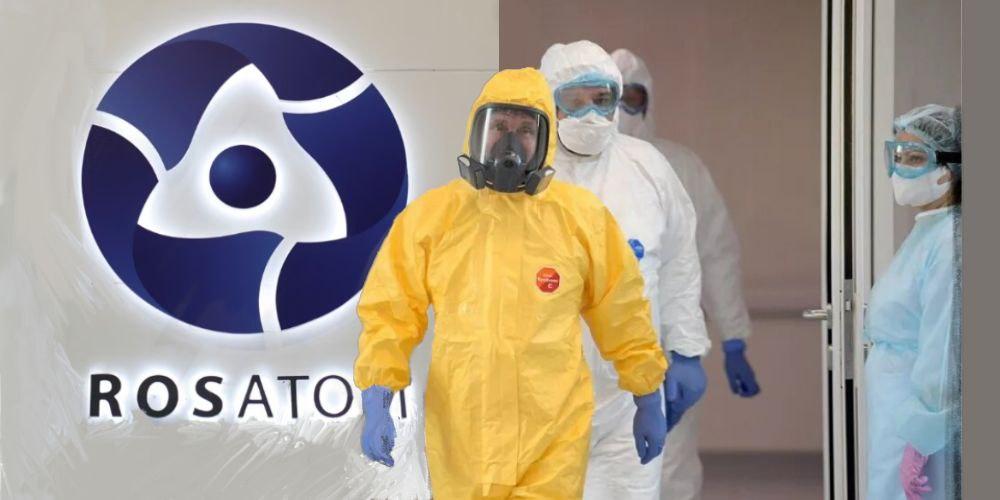
The Kremlin has confirmed that Russian President Vladimir Putin will visit Kazakhstan on November 27 at the invitation of Kazakh President Kassym-Jomart Tokayev. The visit is expected to focus on several key issues, with the construction of Kazakhstan's first nuclear power plant likely to be high on the agenda. As part of the visit, the two leaders will participate in the 20th Forum of Inter-regional Cooperation between Kazakhstan and Russia via video conference. Additionally, Putin will attend the regular session of the Collective Security Treaty Organization (CSTO) Collective Security Council, chaired by President Tokayev, on November 28. The meeting will involve heads of state from Russia, Kazakhstan, Belarus, Kyrgyzstan, and Tajikistan, as well as CSTO Secretary General Imangali Tasmagambetov. The agenda includes discussions on regional and international security, with a program to strengthen Tajik-Afghan border security set to be adopted. Notably, given its currently tumultuous relationship with Russia in the wake of Azerbaijan's invasion of Nagorno-Karabakh, Armenia will not participate, with its Foreign Minister, Ararat Mirzoyan having opted out of attending. Focus on Nuclear Power and the Role of a Consortium Experts believe that Putin’s visit will include discussions on nuclear energy. This aligns with recent remarks by Kazakh Energy Minister Almasadam Satkaliyev, who stated that Kazakhstan is open to discussing nuclear power plant construction with Russia, among other potential partners. Satkaliyev emphasized that energy issues remain a cornerstone of international cooperation, and Kazakhstan has established an intergovernmental commission to evaluate proposals from various vendors on a competitive basis. Kazakhstan’s First Deputy Prime Minister Roman Sklyar has highlighted the importance of forming an international consortium for the project. Speaking in September, Sklyar noted that political risks and safety concerns would be addressed during the process. He also emphasized the need to incorporate cutting-edge technologies from global leaders in the nuclear energy sector. On November 14, Kazakh Prime Minister Olzhas Bektenov met with Alexei Likhachev, Director General of the Russian State Atomic Energy Corporation, Rosatom. The meeting focused on cooperation in nuclear energy, quantum technologies, digitization, and the development of human resources. Rosatom, a diversified company involved in engineering and construction, currently has 39 nuclear power units in various stages of development across ten countries. Public Support and Future Plans The potential construction of a nuclear power plant in Kazakhstan has garnered significant public support. In an October 2024 referendum, 71.2% of Kazakh voters approved the initiative. Commenting on the result, Tokayev suggested that an international consortium involving global companies with advanced technologies would be the best approach for the project. Kazakhstan’s energy landscape is characterized by a reliance on aging thermal power plants, which are increasingly unable to meet the demands of a growing population and economy, with electricity shortages projected to worsen, particularly in the rapidly developing southern regions. The construction of a nuclear power plant, therefore, is seen as a crucial step toward alleviating these shortages, reducing dependence on overpriced imports from Russia, and achieving carbon neutrality goals. The construction of Kazakhstan’s first nuclear power plant presents both...

1 year ago

Redefining Work and Innovation: The Impact of AI and Its Rise in Kazakhstan

Will artificial intelligence be able to replace humans? What professions will disappear in the future, and will mankind face an “aggressive” neural network? Aigerim Abdenbayeva, head of educational programs at the Institute of Smart Systems and Artificial Intelligence (ISSAI) at Nazarbayev University (NU), answers these questions and discusses how AI is developing in Kazakhstan. TCA: Most people have heard the term “artificial intelligence” in one way or another, but only a small proportion know about the practical possibilities of AI. In your view, what is artificial intelligence? Artificial intelligence can be characterized as the ability of machines to perform tasks that traditionally require human intelligence. This includes recognizing images, understanding language, making decisions, and solving complex problems. In everyday life, we encounter AI in many different forms, from voice assistants like Siri and Google Assistant to recommendations on streaming platforms like Netflix, which suggests movies based on your preferences. The term “artificial intelligence” was coined in 1956 by American scientist John McCarthy, who is considered one of the field's founders. Although the concept of AI was proposed more than half a century ago, its modern form only began to develop in the 1980s, when so-called expert systems emerged. These systems used rules and knowledge bases to solve specific problems, such as disease diagnosis or financial forecasting. Since then, AI has gone through several stages of development. The 2010s saw a significant breakthrough with the emergence of deep learning and big data technologies. Based on neural networks, deep learning has allowed computers to process and analyze vast amounts of information, dramatically improving their ability to recognize patterns and understand speech. This progress has made AI more accessible to a broader audience and has become an integral part of our daily lives. Several trends in the field of artificial intelligence can be distinguished: "Narrow AI"  is a specialized system for specific tasks. For example, algorithms are used to recognize faces or diagnose diseases. They outperform humans in a narrow domain, but cannot perform functions outside their specialization. “General AI” involves creating machines that can perform any intellectual task at a level comparable to humans. General AI remains a theoretical concept and has not been achieved in reality. "Generative AI" is a field that deals with creating new data based on existing data. Examples include generating text, images, and music. Algorithms such as GPT (Generative Pre-trained Transformer) can create text that looks like a human wrote it, and they are already being used extensively in various applications. Generative AI, in particular, has become popular due to its ability to make human life more manageable. For example, platforms like ChatGPT can help with writing articles, creating content for social media, and automating routine tasks, saving users a lot of time and effort. Other AI applications have already become part of our daily lives. For example, in medicine, AI is used to analyze medical images, which helps doctors in diagnosis and treatment selection. In finance, AI helps analyze market data and predict trends, allowing investors...

1 year ago

Kazakhstan Abandons Universal Income Declaration Plan

Kazakhstan Scraps Universal Tax Declarations Amid Public Concerns In a surprising move, the Kazakh government has proposed canceling the universal tax declaration system set to take effect in 2025. The decision, aimed at alleviating public anxiety amid worsening economic conditions, will exempt over 90% of the population from filing declarations. Experts argue that this adjustment is necessary and practical, as the reform would otherwise add unnecessary strain on taxpayers without significantly benefiting state revenues. Public Backlash and Policy Reassessment The Universal Declaration initiative was intended to include approximately 8 million additional citizens in 2025, encompassing private sector employees, pensioners, and students. However, widespread public concern about the burden on taxpayers and tax authorities prompted a reevaluation. Finance Minister Madi Takiyev announced the exemption on November 19, citing the country's advanced digital infrastructure, which already tracks key financial data. Prime Minister Olzhas Bektenov echoed these sentiments, directing the Ministries of Finance, National Economy, and Justice to draft legislative amendments within three days. He emphasized that the reform had “caused concern of the population, which was brought to the attention of the head of state.”  He added that a widespread income declaration is unnecessary because the databases of state agencies in Kazakhstan are "highly digitized." Streamlined Tax Obligations The revised approach retains declaration requirements for specific groups, including: Citizens with assets abroad. Individuals making significant purchases (exceeding 74 million KZT, or approximately $149,000, in 2024). Those receiving income are subject to independent taxation. Voluntary declarations will remain an option for all citizens. A Phased Reform The universal declaration system began in 2021 and was implemented in stages. Initially, it targeted government officials and their spouses. The requirement extended to public sector employees and the quasi-public sector in subsequent phases. By 2024, business leaders, entrepreneurs, and their spouses were included. The final stage, which aimed to include the broader population, faced criticism for being outdated in the digital era. President Kassym-Jomart Tokayev acknowledged this, stating, “It is planned that about 8 million more people will submit declarations next year. However, we should consider that the concept of universal income declaration was adopted 14 years ago. During this time, the country has made significant progress in digitalization and fintech. Databases of various government agencies have been integrated. Financial and tax control has been strengthened. Given these large-scale changes, the question arises as to whether it is advisable for citizens falling under the fourth and final stage to submit declarations. The government needs to work out a solution to this.” Expert Analysis Political scientist Gaziz Abishev highlighted the effectiveness of the reform's earlier stages, which targeted those most likely to influence public funds or earn significant income. “The first three stages have already included bureaucrats, civil servants, quasi-public sector employees, and businesspeople. Everyone who manages public funds or earns a considerable income within Kazakhstan’s economy has already been required to report and will continue to submit declarations,” Abishev explained. The fourth stage, set to include around 8 million additional citizens, drew criticism for its lack...

1 year ago