• KGS/USD = 0.01143 0%
  • KZT/USD = 0.00205 0%
  • TJS/USD = 0.10724 0.09%
  • UZS/USD = 0.00008 0%
  • TMT/USD = 0.28571 0%
  • KGS/USD = 0.01143 0%
  • KZT/USD = 0.00205 0%
  • TJS/USD = 0.10724 0.09%
  • UZS/USD = 0.00008 0%
  • TMT/USD = 0.28571 0%
  • KGS/USD = 0.01143 0%
  • KZT/USD = 0.00205 0%
  • TJS/USD = 0.10724 0.09%
  • UZS/USD = 0.00008 0%
  • TMT/USD = 0.28571 0%
  • KGS/USD = 0.01143 0%
  • KZT/USD = 0.00205 0%
  • TJS/USD = 0.10724 0.09%
  • UZS/USD = 0.00008 0%
  • TMT/USD = 0.28571 0%
  • KGS/USD = 0.01143 0%
  • KZT/USD = 0.00205 0%
  • TJS/USD = 0.10724 0.09%
  • UZS/USD = 0.00008 0%
  • TMT/USD = 0.28571 0%
  • KGS/USD = 0.01143 0%
  • KZT/USD = 0.00205 0%
  • TJS/USD = 0.10724 0.09%
  • UZS/USD = 0.00008 0%
  • TMT/USD = 0.28571 0%
  • KGS/USD = 0.01143 0%
  • KZT/USD = 0.00205 0%
  • TJS/USD = 0.10724 0.09%
  • UZS/USD = 0.00008 0%
  • TMT/USD = 0.28571 0%
  • KGS/USD = 0.01143 0%
  • KZT/USD = 0.00205 0%
  • TJS/USD = 0.10724 0.09%
  • UZS/USD = 0.00008 0%
  • TMT/USD = 0.28571 0%

Our People > Aliya Haidar

Aliya Haidar's Avatar

Aliya Haidar

Journalist

Aliya Haidar is a Kazakhstani journalist. She started her career in 1998, and has worked in the country's leading regional and national publications ever since.

Articles

Kazakhstan Under Pressure to Address Environmental Crisis

The United Nations Green Climate Fund (GCF) has pledged $280 million to Kazakhstan for environmental projects, underscoring the country's increasingly urgent ecological challenges. Experts warn that Kazakhstan faces a widening crisis as environmental degradation accelerates. Toward a “Green” Transition Minister of Ecology and Natural Resources Yerlan Nyssanbayev announced that the GCF will allocate substantial funding to Kazakhstan to support initiatives in renewable energy, electric transport development, and the adoption of low-carbon industrial technologies. “These investments will accelerate the country's transition to a sustainable, environmentally friendly economy,” Nyssanbayev stated. The minister said that Kazakhstan prepared a national program for GCF funding in 2024, comprising seven major initiatives. These included reducing greenhouse gas emissions in the energy sector, strengthening rural water supply systems, modernizing livestock farms, and promoting private-sector green financing. The program's total budget exceeds $1 billion, with $630 million potentially financed by the GCF. Additionally, the European Bank for Reconstruction and Development (EBRD) continues to back renewable energy projects in Kazakhstan. Eleven projects with a combined capacity of 330 MW are planned by 2027; nine have already secured financing. A Mounting Environmental Toll Kazakhstan continues to struggle with serious environmental challenges, many rooted in the Soviet-era legacy, and others emerging from modern development pressures. The country faces desertification, flooding, frequent wildfires, and escalating urban air pollution, particularly in cities like Almaty, Pavlodar, and Karaganda. On June 5, the government announced the formation of a Biodiversity Protection Fund at a forum in Astana. Akylbek Kurishbayev, President of the National Academy of Sciences, emphasized the urgency of regional collaboration in biodiversity conservation amid intensifying climate and anthropogenic pressures. Deputy Minister Nurlan Kurmalayev highlighted biodiversity preservation as a key component of environmental security and sustainable land use, calling for cross-border cooperation. In parallel, the national initiative “Green Kazakhstan” is advancing afforestation efforts across urban and rural areas, alongside waste management programs, ecosystem restoration, energy efficiency campaigns, and public education on environmental stewardship. Environmental Disaster Zones: The Caspian and Aral Seas Two of Kazakhstan's most pressing ecological crises involve the shrinking Caspian and Aral Seas. The Caspian Sea's water levels are falling dramatically. According to the Ministry of Ecology and Natural Resources, levels in 2024 are expected to drop by 22 cm in the northeast and 29 cm in the eastern Kazakh sector compared to 2023. Scientists warn of continued decline due to reduced inflows from the Volga and Ural rivers and rising global temperatures. TCA has previously reported about mass die-outs of Caspian seals in recent years. Vadim Ni, founder of the Save the Caspian Sea movement, described the crisis as triple-faceted, climate, ecological, and economic. “Its level is falling at an unprecedented rate, 2 meters over the past 20 years. By century’s end, up to one-third of its surface could be lost,” he said, warning that the shallow northern shelf, vital to the ecosystem, is especially at risk. Pollution, overfishing, and unchecked oil extraction are cited as critical threats. In April 2025, Mazhilis Deputy Sergei Ponomarev addressed a parliamentary inquiry to Prime...

1 year ago

Central Asian Students Face Uncertainty at U.S. Universities Under Trump Administration Policies

The situation for students from Central Asia studying in the United States has grown increasingly precarious following a controversial move by the Trump administration to restrict foreign student admissions at Harvard University, a decision that has sparked legal and diplomatic reactions. Administrative Ban Targets Foreign Students On May 23, U.S. Secretary of Homeland Security Kirstjen Nielsen ordered the termination of Harvard University's certification for its student and exchange visitor program. The Department of Homeland Security (DHS) cited Harvard’s alleged refusal to submit records on the conduct of its foreign students, requested the previous month. “Harvard can no longer accept foreign students, and existing foreign students must transfer or lose their legal status,” the DHS said in a statement. The university is currently challenging the decision in court. The administration attributes the crackdown to ideological concerns. Officials have cited a determination to confront anti-Semitic rhetoric amid campus protests related to the war between Israel and Hamas. They also oppose Diversity, Equity, and Inclusion (DEI) initiatives, which the administration has condemned as “illegal and immoral discrimination.” Harvard representatives reported that 6,793 international students were enrolled in the 2024-2025 academic year, comprising 27.2% of the student body. The loss of international students, they argue, could jeopardize not only Harvard’s standing but also the broader U.S. academic landscape. Beyond Harvard, the administration has intensified scrutiny of foreign students' social media activity, suspended hundreds of millions of dollars in funding to universities, revoked thousands of student visas, and initiated deportations. In response, Harvard filed a lawsuit, and on May 30, a federal court in Boston temporarily blocked the enforcement of the ban, according to Bloomberg. Nonetheless, the outlook remains uncertain. Kazakhstan Responds with Contingency Planning According to Kazakhstan’s Ministry of Science and Higher Education, seven students are currently studying at Harvard under the state-funded Bolashak program. Additional students may be enrolled privately or through other sponsorships. Minister of Science and Higher Education Sayasat Nurbek described the situation as "difficult" and stated that the ministry is awaiting the final court decision. In the event of an unfavorable outcome, Bolashak students would be offered transfer opportunities to other Ivy League institutions, all of which maintain partnerships with the scholarship program. Bolashak Program: Opportunity and Criticism Founded in 1993, the Bolashak (Future) program offers state-funded scholarships for international education in priority sectors of Kazakhstan’s economy. In return, graduates are required to work in Kazakhstan for a specified period. Despite its aims, the program has faced criticism for alleged elitism. Critics claim it disproportionately benefits children of influential families and that many graduates fail to fulfill their service obligations or remain abroad. Among its alumni is former Minister of National Economy Kuandyk Bishimbayev, who was educated in the U.S. under Bolashak and later served as chairman of the Bolashak Association. He was subsequently convicted twice, first for corruption, and later for the murder of his common-law wife, Saltanat Nukenova, in a case that attracted international attention. Nevertheless, official statistics indicate that more than 13,000 individuals have benefited from the...

1 year ago

Astana Gathers the World: Forum Elevates Kazakhstan’s Diplomatic Stature

The Astana International Forum 2025 (AIF2025), themed “Connecting Minds, Shaping the Future,” will take place in Kazakhstan’s capital on May 29-30. World leaders, business executives, investors, and experts will convene to address pressing global challenges and explore avenues for mutually beneficial agreements. Who is Expected in Astana? The AIF2025 aims to serve as a platform for open dialogue and to attract foreign capital. Participants will also seek to forge strategic partnerships and promote economic development initiatives. Approximately 600 international guests are expected, including prominent political figures, heads of international organizations, business leaders, investors, and members of the academic community. Confirmed attendees include Paul Kagame, President of Rwanda; Edi Rama, Prime Minister of Albania; Andrej Plenković, Prime Minister of Croatia, Gordana Siljanovska Davkova, President of the Republic of North Macedonia; and Sheikh Mohammed bin Abdulrahman Al Thani, Prime Minister and Minister of Foreign Affairs of Qatar. Ban Ki-moon, former UN Secretary-General and Chair of the Global Green Growth Institute and the Boao Forum for Asia, will also participate. Other distinguished guests include Alain Berset, Secretary General of the Council of Europe; Qu Dongyu, Director-General of the UN Food and Agriculture Organization (FAO); Amy Pope, Director General of the International Organization for Migration (IOM); Mathias Cormann, Secretary General of the OECD; and Daren Tang, Director General of the World Intellectual Property Organization. Also expected are Antonella Bassani, World Bank Vice President for Europe and Central Asia; Haoliang Xu, UNDP Deputy Secretary-General and Deputy Administrator; Jin Liqun, President of the Asian Infrastructure Investment Bank (AIIB); Jürgen Rigterink, First Vice President of the EBRD; Kubanychbek Omuraliev, Secretary General of the Organization of Turkic States; and Sebastian Kurz, former Federal Chancellor of Austria. This year, the forum will focus on three global themes: politics and international security, energy and climate change, and economics and finance. According to the Kazakh government, AIF2025 takes place amid intensifying global competition for investment and showcases Kazakhstan’s openness to international collaboration. The country continues to solidify its global presence through comprehensive reforms, legal modernization, and a strengthened investment climate. On May 28, two bilateral business forums, Kazakhstan-France and Kazakhstan-Italy will precede the main event. Italian Prime Minister Giorgia Meloni will also attend a Central Asia-Italy summit. As previously reported by The Times of Central Asia, in recent years Italy has emerged as one of the European countries most keen to maintain close relations with the countries of Central Asia. President Kassym-Jomart Tokayev is scheduled to open the forum. Global Anticipation Builds In the run-up to the event, several participants have already shared their expectations, with Maha Al-Kuwari, General Manager of the Doha Forum, saying that it was a privilege to be involved. “Together with the Qatar Development Fund, the Doha Forum will host a session focused on innovative approaches to enhancing global sustainability. Given geopolitical fragmentation, post-pandemic recovery, and disrupted supply chains, this discussion is vital, especially for developing and least developed countries,” she stated. The session will highlight new investment models and successful partnership frameworks spanning from Astana to Doha. Interviews...

1 year ago

Stealing Brides, Ignoring Justice: The Battle Against Forced Marriage in Central Asia

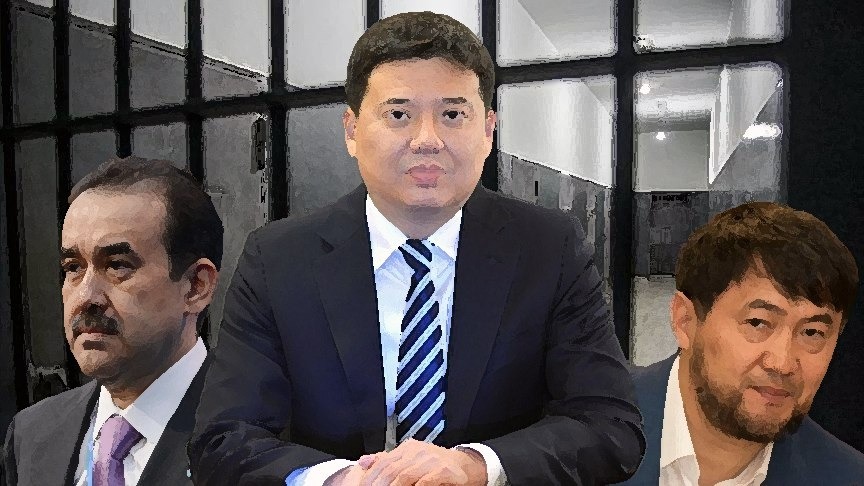
The abduction of girls for forced marriage remains a troubling and persistent practice across Central Asia. While Kazakhstan has been progressively tightening its legal framework to better protect women's rights, bride kidnapping continues to pose a serious human rights challenge throughout the region. Fighting the Middle Ages? Bride kidnapping has long been practiced in Central Asia and the Caucasus. In contemporary times, some instances are consensual, carried out as a form of cultural theatre to reduce the high cost of weddings in traditional societies. However, when carried out without the woman’s explicit permission, the ritual becomes a form of gender-based violence. Efforts to combat non-consensual bride kidnapping have been ongoing since the Soviet era, yet the practice endures. According to some Kazakhstani legislators, the current laws are no longer adequate to address the full scope of the issue. The existing criminal code’s general provisions on abduction, they argue, fall short of tackling the specific dynamics of forced marriage. Mazhilis Deputy Murat Abenov has proposed introducing explicit criminal liability for coercion into marriage. “Over the past three years, 214 complaints have been filed in Kazakhstan from people who were forced into marriage. Only ten of them reached court. Hundreds of criminal cases were simply closed,” Abenov stated. “Even though the girl proved that she had been kidnapped, that she had jumped out of the car, that force had been used against her, nothing could be done.” New legislative amendments have been drafted and are expected to be debated in the Mazhilis, Kazakhstan’s lower house of parliament. The proposed law introduces a scale of penalties based on the severity of the offense. “There is administrative liability, there will be a large fine, and in serious cases where the girl is under 18 or where force is used or by a group of people, there will be more serious liability, up to criminal liability, five to seven years in prison,” Abenov explained. This new law could be enacted by the end of 2025. Kazakhstan's Human Rights Commissioner, Artur Lastaev, addressed the issue in February 2024 in the wake of a high-profile case in Shymkent. “The practice of kidnapping girls for the purpose of marriage is still widespread in our country, especially in the southern regions. In some cases, such actions result in sexual assault, humiliation, unlawful deprivation of liberty, and even suicide,” Lastaev stated. “Saltanat’s Law” Written in Blood In June 2024, Kazakhstan implemented a sweeping new law entitled “On Amendments to Ensure the Rights of Women and the Safety of Children.” Though years in the making, the law is colloquially known as “Saltanat’s Law,” named after Saltanat Nukenova, a young woman who was brutally murdered by her common-law husband, Kuandyk Bishimbayev, a former senior government official. In November 2023, Bishimbayev beat Nukenova over the course of a night in a restaurant in Astana. After she lost consciousness, he attempted to conceal the crime instead of seeking medical help. In May 2024, following a highly publicized trial, Bishimbayev was sentenced to 24 years...

1 year ago

Kazakhstan’s Crypto Aspirations Face a Power Problem

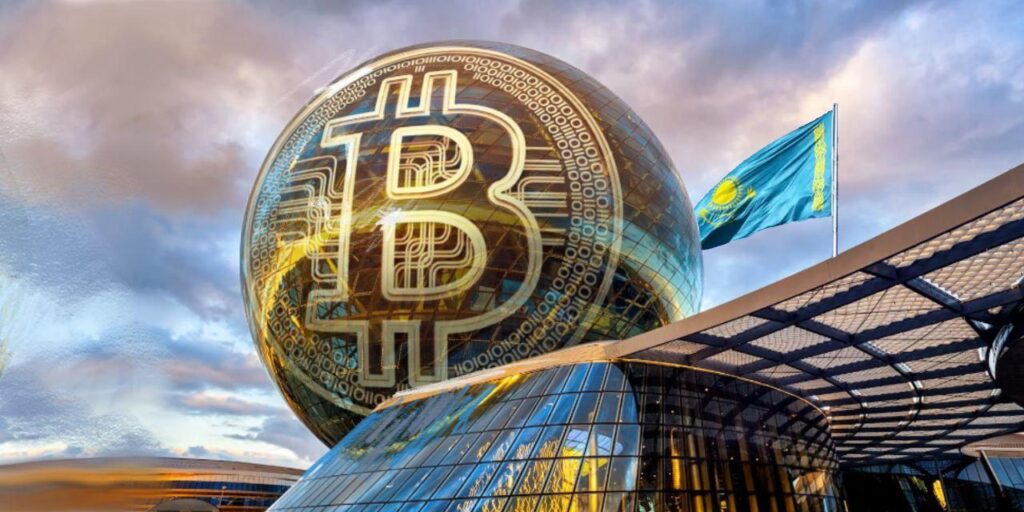
Kazakhstan’s First Deputy Minister of Digital Development, Innovation, and Aerospace Industry, Kanysh Tuleushin, believes that state-regulated cryptocurrency mining could generate substantial revenue and help modernize the country's energy infrastructure. Tuleushin argues that Kazakhstan has the potential to become Central Asia’s leading blockchain hub. However, this vision clashes with the country’s ongoing energy crisis, which continues to impact households and businesses. Optimistic Vision In an article published in the state newspaper Kazakhstanskaya Pravda, Tuleushin outlined how mining operations could contribute to the development of Kazakhstan’s power generation capabilities. He emphasized the use of associated petroleum gas (APG) to produce electricity for mining, which he claims would reduce carbon emissions and boost oil sector profits. “Miners can help modernize the power grid. In the U.S., they participate in grid balancing by consuming excess energy during low-demand periods. Kazakhstan already has a ‘70⁄30’ initiative, where foreign investors upgrade thermal power plants, allocating 70% of new capacity to the general grid and 30% to miners,” Tuleushin wrote. Tuleushin reported that cryptocurrency mining has brought 17.7 billion tenge to the national budget over the past three years. Meanwhile, trading volume on the Astana International Financial Center (AIFC) exchanges increased from $324.2 million in 2023 to $1.4 billion in 2024. From January 1, 2025, miners will be required to sell 75% of their assets through the AIFC. Despite a generally cautious regulatory stance, Kazakhstan permits digital asset trading within the AIFC. Digital assets are categorized as secured (linked to physical assets) or unsecured (such as Bitcoin and Ethereum). In 2023, digital asset transactions in Kazakhstan reached $4.1 billion, but 91.5% occurred in the “gray zone,” beyond state oversight. In 2024 alone, the Financial Monitoring Agency shut down 36 illegal crypto exchanges, froze $4.8 million in assets, and blocked over 3,500 illicit platforms. Tuleushin argues that fully legalizing and regulating these operations could add more than 190 billion tenge annually to the budget, enough to fund major public infrastructure such as schools and hospitals. He proposes extending crypto trading beyond the AIFC, authorizing crypto ATMs, and opening the market to major players, an approach akin to that of the UAE. Tuleushin also claimed that regions like Pavlodar and Karaganda have electricity surpluses and that Kazakhstan's cold climate further lowers operational costs for miners. Unchecked Consumption and Mounting Strain Despite the deputy minister's optimism, Kazakhstan’s Supreme Audit Chamber (SAC) has raised alarms over uncontrolled energy consumption by miners. According to a 2024 audit, miners consumed 901 million kWh worth 13 billion tenge, despite a national energy shortage, by bypassing RFZ LLP, the country’s sole energy purchaser. Former Prime Minister and current head of the Supreme Audit Chamber, Alikhan Smailov, warned, “Miners are consuming up to a billion kilowatt-hours. This is damaging our economy. How can we allow unchecked consumption amid such a crisis?” The audit revealed systemic issues, including deteriorating Soviet-era power plants (55% average wear), a 4,500-worker shortfall in the energy sector, and a lack of financial oversight by the Ministry of Energy. Looming Crisis In January...

1 year ago

Despite Ceasefire India-Pakistan Conflict Sends Ripples Through Central Asia

Despite a recent ceasefire agreement between India and Pakistan, renewed hostilities remain a looming threat. The latest clashes between the two nuclear-armed neighbors have direct and potentially lasting repercussions for Central Asia’s political stability and economic development. Ceasefire Amid Escalation Armed conflict erupted on May 7, when New Delhi launched “Operation Sindoor,” targeting what it described as terrorist infrastructure within Pakistan. The move followed a deadly terrorist attack on April 22 in Pahalgam, Jammu and Kashmir, which killed 26 people. India accused Pakistan of complicity, a charge Islamabad rejected, condemning the airstrikes as an “act of war.” Full-scale hostilities ensued for several days, raising alarms across the broader region. By May 11, a ceasefire was brokered, though both sides warned that fighting could resume if provoked. Given the eight-decade-long volatility along their shared border, the risk of future escalations remains significant. Whilst Pakistan credited the U.S. for facilitating the ceasefire, specifically highlighting Senator Rubio and what it described as direct intervention by President Trump, India maintained that the agreement was a result of direct communication between the Directors General of Military Operations (DGMOs). In a formal televised address, Foreign Secretary Vikram Misri emphasized that the ceasefire was a "bilateral" decision reached via military hotlines, omitting any mention of Trump or Rubio. “Both sides agreed to cease all firing and military actions on land,” Misri stated firmly, reiterating India’s stance that no third party played a role in its interactions with Pakistan. Disruption to Tourism Flows One immediate economic impact of the conflict has been felt in Central Asia’s tourism sector. In recent years, Kazakhstan, especially Almaty, has become an increasingly popular destination for Indian travelers, aided by a visa-free regime that permits 14-day stays. The country also hosts large numbers of Indian and Pakistani students, along with medical tourists and business travelers. Many Indian visitors rely on budget carriers such as IndiGo, which previously operated routes from Delhi to Almaty and Tashkent using airspace over Pakistan. The closure of this airspace led to increased costs and logistical complications. IndiGo suspended flights to both cities on April 27 and 28, respectively. Should hostilities resume, these suspensions could be extended, potentially setting back Central Asia’s still-fragile tourism recovery. Infrastructure and Trade at Risk The geopolitical instability also jeopardizes key infrastructure projects and trade routes. Kazakhstan and Uzbekistan have both enhanced connectivity with Pakistan through distinct strategies, with Kazakhstan integrating into multilateral frameworks like the Middle Corridor and QTTA, and Uzbekistan focusing on tactical bilateral projects such as the Termez–Karachi transport corridor and Trans-Afghan Railway. Both countries aim to reduce their reliance on Russian-controlled routes while leveraging Pakistan’s ports to boost regional trade. Political analyst Zhanat Momynkulov warns that the conflict could disrupt supply chains and raise the cost of goods across South and Central Asia. The rerouting of flights due to Pakistani airspace closures is already affecting logistics and regional connectivity. Kazakhstan, a central player in both the Shanghai Cooperation Organization and the Belt and Road Initiative (BRI), is particularly vulnerable. Projects...

1 year ago

Victory Day in Central Asia: Honoring Sacrifice Amid Shifting Narratives

For the countries of Central Asia, Victory Day holds a deep significance. Although debates over the nature of the May 9 commemorations have intensified in recent years, the importance of the holiday remains unchallenged. A War That Touched Every Family Attitudes toward the celebration marking the defeat of Nazi Germany are largely shaped by each nation's level of participation in the war effort. Kazakhstan mobilized over 1.2 million people, nearly 20% of its pre-war population of 6.5 million. Of these, more than 600,000 perished at the front, with an additional 300,000 dying in the rear due to malnutrition, forced labor, and inadequate medical care. With a similar sized population, Uzbekistan sent approximately 1.95 million people to the front - or one in every three residents. Around 400,000 Uzbeks did not return home. Over 500 Kazakhstani and more than 300 Uzbekistani soldiers were awarded the title Hero of the Soviet Union. [caption id="attachment_31602" align="aligncenter" width="2560"] Eternal flame and Crying Mother Monument, Tashkent; image: TCA, Stephen M. Bland[/caption] Kyrgyzstan, home to just 1.5 million people at the time, sent over 363,000 to the front. Approximately 100,000 perished, and 73 received the Hero of the Soviet Union medal. Tajikistan mobilized more than 300,000 troops, with over 100,000 never returning. Fifty-five Tajiks received Hero of the Soviet Union honors. Turkmenistan, with a population of 1.3 million, sent around 200,000 soldiers and officers; 16 received Hero status. Central Asian soldiers played vital roles in major battles, including the defense of Moscow. They helped liberate territories across the Soviet Union and Eastern Europe. The region also contributed 20-30% of its horse population, then a central component of local economies, for military use. The war profoundly reshaped Central Asia. Thousands of Soviet enterprises were relocated to the region, fueling industrialization. Millions of refugees from Nazi-occupied zones found sanctuary in Central Asian republics. Many children were taken in by local families and raised as their own. Today, many in Central Asia feel that outsiders fail to grasp the weight of Victory Day. While countries like the UK, U.S., Italy, and France recorded wartime deaths of 380,000, 417,000, 479,000, and 665,000 respectively, the USSR suffered over 26 million losses. German losses are estimated at 8.4 million. Celebrating Amid Controversy Recent years have brought a shift in how Victory Day is perceived in Central Asia. Symbols such as the Guards ribbon, criticized for echoing imperial Russian motifs, have sparked debate. Some argue that the holiday reflects colonial oppression, as the peoples of Soviet Asia were conscripted into a foreign war. These debates have grown louder since Russia annexed Crimea in 2014, with some now viewing the May 9 celebrations as a tool of Russian influence in the region. Nonetheless, Central Asian leaders have rejected efforts to "cancel" Victory Day, reaffirming its deep personal and national resonance. Efforts to distinguish the celebration from Russian state narratives are evident. Many events now emphasize patriotism rather than Soviet nostalgia. On May 7, Kazakhstan held its first military parade in Astana in seven years,...

1 year ago

Kazakhstan Braces for Economic Fallout from OPEC+ Output Hike

The latest OPEC+ decision to boost oil production in a strained global market threatens to push Kazakhstan closer to recession and further inflation. On May 3, OPEC+ members agreed to a significant increase in oil output for June. Leading financial outlets, including Bloomberg, suggest that the move is intended to penalize member states that have consistently breached their production quotas, most notably Kazakhstan and Iraq. The announcement triggered a sharp drop in oil prices. Production will rise by 411,000 barrels per day in June, following a tripling of output in May from the originally planned volume. Analysts attribute the shift to Riyadh’s growing frustration with non-compliant members. According to Rystad Energy analyst Jorge Leon, a former OPEC official, Saudi Arabia aims to “financially wear down” these states while aligning with U.S. President Donald Trump’s push for lower energy prices. Kazakhstan’s Overproduction at Tengiz Despite repeated assurances from Kazakhstan’s Ministry of Energy that they would honor OPEC+ agreements, the country exceeded its January quota by 32,000 barrels per day (bpd), producing 1.5 million bpd versus an allotted 1.468 million. This surge followed Tengizchevroil LLP’s launch of a new expansion phase at the Tengiz oil field in the Atyrau region, elevating output there to 870,000 barrels per day, 45% above the 2024 average. The expansion is expected to add 12 million tons annually to Tengiz’s crude production. Tengizchevroil is a joint venture comprising Chevron (50%), ExxonMobil (25%), KazMunayGas (20%), and LUKOIL (5%). Falling Prices and Criticism of OPEC’s Tactics Following the OPEC+ announcement, Brent crude futures fell to $59.30 per barrel on May 5, with U.S. WTI at $56.19. Some analysts argue Kazakhstan is being unfairly targeted. As Reuters reports, Kazakhstan contributes only 5% of OPEC+ production and under 2% of global output. Analysts at the Stankevicius Group note that larger producers such as the UAE, Russia, and Iraq have repeatedly breached quotas without facing similar scrutiny. They argue that Saudi Arabia’s surge in production undermines the cartel’s objectives more than Kazakhstan’s actions. “Saudi Arabia, which has sharply increased its oil production, is causing even greater damage to the OPEC+ agreement by encouraging lower prices," the analysts claimed. "In other words, Kazakhstan is maintaining a balance of interests and the interests of other cartel members. Meanwhile, other members are allowing themselves to disrupt the market balance.” Planning for a Downturn Oil revenues are central to Kazakhstan’s state budget, prompting government officials to prepare for a potential downturn. Deputy Prime Minister and Minister of National Economy Serik Zhumangarin stated in April that contingency plans are being developed for scenarios where oil prices fall to $55 or even $50 per barrel. However, the national budget is pegged to a $75 per barrel benchmark. According to analyst Murat Kastaev, social obligations make spending cuts politically infeasible, leaving the government reliant on increased transfers from the National Fund and a probable weakening of the tenge. While GDP growth could slow to 3-3.5% at current prices, a sustained drop to $40-50 per barrel may trigger a recession...

1 year ago

Kazakhstan Seeks to Mitigate Impact of U.S. Tariffs

Kazakhstan is working to minimize the economic damage from newly imposed U.S. tariffs, the highest levied on any Central Asian country. The government is assessing the scope of potential losses and pursuing diplomatic efforts to reverse or reduce the trade measures. A New Front in the Trade War On April 2, U.S. President Donald Trump announced sweeping new tariffs on imports from over 180 countries. Kazakhstan was subjected to a 27% tariff rate. In contrast, most other post-Soviet countries, including Uzbekistan, Kyrgyzstan, Armenia, and Tajikistan, were assigned a 10% tariff, described by the U.S. administration as the “base rate” for countries that “trade fairly” with the United States. Russia and Belarus, whose trade with the U.S. is effectively suspended due to sanctions, were exempt from the increase. Only Moldova, which reportedly imposes a 61% duty on U.S. goods, received a higher rate than Kazakhstan. According to Washington, Kazakhstan applies a 54% tariff on U.S. imports, prompting a reciprocal response, though the methodology behind the administration’s calculations has been questioned by many analysts. Moldova’s higher rate of 61% led to a 31% U.S. tariff. Limited Exposure for Key Exports U.S. President Trump announced a 90-day reprieve for affected countries on April 9, allowing time for negotiations to take place. While the move signals potential flexibility, the economic impact remains uncertain. Kazakh Trade Ministry representative Serik Ashitov stated on April 29 that only 4.8% of Kazakhstan’s exports to the U.S. would be affected by the tariffs. Crucially, major exports, such as oil, uranium, silver, and ferroalloys stand to remain untouched. These commodities account for approximately 90% of Kazakh shipments to the U.S. Despite fears of a broader economic fallout, Kazakhstan's stock market showed resilience in the first quarter of 2025, according to financial news channels. However, the trade conflict has had a deflationary effect on key exports. Oil prices have dropped below projected baselines amid concerns about declining global demand driven by slowing industrial activity, especially in Asia. “We’re observing falling oil prices and reduced global trade. The tariffs are cutting into industrial output in China and other key consumers of raw materials, which affects oil demand directly,” noted a representative of the Kazakhstan Stock Exchange. As of late April, Brent crude was trading at approximately $64 per barrel. Negotiations and Constraints In response, Kazakhstan has initiated diplomatic talks with the United States and plans to raise the issue at the World Trade Organization (WTO). “At present, there is no reason to believe these measures will significantly affect our exports. Nonetheless, we will continue working with American counterparts to mitigate the consequences of these unilateral measures,” Ashitov said during a press briefing. However, analysts caution that Kazakhstan may face structural limits in attempting to resolve this dispute. As a member of the Eurasian Economic Union (EAEU), Kazakhstan does not set its tariff policy independently. “Our customs duties are EAEU duties,” economist Almas Chukin explained. “If we wanted to unilaterally lower tariffs for the U.S., as Israel did, it would require the approval...

1 year ago

Breaking Old Ties: Central Asia’s Delicate Dance Between Russia and the West

Central Asian countries are increasingly asserting their independence in foreign policy, distancing themselves from traditional centers of global influence. Recent developments highlight a nuanced balancing act as states in the region navigate growing tensions between Russia and the West. Kyrgyzstan Pushes Back In Kyrgyzstan, the recent arrest of Natalya Sekerina, an employee of the Russian House in Osh, marked a notable assertion of sovereignty. Sekerina was detained under Part 1 of Article 416 of the Criminal Code of the Kyrgyz Republic, which pertains to the recruitment, financing, and training of mercenaries for armed conflict or attempts to overthrow state authority. Earlier, Sergei Lapushkin, an employee of Osh city hall, and two others were also detained in connection with the case.  All suspects were later placed under house arrest. Nevertheless, the arrests are seen by observers as a clear signal that Kyrgyzstan is not simply aligning with Russian policy, despite its economic dependence on Moscow, particularly due to labor migration. The move was reportedly a response to the April 17 detention of over 50 Kyrgyz nationals in a Moscow bathhouse, where Russian security forces allegedly used excessive force. The Kyrgyz Ministry of Foreign Affairs issued a formal note of protest. Russia later stated that the detainees were in the country illegally and some were suspected of links to radical groups.  At the same time, Kyrgyzstan is scrutinizing Western influence as well. In February, U.S. President Donald Trump announced funding cuts and a wind-down of the U.S. Agency for International Development (USAID). The announcement triggered debate in Kyrgyzstan, where some voices argued that while USAID had supported civil society, it also fostered instability and economic dependency. Critics claim the agency promoted Western values and helped establish a network of NGOs that played outsized roles in the country’s politics.  Kazakhstan and Uzbekistan Seek Equilibrium In Kazakhstan, USAID also came under fire. Parliamentary Deputy Magherram Magherramov criticized the agency for promoting what he described as values alien to Kazakh society, referencing controversial events such as women’s rights marches and LGBTQ+ parades in Almaty. He called for a formal review of foreign-funded NGOs.  Meanwhile, Uzbekistan witnessed a diplomatic rift during an April visit by Russian Foreign Minister Sergey Lavrov to the “Grieving Mother” memorial in Samarkand. Lavrov commented on the absence of a Russian-language inscription, provoking widespread backlash on Uzbek social media. Sherzodkhon Kudratkhodzha, rector of the University of Journalism and Mass Communications, responded sharply: “We are not their colony.” He also cited ongoing discrimination against Uzbek migrants in Russia, which, he argued, has been met with silence from Russian officials.  A More Independent Foreign Policy Central Asian nations are increasingly holding intra-regional and international meetings, often excluding Russia. On April 25, intelligence chiefs from the region gathered in Tashkent to coordinate on regional security threats.  The following day, a meeting of foreign ministers from Central Asia and China took place in Almaty. It was attended by Kazakh Foreign Minister Murat Nurtleu, Chinese Foreign Minister Wang Yi, and counterparts from Kyrgyzstan, Tajikistan, Uzbekistan, and a...

1 year ago