• KGS/USD = 0.01144 0%
  • KZT/USD = 0.00215 0%
  • TJS/USD = 0.10640 0.76%
  • UZS/USD = 0.00008 0%
  • TMT/USD = 0.28530 0%
  • KGS/USD = 0.01144 0%
  • KZT/USD = 0.00215 0%
  • TJS/USD = 0.10640 0.76%
  • UZS/USD = 0.00008 0%
  • TMT/USD = 0.28530 0%
  • KGS/USD = 0.01144 0%
  • KZT/USD = 0.00215 0%
  • TJS/USD = 0.10640 0.76%
  • UZS/USD = 0.00008 0%
  • TMT/USD = 0.28530 0%
  • KGS/USD = 0.01144 0%
  • KZT/USD = 0.00215 0%
  • TJS/USD = 0.10640 0.76%
  • UZS/USD = 0.00008 0%
  • TMT/USD = 0.28530 0%
  • KGS/USD = 0.01144 0%
  • KZT/USD = 0.00215 0%
  • TJS/USD = 0.10640 0.76%
  • UZS/USD = 0.00008 0%
  • TMT/USD = 0.28530 0%
  • KGS/USD = 0.01144 0%
  • KZT/USD = 0.00215 0%
  • TJS/USD = 0.10640 0.76%
  • UZS/USD = 0.00008 0%
  • TMT/USD = 0.28530 0%
  • KGS/USD = 0.01144 0%
  • KZT/USD = 0.00215 0%
  • TJS/USD = 0.10640 0.76%
  • UZS/USD = 0.00008 0%
  • TMT/USD = 0.28530 0%
  • KGS/USD = 0.01144 0%
  • KZT/USD = 0.00215 0%
  • TJS/USD = 0.10640 0.76%
  • UZS/USD = 0.00008 0%
  • TMT/USD = 0.28530 0%

Our People > Aliya Haidar

Aliya Haidar's Avatar

Aliya Haidar

Journalist

Aliya Haidar is a Kazakhstani journalist. She started her career in 1998, and has worked in the country's leading regional and national publications ever since.

Articles

Kazakhstan Courts Global Investment with Critical Minerals and Green Energy Push

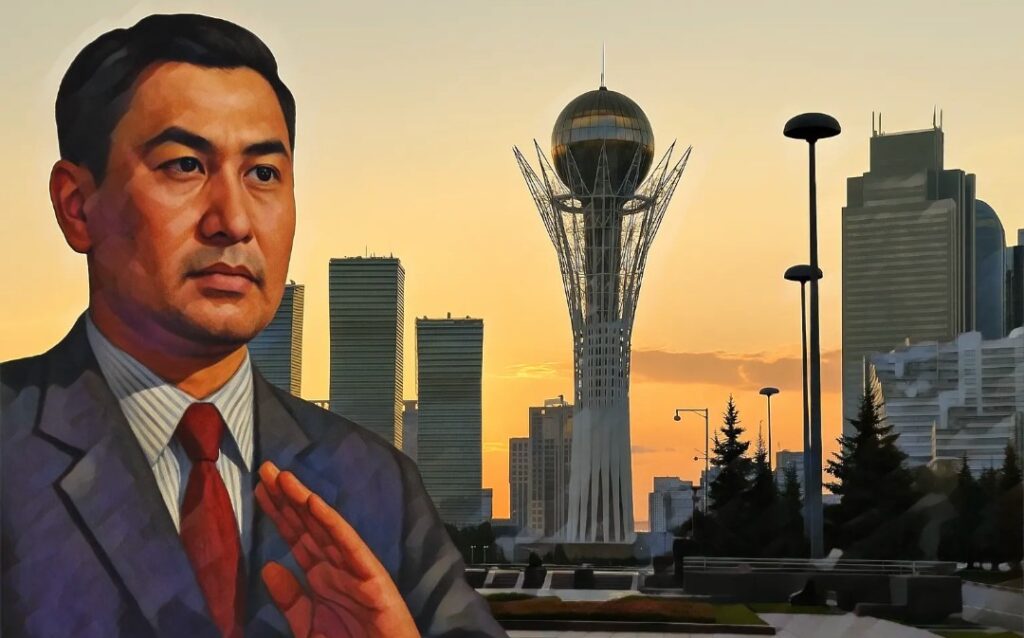
Since gaining independence, Kazakhstan has established itself as a reliable global supplier of raw materials. Today, the country's economic structure is evolving as it positions itself as a high-added-value hub for industrial production. These developments are closely tied to Kazakhstan’s transition to a green economy and its role in global supply chains for critical minerals. Creating a Favorable Investment Climate Kazakhstan has taken significant steps to create a transparent, predictable investment environment and enhance its business competitiveness. Among these measures is the introduction of investment agreements that guarantee legislative stability for up to 25 years for large projects exceeding $60 million. The legal framework has also undergone reforms, procurement procedures have been modernized, and judicial reforms have created separate cassation courts and redefined the Supreme Court’s role. These reforms have drawn the attention of international investors and rating agencies. In 2024, Moody’s upgraded Kazakhstan’s long-term credit rating to the highest level in the country's history, citing macroeconomic stability and policy predictability. In the first nine months of 2025, GDP grew by 6.3%, while investment in fixed capital rose by 13.5% to reach $26 billion. Moody’s analysts also highlighted Kazakhstan’s stronger economic outlook compared to other hydrocarbon-exporting nations, attributing this to ongoing reforms that enhance the country’s competitiveness. One key driver is the rapid development of the transport and logistics sector, particularly through the Trans-Caspian International Trade Route, also known as the Middle Corridor. This corridor is attracting foreign investors across a range of non-oil sectors, including automotive, pharmaceuticals, food production, and construction materials. Kazakhstan is also home to the Astana International Financial Centre (AIFC), a platform that operates under English common law. The AIFC offers tax exemptions, simplified labor regulations, and digital arbitration. It currently ranks first in Eastern Europe and Central Asia in the Global Financial Centres Index. More than 4,200 companies from 80 countries, including over 60 American firms, are registered with the AIFC. Strategic Projects Take Shape Kazakhstan’s diversification strategy and focus on critical minerals were prominently showcased during the 8th Kazakhstan Global Investment Roundtable (KGIR-2025), held in Astana in October. The event attracted over 1,000 participants from 55 countries, resulting in the signing of 49 agreements worth $7.5 billion. A key session focused on critical minerals and the energy transition, signaling the country’s long-term growth trajectory. Among the highlights was a meeting between the government and Mohammad Vahid Sheikhzadeh Najjar, CEO of FakoorSanat Tehran Engineering Co., to explore cooperation in mining and metallurgy, including new technologies for processing mineral raw materials. Sheikhzadeh Najjar noted that the global market for critical minerals, currently valued at $328 billion, is expected to double by 2032. He emphasized that Kazakhstan is well-positioned to lead this growth. Environmental initiatives, such as a project to process 55 billion tons of mining waste, offer additional economic potential. Meanwhile, Chinese investor Zhang Jintao, founder of Chengdu Sepmem Energy, proposed a long-term plan to develop an LNG cluster in Kazakhstan. The project envisions a nationwide network of LNG plants and supporting infrastructure to reduce emissions...

6 months ago

U.S. Envoys Experience Kazakhstan’s Living Nomadic Traditions

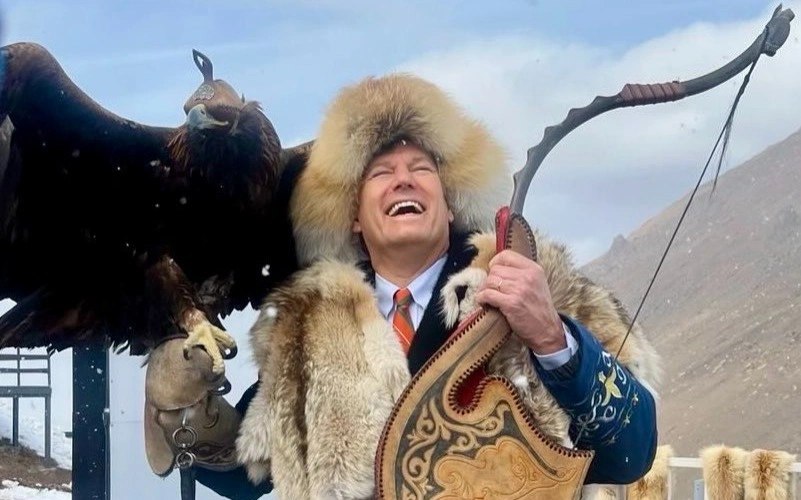
U.S. Special Representative for South and Central Asia Sergio Gor and Deputy Secretary of State Christopher Landau recently visited Kazakhstan as part of preparations for the upcoming C5+1 summit. While official releases highlighted meetings on regional cooperation and stability, local media also noted cultural engagements showcasing Kazakhstan’s living nomadic traditions. While in Almaty, the U.S. delegation also toured the Shymbulak ski resort and the Medeu high-altitude skating rink. Amidst the picturesque alpine scenery, they participated in traditional archery, an enduring symbol of the nomadic peoples’ skill and heritage. Archery: A Living Legacy Traditional archery, known as sadak atu, is experiencing a revival in Kazakhstan. As in the past, both boys and girls train in the discipline, a tradition rooted in the realities of steppe life, where women were equally taught to hunt and defend their communities. Far more than a sport, archery reflects a nomadic philosophy. In ancient times, the bow served both as a hunting tool and a weapon of war, requiring intricate craftsmanship using wood, bone, and animal tendons. Archers learned to shoot from horseback, relying on instinct and experience rather than sights. Today, this heritage is inspiring a resurgence of interest among young Kazakhs. Archery clubs are opening across the country, competitions are being held, and the traditional art is gaining popularity. The 5th World Nomad Games, held in Astana in 2024, prominently featured sadak atu among other ethnic sports. Petropavl also hosted the Kazakhstan Youth Traditional Archery Championship, drawing 400 participants aged 10 to 17, many in national attire. Meanwhile, Uralsk hosted the 4th Republican Traditional Archery Championship, with 270 athletes from 18 regions competing. Coaches expect the popularity of sadak atu and zhamba atu, mounted archery, to grow, offering Kazakhs a tangible link to their ancestral culture and a spectacle that continues to impress international visitors. [caption id="attachment_22863" align="aligncenter" width="909"] Horseback archery at the World Nomad Games 2024; image: TCA, Ilyas Otan[/caption] The Tazy: A National Symbol The Tazy dog, sometimes referred to as the Kazakh or Central Asian greyhound, holds a special place in Turkic heritage. Once indispensable to nomadic hunters, the breed’s cultural and historical value is now protected by state policy. In 2023, Kazakh President Kassym-Jomart Tokayev was gifted a Tazy puppy called Nauryz, which is named after the spring festival celebrating renewal. The president emphasized the importance of promoting the Tazy and Tobet breeds internationally and called on the Ministry of Foreign Affairs to participate in preservation efforts. A special law was adopted to support this cause. By 2024, President Tokayev had three Tazy dogs under his care. He is known to walk them personally in his free time. That same year, he gifted two Tazy puppies to French President Emmanuel Macron. Delivered to Paris, the puppies were named Jules and Jeanne. [caption id="attachment_38363" align="aligncenter" width="1200"] The Tazy; image: TCA, Stephen M. Bland[/caption] Hunting with Birds of Prey: The Wings of Victory The tradition of hunting with birds of prey, kusbegilik, has deep roots in Turkic culture, dating back millennia. Archaeological...

6 months ago

Azerbaijan and Kazakhstan Deepen Strategic Partnership Through Middle Corridor

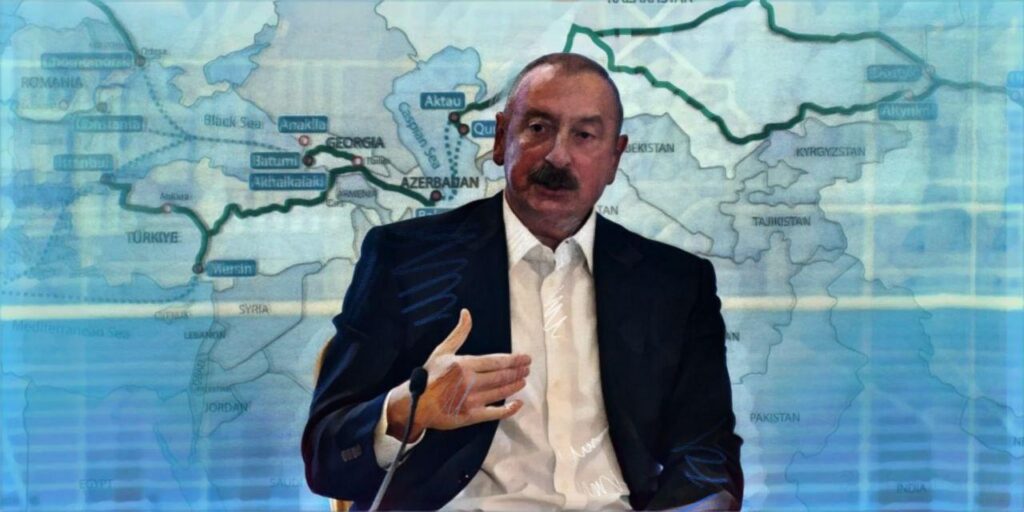
Azerbaijani President Ilham Aliyev’s recent state visit to Astana has marked a significant turning point in relations between Azerbaijan and Kazakhstan. President Kassym-Jomart Tokayev and President Aliyev underscored the rapid expansion of cooperation across transport, investment, and technology sectors. Political and cultural ties are also deepening, bolstering what both sides have described as a “brotherly” relationship. Economic Ties Strengthened by Infrastructure and Energy Projects Tokayev highlighted the strategic importance of the Trans-Caspian International Transport Route (Middle Corridor), noting a 62% increase in freight traffic in 2024 to 4.5 million tons, with a further 2% rise recorded so far in 2025. Kazakhstan is currently building a container hub in Aktau, while a new cargo terminal in the port of Alat, developed with foreign partners, including China, offers further growth potential. The two leaders also discussed establishing a Trans-Caspian ferry system to expand exports, with a long-term goal of boosting cargo traffic to 10 million tons. Tokayev further emphasized Kazakhstan’s use of the Baku-Tbilisi-Ceyhan pipeline for oil exports. In 2024, nearly 1.5 million tons of Kazakh oil transited through Azerbaijan, with plans to increase volumes significantly. He also cited efforts to deliver Kazakh uranium to foreign markets via Azerbaijan. Joint IT projects are also advancing, including plans to lay a fiber-optic communication line under the Caspian Sea. Tokayev commended the joint declaration on peace signed by Armenia and Azerbaijan in Washington under U.S. mediation, calling it a "historic" milestone in regional reconciliation efforts. Earlier on Monday, Aliyev had announced a significant policy shift, stating that Baku is lifting all restrictions on the transit of goods to Armenia. Middle Corridor as a Strategic Geopolitical Tool The Middle Corridor, connecting China and Europe through Kazakhstan, the Caspian Sea, and Azerbaijan, was a major focus of Aliyev's state visit. Amina Kosbaeva of the Institute for Eurasian Integration noted that the corridor - which carried about 2.7 million tons in 2023 and 4.5 million tons in 2024, as traffic shifted away from traditional routes via Russia - is evolving into a strategic asset that enhances regional autonomy and global connectivity. Kosbaeva highlighted that both countries have built a sustainable cooperation model grounded in cultural commonalities and mutual trust. She identified agriculture, petrochemicals, and machine-building as key sectors where new supply chains could emerge, boosting trade and resilience to global market fluctuations. Kosbaeva added that future cooperation is likely to grow within the framework of the Organization of Turkic States (OTS), which held its 12th Summit in Gabala, Azerbaijan, on October 6–7, 2025. further institutionalizing bilateral ties as a driving force within the Turkic world. “The history of the Turkic peoples goes back to common roots,” Tokayev said at the summit, expressing support for the idea of a broader “Turkic-speaking States +” platform to expand cooperation. Business Relations Rooted in Political Alignment Kazakh political analyst Gaziz Abishev noted that Astana and Baku often align on geopolitical issues. “The relationship between the two countries proves that rigid multilateral blocs are not necessary for close alliances. Unconditional mutual sympathy at all levels, leaders,...

6 months ago

Kazakhstan Urges Regional Cooperation to Save the Aral Sea

Kazakhstan has intensified its efforts to restore its portion of the former Aral Sea, calling on neighboring Central Asian states to increase their participation in regional environmental cooperation. Once the world’s fourth-largest lake, the Aral Sea has become a symbol of ecological catastrophe. Experts warn that international efforts remain inadequate. How the Sea Died Straddling the border between Kazakhstan and Uzbekistan, the Aral Sea began to shrink in the 1960s when large-scale irrigation projects diverted water from its two main tributaries, the Amu Darya and Syr Darya rivers, to support cotton production and agriculture. A growing regional population added further strain. By 1989, the sea had split into the Northern (Small) and Southern (Large) Aral Seas. In 2014, the eastern basin of the Southern Aral Sea dried up completely. Today, the Aralkum Desert occupies much of what was once open water. Kazakhstan has since focused on restoring the Northern Aral Sea. [caption id="attachment_37684" align="aligncenter" width="2560"] A ship stranded in the desert, Moynaq, Uzbekistan; image: TCA, Stephen M. Bland[/caption] The restoration of the Northern Aral Sea has already yielded visible environmental and social benefits. Rising water levels have lowered salinity, allowing several native fish species to return. Local fisheries, once thought lost, are now active again in communities such as Aralsk. According to the Ministry of Ecology, the annual fish catch in the North Aral has risen more than tenfold since the early 2000s, reviving local employment and boosting food security. Experts note that even small ecological gains have had a profound psychological impact on residents who once witnessed the sea’s disappearance. Call for Renewed Efforts On October 15, Kazakhstan called for expanded international cooperation to protect both the Aral and Caspian Seas. First Deputy Minister of Foreign Affairs, Yerzhan Ashikbayev, speaking at the International Astana Think Tank Forum-2025, emphasized Kazakhstan’s contribution to the global climate agenda. He noted that a regional climate summit, set to be held in Astana in 2026, would provide a platform for coordinated strategies and joint decision-making among Central Asian nations. “Astana also calls for increased international participation in solving environmental problems and preserving the water resources of the Aral and Caspian Seas,” Ashikbayev said. Earlier, on October 10, Prime Minister Olzhas Bektenov met with senior officials from Tajikistan, Uzbekistan, and Turkmenistan during the second meeting of the Board of the International Fund for Saving the Aral Sea (IFAS), chaired by Kazakhstan. The event highlighted the need for a united regional approach, noting that restoration of the Aral Sea can be achieved through collective action. Bektenov acknowledged the challenges of the recent growing season, but said regional cooperation had helped maintain a stable water regime in the basin. “Each country has its own national interests, and we are obliged to defend them and will always do so. But I am convinced that our common strategic, long-term priority is good neighborly relations. In solving everyday short-term tasks, we must not undermine long-term priorities. I think that we will take joint measures to ensure that issues are always...

6 months ago

Experts Warn of Risks as Kazakhstan Considers Alcohol Sales Restrictions

On October 13, Kazakhstan’s Ministry of Internal Affairs shocked citizens by proposing a ban on the sale of alcohol in regular grocery stores, retail chains, and online platforms. The announcement overshadowed global headlines and quickly sparked widespread debate. While the number of alcohol-free settlements in Kazakhstan is rising, overall consumption remains high, prompting concerns among experts about the potential consequences of such a sweeping ban. A Push for Specialized Alcohol Stores The ministry justified the proposed restrictions as a public safety measure. According to Minister of Internal Affairs Yerzhan Sadenov, alcohol is a major contributor to crime, with up to 10,000 crimes committed annually under the influence. Violations of age and time restrictions on alcohol sales are reportedly common. “They sell around the clock under the guise of cafes and bars. Online delivery is widely used. The measure of revoking a license is ineffective, it can be obtained the next day by other persons,” said Sadenov. The ministry is advocating for alcohol to be sold only in specialized stores, so-called alcohol markets. It also proposes tightening the licensing process and limiting the number of licenses issued. Additionally, it recommends restricting alcohol sales in entertainment venues, where more than 1,400 alcohol-related crimes, including three murders, have occurred. A New Front in the Fight Against Alcohol Abuse Many Kazakhstani citizens observe that alcohol consumption has declined since Soviet times, a trend attributed to increasing religiosity in the predominantly Muslim country and the popularity of healthy lifestyles. Still, the issue remains pressing. Over the years, Kazakhstan has introduced stricter regulations. In 2014, restrictions were imposed on sales hours. High-alcohol-content beverages were banned in stores from 9 p.m. to 12 p.m., and low-alcohol beverages from 11 p.m. to 8 a.m. In 2020, the minimum legal age for purchasing alcohol and tobacco was raised from 18 to 21. As of 2025, 429 villages have officially renounced alcohol. In the Aktobe region, 33 villages adopted alcohol-free policies, while 18 in the Kyzylorda region and 53 in the Atyrau region followed suit. According to officials, no offenses have been recorded in some of these areas over the past two years. Kazakhstan Still Drinks Despite these measures, alcohol consumption remains substantial. According to the World Health Organization (WHO), the average per capita alcohol consumption in Kazakhstan among those aged 15 and older stood at 5.4 liters of pure ethanol in 2022. The global average that year was 6.2 liters, with consumption in Europe ranging from 9 to 11 liters. In predominantly Muslim countries, the average is below 3 liters. WHO considers levels above 5 liters a significant health risk. A June 2025 survey found the highest consumption in northern regions, Pavlodar, Kostanay, and North Kazakhstan, as well as in Astana and Almaty. In contrast, Shymkent, Atyrau, and Turkestan reported the lowest levels. Interestingly, young adults aged 18 to 24 were found to drink less frequently, a trend attributed to stronger family oversight and cultural values. Economic and Social Risks of a Ban Experts urge caution in pursuing aggressive...

6 months ago