• KGS/USD = 0.01143 -0%
  • KZT/USD = 0.00193 -0%
  • TJS/USD = 0.10881 0%
  • UZS/USD = 0.00008 0%
  • TMT/USD = 0.28575 0%
  • KGS/USD = 0.01143 -0%
  • KZT/USD = 0.00193 -0%
  • TJS/USD = 0.10881 0%
  • UZS/USD = 0.00008 0%
  • TMT/USD = 0.28575 0%
  • KGS/USD = 0.01143 -0%
  • KZT/USD = 0.00193 -0%
  • TJS/USD = 0.10881 0%
  • UZS/USD = 0.00008 0%
  • TMT/USD = 0.28575 0%
  • KGS/USD = 0.01143 -0%
  • KZT/USD = 0.00193 -0%
  • TJS/USD = 0.10881 0%
  • UZS/USD = 0.00008 0%
  • TMT/USD = 0.28575 0%
  • KGS/USD = 0.01143 -0%
  • KZT/USD = 0.00193 -0%
  • TJS/USD = 0.10881 0%
  • UZS/USD = 0.00008 0%
  • TMT/USD = 0.28575 0%
  • KGS/USD = 0.01143 -0%
  • KZT/USD = 0.00193 -0%
  • TJS/USD = 0.10881 0%
  • UZS/USD = 0.00008 0%
  • TMT/USD = 0.28575 0%
  • KGS/USD = 0.01143 -0%
  • KZT/USD = 0.00193 -0%
  • TJS/USD = 0.10881 0%
  • UZS/USD = 0.00008 0%
  • TMT/USD = 0.28575 0%
  • KGS/USD = 0.01143 -0%
  • KZT/USD = 0.00193 -0%
  • TJS/USD = 0.10881 0%
  • UZS/USD = 0.00008 0%
  • TMT/USD = 0.28575 0%
21 December 2025

Our People > Arindam Banik

Arindam Banik's Avatar

Arindam Banik

Contributor

Arindam Banik is an Indian economist who is the ICCR's Chair of Indian Studies (Economics) at Samarkand State University. The recipient of numerous awards Banik has worked as a consultant for various government and multilateral agencies, including the World Bank and the Asian Development Bank. Banik has authored several books and written for numerous magazines and newspapers.

Articles

Opinion: Trump’s Tariff Policy Will Propel the Asian Century More Rapidly Than Ever Before

The concept of the Asian Century draws a parallel to the characterization of the 19th century as Britain's Imperial Century and the 20th century as the American Century. The Asian Century refers to the anticipated dominance of Asian politics and culture in the 21st century, contingent upon the continuation of specific demographic and economic trends. A study by the Asian Development Bank indicated that by 2050, approximately three billion Asians -- equating to 56.6% of the projected 5.3 billion total inhabitants of Asia -- could attain living standards comparable to those in Europe today. Furthermore, this region is expected to contribute to over half of global output by the middle of this century. It seems pertinent to explore further insights on this topic. China is home to approximately 1.4 billion people, while India's population is expected to reach around 1.45 billion by mid-2025. The share of South-South trade, i.e., trade between emerging economies, is expected to rise significantly, increasing from 18% in 2013 to approximately 40% by 2030. This shift will bring these nations back to a trading prominence reminiscent of their historical dominance roughly 200 years ago. Such a trend underscores the changing dynamics of economic power and highlights the growing importance of these countries in the global marketplace. It is interesting to note that China and India, together, accounted for approximately 50% of the worldwide GDP during the 19th century, according to economist Angus Maddison. However, predicting how these nations will integrate into the global economy proves challenging, as historical events like Germany’s reunification and the fall of the Iron Curtain provide inadequate comparisons for this process. Following those milestones in 1990, a significant number of individuals entered the global economy; yet, the scale of that influx pales in comparison to what is expected with the simultaneous rise of China and India. Whether this development is welcomed or not, the future of the world is inextricably intertwined with the trajectories of these two nations, Russia, and the former communist countries, such as those in Central Asia, as well as Pacific countries. It is widely acknowledged that Asia's impressive economic performance over the three decades leading up to 2024, especially in comparison to the rest of the world, arguably presents the strongest case to date for the emergence of an Asian Century. While this disparity in economic achievement had been recognized for some time, specific individual setbacks -- such as the 1997 Asian financial crisis -- often overshadowed the broader trends and general trajectory. However, by the early 21st century, it became increasingly clear that this superior economic performance was not only sustainable but also possessed a force and significance that could dramatically reshape the global distribution of power. Consequently, leadership in various critical domains -- such as international diplomacy, military strength, technology, and soft power -- may soon be assumed by one or more of Asia's nation-states. The Asia-Pacific Region is also a vast geographical area, from Vladivostok, Russia, in the North to Australia in the south, and...

2 months ago

Opinion: The U.S. Dollar Loses Its Luster as the Uzbek Som Shines

From May 20, 2025, to June 19, 2025, the U.S. dollar declined from 12,885 Uzbek som to 12,625 som, reaching its lowest level since early December 2023. This trend is anticipated to persist. Over the past 30 days, the dollar has depreciated by 2.08% against the som. The Central Bank of Uzbekistan adheres to a flexible exchange rate mechanism, commonly referred to as a floating exchange rate. This approach allows the value of the Uzbek som to be primarily influenced by market forces of supply and demand, rather than being fixed or pegged to another currency. In the context of Uzbekistan, the Central Bank defines the market-determined exchange rate, permitting the som to fluctuate freely based on the interactions between buyers and sellers in the foreign exchange market. In 2017, Uzbekistan transitioned to a flexible exchange rate regime, aligning the som with market conditions and narrowing the gap between the official and parallel exchange rates. This move is expected to enhance export competitiveness, as noted by the European Bank for Reconstruction and Development (EBRD). While the market predominantly determines the exchange rate, the Central Bank reserves the right to intervene in the foreign exchange market to mitigate excessive fluctuations or address significant imbalances. However, it does not maintain a fixed exchange rate. The primary objective of the Central Bank is to uphold price stability, ensuring low and stable inflation. The flexible exchange rate regime empowers the Central Bank to utilize interest rates as a tool to influence inflation and manage the overall economy. Since 2020, the Central Bank of Uzbekistan has been implementing an inflation targeting framework that guides its monetary policy decisions, including those related to the exchange rate. Uzbekistan has recently achieved a remarkable milestone, with its international reserves soaring to an unprecedented $49.6 billion, primarily driven by a substantial increase in gold prices. This significant figure, recorded at the end of last week, represents the highest level of international reserves since the Central Bank of Uzbekistan began tracking this data in 2013. Uzbekistan has been on a remarkable journey of financial growth, marked by a sustained increase in its reserves over the past five months. Since the beginning of the year, the country's reserves have increased by an impressive $8.48 billion, reaching a new historic high of $49.66 billion. In May alone, the reserves saw a substantial boost of $410.2 million, translating to a 0.8% increase compared to April. This consistent upward momentum not only highlights the resilience of Uzbekistan's economy but also demonstrates its ability to adapt and thrive in a dynamic global landscape. Central to this financial ascent has been the role of gold, which has enjoyed significant demand due to its elevated prices in international markets. Over the last month, gold prices surged by 3.27%, rising from $3,280 to $3,390.07 per ounce. When examining the broader trends, it is evident that gold has significantly appreciated, with a striking 25.5% increase since the start of this year and an even more impressive 41.3% surge over...

6 months ago

Unpacking the Effects of Trump’s Tariffs on Central Asia

Trade analysts across Central Asia generally agree that the immediate impact of the United States' tariff policy on the export dynamics of their nations will likely be minimal, as observed in past experiences, except for Kazakhstan. However, there is a palpable concern regarding potential unforeseen consequences arising from a broader global trade conflict. Notably, the timing of the Trump administration's announcement regarding global tariffs on imports coincides with a period when Central Asian countries are actively working to enhance their regional trade relationships. This new tariff policy raises significant doubts about the authenticity of recent U.S. efforts to promote increased trade and investment in the region. The mixed signals coming from Washington may lead Central Asian leaders to re-evaluate their current trade partnerships, especially as they consider the benefits of strengthening ties with China and Russia against the attractiveness of expanding commerce with the United States. Similarly, the European Union may find an opportunity to improve its position, while India could leverage the Chabahar route (a multi-modal transportation route connecting India, Iran, Afghanistan, and potentially Central Asia and Europe). It is worth noting that the market is primarily situated in Asia, and this alternative could have adverse long-term effects on the United States. Kazakhstan, acknowledged as the United States’ largest trading partner in Central Asia, is poised to face significant repercussions from introducing new tariffs set at 27%. In 2024, trade relations between the U.S. and Kazakhstan reached an impressive total of $3.4 billion, with $1.1 billion in U.S. exports to Kazakhstan and $2.3 billion in imports from Kazakhstan to the U.S. However, a statement from the Kazakh Trade Ministry indicates that exports to the U.S. primarily consist of crude oil, uranium, silver, and other raw materials, all exempt from these tariffs. In 2024, Kazakhstan exported only $95.2 million worth of goods, which will now incur surcharges – a relatively modest figure compared to the country’s overall foreign trade turnover of $141.4 billion. Trade analysts suggest that Kazakhstan has little cause for concern, viewing this situation more as a psychological impact than a serious economic threat. Resource-driven Central Asian economies, such as Kazakhstan, may even find enhanced opportunities in the expanding Asian market. Trade dynamics in Central Asia reveal a complex landscape, especially concerning the United States. In 2024, Uzbekistan managed to export a modest $42.4 million worth of goods to the US, a small fraction considering its total foreign trade turnover, which reached an impressive $66 billion for that year. This stark contrast highlights the limited engagement of Uzbekistan in the American market. With its total trade turnover of $16 billion in 2024, Kyrgyzstan similarly struggled with exports to the US, which amounted to merely $16.7 million. This reflects a broader trend where Central Asian economies exhibit low volume exports to the US, suggesting significant barriers or challenges in establishing a foothold in this lucrative market. Tajikistan's economic performance presented an even more sobering picture. Recording a total trade turnover of $8.9 billion, the country achieved only $4.6 million...

9 months ago

Mirziyoyev Champions a Flourishing Central Asia by Enhancing Collaboration With the European Union

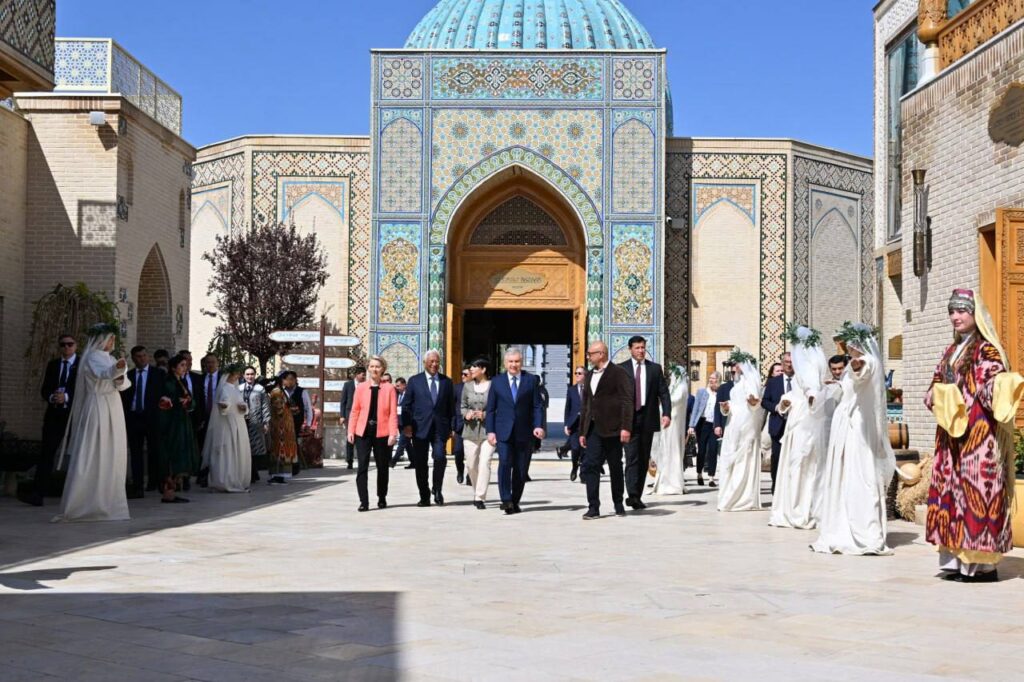
The global landscape is transforming, driven by geopolitical instability, economic uncertainties, and climate-related challenges. These dynamics are fostering innovative forms of international collaboration. A notable example of this shift is the remarkable fourfold increase in trade between Central Asia and the European Union over the past seven years, culminating in an impressive €54 billion. This surge highlights a growing interest among European businesses in the diverse markets of Central Asia, strategically situated at the intersection of crucial global trade routes. Against this backdrop, the Central Asia-EU summit was held over two days in Samarkand, the "Eternal City", on April 3-4, 2025. During his inaugural address on April 3, 2025, Uzbekistan's President Shavkat Mirziyoyev articulated the summit's significance, stating his view that this gathering represented a transformative moment that could redefine regional partnerships. Mirziyoyev reflected on the deep historical connections and shared interests driving the momentum toward closer ties with the EU. The choice of Samarkand — renowned for its rich historical legacy as a center of trade, science, and diplomacy — as the venue for this significant meeting was particularly poignant, as it symbolizes the intersection of cultures and ideas. Mirziyoyev evoked the historical interactions between Amir Temur and European monarchs, underscoring Samarkand as a melting pot of diversity and intellectual exchange. He introduced the notion of the “Samarkand spirit,” which he described as a symbol of unity and interconnectedness that could serve as the foundation for a new chapter in international relations. The President emphasized the sweeping transformations occurring in Central Asia, reinforcing Uzbekistan’s dedication to nurturing good-neighborly relations built on mutual benefit. Miriyoyev candidly acknowledged the region's history of conflicts and disputes but expressed hope for a shift toward constructive dialogue and trust, pointing to the recent resolution of border disputes between Kyrgyzstan and Tajikistan as a concrete example of this positive trajectory. Furthermore, he elaborated on ongoing initiatives to establish border trade zones, joint investment funds, and transportation corridors that could enhance connectivity and economic collaboration. Mirziyoyev outlined several key priorities: fortifying regional security, advancing economic integration, and promoting environmental sustainability. He conveyed a sense of optimism, proclaiming, "We are facing a historic chance to make our region not only sustainable but also prosperous." The President discussed Uzbekistan's comprehensive economic reforms to create a conducive business environment and liberalize the foreign exchange market. He expressed optimism that the Enhanced Partnership and Cooperation Agreement (EPCA) with the EU would significantly enhance trade and investment relations and proposed aligning the EU's Global Gateway strategy with regional transport initiatives to support this. He also advocated for developing an Action Plan for the Trans-Caspian Transport Corridor. Additionally, he believes there is potential to establish Tashkent as a financial center similar to Hong Kong, as the initial conditions meet the necessary criteria. On energy matters, Mirziyoyev positioned Central Asia as a dependable partner for Europe, highlighting the region's potential to contribute to energy stability and decarbonization efforts. He cited the ambitious Green Strategic Corridor project and the prospect of a Central Asia-EU...

9 months ago

A Historic Gathering: The First Central Asia-European Union Summit in Samarkand

Excitement is building in Samarkand as it gears up to host the inaugural Central Asia-European Union Summit. This landmark event promises to pave the way for significant negotiations and collaboration, bringing together leaders and representatives from both regions. With a rich cultural backdrop and a vibrant atmosphere, Samarkand is poised to play a crucial role in shaping the future of partnerships and cooperation between Central Asia and the European Union.  In recent weeks, Uzbekistan has experienced notable advancements in its foreign policy, signaling a proactive approach to international collaboration. A highlighted event was the fruitful engagement between Uzbekistan's head of state and Kaja Kallas, the High-level Representative of the European Union for Foreign Affairs and Security Policy. Additionally, a delegation led by Josef Sikela, the European Union Commissioner for International Cooperation, participated in discussions to foster deeper ties. A significant milestone on the horizon is the inaugural Central Asia-European Union summit, set to unfold in the historic city of Samarkand on April 3-4. During a pivotal meeting on March 27 with Kallas, President Shavkat Mirziyoyev meticulously explored the preparations for this groundbreaking summit, which has captured global attention due to its potential to reshape regional dynamics. The leaders engaged in a rich exchange of ideas focused on bolstering practical cooperation between their regions and planning future collaborative events that could further strengthen these ties. The significance of fostering mutually beneficial cooperation between the two regions in trade and logistics was emphasized during the meeting. This includes harnessing the potential of the Trans-Caspian Transport Corridor, advancing digitalization, promoting green energy, addressing ecological concerns, modernizing infrastructure, and other priority areas. The introduction of effective mechanisms for implementing initiatives and projects in these fields was also highlighted. Participants exchanged views on enhancing Uzbekistan's relations with European Union organizations, discussing adopting a new agreement for enhanced partnership and cooperation and Uzbekistan's accession to the World Trade Organization. Current international and regional policy issues were also addressed. Additionally, on March 18, President Shavkat Mirziyoyev met with a delegation led by Josef Sikela, the European Union Commissioner for International Cooperation. This meeting discussed critical matters regarding further developing multifaceted relations between Uzbekistan and the European Union. Moreover, plans for organizing the inaugural "Central Asia - EU" summit and the Climate Forum in Samarkand were considered. In recent years, bilateral cooperation with the European Union has accelerated across political, trade, economic, investment, and cultural-humanitarian spheres, presenting extensive opportunities for the continued expansion of these ties. A new Enhanced Partnership and Cooperation Agreement between Uzbekistan and the European Union is anticipated to be signed soon. Both parties have expressed a keen interest in promoting joint projects and programs across transport and logistics, energy, digitalization, agriculture, water management, and other key areas. Kallas conveyed warm greetings and best wishes on behalf of key EU figures, including António Costa, the President of the European Council, and Ursula von der Leyen, the President of the European Commission. The discussions underscored the necessity of cultivating mutually beneficial cooperation across various sectors, including...

9 months ago