• KGS/USD = 0.01144 0%
  • KZT/USD = 0.00213 0%
  • TJS/USD = 0.10543 -0.09%
  • UZS/USD = 0.00008 0%
  • TMT/USD = 0.28530 0%
  • KGS/USD = 0.01144 0%
  • KZT/USD = 0.00213 0%
  • TJS/USD = 0.10543 -0.09%
  • UZS/USD = 0.00008 0%
  • TMT/USD = 0.28530 0%
  • KGS/USD = 0.01144 0%
  • KZT/USD = 0.00213 0%
  • TJS/USD = 0.10543 -0.09%
  • UZS/USD = 0.00008 0%
  • TMT/USD = 0.28530 0%
  • KGS/USD = 0.01144 0%
  • KZT/USD = 0.00213 0%
  • TJS/USD = 0.10543 -0.09%
  • UZS/USD = 0.00008 0%
  • TMT/USD = 0.28530 0%
  • KGS/USD = 0.01144 0%
  • KZT/USD = 0.00213 0%
  • TJS/USD = 0.10543 -0.09%
  • UZS/USD = 0.00008 0%
  • TMT/USD = 0.28530 0%
  • KGS/USD = 0.01144 0%
  • KZT/USD = 0.00213 0%
  • TJS/USD = 0.10543 -0.09%
  • UZS/USD = 0.00008 0%
  • TMT/USD = 0.28530 0%
  • KGS/USD = 0.01144 0%
  • KZT/USD = 0.00213 0%
  • TJS/USD = 0.10543 -0.09%
  • UZS/USD = 0.00008 0%
  • TMT/USD = 0.28530 0%
  • KGS/USD = 0.01144 0%
  • KZT/USD = 0.00213 0%
  • TJS/USD = 0.10543 -0.09%
  • UZS/USD = 0.00008 0%
  • TMT/USD = 0.28530 0%

Our People > Dmitry Pokidaev

Dmitry Pokidaev's Avatar

Dmitry Pokidaev

Journalist

Dmitry Pokidaev is a journalist based in Astana, Kazakhstan, with experience at some of the country's top media outlets. Before his career in journalism, Pokidaev worked as an academic, teaching Russian language and literature.

Articles

Kazakhstan Breaks Ground on First Nuclear Power Plant

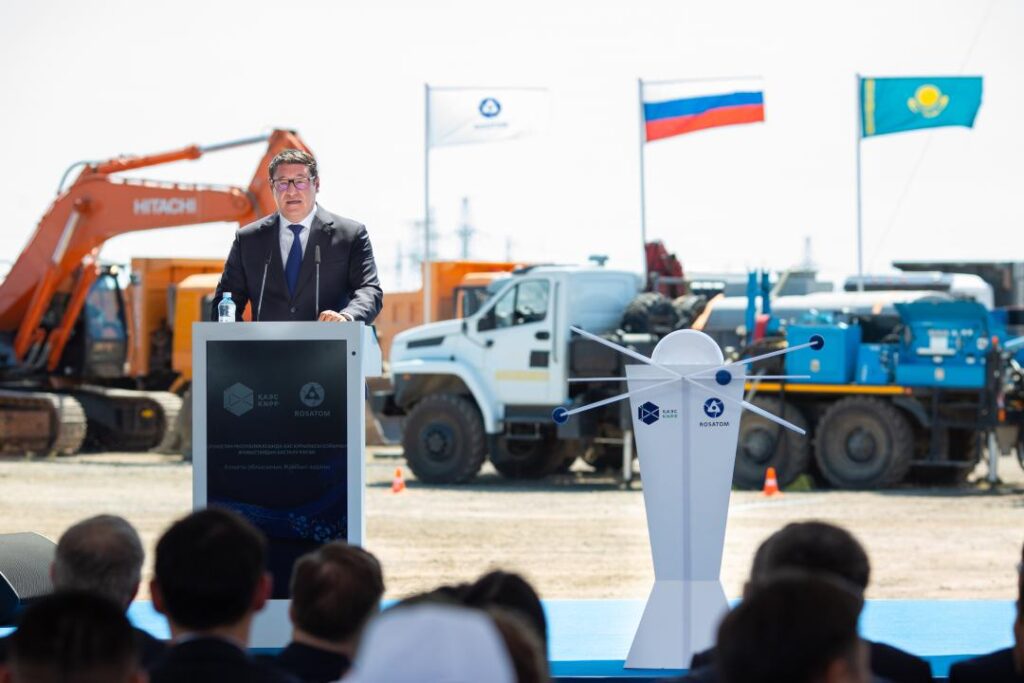
Kazakhstan has officially launched the construction of its first nuclear power plant, marking a significant milestone in the country’s long-term energy strategy. A groundbreaking ceremony was held on Friday in the Almaty region, in the south of the country. The project is being led by a consortium headed by Rosatom, Russia’s state nuclear energy corporation. The facility will be located near the village of Ulken on the shores of Lake Balkhash, approximately 400 kilometers from Almaty, Kazakhstan’s largest city. The plant will feature two reactors with a combined capacity of 2.4 gigawatts by 2035 and is expected to meet a substantial share of the country’s future electricity demand. According to Almasadam Satkaliyev, Chairman of the Atomic Energy Agency of the Republic of Kazakhstan, the total investment in the project is estimated at $14-15 billion. An additional $1 billion has been allocated for the development of social infrastructure in the surrounding region. “Today’s ceremony marks the start of engineering and survey work, a critical preparatory stage that will determine not only the final site and configuration of the plant, but also the safety, reliability, and economic efficiency of the entire project,” Satkaliyev said. Rosatom Director General Alexey Likhachev presented a model of the plant, which will be based on the design of Russia’s Novovoronezh Nuclear Power Plant and utilize Generation III+ reactor technology. This design is recognized for its improved fuel efficiency, advanced safety systems, and standardized construction process, which aims to reduce both construction and operational costs. Satkaliyev stressed that Kazakhstani enterprises and research institutions would play a central role in the project, with the aim of bolstering domestic industry, creating thousands of jobs, and advancing the country's nuclear science capabilities to international standards. According to the Agency’s press service, Satkaliyev recently met with Professor Jozef Konings, Dean of the Nazarbayev University Graduate School of Business, and Professor David Robinson of Duke University (USA) to discuss collaboration on nuclear workforce development. Discussions focused on potential joint academic programs, faculty exchanges, and international research partnerships. “Human capital development is a key pillar of the safe and sustainable introduction of nuclear technologies in Kazakhstan. I am confident that cooperation with leading academic institutions will contribute to forming a new generation of specialists capable of ensuring the safe and efficient operation of future nuclear power plants,” Satkaliyev stated. As previously reported by The Times of Central Asia, Kazakhstan plans to build at least three nuclear power plants. The second and third facilities are slated for development by the China National Nuclear Corporation (CNNC).

8 months ago

Kazakhtelecom CEO Confirms 2026 Launch of Caspian Submarine Cable Project

Kazakhstan and Azerbaijan have entered the active implementation phase of the long-anticipated submarine fiber-optic cable (SFOC) project across the Caspian Sea. According to Bagdat Mussin, CEO of Kazakhtelecom JSC, the underwater cable system is scheduled for completion and launch by the end of 2026. First proposed in 2019, the project involves the construction of two parallel fiber-optic lines, spanning approximately 380 to 400 kilometers, to connect the digital infrastructures of Kazakhstan and Azerbaijan. Originally, Kazakh telecom operators Transtelecom and KazTransCom participated alongside Azerbaijan’s AzerTelecom. However, by 2022, the Kazakh companies had exited the venture, and in 2023, Kazakhtelecom assumed the lead role on behalf of Astana. On August 22, 2023, Kazakhtelecom and AzerTelecom formalized their partnership by signing a joint venture agreement in Amsterdam. Mussin stated that national operators have now completed site surveys of the coastal infrastructure, identifying locations for both a beach manhole and a cable landing station. A specialized survey vessel, currently operating from the Kazakh port of Bautino, is mapping the seabed to assess depth, terrain, underwater currents, and geological conditions to finalize the cable route. “The bridge's capacity is designed to meet future demands and will support at least 400 Tbit/s. When the first byte of data travels through this artery, the Caspian will become a unique digital bridge between Asia and Europe,” Mussin said. As previously reported by The Times of Central Asia, the total cost of the project is estimated at $50.6 million. The cable is part of a wider regional initiative to advance digital transformation and sustainable connectivity across Eurasia.

8 months ago

Maternal and Infant Mortality Rates Continue to Decline in Kazakhstan

Kazakhstan's Health Minister Akmaral Alnazaraeva has announced further reductions in maternal and infant mortality rates, although some regions are showing a troubling reversal of the trend. Speaking at a recent government meeting, Alnazaraeva attributed the improvements to the adoption of recommendations from the World Health Organization (WHO) and UNICEF. In 2024, maternal mortality declined by 12 percent to 10.1 deaths per 100,000 live births, while infant mortality dropped by 11 percent to 6.88 deaths per 1,000 live births. The positive trend continued into the first half of 2025, with maternal mortality falling by another 10 percent and infant mortality by 26 percent. The minister noted that clinical protocols in obstetrics and pediatrics have been revised nationwide. Since June 2024, tariffs for obstetric and pediatric services, including childbirth, surgeries, and neonatal care, have been increased. These changes have improved access to expensive medications, reduced the debt burden of medical institutions, and helped attract qualified specialists to the sector. The Health Ministry also highlighted the expanded role of air ambulance services, which have saved 96 percent of women in labor and their newborns in remote areas. In 2025, for the first time, medications for pregnant women with conditions such as pyelonephritis, diabetes, and hypertension were added to the list of free drugs. To improve rural maternal care, "Salaawatty Ana" (Healthy Mother) boarding houses have opened in Turkestan, East Kazakhstan, and Akmola regions. These facilities offer pre-hospital care and postnatal rehabilitation for women with complicated births, with their effectiveness monitored in real time by regional situation centers. Kazakhstan is also making strides in healthcare digitalization. The electronic child health passport, now mandatory for kindergarten and school enrollment, has been introduced nationwide. A monitoring system for early detection of pediatric health problems has been deployed, and a digital health profile is being developed for every child under 18. Despite overall national progress, the minister acknowledged rising maternal mortality in Akmola, Zhambyl, Aktobe, Kostanay, Zhetysu, and Abai regions. Infant mortality has also increased in Kostanay, West Kazakhstan, Zhambyl, Abai, and Zhetysu. The situation is most severe in Akmola, where maternal mortality is seven times the national average. Key factors include severe extragenital conditions, obstetric complications, congenital malformations, and neonatal respiratory disorders. In response, stricter regulatory oversight will be introduced starting in September 2025. The Medical and Pharmaceutical Control Committee will be granted new powers to suspend the licenses of medical facilities and dismiss uncertified personnel. Qualification standards will be raised, and patient support services will be expanded. As previously reported by The Times of Central Asia, Kazakhstan continues to experience a steady decline in birth rates despite government efforts to encourage demographic growth.

8 months ago

NCOC Wins Temporary Reprieve in Environmental Case in Kazakhstan

An Astana court has overturned a multi-billion-dollar environmental fine imposed on the North Caspian Operating Company (NCOC), the consortium developing the Kashagan oil field in Kazakhstan’s sector of the Caspian Sea. The ruling was based on procedural violations by Kazakhstan’s environmental authorities. However, the court made clear that the decision does not prevent the re-filing of claims once the procedural flaws are addressed. The NCOC consortium comprises KMG Kashagan B.V. (16.877%), Shell Kazakhstan Development B.V. (16.807%), Total EP Kazakhstan (16.807%), Agip Caspian Sea B.V. (16.807%), ExxonMobil Kazakhstan Inc. (16.807%), CNPC Kazakhstan B.V. (8.333%), and Inpex North Caspian Sea Ltd. (7.563%). In March 2023, the Ministry of Ecology and Natural Resources filed a $4.2 billion lawsuit against NCOC, based on a complaint from the Atyrau Region Department of Ecology. The agency alleged that more than 1.7 million tons of sulfur were being stored at the Kashagan site, far exceeding the 2022 legal limit of 730,000 tons. NCOC denied the allegations, stating that its sulfur production and storage practices fully complied with Kazakh legislation and international standards. In March 2025, an arbitration court ruled in favor of NCOC. The case then proceeded to the appellate level, where the Administrative Chamber of the Astana Court annulled the initial enforcement order due to violations of the Administrative Procedure Code by the environmental authorities. “It has been established that the authorized body committed violations of the Administrative Procedure Code of the Republic of Kazakhstan when issuing the order, which was the basis for overturning the contested order,” the court’s press service stated. The court emphasized that its ruling was procedural and did not address the substance of the environmental claims. “The court did not assess the validity of the conclusions of the Department of Ecology on the merits. Thus, the decision does not affect the substance of the violations identified and does not prevent the authorized body from taking further action after the procedural errors have been corrected,” the statement continued. As previously reported by The Times of Central Asia, this is not Kazakhstan’s only legal dispute with NCOC. An international arbitration case remains ongoing, in which the government is seeking $150 billion in lost profits, citing delays in the Kashagan field’s launch and the failure to meet oil delivery commitments.

8 months ago

Kazakhstan to Launch Agricultural Marketplace for Businesses

Kazakhstan’s Ministry of Trade and Integration is developing a domestic digital platform aimed at streamlining the purchase of agricultural products, reducing their cost, and enhancing government oversight of the agricultural sector. Speaking at a government meeting on August 5, Minister of Trade and Integration Arman Shakkaliev said a pilot project is currently underway to introduce a nationwide information system for tracking goods, implemented in partnership with the national telecom operator, Kazakhtelecom JSC. The goal is to ensure a transparent and accessible supply of socially important food products to the population. “This project aggregates real-time data on the stock and volume of such goods, based on invoices across the supply chain,” Shakkaliev stated. “Using this system, we are creating an innovative agri-marketplace that will provide digital connectivity between producers, retail chains, and government agencies, eliminating intermediaries and opaque schemes.” The ministry is also preparing to launch a domestic B2B platform to facilitate wholesale imports, primarily from China, and support small and medium-sized enterprises. Plans include the introduction of digital tools, streamlined procedures, and integration with suppliers via direct channels, including JD.com and Alibaba. Full implementation will require removing technical certification barriers with the Chinese side. According to Shakkaliev, over 25 million fiscal receipts are generated daily in Kazakhstan. In response, the ministry will launch a dedicated module to monitor trade markups by analyzing electronic invoices and cash register receipts. “The system will enable monitoring of purchase and retail prices, identifying price anomalies, assessing markup levels by category, region, and supplier, and detecting potential shortages in a timely manner,” he explained. Further digital initiatives include expanding Kazakhstan’s product labeling system. By the end of 2025, motor oils will be subject to digital labeling, followed by beer in February 2026, light industry goods in March, and jewelry by December. From 2027, biologically active supplements (BAS) will also be included. Shakkaliev said these reforms are expected to boost trade volumes, reduce the shadow economy, and increase labor productivity in the retail sector. As previously reported by The Times of Central Asia, Kazakhstan launched a domestic online marketplace, Teez, in December 2024, offering next-day delivery and opening pick-up points in 24 cities across the country.

8 months ago