• KGS/USD = 0.01143 0%
  • KZT/USD = 0.00202 0%
  • TJS/USD = 0.10661 -0.19%
  • UZS/USD = 0.00008 0%
  • TMT/USD = 0.28575 0%
  • KGS/USD = 0.01143 0%
  • KZT/USD = 0.00202 0%
  • TJS/USD = 0.10661 -0.19%
  • UZS/USD = 0.00008 0%
  • TMT/USD = 0.28575 0%
  • KGS/USD = 0.01143 0%
  • KZT/USD = 0.00202 0%
  • TJS/USD = 0.10661 -0.19%
  • UZS/USD = 0.00008 0%
  • TMT/USD = 0.28575 0%
  • KGS/USD = 0.01143 0%
  • KZT/USD = 0.00202 0%
  • TJS/USD = 0.10661 -0.19%
  • UZS/USD = 0.00008 0%
  • TMT/USD = 0.28575 0%
  • KGS/USD = 0.01143 0%
  • KZT/USD = 0.00202 0%
  • TJS/USD = 0.10661 -0.19%
  • UZS/USD = 0.00008 0%
  • TMT/USD = 0.28575 0%
  • KGS/USD = 0.01143 0%
  • KZT/USD = 0.00202 0%
  • TJS/USD = 0.10661 -0.19%
  • UZS/USD = 0.00008 0%
  • TMT/USD = 0.28575 0%
  • KGS/USD = 0.01143 0%
  • KZT/USD = 0.00202 0%
  • TJS/USD = 0.10661 -0.19%
  • UZS/USD = 0.00008 0%
  • TMT/USD = 0.28575 0%
  • KGS/USD = 0.01143 0%
  • KZT/USD = 0.00202 0%
  • TJS/USD = 0.10661 -0.19%
  • UZS/USD = 0.00008 0%
  • TMT/USD = 0.28575 0%
08 February 2026

Our People > Dmitry Pokidaev

Dmitry Pokidaev's Avatar

Dmitry Pokidaev

Journalist

Dmitry Pokidaev is a journalist based in Astana, Kazakhstan, with experience at some of the country's top media outlets. Before his career in journalism, Pokidaev worked as an academic, teaching Russian language and literature.

Articles

Almaty to Host 2029 Asian Winter Games

Almaty, Kazakhstan’s largest city nestled in the foothills of the Alatau Mountains, has been selected to host the 2029 Asian Winter Games, the country’s National Olympic Committee (NOC) has announced. The agreement was signed on February 6 in Milan, coinciding with the opening of the Winter Olympics. Almaty’s selection is credited largely to its robust existing sports infrastructure, much of which was developed for the 2011 Asian Winter Games, co-hosted by Almaty and Astana. Almaty also hosted the 2017 Winter Universiade, further demonstrating its capacity to stage major international sporting events. Kazakhstan’s Ministry of Tourism and Sports emphasized that the 2029 Games will rely on current facilities, avoiding the need for large-scale new construction. “The existing sports complexes allow competitions to be held in all sports included in the program of the Winter Asian Games,” the ministry said. The NOC of Kazakhstan noted that leveraging existing infrastructure and prior experience will ensure a cost-effective and efficient approach to hosting. Organizing a second edition of the Winter Asian Games is viewed as a strategic move to further develop Olympic sports in the country. “Hosting major international competitions, including the Asian Games, is of strategic importance for the country. It reflects the high level of trust placed in us by the international sports community and recognizes Kazakhstan’s potential,” said Gennady Golovkin, the head of the National Olympic Committee. He added that Almaty possesses all the necessary sports and urban infrastructure, eliminating the need for additional construction. Saudi Arabia had previously been awarded hosting rights for the 2029 Asian Winter Games but later postponed the event due to large-scale infrastructure developments and extended preparation timelines. As previously reported by The Times of Central Asia, Kazakhstan placed fourth among 34 countries in the medal tally at the 2025 Asian Winter Games, securing 20 medals.

2 days ago

Kazakh Civil Servants Fined Nearly $100,000 for Poor Public Services

In 2025, Kazakh civil servants were fined a total of $99,300 for violations related to the provision of public services, according to the Agency for Civil Service Affairs (ACSA). The agency reported that 917 administrative reports were filed against 442 officials for infractions such as missed deadlines, improper procedures for issuing permits, and unjustified refusals of service. Of those held accountable, 375 were local government employees and 67 represented central government agencies. In addition to financial penalties, 1,636 public employees faced disciplinary measures, 1,331 from local administrations and 305 from ministries and central agencies. Among them, 27.3% were in managerial positions. Over the course of the year, more than 478,000 violations in the provision of public services were identified: 130,751 in central government bodies and 347,692 at the local level. These included 147,105 instances of missed deadlines. The rights of 12,340 service recipients were restored as a result of investigations. The ACSA also received 2,737 complaints related to public service quality. Most grievances concerned local government officials, state-owned enterprises, and agencies involved in land administration. Following these complaints, 481 unscheduled inspections were conducted, leading to the restoration of the rights of 233 citizens. In total, the agency carried out 4,316 control measures in 2025. These resulted in 720 formal submissions and 2,164 orders to rectify violations, 2,026 of which were executed. As previously reported by The Times of Central Asia, Kazakhstan is prioritizing digital transformation to enhance public service delivery. A unified electronic platform for the construction industry is scheduled for launch in 2026, aiming to streamline bureaucratic processes and increase transparency.

2 days ago

Kazakhstan Moves to Regulate Chinese Medicine Clinics

Amanzhol Altai, a deputy of the Mazhilis, has submitted a formal request to the Ministry of Health proposing tighter oversight of centers operating under labels such as “Eastern medicine,” “Chinese medicine,” “acupuncture,” and “manual therapy.” The central proposal is the creation of an open digital register of such institutions, particularly those involving foreign specialists. According to the deputy, he regularly receives complaints from citizens about the provision of medical services without proper licenses or verified qualifications, the performance of invasive procedures in violation of sanitary standards, the use of unregistered medicines, and misleading advertising that promises to “cure” serious illnesses. Altai also said that some centers operate for only short periods before changing their names or addresses in order to evade oversight. Of particular concern, he noted, are cases in which foreign nationals without confirmed medical education present themselves as doctors. “We are talking about citizens of the People's Republic of China who present themselves as qualified specialists, see patients for several months, and then close the center and leave the country,” the deputy said. In his view, such practices pose a direct threat to patients’ life and health and undermine trust in the healthcare system. At the same time, some services offered under the branding of “traditional Chinese medicine” are classified as medical activities under Kazakh law and therefore require licensing, certified qualifications, and compliance with established regulatory standards. In this context, Altai proposes not only establishing a digital register of these organizations but also issuing official legal clarifications on the status of such services, strengthening interagency control over the circulation of unregistered medicines, and tightening oversight of online advertising for these centers. The Times of Central Asia previously reported on the risks of drug shortages in Kazakhstan amid proposed changes to tax policy.

3 days ago

Kazakhstan’s Falcon EuroBus to Supply 600 Electric Buses to Pakistan

Falcon EuroBus, founded in 2018 in Almaty, has signed an agreement with Pakistan to supply 600 electric buses. The deal is one of the largest export contracts for Kazakhstan’s engineering industry in the public transport sector. Falcon EuroBus produces a range of buses that meet European quality standards. The company’s current production capacity stands at 1,500 buses per year, with plans to expand it to 3,000 units. Uzbekistan and Mongolia have already expressed interest in its products, and Pakistan has now joined that list. A memorandum on the supply of electric buses was signed between Falcon EuroBus and Pakistani carrier OGCC International at the Kazakhstan–Pakistan business forum in Islamabad, held during the state visit of President Kassym-Jomart Tokayev. The first deliveries are scheduled to begin in April. The contract covers 600 electric buses and is valued at $108 million. By 2027–2028, the company plans to increase exports to Pakistan to 2,000 buses, including vehicles designed for transporting schoolchildren. “We carry out the full production cycle for buses. For us, this is an entry into a large market. In addition to the current contract, agreements have been reached on the prospects of supplying 2,000 school buses,” said Murat Adilkhanov, chairman of the board of directors of Falcon EuroBus. Kazakhstan’s Ministry of Trade and Integration described the agreement as strategically important for promoting the Made in Kazakhstan brand and expanding exports of high-tech products. A total of 32 commercial documents were signed at the forum. Samruk-Kazyna JSC and Pakistan’s Fauji Group agreed to establish a joint investment platform. Kazakhstan Temir Zholy and Pakistan’s National Logistics Corporation reached an agreement on cooperation in multimodal transport. Kazposhta signed memoranda with Pakistan Post and TCS Private Limited. The Aktau Seaport and the Port of Karachi also agreed to expand cooperation. The Times of Central Asia previously reported that more than 171,000 vehicles were produced in Kazakhstan in 2025, a record for the industry. Output of commercial vehicles, including buses, reached 12,200 units, up 8% year on year.

3 days ago

Kazakhstan and China Launch Project to Double Capacity of Shymkent Oil Refinery

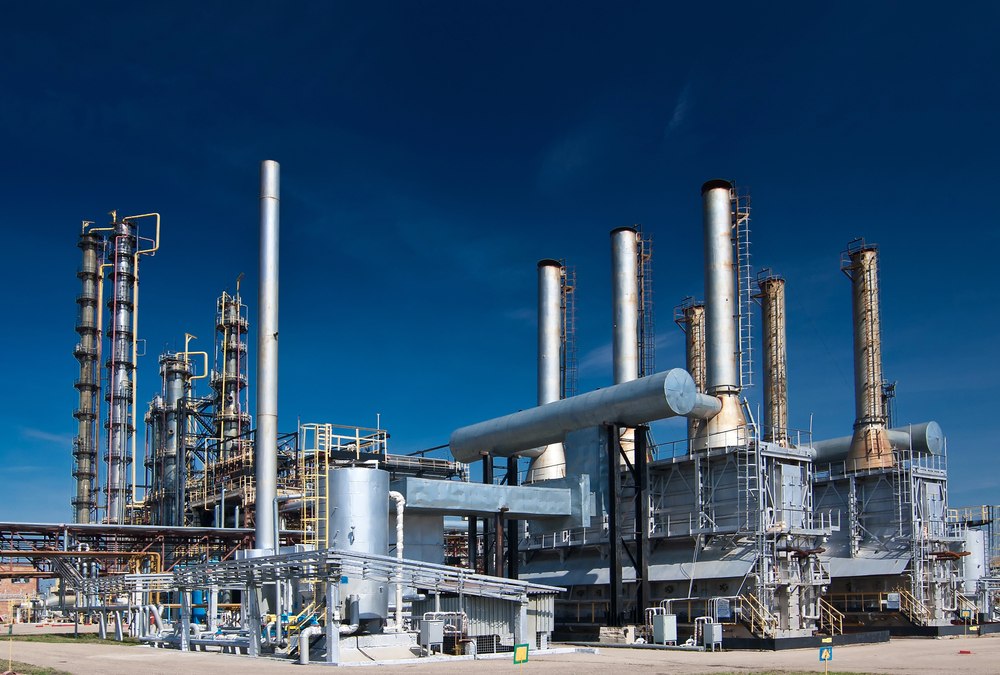
Kazakhstan and China have agreed on the basic parameters of a major expansion project at the Shymkent oil refinery, which will double its processing capacity from over 6 million to 12 million tons of oil per year. According to national oil company KazMunayGas, the Shymkent refinery became Kazakhstan’s leading facility in 2025 in terms of processing volume, handling 6.23 million tons of oil. By comparison, the Pavlodar Petrochemical Plant processed 5.76 million tons, and the Atyrau Oil Refinery 5.47 million tons. Shymkent also topped production output, delivering over 2.28 million tons of gasoline and more than 2.1 million tons of diesel fuel. The refinery is jointly owned by KazMunayGas JSC and China National Petroleum Corporation (CNPC). The two partners plan to expand the plant’s production capacity by constructing new processing infrastructure. A delegation from Kazakhstan’s Ministry of Energy, led by Daulet Arykbayev, Director of the Oil Transportation and Refining Department, participated in a strategic meeting in Qingdao, China, to prepare a feasibility study for the expansion. Following the meeting, both sides approved the project’s basic framework. A central decision was the adoption of the “6+6” configuration: two processing lines, each with a 6-million-ton annual capacity, fully integrated into the refinery’s existing operations. Officials stressed the importance of meeting project deadlines, with the core feasibility work scheduled for completion by 2032 under the framework agreement. The Ministry of Energy also noted that, under Kazakhstan’s broader refinery modernization program, the goal is to increase total national processing capacity from 18 million to 39 million tons of oil per year. Simultaneously, the government is seeking investors for the construction of a new refinery with an annual capacity of up to 10 million tons. The Times of Central Asia previously reported on state plans to attract foreign investment for a proposed fourth major refinery. Government estimates suggest that expanding the three existing refineries to 39 million tons will require investments of $15-19 billion. In March 2025, the Agency for the Protection and Development of Competition recommended partial privatization of the Pavlodar and Atyrau plants to boost efficiency and attract private capital. However, in December, Energy Minister Yerlan Akkenzhenov stated that KazMunayGas currently has no plans to privatize these assets.

4 days ago

Kazakhstan Explores Budget Cuts and Tax Reforms with Input from Elon Musk

Kazakhstan is exploring ways to optimize its state budget, drawing inspiration from recent U.S. reforms. Deputy Prime Minister and Minister of National Economy Serik Zhumangarin revealed that Elon Musk, head of the newly established U.S. Department of Government Efficiency (DOGE), has offered assistance in implementing similar measures in Kazakhstan. According to Zhumangarin, Musk proposed helping the government identify potential cost-cutting areas, though he acknowledged that reducing social expenditures would be challenging. He welcomed Musk’s input, suggesting the formation of a working group to assess possible savings while ensuring that cuts do not negatively impact ordinary citizens. The discussion on budget efficiency comes as Kazakhstan prepares for tax reforms, including raising the value-added tax (VAT) from 12% to a proposed 16-20% and lowering the revenue threshold for VAT registration from 78 million KZT to 15 million KZT ($150,000 to $29,000). Officials estimate the changes could generate an additional 5-7 trillion KZT in revenue. However, the proposed reforms have met resistance. A petition argues that lowering the VAT threshold will disproportionately burden small and medium-sized enterprises (SMEs), forcing them to hire additional staff and leading to price increases. Some lawmakers have also warned that raising the VAT rate could drive inflation higher. Senate Speaker Maulen Ashimbayev has urged the government to reassess budget efficiency before implementing tax hikes, pointing to the U.S. model, where the Department of Government Efficiency is working to cut wasteful spending. While he does not advocate blindly following the U.S. approach, Ashimbayev believes Kazakhstan should consider similar measures as it debates tax increases and fiscal responsibility. As previously reported, Kazakhstan’s Ministry of National Economy had proposed reducing the number of taxes in the country by 21% a year ago.

1 year ago