• KGS/USD = 0.01144 0%
  • KZT/USD = 0.00210 0%
  • TJS/USD = 0.10559 0%
  • UZS/USD = 0.00008 0%
  • TMT/USD = 0.28530 0%
  • KGS/USD = 0.01144 0%
  • KZT/USD = 0.00210 0%
  • TJS/USD = 0.10559 0%
  • UZS/USD = 0.00008 0%
  • TMT/USD = 0.28530 0%
  • KGS/USD = 0.01144 0%
  • KZT/USD = 0.00210 0%
  • TJS/USD = 0.10559 0%
  • UZS/USD = 0.00008 0%
  • TMT/USD = 0.28530 0%
  • KGS/USD = 0.01144 0%
  • KZT/USD = 0.00210 0%
  • TJS/USD = 0.10559 0%
  • UZS/USD = 0.00008 0%
  • TMT/USD = 0.28530 0%
  • KGS/USD = 0.01144 0%
  • KZT/USD = 0.00210 0%
  • TJS/USD = 0.10559 0%
  • UZS/USD = 0.00008 0%
  • TMT/USD = 0.28530 0%
  • KGS/USD = 0.01144 0%
  • KZT/USD = 0.00210 0%
  • TJS/USD = 0.10559 0%
  • UZS/USD = 0.00008 0%
  • TMT/USD = 0.28530 0%
  • KGS/USD = 0.01144 0%
  • KZT/USD = 0.00210 0%
  • TJS/USD = 0.10559 0%
  • UZS/USD = 0.00008 0%
  • TMT/USD = 0.28530 0%
  • KGS/USD = 0.01144 0%
  • KZT/USD = 0.00210 0%
  • TJS/USD = 0.10559 0%
  • UZS/USD = 0.00008 0%
  • TMT/USD = 0.28530 0%

Our People > Dmitry Pokidaev

Dmitry Pokidaev's Avatar

Dmitry Pokidaev

Journalist

Dmitry Pokidaev is a journalist based in Astana, Kazakhstan, with experience at some of the country's top media outlets. Before his career in journalism, Pokidaev worked as an academic, teaching Russian language and literature.

Articles

Kazakhstan Prioritizes Nuclear Energy in Long-Term Development Strategy

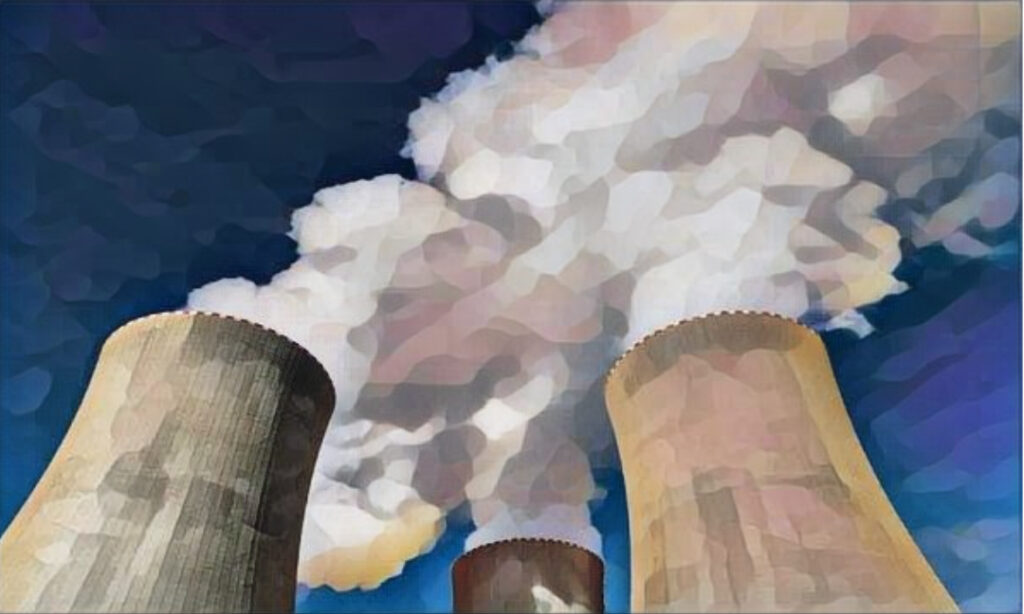
Kazakhstan has identified the development of nuclear energy as a strategic priority for the country's economic future, President Kassym-Jomart Tokayev announced at the Astana International Forum (AIF). “Kazakhstan, which possesses 40% of the world's uranium reserves, views nuclear energy as a key pillar of its national development strategy,” Tokayev stated. “However, sustainable development is impossible without addressing the climate crisis, particularly as Central Asia is among the region’s most vulnerable to climate change. Global warming is occurring here at twice the global average rate.” To address this, Tokayev outlined Kazakhstan’s commitment to a pragmatic and regionally coordinated climate agenda. He noted the country’s participation in various international organizations and agreements focused on environmental sustainability. In 2026, Kazakhstan, in partnership with the United Nations, will host a Regional Climate Summit, aimed at aligning Central Asian strategies with global environmental ambitions. Tokayev also highlighted the recent establishment of the UN Regional Center for Sustainable Development Goals for Central Asia and Afghanistan in Almaty. “This marks a significant step in our multilateral cooperation. The center will facilitate joint projects, provide technical support, and coordinate international efforts,” he said. At the same time, Kazakhstan continues to promote nuclear non-proliferation. “Today, nine countries possess more than 13,000 nuclear warheads. Experts warn that the risk of their use is rising, whether through miscalculation, accident, or escalation,” Tokayev cautioned. He emphasized the lasting impact of 450 nuclear tests conducted on Kazakh territory during the Soviet era. Public support for nuclear energy has been growing. In a referendum held last fall, over 70% of Kazakh citizens voted in favor of developing the country’s nuclear energy capacity. In January 2025, the government finalized a shortlist of potential technology suppliers for Kazakhstan’s first nuclear power plant. The contenders include Russia’s Rosatom, South Korea’s KHNP, China’s CNNC, and France’s EDF. The inaugural plant is expected to be built in the Almaty region and operational by 2035. Authorities are also evaluating sites for two additional facilities, with possible locations in Balkhash (southeastern Kazakhstan), Kurchatov (in the Abai region, near the former Semipalatinsk nuclear test site), and Aktau (Mangistau region, home to a Soviet-era experimental reactor). To oversee the development and regulation of the sector, Kazakhstan established the Atomic Energy Agency in March. Reporting directly to the president, the agency is responsible for uranium mining, atomic energy use, radiation safety, and management of the Semipalatinsk Nuclear Safety Zone.

11 months ago

Tokayev Backs Expansion of UN Security Council for Greater Global Representation

Kazakhstan's President Kassym-Jomart Tokayev has called for expanding the United Nations Security Council to better reflect contemporary global dynamics. Speaking at the Astana International Forum (AIF), he emphasized that reforming the UN’s most powerful body is essential to restoring trust and maintaining international peace and security. The Security Council currently consists of 15 members, five permanent (the United States, China, Russia, France, and the United Kingdom) and ten non-permanent members elected for two-year terms by the UN General Assembly. “Kazakhstan supports the expansion of the UN Security Council to include broader regional representation,” Tokayev stated. “This year, we celebrate the 80th anniversary of the United Nations. Founded in 1945 by 51 states in the aftermath of a devastating global war, the UN envisioned a more peaceful and secure world. Today, it has grown to 193 member states.” Tokayev criticized the Council’s structure as outdated. “The gap between institutional design, frozen in the post-World War II era, and modern realities undermines both trust in the UN and its effectiveness. Critical decisions affecting billions should not rest in the hands of only a few,” he argued. He called for a structural overhaul of the Council to ensure its continued relevance, emphasizing that major powers must recommit to the foundational principles of peace, security, and respect for the territorial integrity of all nations. Highlighting the scale of current global unrest, Tokayev noted that 52 countries were in active armed conflict last year. The economic toll from these hostilities reached an estimated US$19 trillion, approximately 13.5% of global GDP. “Beyond the staggering numbers lies a more troubling reality,” he said. “Modern conflicts are becoming longer, more complex, and increasingly involve non-state actors. Many are rooted in deep historical and structural contradictions.” Tokayev emphasized the growing role of so-called “middle powers” in shaping a fairer and more inclusive world order. “Middle powers must be ready to assume greater responsibility in rethinking global governance,” he concluded. As previously reported by The Times of Central Asia, the 2025 Astana International Forum, themed “Uniting Minds, Shaping the Future,” gathered global leaders, international organizations, investors, businesspeople, and policy experts in Kazakhstan’s capital.

11 months ago

Kazakhstan Considers Handing Rare Earth Deposits to State Mining Firm Tau-Ken Samruk

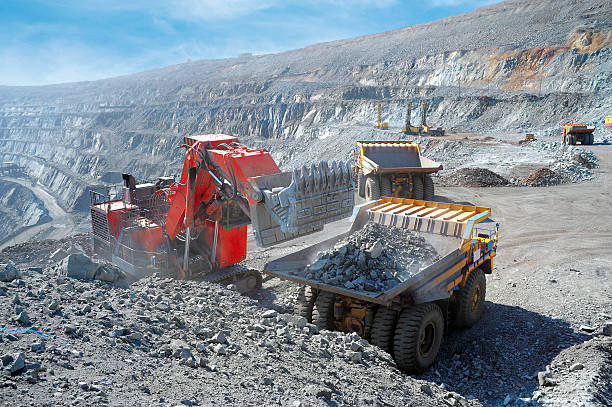
Kazakhstan may transfer a series of newly discovered rare earth metal deposits to the state-owned mining company Tau-Ken Samruk, according to Erlan Akbarov, Chairman of the Geology Committee under the Ministry of Industry and Construction. Geological exploration initiated by the government in 2021 has covered 12 targeted areas, with exploration completed in 10 of them. These surveys led to the discovery of multiple rare earth metal deposits, including 17 rare earth elements such as tantalum, lithium, and niobium. “The largest deposit we have discovered is the Kuyrektykol site, which has industrial reserves estimated at 1 million tons, with a projected reserve of 20 million tons. The remaining sites are located in eastern Kazakhstan (two), southern Kazakhstan (three), and northern Kazakhstan (three),” Akbarov said during a government briefing. “We have completed exploration and evaluation at these sites, and specific investors will continue the development. One of the options under consideration is transferring these sites to Tau-Ken Samruk,” he added. The National Mining Company Tau-Ken Samruk, a joint-stock company established in 2009, aims to unlock Kazakhstan's mineral wealth by attracting leading partners and technologies. It is preparing to lead the next development phase of the Kuyrektykol site, which includes pre-investment groundwork, further geological assessments, and the selection of appropriate mining technologies. Located in the Karaganda region in central Kazakhstan, initial exploration of Kuyrektykol began in 2022 and concluded in November 2024. Kazakhstan currently extracts 19 of the 34 globally recognized rare earth elements, including beryllium, tantalum, niobium, and rhenium. More than 100 deposits of rare and rare earth elements have been identified nationwide. Akbarov also noted that Tau-Ken Samruk might participate in a lithium mining project initiated by the Korea Institute of Geoscience and Mineral Resources (KIGAM) in eastern Kazakhstan. “KIGAM conducted geological studies with us and discovered lithium deposits. Negotiations are ongoing, and our Korean colleagues are keen to proceed with further exploration. Tau-Ken Samruk may acquire a stake in this project,” Akbarov stated. Earlier, The Times of Central Asia reported that in June this year, the Ministry of Industry and Construction will open electronic auctions granting private investors the right to explore and develop 50 gold and rare metal deposits.

11 months ago

OpenAI Registers as a Taxpayer in Kazakhstan

OpenAI, the U.S.-based developer of the ChatGPT chatbot, has officially registered as a taxpayer in Kazakhstan and will now pay value-added tax (VAT), according to the State Revenue Committee (SRC) of the Ministry of Finance. The announcement comes as part of the government’s ongoing efforts to ensure equitable taxation of foreign digital service providers operating in the country’s market. Kazakhstan introduced its digital services tax, commonly referred to as the “Google tax”, in 2022, becoming one of the first countries in Central Asia to do so. The policy aims to bring major international tech firms into the national tax framework. “As part of improving interaction with global digital platforms, in May 2025, OpenAI, L.L.C., a leading American organization in the field of artificial intelligence and widely known as the developer of the ChatGPT intelligent system, was conditionally registered. Now, for providing services to individuals in Kazakhstan, the chatbot will pay VAT in accordance with tax legislation,” the SRC said in a statement. ChatGPT is based on the GPT (Generative Pre-trained Transformer) language model. It can understand and respond to user queries, assist with translations, compose letters, generate code, and support learning and research tasks. The digital services tax has become a significant revenue stream for Kazakhstan. In 2022, it contributed 16.4 billion KZT (approximately $32.1 million) to the state budget. Revenues increased to 26.3 billion KZT ($51.4 million) in 2023 and reached 26.4 billion KZT ($51.6 million) in 2024. To date, around 100 international companies, including Google, Apple, Netflix, and Amazon, are registered as VAT payers under the digital services tax regime. The registration process for foreign companies has been streamlined to facilitate compliance. As previously reported by The Times of Central Asia, OpenAI also registered as a taxpayer in Uzbekistan in April.

11 months ago

Kazakhstan to Launch New Flights to 15 Foreign Cities

Kazakhstan will open 15 new international air routes this year, operated both by domestic carriers and by new foreign low-cost airlines entering the market. The announcement was made by Minister of Transport Marat Karabaev during a government session in the Senate, the upper house of Kazakhstan’s parliament. “The new destinations include cities such as Munich, Budapest, Shanghai, Guangzhou, and others,” Karabaev stated. Most of these routes will be serviced by Kazakh airlines Air Astana and SCAT. Karabaev also highlighted the entry of five new low-cost carriers from India, Thailand, and South Korea, following the implementation of Kazakhstan’s open skies regime. The additional eleven destinations are Cairo, Da Nang, Abu Dhabi, Hurghada, Busan, Osh, Mumbai, Kulja, Rome, Gazipaşa, and Samarkand. The incoming low-cost carriers include SpiceJet (India), Thai AirAsia X (Thailand), Eastar Jet and T’Way Air (South Korea), and Air Arabia Abu Dhabi (UAE). The open skies regime eliminates all restrictions on the number of flights operated by foreign carriers on international routes not served by domestic airlines. It currently applies to 15 airports across Kazakhstan: Astana, Almaty, Shymkent, Aktau, Aktobe, Karaganda, Ust-Kamenogorsk, Pavlodar, Kokshetau, Taraz, Petropavlovsk, Semey, Turkestan, Kostanay, and Uralsk. Introduced in 2022, the policy has been extended through the end of 2027. Karabaev noted that the increased presence of low-cost airlines is fostering greater competition within the domestic aviation market. He also addressed the development plans of VietJet Kazakhstan, formerly known as Qazaq Air. The airline, now under the ownership of Vietnam’s SOVICO Group, aims to expand its operations beyond Vietnam by launching additional routes between Kazakhstan and neighboring Russia. As previously reported by The Times of Central Asia, SOVICO Group is also considering the acquisition or management of an airport in Kazakhstan. Currently, VietJet Kazakhstan operates 14 domestic routes, four of which receive state subsidies, and four international destinations. The airline has reportedly been offered an option to manage an airport in the Kyzylorda region.

11 months ago