• KGS/USD = 0.01143 -0%
  • KZT/USD = 0.00193 -0%
  • TJS/USD = 0.10881 0%
  • UZS/USD = 0.00008 0%
  • TMT/USD = 0.28575 0%
  • KGS/USD = 0.01143 -0%
  • KZT/USD = 0.00193 -0%
  • TJS/USD = 0.10881 0%
  • UZS/USD = 0.00008 0%
  • TMT/USD = 0.28575 0%
  • KGS/USD = 0.01143 -0%
  • KZT/USD = 0.00193 -0%
  • TJS/USD = 0.10881 0%
  • UZS/USD = 0.00008 0%
  • TMT/USD = 0.28575 0%
  • KGS/USD = 0.01143 -0%
  • KZT/USD = 0.00193 -0%
  • TJS/USD = 0.10881 0%
  • UZS/USD = 0.00008 0%
  • TMT/USD = 0.28575 0%
  • KGS/USD = 0.01143 -0%
  • KZT/USD = 0.00193 -0%
  • TJS/USD = 0.10881 0%
  • UZS/USD = 0.00008 0%
  • TMT/USD = 0.28575 0%
  • KGS/USD = 0.01143 -0%
  • KZT/USD = 0.00193 -0%
  • TJS/USD = 0.10881 0%
  • UZS/USD = 0.00008 0%
  • TMT/USD = 0.28575 0%
  • KGS/USD = 0.01143 -0%
  • KZT/USD = 0.00193 -0%
  • TJS/USD = 0.10881 0%
  • UZS/USD = 0.00008 0%
  • TMT/USD = 0.28575 0%
  • KGS/USD = 0.01143 -0%
  • KZT/USD = 0.00193 -0%
  • TJS/USD = 0.10881 0%
  • UZS/USD = 0.00008 0%
  • TMT/USD = 0.28575 0%
21 December 2025

Our People > Times of Central Asia

Times of Central Asia's Avatar

Articles

Kazakhstan Accelerates Development of Trans-Kazakhstan Railway Corridor

With a closed domestic railway network now fully in place, Kazakhstan has shifted focus toward developing new routes aimed at enhancing export and transit cargo delivery. In early 2025, President Kassym-Jomart Tokayev ordered the acceleration of the Trans-Kazakhstan railway corridor, an essential component of the Trans-Caspian International Transport Route. Central to this effort is the construction of the Mointy-Kyzylzhar railway line. Rail transport remains a vital sector of Kazakhstan’s economy, shaping both domestic commodity markets and the country’s strategic transit potential. In the face of shifting geopolitical dynamics and rising demand for freight transport, Kazakhstan has gained fresh opportunities to expand its international logistics capabilities. However, aging infrastructure, bottlenecks, and missing links continue to restrict this potential and hinder trade growth. In response, Kazakhstan has launched a series of major infrastructure projects, including the Mointy-Kyzylzhar line, an extension of the existing Dostyk-Mointy branch. According to JSC “NC “KTZ”, the project will expand the nation’s transit capacity, ease congestion on the Mointy-Zharyk segment, remove key bottlenecks, and reduce delivery times through route optimization. It is also expected to stimulate economic activity in the Karaganda and Ulytau regions by strengthening export logistics and creating new jobs. The direct link between Mointy and Kyzylzhar stations will shorten the Trans-Caspian corridor and reduce traffic on overburdened parts of the network. In an interview with The Times of Central Asia, Saken Rakhmetov, Managing Director of the Mainline Network Directorate at KTZ, noted that the project will shorten delivery distances and eliminate locomotive changeovers at Mointy and Zharyk. This, he said, could reduce shipping times from the Chinese border to the port of Aktau by more than a day, depending on the route. The project entails constructing over 390 kilometers of rail infrastructure, including single-track lines, stations, two overpasses, 35 bridges, 21 cattle crossings, 108 culverts, 16 passing loops, and five stations. Topographic, geodetic, geological, and hydrological surveys have been completed. More than 96% of the planned 12.9 million cubic meters of roadbed has been filled. Installation of culverts is underway, with 11 already completed and 14 in progress. More than half of the rail-sleeper grid, 165 kilometers out of 323, has been assembled, with track laying initiated at both ends. According to the approved timeline, construction of pipes, bridges, and overpasses, along with power and communication systems and related infrastructure, is scheduled for completion in 2026. A notable feature of the project is the use of jointless track technology, which employs long continuous welded rails rather than standard 25-meter links. This design reduces dynamic stress on the track, cuts wear and tear on infrastructure and rolling stock, improves energy efficiency, and allows higher train speeds. At the height of construction during July-August, approximately 550 pieces of machinery and up to 1,150 workers were deployed. Upon completion, the line is expected to create at least 700 permanent jobs. According to KTZ, about 80% of the goods, services, and labor used in the project are sourced locally, with final figures to be confirmed after a state review...

5 days ago

“I Miss Everything:” Friends, Officials Mourn Uzbek Student Slain in the U.S.

MukhammadAziz Umurzokov, one of two students killed by a gunman at Brown University on Dec. 13, seemed to be making the most of life after moving to the United States from Uzbekistan with his family some years ago. He hoped to become a neurosurgeon, according to a sister, and his acceptance into the elite university in Rhode Island signaled that he was on the way to achieving his goals. So, the killing of Umurzokov, along with that of student Ella Cook of Alabama, hit hard for some people who, though accustomed to periodic news of mass shootings in the United States, were especially saddened that lives of such promise ended in violence. In Umurzokov’s case, he was mourned from the halls of power and diplomacy in the Uzbek capital of Tashkent to the suburbs of Richmond, Virginia, where he went to high school. “The loss of innocent lives as a result of this tragedy is a heavy loss for all of us,” Akhror Burkhanov, press secretary for Uzbekistan’s Ministry of Foreign Affairs, said on X. “Representatives of the missions of the Republic of Uzbekistan in the United States are in constant contact with the relatives of the deceased and are working closely with the relevant U.S. agencies on all issues.” Jonathan Henick, the U.S. ambassador to Uzbekistan, also expressed his sadness over the killings at Brown. “We extend our sincere condolences to Mr. Umurzokov’s family, friends, and fellow students and mourn the loss of his bright future,” Henick said in a statement. He added the Uzbek-language phrase: “Marhumni Xudo rahmat qilsin” (May God have mercy on the deceased). The Uzbek American Association issued a tribute to the Uzbek student, saying: “His passing has left an immeasurable void in the hearts of his family, friends, classmates, and the broader Uzbek American community.” Some comments from old friends in the United States suggested that Umurzokov, as a member of the Uzbek diaspora, was integrated into the rhythms of American life. “I miss everything,” Jameson Huang said on the GoFundMe page that was set up by Umurzokov’s sister, Samira Umurzokova. “Let’s catch up one day in Publix, drinking Arizonas and eating mac and cheese. Let’s race our cars and see who’s faster. Let’s redo the chaos of the college application cycle and the late night calls and hangouts. One day man, one day. For now, rest easy and stay safe up there.”

6 days ago

Kazakhstan’s Independence Day: Plenty to Cheer, More to Consider

As Kazakhstan prepares to celebrate its Independence Day on December 16th, The Times of Central Asia (TCA) sat down with its special correspondent, Javier M. Piedra, a banker, corporate executive, writer, and seasoned international development expert whose professional ties to Kazakhstan date back to 2000. Piedra lived in Kazakhstan for 16 years. Over that time, he headed KPMG’s M&A (2007 – 2012), set up a credit bureau - the only one in the region at the time - and was a senior advisor for a private equity fund. He also taught corporate finance at Narxoz University. Back in Washington, he later managed USAID’s multibillion-dollar Asia Bureau under Donald Trump. Drawing on decades of experience in financial consulting, international development, and regional policy, Piedra offers wide-ranging insights into the nation’s evolution since 1991. In this conversation, he reflects on the mindset of Kazakhstan’s leadership – especially in recent years – that has led to, despite challenges, to its achievements - from economic reforms and institutional development to social progress and an increasingly dynamic national outlook. He highlights milestones worth celebrating, offers guidance to the next generation, and provides nuanced commentary on religious freedom and the country’s ongoing development path. The views expressed in this interview are those of the speaker and do not necessarily reflect the editorial position of The Times of Central Asia. TCA: As Kazakhstan marks Independence Day on December 16, what core achievements of the country are most worth celebrating at this moment in its history? Piedra: On December 16th, I expect – and this is good news – President Tokayev to repeat what he said last year, i.e., “I am convinced that by maintaining our unity, tranquility and stability in society, we will overcome all challenges and reach new heights on the path of progress.” Put simply, Kazakhstan can stay unified and stable despite challenges if it commits to doing so. People need to hear this message because it is positive, and the record supports his optimism. It is worth celebrating the country’s positive attitude and confidence in the future. Kazakhstan’s greatest achievement since independence, despite forces pushing in the contrary direction, has been the ability of its multiethnic and multicultural society to flourish. Kazakhstan has preserved unity, strengthened friendships with neighbors, ensured economic freedoms, and inspired its youth with hope, despite trials, corruption, and human shortcomings. Kazakhstan’s dedication to unity is strengthened by its refusal to get pulled into unnecessary geopolitical ambitions or Great Power maneuverings that tend to rob countries of their sovereignty; this mindset is worth celebrating on Independence Day. TCA: You mention “confidence in the future.” What does that mean in the context of Independence Day? Piedra: The early days of Independence were rough, very rough, not only for Kazakhstan, but for the rest of the countries of Central Asia. Since independence in 1991, Kazakhstan has worked hard to build social and institutional structures that enable people to have greater “confidence in the future,” and there were many mistakes made, but Kazakhstan came...

6 days ago

Opinion: Is Uzbekistan Importing a Future Crisis?

Once hidden from the view of international investors, Uzbekistan is rapidly rewriting its economic narrative. Over the past eight years, the nation attracted over $113 billion in foreign investment, drawing financial firms and mutual funds eager to seize the momentum of Tashkent’s trade liberalization and its ambition to double GDP by 2030. And rightly so; 40% of the country’s population, which is the largest in Central Asia, is under the age of 25, while its gold production is within the top ten globally. Uzbekistan is in its breakout moment. With Uzbek bonds receiving a further upgrade to a BB rating from both Fitch and S&P Global, comparisons to Vietnam or Indonesia no longer seem aspirational. However, the question remains: Is Uzbekistan ready to set foot on the financial global stage, and, more importantly, is it structurally equipped to stay there? Amidst its sweeping economic transformation, IMF officials have warned the administration to remain vigilant against economic shocks beyond its control: volatile commodity prices, contractions in foreign investor liquidity, and consequently, tighter external financing. These warnings are not theoretical. They come from decades of IMF experience with financial crises in other emerging markets, such as the Latin American debt crises in the 1980s, the “Tequila Crisis” in 1994, and the “Asian Flu” in 1997. In those historic cases, newly liberalized economies suffered not because they lacked growth, but because they lacked a defense against the liquidity cycle. The economic reality is that global capital flows are often driven by decisions made in New York or London, not Tashkent. This economic phenomenon is often explained by the “liquidity model,” which argues that changes in exogenous liquidity conditions - driven by the economic situation of investor countries - shape capital flows into emerging markets. Thus, without sufficient financial market depth, emerging capital markets cannot absorb external shocks. And when global liquidity tightens, these flows can abruptly reverse, resulting in prolonged economic instability and loss of monetary sovereignty. The sequence unfolds as follows: capital inflows surge and balance-sheet vulnerabilities quietly build up; then an external shock - such as a monetary tightening in the creditor economy - causes inflows to slow; the local currency depreciates; and a feedback spiral of declining confidence and weakening balance sheets pushes the economy into crisis. Currency loses trust, struggles to recover, and money flees. Some initial signs of this pattern can be observed in Uzbekistan’s current boom. The economy is increasingly reliant on foreign borrowing: external debt as a share of GDP rose from 24.7% in 2017 to 61.4% in 2024, reaching $78.5 billion by June 2025. According to CEIC benchmarks, this level is already comparable to Poland’s 51.8% and Malaysia’s 69.9%, and now exceeds Kazakhstan’s 59.2%, reflecting growing dependence on financing from the World Bank, Eurobond investors, and major East Asian institutions. High debt levels alone do not necessarily imply instability. They can reflect efforts to accelerate domestic development. The real source of fragility in past crises was not the volume of debt but its denomination. When...

6 days ago

The Silk Visa Deadlock: The Long Road to a Borderless Central Asia

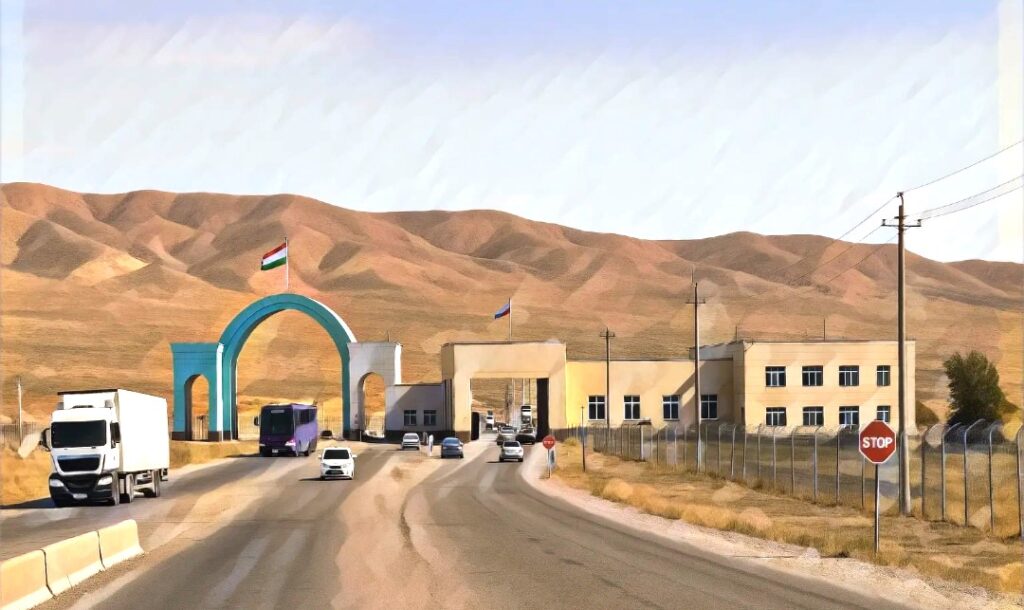
The year 2025 will likely be remembered as a milestone in Central Asian diplomacy. Regional leaders signed landmark agreements on water and energy cooperation and launched major investment projects. At high-level meetings, Central Asian presidents emphasized a new phase of deeper cooperation and greater unity, highlighting strategic partnership and shared development goals. But at ground level, at border crossings such as Korday between Kazakhstan and Kyrgyzstan, or the congested diversion routes replacing the closed Zhibek Zholy checkpoint, the picture is far less seamless. Long queues, heightened scrutiny, and bureaucratic delays remain the norm. While political rhetoric celebrates unity, the reality on the ground tells a different story. The region’s physical borders remain tightly controlled. A key symbol of unrealized integration is the stalled “Silk Visa” project, a proposed Central Asian version of the Schengen visa that would allow tourists to travel freely across the region. The project has made little headway, with experts suggesting that, beyond technical issues, deeper concerns, including economic disparities and security sensitivities, have played a role. Silk Visa: A Stalled Vision Launched in 2018 by Uzbekistan and Kazakhstan, the Silk Visa was envisioned as a game-changer for regional tourism and mobility. Under the scheme, tourists with a visa to one participating country could move freely across Central Asia, from Almaty to Samarkand and Bishkek. Seven years on, the project has yet to materialize. Official explanations point to the difficulty of integrating databases on “undesirable persons.” But as Uzbekistan’s Deputy Prime Minister acknowledged earlier this year, the delay stems from the need to harmonize security services and create a unified system. Experts also cite diverging visa policies and resistance from national security agencies unwilling to share sensitive data. As long as each country insists on determining independently whom to admit or blacklist, the Silk Visa will remain more aspiration than policy. Economic Imbalance: The Silent Barrier The most significant, albeit rarely acknowledged, hurdle to regional openness is economic inequality. Kazakhstan’s GDP per capita, at over $14,000, is significantly higher than that of Uzbekistan or Kyrgyzstan, which hover around $2,500-3,000. This disparity feeds fears in Astana that full border liberalization would trigger a wave of low-skilled labor migration, putting strain on Kazakhstan’s urban infrastructure and labor market. While Kazakhstan is eager to export goods, services, and capital across Central Asia, it remains reluctant to import unemployment or social tension. Migration pressure is already high: according to Uzbekistan’s Migration Agency, the number of Uzbek workers in Kazakhstan reached 322,700 in early 2025. Removing border controls entirely could exacerbate this trend, overwhelming already stretched public services. Security Concerns and Regional Tensions The geopolitical landscape further complicates the dream of borderless travel. A truly open regional system would require a strong, unified external border, something unattainable given Afghanistan’s proximity. The persistent threats of drug trafficking and extremist infiltration compel Uzbekistan and Tajikistan to maintain tight border controls. Kazakhstan, while geographically removed, remains cautious about loosening controls along its southern frontier. Moreover, despite recent agreements on delimiting the Kyrgyz–Tajik border, tensions in...

2 weeks ago