• KGS/USD = 0.01144 0%
  • KZT/USD = 0.00210 0%
  • TJS/USD = 0.10563 0%
  • UZS/USD = 0.00008 0%
  • TMT/USD = 0.28530 0%
  • KGS/USD = 0.01144 0%
  • KZT/USD = 0.00210 0%
  • TJS/USD = 0.10563 0%
  • UZS/USD = 0.00008 0%
  • TMT/USD = 0.28530 0%
  • KGS/USD = 0.01144 0%
  • KZT/USD = 0.00210 0%
  • TJS/USD = 0.10563 0%
  • UZS/USD = 0.00008 0%
  • TMT/USD = 0.28530 0%
  • KGS/USD = 0.01144 0%
  • KZT/USD = 0.00210 0%
  • TJS/USD = 0.10563 0%
  • UZS/USD = 0.00008 0%
  • TMT/USD = 0.28530 0%
  • KGS/USD = 0.01144 0%
  • KZT/USD = 0.00210 0%
  • TJS/USD = 0.10563 0%
  • UZS/USD = 0.00008 0%
  • TMT/USD = 0.28530 0%
  • KGS/USD = 0.01144 0%
  • KZT/USD = 0.00210 0%
  • TJS/USD = 0.10563 0%
  • UZS/USD = 0.00008 0%
  • TMT/USD = 0.28530 0%
  • KGS/USD = 0.01144 0%
  • KZT/USD = 0.00210 0%
  • TJS/USD = 0.10563 0%
  • UZS/USD = 0.00008 0%
  • TMT/USD = 0.28530 0%
  • KGS/USD = 0.01144 0%
  • KZT/USD = 0.00210 0%
  • TJS/USD = 0.10563 0%
  • UZS/USD = 0.00008 0%
  • TMT/USD = 0.28530 0%

Our People > Times of Central Asia

Times of Central Asia's Avatar

Articles

Kazakhstan’s Bublik Remembers Clay Court Moment with Monfils

Kazakhstan’s Alexander Bublik shared a memory at the net with Gaël Monfils after defeating him at the Monte-Carlo Masters, in the French veteran’s last appearance at the Roland Garros tune-up. “Do you know what? Exactly 10 years ago, I was a hitting partner here,” Bublik, ranked 11th in the world, told Monfils after beating him 6-4, 6-4 in the round of 32 on Tuesday. As the two men embraced and the crowd cheered, Bublik asked Monfils if he remembered what he had said a decade ago. Monfils responded: “I told you grass is not the main, here is your main! Remember that.” The 39-year-old Frenchman, who has said the 2026 season will be his last in professional tennis, was onto something when he told Bublik to focus on clay court tennis all those years ago. Although the Russia-born player was once open about his distaste for the surface, he reached the French Open quarterfinals and won two clay titles last year during a resurgence that propelled him up the rankings. Bublik, 28, was in command against Monfils, mixing up baseline drives with feathered drop shots that his opponent couldn’t reach. Monfils was once ranked as high as sixth in the world and has won 13 ATP titles. Bublik has won nine titles. The two men are considered among the most entertaining on the tour, for their shotmaking and flamboyance on the court. In Monaco on Tuesday, as they approached the umpire’s chair for a handshake, Monfils said to Bublik: “Good luck, brother.”

6 days ago

Tokayev Welcomes Middle East Truce, Reaffirms Kazakhstan’s Support for Peace Efforts

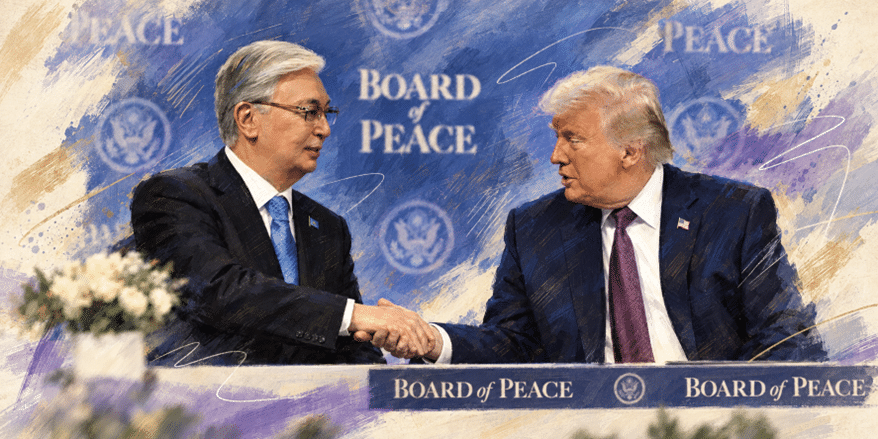
President Kassym-Jomart Tokayev has welcomed the "ceasefire and truce” announced in the Middle East, praising the mediation efforts of Pakistani Prime Minister Shehbaz Sharif and Pakistan’s Chief of Army Staff, Field Marshal Asim Munir. According to Kazakhstan’s presidential press office, Tokayev stated that “this agreement became possible due to the goodwill and wisdom of the President of the United States, Donald Trump, and the senior leadership of Iran, as well as all countries involved in the military conflict.” He added that he hoped the agreement would be lasting and would contribute to global trade and the economic prosperity of nations. Tokayev’s statement is consistent with his broader support for diplomatic peace initiatives. On January 22, 2026, Tokayev signed the Charter of the Board of Peace in Davos. At the Board’s inaugural meeting on February 20, Tokayev said Kazakhstan’s decision to join the Abraham Accords was fully aligned with the Board of Peace’s mission and could help advance peace, security, and wider humanitarian and economic cooperation in the Middle East. Kazakhstan has also framed its decision to join the Abraham Accords as part of a larger effort to reduce confrontation and encourage dialogue. In official remarks, Tokayev said the move was intended to contribute to lasting peace in the Middle East and reflected Kazakhstan’s multilateral diplomacy aimed at promoting peace and security. By linking the truce to trade and prosperity, Tokayev underscored Kazakhstan’s view that peace and economic stability go hand in hand. The statement reinforces Astana’s position that dialogue, bridge-building, and sustained diplomacy remain the strongest path toward regional stability and long-term growth.

7 days ago

Opinion: Supply Chains of Power: How Critical Minerals Are Shaping China–U.S. Competition in Central Asia

Central Asia is no longer a distant frontier for global geopolitics. It is developing into a central arena of competition for critical minerals, supply chains, and industrial power, where minerals are no longer simple commodities but have instead become key components of contemporary statecraft. In essence, this transformation highlights a recognition in Washington and other capitals that critical mineral supply chains are fundamental to next-generation energy systems, the development of artificial intelligence (AI), and strategic defense capabilities. Even as the global economy is multipolar, critical mineral supply chains remain highly concentrated and dominated by China. Control of rare earths is increasingly geopolitical, with clear economic, political, and security consequences. The significance of that imbalance is now shaping U.S. foreign policy, Central Asia’s development strategies, and the future of global economics. China’s Strategy: Control the Chain, Not Just the Mine Though many years in the making, China’s critical minerals strategy is still often misunderstood as focused primarily on resource access. However, Beijing’s efforts are far broader and more effective. Not only securing raw materials, the Chinese leadership has also worked to control the entire supply chain—from extraction to processing, refining, and manufacturing. China’s long-term focus and investments began in the 1980s with efforts that culminated in the Made in China 2025 plan for national and overseas manufacturing. In 2023 alone, Chinese firms invested more than $120 billion in overseas mining and processing, targeting key elements used in energy supply chains. Beijing also fed its industrial base by providing over $220 billion for the production of electric vehicles, batteries, and renewable infrastructure. As a result, China now controls approximately 60% of lithium processing, more than 70% of cobalt refining, and over 90% of battery material manufacturing. Strategically, China controls roughly 90% of global rare earth refining and associated technologies. Early investments in supplies enabled Beijing to subsequently concentrate funds into refining capacity to feed its industrial sector. This integrated approach has shifted the power dynamic for global supply chains tied to the critical minerals economy. As evidenced by Beijing’s near monopoly on processing, market control is not just associated with geological supplies but with processing capacity. China’s willingness to weaponize access not only to rare earths but also to processing technology demonstrates Beijing’s market muscle. This distinction is critical. Rare earth elements are not inherently scarce, but they are rarely found in concentrated deposits, making them difficult to extract and refine. Over decades, Beijing developed unique refining capabilities and subsidized an industrial base that disincentivized competition and encouraged processing to shift to China. The Vicious Circle Prohibitive investment costs, long development timelines, and market volatility have discouraged Western investment in alternative supply chains. Each stage (mining, processing, refining, manufacturing) is interdependent: miners won’t invest without buyers and offtake agreements, processors and refiners need secure financing and stable mineral supply, and manufacturers need steady inputs. Such interdependence creates an investment standoff and heightens perceptions of risk. By integrating all stages, Beijing exerts influence across global markets, from pricing to production. This has conditioned global markets...

7 days ago

The American-Uzbek Business Council Launches in Washington

Washington D.C. - At the launch of the American-Uzbek Business and Investment Council in Washington on April 6, the most revealing line came early. Ambassador Sergio Gor, the White House’s special envoy for South and Central Asia, and Co-Chair of the Council, did not begin with trade statistics or a list of deliverables. He began with a blunt assessment of how the region has been treated in Washington. “For too long, this region has not found the attention that it deserves,” he said. That observation is hardly novel to anyone who follows Central Asia. What made it notable was the speaker and the setting. U.S. policy toward the region has often been episodic, driven at different times by Afghanistan, by Russia, by sanctions enforcement, or by concern over Chinese influence rather than sustained by a coherent regional economic strategy. Gor’s remarks suggested an attempt, at least by the current administration, to correct for that pattern. He was equally clear, however, that this was a political opening, not yet a settled doctrine. “Take this opportunity that the next two and a half years present,” he told the room, an unusually candid acknowledgment that Washington’s attention may be real without yet being durable. His other key formulation explained how the administration wants to make that attention count. “Never before in the history of the U.S. government has commercial diplomacy been such a major pillar of U.S. foreign policy,” Gor said. Whatever the phrasing, the intended shift was clear. Washington is signaling that in Central Asia, economic statecraft will not be treated as a side channel to politics, but as a primary instrument of policy. In that sense, the new council is less a ceremonial bilateral upgrade than a mechanism for turning political attention into projects, financing, and institutional follow-through. [caption id="attachment_46673" align="aligncenter" width="1600"] Image: TCA[/caption] Saida Mirziyoyeva, head of Uzbekistan’s presidential administration and the Uzbek co-chair of the council, answered that shift with a line that was just as pointed. “We are no longer at the stage where we speak about potential,” she said. “We are at the stage where we must deliver.” For a government that has spent years presenting Uzbekistan as a reforming economy open to outside capital, that was a significant change of emphasis. The argument is no longer that Uzbekistan deserves credit for opening up but that it now expects to be judged by execution. Her most substantive remarks were about institutions rather than ambition. The council matters, she said, because it should help “solve problems quickly, without unnecessary bureaucracy” and ensure that “no project is lost along the way.” That is a more serious claim than the language of partnership that usually fills these forums. Mirziyoyeva was effectively acknowledging the gap that often opens between political endorsement and project delivery. Uzbekistan’s challenge is no longer simply attracting attention from foreign partners but getting projects through financing, approvals, and implementation without losing momentum inside the state apparatus. That urgency reflects the scale of the opportunity. Uzbekistan, with a...

7 days ago

Opinion: Trump Has Golden Opportunity to Launch C6+1 on Sidelines of UN

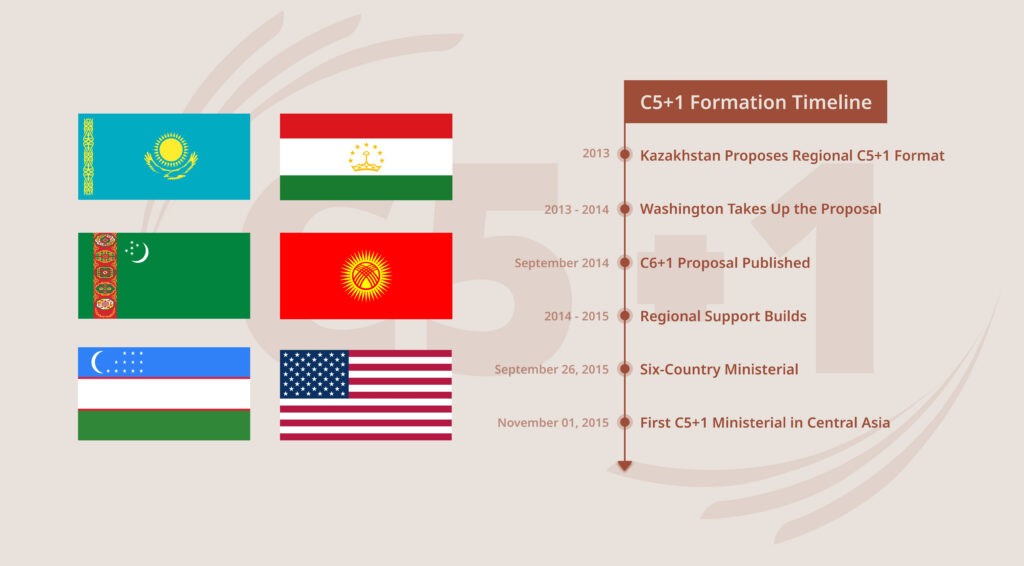
Representatives of the five Central Asian states — Kazakhstan, Uzbekistan, Kyrgyzstan, Tajikistan, and Turkmenistan — along with Azerbaijan, are expected in New York for the United Nations General Assembly in September. Historically, meetings between the Central Asian states and the United States – the C5+1 – have taken place on the sidelines of the United Nations. It is the most natural and logistically efficient venue for President Donald Trump to re-engage with the C5 partners he hosted at the White House last November. As of now, only foreign ministers are expected to attend the UNGA. But this could change if Trump extends an invitation to the leaders, according to a Central Asian diplomatic source. This time, however, he has the opportunity to add Azerbaijan, transforming the format into a C6+1. Baku has already been invited to participate as a full member in Central Asian gatherings, and Washington should build on that momentum. Azerbaijan is uniquely positioned: close to both Israel and Turkey – two of America’s most important regional partners – it sits astride one of the most important connectivity corridors linking Europe and Asia. Its inclusion would turn the C5+1 into a genuinely trans‑Caspian framework that reflects the emerging realities of Eurasian integration. The move would also link two major diplomatic achievements of Trump’s second term: the launch of the Trump Route for International Peace and Prosperity (TRIPP), a 43-km strategic transit corridor connecting mainland Azerbaijan to its Nakhchivan exclave through Armenia, and Trump’s elevation of the C5+1 to a White House-level summit. While TRIPP was discussed at the C5+1 meeting in November, bringing Azerbaijan into the next gathering would allow the administration to present itself as the architect of a new Eurasian trade and energy map. Strategically, a C6+1 format carries significant implications for great-power competition with China. This is because Central Asia is so crucial to Beijing’s grand strategy. In its recently adopted 15th five-year plan, neighborhood diplomacy is listed as the top priority — ahead of relations with major powers or developing countries. Beijing seeks to build a “community with a shared future” with 17 neighboring states, including all five in Central Asia, to “create a favorable external environment” for national rejuvenation, as Foreign Minister Wang Yi has stated. For China, Central Asia is a vital “hinterland” for energy and resource security, and a buffer against maritime disruptions. The United States does not need to dominate the Eurasian Heartland or force Central Asian states to choose between Washington and Beijing. It simply needs to ensure that any Chinese westward access runs through a vast landmass of countries that maintain constructive relations with the United States. A C6+1 format helps shape that environment without confrontation. A stable Middle Corridor – the energy and trade route running through Central Asia, across the Caspian Sea and through Azerbaijan to Turkey and the Mediterranean – also benefits America's energy-hungry allies in Asia, such as Japan and South Korea. Both increasingly look to Kazakhstan as an alternative oil supplier as they...

1 week ago