• KGS/USD = 0.01143 -0%
  • KZT/USD = 0.00193 -0%
  • TJS/USD = 0.10881 0%
  • UZS/USD = 0.00008 0%
  • TMT/USD = 0.28575 0%
  • KGS/USD = 0.01143 -0%
  • KZT/USD = 0.00193 -0%
  • TJS/USD = 0.10881 0%
  • UZS/USD = 0.00008 0%
  • TMT/USD = 0.28575 0%
  • KGS/USD = 0.01143 -0%
  • KZT/USD = 0.00193 -0%
  • TJS/USD = 0.10881 0%
  • UZS/USD = 0.00008 0%
  • TMT/USD = 0.28575 0%
  • KGS/USD = 0.01143 -0%
  • KZT/USD = 0.00193 -0%
  • TJS/USD = 0.10881 0%
  • UZS/USD = 0.00008 0%
  • TMT/USD = 0.28575 0%
  • KGS/USD = 0.01143 -0%
  • KZT/USD = 0.00193 -0%
  • TJS/USD = 0.10881 0%
  • UZS/USD = 0.00008 0%
  • TMT/USD = 0.28575 0%
  • KGS/USD = 0.01143 -0%
  • KZT/USD = 0.00193 -0%
  • TJS/USD = 0.10881 0%
  • UZS/USD = 0.00008 0%
  • TMT/USD = 0.28575 0%
  • KGS/USD = 0.01143 -0%
  • KZT/USD = 0.00193 -0%
  • TJS/USD = 0.10881 0%
  • UZS/USD = 0.00008 0%
  • TMT/USD = 0.28575 0%
  • KGS/USD = 0.01143 -0%
  • KZT/USD = 0.00193 -0%
  • TJS/USD = 0.10881 0%
  • UZS/USD = 0.00008 0%
  • TMT/USD = 0.28575 0%
21 December 2025

Our People > Javier M. Piedra

Javier M. Piedra's Avatar

Contributor

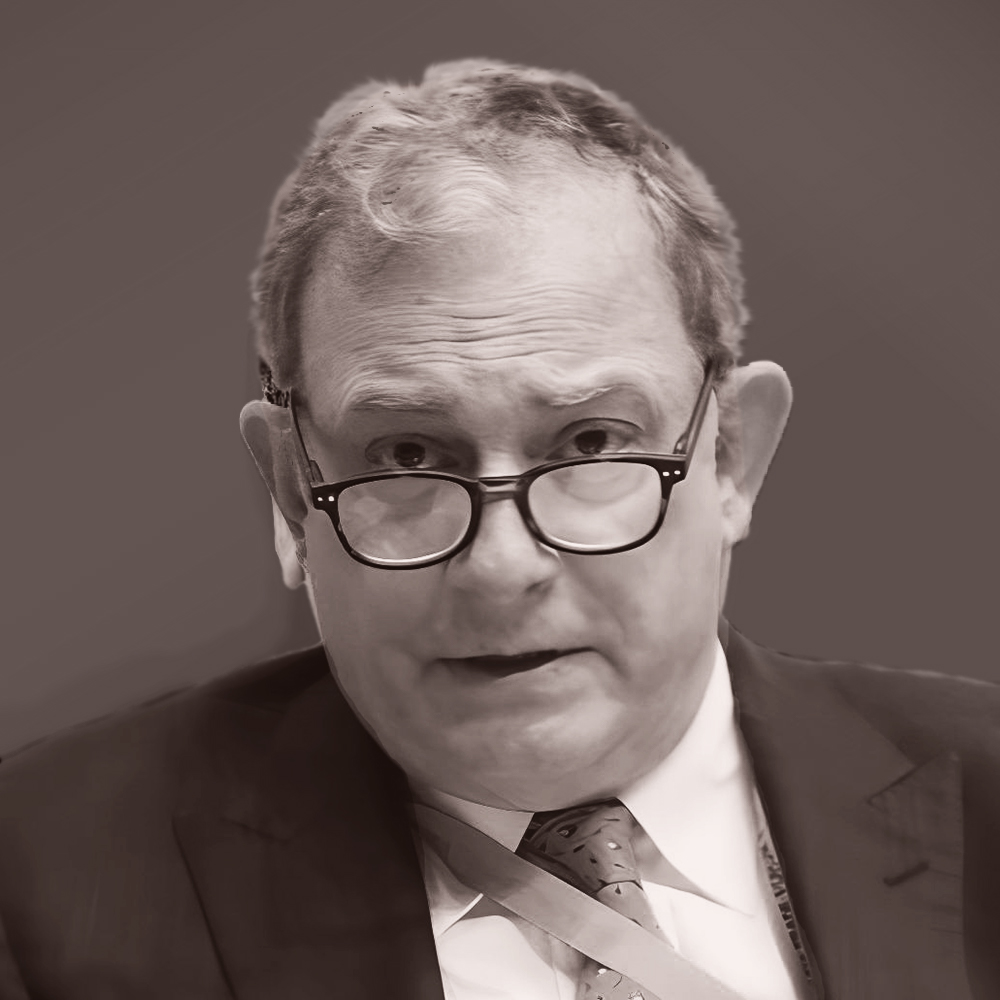
Javier M Piedra is a financial consultant with over 40 years of work experience in private and public sectors, international development, finance, marketing and advisory across multiple disciplines (corporate and retail banking, SMEs, hedge fund management, credit reporting, restructuring and sovereign and corporate risk management). He is former acting Assistant Administrator for Asia at USAID in President Trump's first administration.

Articles

Vatican, Uzbekistan United in Pursuit of Diplomacy and Peace

On 6 December 2025, Pope Leo XIV accepted the credentials of thirteen new ambassadors, among them Abat Fayzullaev of Uzbekistan, in Vatican City’s splendid, fresco-festooned Sala Clementia in the Apostolic Palace. The accreditation of Uzbekistan’s ambassador marks a further milestone in the development of Tashkent’s relations with the Holy See. Addressing the new diplomats, Pope Leo XIV asserted the primacy the Holy See accords peace and diplomacy, and its conviction that peace can take root whenever the will to embrace it exists. “Peace is not merely the absence of conflict, but an active and demanding gift, one that is built in the heart and from the heart,” the Pope stated. He called on the ambassadors and the governments they represent to renounce “pride and vindictiveness,” and to resist “the temptation to use words as weapons. This vision of peace has become all the more urgent as geopolitical tension and fragmentation continue to deepen in ways that burden nations and that strain the bonds of the human family.” Pope Leo XIV said the Vatican would continue to publicly condemn grave inequalities, human rights abuses, and systemic injustice, while it defended the dignity of the poor and vulnerable.  This assertion is consistent with the Church’s age-old social teaching and constitutes a veiled jab at the global economic system and its evident defects from the Christian perspective. In line with Central Asia’s broader interest in stability and common-good capitalism, Pope Leo told the ambassadors that “in times of global instability, the poorest and most marginalized often suffer most.” He encouraged the new ambassadors to help lay "the foundations for a more just, fraternal and peaceful world." Uzbekistan has struck a similar chord but from a different angle: “If the greatest gift given to man is life, then the greatest goal humanity has always strived for is, without a doubt, peace and harmony. That is why we always wish each other peace and tranquility, health, and well-being,” Kahramon Sariyev, Chairman of the Committee on Interethnic Relations and Compatriots Abroad of the Republic of Uzbekistan, stated. Central Asians will surely welcome the Pope’s belief that “religions and interreligious dialogue can make a fundamental contribution to fostering a climate of peace and that truly peaceful relationships cannot be built apart from truth.”  Uzbekistan's state media—along with those of other Central Asian countries—have pointed out repeatedly that genuine interfaith and interethnic dialogue is not only possible but essential for peace and stability—perhaps an indication of the impact Central Asia’s Congress of Leaders of World and Traditional Religions has had in calling for a diplomacy rooted in respect for diverse traditions and cultural mores. Tashkent’s diplomatic engagement with the Vatican—embodied in the Uzbek ambassador’s accreditation to the Holy See last week—reflects a convergence of values. The Pope’s call for dialogue over discord sets the stage for deeper Vatican cooperation with Uzbekistan and the wider Central Asian region.

2 weeks ago

Why Regional Connectivity Is Reshaping Central Asia: Insights from ISRS Director Eldor Aripov (Part Two)

The Times of Central Asia presents the second part of an interview in Washington, D.C. with Eldor Aripov, Director of the Institute for Strategic and Regional Studies under the President of Uzbekistan. Dr. Aripov sat down with our Washington Correspondent, Javier M. Piedra, to discuss Uzbekistan’s geoeconomic and geopolitical strategic thinking. The conversation focused on Uzbekistan’s and the region’s efforts to cooperate diplomatically to maintain peace and stability with neighbors, irrespective of historical “hotspots,” cultural sensitivities, or the all-important matter of water resources. Aripov comments on Afghanistan, Chabahar Port (Iran), Ferghana Valley, and business development – key for U.S. investors thinking about Uzbekistan and the broader Central Asian region. TCA: What message do you have for businesses and private investors who do not have any experience in Central Asia? Many companies are sniffing around at this time – what do you want to tell them? Aripov: Uzbekistan is ready for committed investors - those who deliver lasting benefits, quality jobs, and shared prosperity. A decade of reforms has strengthened our fiscal discipline, boosted SMEs, and anchored stability. Coupled with our focus on good relations and a secure, integrated Central Asia, we offer a reliable platform for long-term, sustainable investment. While we have more work to do, we invite you to be part of our momentum. TCA: What are the risks that companies might face when considering long-term investment? Aripov: No country is immune to downside risks – not only in the developed but developing world. Having said that, downside risks, including trade shocks, commodity price volatility, tighter external financing, and contingent liabilities from state-owned enterprises, are mostly exogenous factors driven by global conditions. Risks are mitigated through political stability, diversification of the economy, prudent macroeconomic management, and reforms to state-owned enterprises and governance. For more in-depth commentary, I refer you to recent IMF, World Bank, and Asian Development Bank assessments about our economic conditions and trends. TCA: Let me move on to more regional issues. The first Ferghana Peace Forum was held in October 2025. How can it serve as a replicable model for other regions seeking sustainable peace? Aripov: First of all, I’d like to put this important forum on everyone’s radar. I’d like to underscore that peace is possible when hard work, respect for others, and a commitment to understanding guide our actions, despite historical memories and past differences. Someone should write a case study about our ability to bring consensus into an otherwise challenging region. In any event, the inaugural Ferghana Peace Forum brought together over 300 participants from more than 20 countries — representatives of Central Asian governments, international organizations, leading think tanks, research institutions, and local communities. A joint communiqué was adopted, confirming the intention to institutionalize the Forum as a permanent platform with rotating hosts. This broad participation highlighted an important reality: the Ferghana Valley is no longer viewed as a fragile zone; it is now viewed as a model of pragmatic peacebuilding. The Forum demonstrated how regional leadership — particularly the openness and...

2 weeks ago

The New Geoeconomics of Uzbekistan: Insights from ISRS Director Eldor Aripov

The Times of Central Asia presents a two-part interview in Washington, D.C. with Eldor Aripov, Director of the Institute for Strategic and Regional Studies under the President of Uzbekistan. Dr. Aripov sat down with our Washington Correspondent, Javier M. Piedra, to discuss Uzbekistan’s strategic thinking regarding its diplomatic posture, regional integration, and relations with Central Asian and global partners. The conversation includes commentary on “Great Game” geopolitics, U.S.–Uzbekistan relations, trade, the meaning of “Uzbekistan First,” the historically explosive Ferghana Valley, and water management. Recognizing the link between investment, a stable geopolitical ecosystem, and the need to de-risk potentially conflictive issues, Aripov further sheds light on Tashkent’s practical approach to internal governance and business development. [caption id="attachment_40284" align="aligncenter" width="2360"] Central Asia on the Front Lines; image: Defense.info[/caption] TCA: “America First” refers to U.S. policies prioritizing national interests, often associated with non-interventionism, nationalism, and protectionist trade. Given Uzbekistan’s pragmatic foreign policy, can we speak of an “Uzbekistan First” policy? It is certainly not isolationist — but how is it manifested on a day-to-day basis? Aripov: What you describe as “Uzbekistan First” is, in our understanding, fundamentally about prioritizing national interests – stability and predictability for the people of Uzbekistan. Yet Uzbekistan’s uniqueness lies in the fact that our national interests are closely intertwined with those of the entire region – this means shared upsides at the transactional and strategic levels and thinking long-term. We border every Central Asian country as well as Afghanistan, and therefore any issue — security, trade, transport, or water management — directly depends on the quality of our relationships with neighbors. From his first days in office, President Shavkat Mirziyoyev — with his strategic vision and deep understanding of regional dynamics — declared that regional unity and mutual benefit stand at the core of Uzbekistan’s foreign policy. The essence of his doctrine is to resolve agreeably any historically or materially problematic issues with neighbors, remove barriers to understanding, and create predictable, stable conditions for mutually beneficial cooperation and the free movement of goods, ideas, and people. That is the true meaning of “Uzbekistan First”: not isolation, but openness, predictability, and regional consolidation. TCA: How are you realizing “Uzbekistan First” in practice? Aripov: Uzbekistan is strengthening its economy domestically and global track - putting in place the building blocks for internal sustainable development and accelerating accession to the World Trade Organization. The latter means expanding the geography and composition of exports and increasing the country’s investment attractiveness. This approach is rooted in the logic of sustainable development within the broader international context: long-term national interests are best served by Uzbekistan integrating into global value chains and markets. The results speak for themselves: in 2024, Uzbekistan’s GDP grew by 6.5%, foreign direct investment increased by more than 50% to reach $11.9 billion, and the target for 2025 is to attract $42 billion. This performance is also a tribute to our style of diplomacy, grounded in respect and having a constructive attitude towards others. Thus, “Uzbekistan First” represents a modern model...

3 weeks ago

U.S. Waiver of Sanctions on Iran’s Chabahar Port is Good News for Central Asia

U.S. sanctions on Iran’s Chabahar Port on the Gulf of Oman have been on again/off again since 2013, when the U.S. Congress passed the Iran Freedom and Counter-Proliferation Act (IFCA) to curb Iran’s regional influence and strategic capabilities through targeted economic pressure, aka sanctions. In the decade following IFCA’s passage, Washington’s sanctions on Chabahar had a negative impact on Central Asia, largely by complicating its efforts to deepen economic ties with South Asia and the Gulf. But geopolitics are shifting. Washington is increasing its involvement in Central Asia and India, and is doing the same in Afghanistan. These factors may well induce the U.S. Department of State to keep the waiver in place. Washington first waived its sanctions on Chabahar in 2018—a strategic move to support India's role in Afghanistan's post-war development and to provide a crucial trade route for that landlocked country. Six years later, India's Indian Ports Global Limited secured a 10-year deal with Iran to manage Chabahar port, in part, to offset Pakistan’s Gwadar port at the end of the China-Pakistan Economic Corridor, a mere 100 miles from Chabahar. For all the fanfare, Central Asia held little real priority in Washington in those years. Seven years later, the U.S. changed course. It announced on September 16, 2025, much to Central Asia’s surprise and concern, that “the State Department has revoked the sanctions exception issued in 2018 under the IFCA”, making individuals involved in Iran’s Chabahar port operations subject to penalties, resulting in another snag in Central Asia’s desire for a southern breakout route. And then, in a swift reversal, the U.S. restored India’s sanctions waiver some six weeks later, on October 30. Whatever might explain the sudden change, Central Asia breathed a sigh of relief, and, by all accounts, now feels confident that the waiver will be evergreened. Time will tell if this confidence is justified. The U.S. waiver enables India to work to enhance Chabahar’s infrastructure and functionality, offering Central Asian exporters a more direct and profitable trade route than those via China, Russia, or the Middle Corridor, which stretches from East Asia to Europe via Kazakhstan, the Caspian Sea, Azerbaijan, Georgia, and Türkiye. As a result, goods like minerals, cotton, and energy products can reach regional and global markets faster. Central Asian capitals are quietly reveling in Washington’s flexible realpolitik in the face of convulsive U.S.-Iranian relations and heated Indo-Pakistan tensions. Without fear of punitive measures, India can now continue its work at Chabahar.  To be sure, the waiver affirms India’s rising global presence and accelerates New Delhi’s drive into Central Asia, including Afghanistan. Washington’s decision signaled to traders, investors, and think tankers that it has no intention of spoiling India’s export ambitions and Central Asia’s desire for north-south economic integration. The waiver shows Washington’s pragmatism—and is welcomed by those who have little or no use for Washington’s penchant for foreign policy moralism. Chabahar Port complements not only the Trans-Caspian corridor—a multimodal trade route connecting Asia and Europe by linking China to Europe through Central...

3 weeks ago

Universities Join Kazakhstan’s Global Education Vision: An Interview with Minister of Education Sayasat Nurbek

At the invitation of President Trump, on November 5-6, the Presidents of the five Central Asia Republics arrived in Washington, D.C. to celebrate and sign deals on the 10th anniversary of C5+1. They were accompanied by cabinet ministers and business leaders. The Times of Central Asia presents a wide-ranging interview with Kazakhstan's Minister of Education, Sayasat Nurbek. Minister Nurbek sat down with our Washington Correspondent, Javier M. Piedra, to discuss Kazakhstan’s education strategy. The interview offers U.S. academic and technical institutions a glimpse into Minister Nurbek’s educational philosophy and his plans to advance Kazakhstan’s higher education through new partnerships with U.S. universities, AI platforms, and private sector innovators—positioning Kazakhstan as a regional educational hub. Nurbek shared his insights on his understanding of traditional values, the human person, AI’s potential and risks, critical thinking, and building mutually beneficial partnerships in the context of education. (His responses have been edited for length and flow.)   TCA: The tenth anniversary of C5+1 was a landmark event, bringing together the Presidents of all five Central Asian nations at the White House. Kazakhstan President Tokayev has tasked you with transforming Kazakhstan into a fully digital nation within three years. In the last two days, you secured six key partnerships with U.S. universities and tech firms across education, testing, mining, and engineering. Minister, with that in mind, how is Central Asia important to the United States? Nurbek: My message to American academic institutions is straightforward. Kazakhstan has a lot to offer, and we are keen on deeper engagement with the outside world. Also, the timing to deepen U.S.-Kazakhstan relations is perfect given that the world is changing. Avenues are open for new relationships and business opportunities. America and Kazakhstan can have a great future as long as we work together to achieve that future. America should not miss this moment in history; the importance of Eurasia and of Central Asia in particular. Besides the education aspects – most important to me – academic and technical partnerships can serve as platforms to maintain U.S. influence, share values, and promote ideas, benefiting both the United States and Kazakhstan as friends in a non-geopolitical sense. TCA: In our earlier conversation, you referenced Sir Halford Mackinder, the early 20th-century British academic who emphasized geography’s role in geopolitics. Can you comment on the sensitivity of mixing education and geopolitics? Nurbek: In The Geographical Pivot of History in 1904, Halford Mackinder argued that control of Eurasia’s central “Heartland,” particularly Eastern Europe and Central Asia, could secure global influence. Mackinder’s theory stressed land power’s dominance over naval power in an increasingly rail-connected world in the early 20th century. Central Asia mattered then and still does today—but why do I mention Mackinder in the context of education? President Tokayev has been clear, especially in the sphere of education, that Kazakhstan seeks great gain, not a “Great Game” – the rivalry between Great Powers for influence and control in Central Asia. In other words, the main way to produce great gains in Kazakhstan and across the...

1 month ago