• KGS/USD = 0.01144 0%
  • KZT/USD = 0.00212 0%
  • TJS/USD = 0.10803 0%
  • UZS/USD = 0.00008 0%
  • TMT/USD = 0.28571 0%
  • KGS/USD = 0.01144 0%
  • KZT/USD = 0.00212 0%
  • TJS/USD = 0.10803 0%
  • UZS/USD = 0.00008 0%
  • TMT/USD = 0.28571 0%
  • KGS/USD = 0.01144 0%
  • KZT/USD = 0.00212 0%
  • TJS/USD = 0.10803 0%
  • UZS/USD = 0.00008 0%
  • TMT/USD = 0.28571 0%
  • KGS/USD = 0.01144 0%
  • KZT/USD = 0.00212 0%
  • TJS/USD = 0.10803 0%
  • UZS/USD = 0.00008 0%
  • TMT/USD = 0.28571 0%
  • KGS/USD = 0.01144 0%
  • KZT/USD = 0.00212 0%
  • TJS/USD = 0.10803 0%
  • UZS/USD = 0.00008 0%
  • TMT/USD = 0.28571 0%
  • KGS/USD = 0.01144 0%
  • KZT/USD = 0.00212 0%
  • TJS/USD = 0.10803 0%
  • UZS/USD = 0.00008 0%
  • TMT/USD = 0.28571 0%
  • KGS/USD = 0.01144 0%
  • KZT/USD = 0.00212 0%
  • TJS/USD = 0.10803 0%
  • UZS/USD = 0.00008 0%
  • TMT/USD = 0.28571 0%
  • KGS/USD = 0.01144 0%
  • KZT/USD = 0.00212 0%
  • TJS/USD = 0.10803 0%
  • UZS/USD = 0.00008 0%
  • TMT/USD = 0.28571 0%

Our People > Javier M. Piedra

Javier M. Piedra's Avatar

Contributor

Javier M Piedra is a financial consultant with over 40 years of work experience in private and public sectors, international development, finance, marketing and advisory across multiple disciplines (corporate and retail banking, SMEs, hedge fund management, credit reporting, restructuring and sovereign and corporate risk management). He is former acting Assistant Administrator for Asia at USAID in President Trump's first administration.

Articles

Universities Join Kazakhstan’s Global Education Vision: An Interview with Minister of Education Sayasat Nurbek

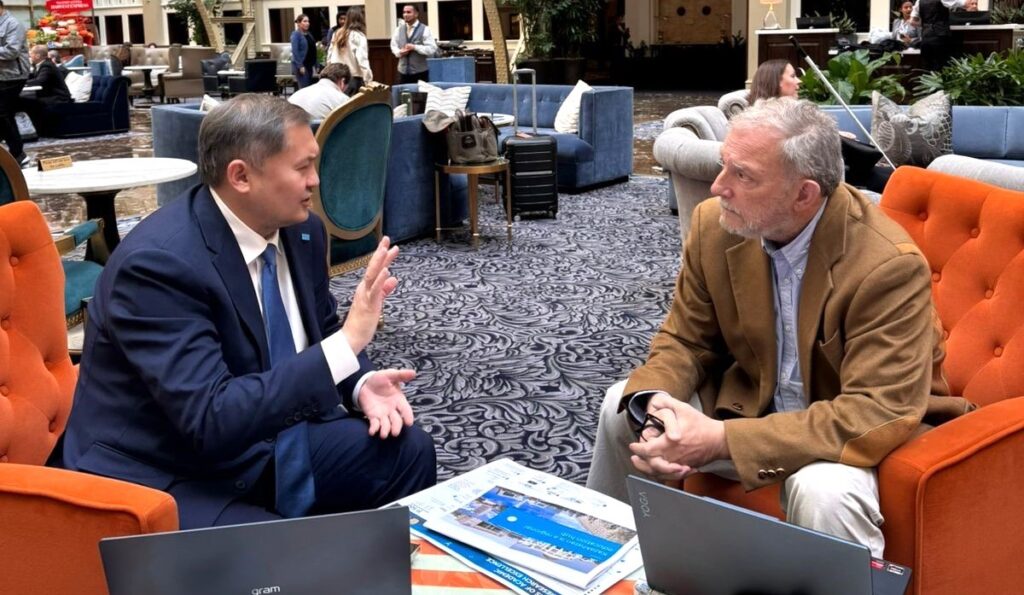
At the invitation of President Trump, on November 5-6, the Presidents of the five Central Asia Republics arrived in Washington, D.C. to celebrate and sign deals on the 10th anniversary of C5+1. They were accompanied by cabinet ministers and business leaders. The Times of Central Asia presents a wide-ranging interview with Kazakhstan's Minister of Education, Sayasat Nurbek. Minister Nurbek sat down with our Washington Correspondent, Javier M. Piedra, to discuss Kazakhstan’s education strategy. The interview offers U.S. academic and technical institutions a glimpse into Minister Nurbek’s educational philosophy and his plans to advance Kazakhstan’s higher education through new partnerships with U.S. universities, AI platforms, and private sector innovators—positioning Kazakhstan as a regional educational hub. Nurbek shared his insights on his understanding of traditional values, the human person, AI’s potential and risks, critical thinking, and building mutually beneficial partnerships in the context of education. (His responses have been edited for length and flow.)   TCA: The tenth anniversary of C5+1 was a landmark event, bringing together the Presidents of all five Central Asian nations at the White House. Kazakhstan President Tokayev has tasked you with transforming Kazakhstan into a fully digital nation within three years. In the last two days, you secured six key partnerships with U.S. universities and tech firms across education, testing, mining, and engineering. Minister, with that in mind, how is Central Asia important to the United States? Nurbek: My message to American academic institutions is straightforward. Kazakhstan has a lot to offer, and we are keen on deeper engagement with the outside world. Also, the timing to deepen U.S.-Kazakhstan relations is perfect given that the world is changing. Avenues are open for new relationships and business opportunities. America and Kazakhstan can have a great future as long as we work together to achieve that future. America should not miss this moment in history; the importance of Eurasia and of Central Asia in particular. Besides the education aspects – most important to me – academic and technical partnerships can serve as platforms to maintain U.S. influence, share values, and promote ideas, benefiting both the United States and Kazakhstan as friends in a non-geopolitical sense. TCA: In our earlier conversation, you referenced Sir Halford Mackinder, the early 20th-century British academic who emphasized geography’s role in geopolitics. Can you comment on the sensitivity of mixing education and geopolitics? Nurbek: In The Geographical Pivot of History in 1904, Halford Mackinder argued that control of Eurasia’s central “Heartland,” particularly Eastern Europe and Central Asia, could secure global influence. Mackinder’s theory stressed land power’s dominance over naval power in an increasingly rail-connected world in the early 20th century. Central Asia mattered then and still does today—but why do I mention Mackinder in the context of education? President Tokayev has been clear, especially in the sphere of education, that Kazakhstan seeks great gain, not a “Great Game” – the rivalry between Great Powers for influence and control in Central Asia. In other words, the main way to produce great gains in Kazakhstan and across the...

6 months ago

C5+1: Diplomats and Executives Define Investment Path

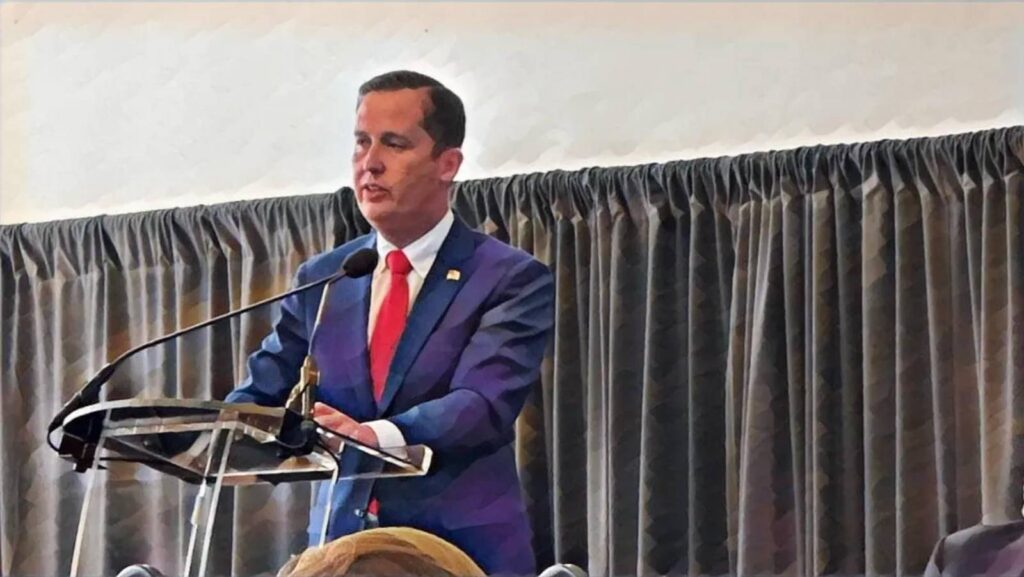
Before the historic White House meetings on November 6 between President Trump and the five Central Asian presidents, U.S. and regional diplomats and business leaders met at the Kennedy Center on the occasion of the C5+1 Business Forum, hosted by the U.S. Department of State, to launch a new chapter of cooperation, with a focus on strengthening commercial and investment ties in energy, finance, and manufacturing. Deputy Secretary of State Christopher Landau, who moderated the panel discussion, said economic engagement is returning to the center of U.S. foreign policy. “The purpose of foreign policy is to increase the prosperity of the American people by finding opportunities for mutually beneficial economic and commercial interchange,” he said. Executives from Chevron, Citi, Freedom Holding, and Uzbekistan’s UzAvtosanoat described how decades of partnership  had demonstrated the wisdom of making strategic investments in the region. These partnerships continue to reshape  the economic and financial landscape for the better.  Participants highlighted Central Asia’s economic stability, solid reserves, and consistent policies, and were confident in faster growth to be driven by increased capital flows and by regional projects like Kazakhstan’s Tengiz oil expansion. Both sides promised to translate diplomacy into dealmaking. Landau further noted that under President Trump and Secretary of State Marco Rubio, the State Department has elevated commercial diplomacy to a core mission. He stressed that mutual respect, win-win agreements, and consistent engagement are key to driving results. Central Asians have waited decades for this: action, not talk. Two-way trade and investment are now front and center. Chevron Points to Long-Term Energy Investment Chevron Corp. Chief Executive Mike Wirth said the company’s 30-year presence in Kazakhstan remains one of its largest international operations. Chevron was the first major U.S. investor to enter the country after independence and is now the biggest foreign investor. The US$ 48 billion Future Growth Project at Kazakhstan’s Tengiz oilfield, co-managed by Chevron and 50%-partner Tengizchevroil LLP, is up and running with expansion underway. “Our history is really founded on relationships and trust,” Wirth said. “The most enduring aspect of it (our work) is the respect and love that our American employees have for the culture and people of Kazakhstan.” He said more than 500 Kazakh employees have trained in Chevron operations worldwide, many of whom now hold senior roles in government and industry. Citi Expands Access to Global Capital Citi’s Managing Director Stephanie von Friedeburg outlined the bank’s activities in Central Asia, where it began operations more than three decades ago. Citi now serves about 800 corporate clients across the region, supporting private companies, governments and state-owned enterprises with strategic planning, capital issuance, and risk management services. The bank has arranged Eurobond sales for the Kyrgyz Republic and Tajikistan and handled more than US$40 billion in fundraising for Kazakhstan since 2014. In Uzbekistan, Citi has supported 19 capital-market transactions and advised the government on improving its credit rating. “We help countries understand how rating agencies look at them (and) how to improve their ratings,” von Friedeburg said. “That allows them...

7 months ago

Daines, Gor, Meredov Launch C5+1 Talks on Next-Gen U.S.–Central Asia Ties

Washington, D.C. — The United States and the five nations of Central Asia – Kazakhstan, Kyrgyzstan, Tajikistan, Turkmenistan and Uzbekistan – marked a decade of partnership on Thursday with an opening panel at the C5+1 Tenth Anniversary Business Conference hosted by the U.S. Department of State. U.S. Senator Steve Daines (Montana), Sergio Gor, the newly appointed U.S. Special Envoy for South and Central Asia and Ambassador to India and Rashid Meredov, Turkmenistan’s Foreign Minister kicked things off with a bold forward-looking vision centered on deeper economic cooperation, net two-way investment flows, and a bolstered U.S. commitment to the region. Held at the Kennedy Center’s REACH campus, the session brought together senior U.S. officials, and Central Asian leaders and private sector companies to deepen a decade of growing cooperation, building on Trump’s transactional approach and first term achievements. Celebrating a Decade of Cooperation U.S. Senator Steve Daines, who moderated the session, not only praised the C5+1 platform’s record of achievements since 2015 but went further. He called the anniversary “a momentous occasion for our nations” to move forward in friendship and a sense of pragmatism, anchored in growing commerce, new investments, cultural exchange, and security cooperation. Daines emphasized that relations with the C5 countries are “vitally important for our national security and prosperity,” adding that the event aimed to pave the way for stronger, results-driven partnerships. Turning to the next speaker, Ambassador Sergio Gor, Daines offered unusually personal remarks, describing him as “truly one of the closest confidants of President Trump.” He noted that “Mr. Gor’s nomination demonstrates President Trump and his administration’s commitment to fostering closer ties between all of our nations.” Daines expressed eagerness to work with  “Sergio and the rest of President Trump’s team” to build upon the successes of previous US-Central Asian relations. U.S. Envoy Stresses Renewed Engagement In his address, Ambassador Sergio Gor,  underscored the administration’s renewed commitment to the region. He recounted that he and Deputy Secretary of State Christopher Landau had visited Kazakhstan and Uzbekistan just last week, praising the hospitality and partnership shown by both governments. Gor extended his appreciation to Kazakhstan, which he noted had “recently become a sponsor of the Kennedy Center,” and thanked Ambassador Richard Grenell for hosting the forum. Gor emphasized that “this President is making this partnership a top priority,” adding that the focus on the five Central Asian nations “is something that has been ignored in past administrations.” According to Gor, President Trump “has made a commitment and has instructed every individual here within the U.S. government to make sure [Central Asia] gets the priority that it deserves.” He emphasized the need to ramp up energy cooperation, open new trade avenues, and secure supply chains for critical minerals. “We are committed to further developing Central Asia’s vast mineral wealth and advancing critical-mineral security,” Gor underscoring C5+1’s shift from dialogue to deliverables and mutual cooperation. He also previewed the White House leaders’ meeting and dinner scheduled for later in the day, noting that several “historic deals” in commerce...

7 months ago

Washington and Tashkent Push for More Trade and Investment

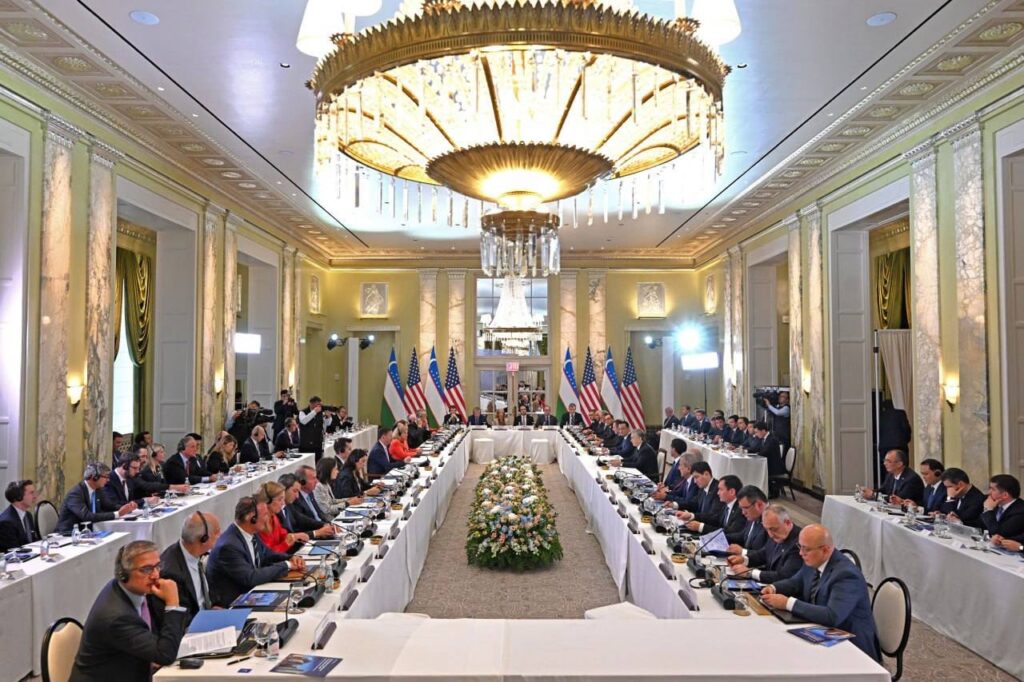
Speaking at the United Nations in New York on September 23, President Mirziyoyev of Uzbekistan made it clear that he no longer adheres to his predecessors’ post-Soviet policies of isolation and ‘go-it-alone’ economic development strategy - those days are over. Uzbekistan today - or so the evidence suggests - is more open for business than at any time in its history, with the caveat that deals must be win-win, strategic, fair, and reciprocal. Though it’s unclear what that precisely entails, both Washington and Tashkent are clearly working to accelerate capital and trade flows. “[Our] top-priority goal”, Mirziyoyev said at the United Nations, “is to fundamentally transform the lives of each and every family and citizen in our country, to enhance human dignity and wellbeing.” These are not mere words, but stand at the core of Uzbekistan’s efforts to build a new nation on the back of its - until recently - entirely archaic Soviet era socio-economic institutional structures and often ossified old ways of thinking. With this in mind, the main event of Mirziyoyev’s recent New York visit - besides his meeting with President Trump - was the high-level US-Uzbekistan investment roundtable with senior executives of major U.S. corporations and financial institutions. The roundtable was more than just symbolic. Its strong turnout underscored both the U.S. and Uzbek commitment to advancing joint initiatives in key sectors, including strategic minerals, transport infrastructure, energy, and smart agriculture.  Top executives from Boeing, Citigroup, BNY Mellon, NASDAQ, Nvidia, Mastercard, Visa, General Motors, Jefferies, Oppenheimer, Cleveland Clinic, Cargill, and other U.S. corporations descended on the meetings in force, clearly eager to court the president and his team. [caption id="attachment_37146" align="aligncenter" width="1280"] Image: president.uz[/caption] At their face-to-face meeting, President Trump personally congratulated Mirziyoyev on the landmark $8 billion Boeing-Uzbekistan Airways deal, projected to generate over 35,000 U.S. jobs – that in itself is not news. Rather, the NY business roundtable appears to have signaled that the American business community is more than just sniffing around for deals. Undoubtedly, a key force behind this growing interest is Washington’s expanding engagement with Uzbekistan. Highlighting Washington’s strategic swing towards Uzbekistan, Mirziyoyev, Sergio Gor, U.S. Special Envoy for South and Central Asian Affairs, and William Kimmitt, Under Secretary of Commerce for International Trade, attended the signing ceremony of bilateral agreements, which ranged from transport, logistics and AI to mining, healthcare, and financial services. Their presence helped move discussions from initial interest to serious dealmaking. To dispel investor uncertainty related to sovereign risk and other hidden booby traps often embedded in cross-border investment agreements, Mirziyoyev declared: “I assure you, I personally guarantee the success of U.S. companies operating in Uzbekistan. At the Ministry of Investments, a dedicated Deputy Minister for U.S. Affairs has been appointed. He will accompany you 24/7.” While this makes plain Uzbekistan’s shift from aid recipient to active economic player, it’s also an attempt to shore up “investor butterflies” who are wary of corruption and shaky legal remedies in the event of contract disputes. Moreover, recognizing that companies...

8 months ago

Tokayev Sides with Trump in Criticism of UN After Escalator, Teleprompter, and Audio Failures

As reported by ULYS Media, Kazakhstan’s President Kassym-Jomart Tokayev publicly aligned with President Trump’s criticism of the United Nations after the poorly managed 80th-anniversary UNGA session. Tokayev, who was present in the hall during Trump’s speech when the failures occurred, lent particular weight to his comments given his long-standing institutional knowledge of the UN, having served as Director-General of the United Nations Office at Geneva (2011–2013) and representing Kazakhstan in various UN forums over his three decades of diplomatic service. During his address to the General Assembly, President Trump recounted a series of technical incidents: an escalator carrying him and First Lady Melania stalled abruptly, nearly causing a fall; his teleprompter failed at the start of his speech, forcing him to improvise—a skill for which he is well known; and the sound system cut out, leaving much of the audience unable to hear him without interpreter earpieces. He condemned the breakdowns as symbolic of broader UN dysfunction, calling them “a REAL DISGRACE” and alleging “triple sabotage.” Trump urged a Secret Service investigation and preservation of security footage. As reported in ULYS Media, Tokayev said: “I consider the incident that occurred at the UN exceptionally dangerous, an event that could have harmed the health of the President and his spouse. The decision to investigate has already been made and is correct.” He went on: “On the other hand, this is the most serious failure, one might even say a collapse, of the UN Secretariat, all employees of the relevant services and departments. To allow such a blunder during the anniversary session of the UN General Assembly is beyond negligence, unless, of course, it is a deliberate sabotage, which is also quite possible given the negative and even depressive sentiments among UN staff.” Tokayev sharpened his critique further, describing the United Nations as suffering a “serious decline” in political effectiveness and managerial competence. He highlighted weakened public trust in the organization’s leadership, an ever more paralyzed Security Council incapable of addressing pressing issues, and an internal culture marked by indifference, fatigue, and low morale—even within the higher decision-making bodies. Tokayev and Trump converge in their sharp criticism of the United Nations, pointing to mismanagement within the Secretariat, the erosion of credibility among its leaders, and the paralysis of the Security Council. Tokayev has even echoed Trump’s remarks approvingly, recognizing their shared view that the organization has drifted into inefficiency and neglect. At the same time, he underscores the urgency of bold reforms to restore the UN’s effectiveness and authority, reinforcing the common ground both leaders have staked out in calling for change. Trump would have welcomed Tokayev’s additional words: “Several of my colleagues have expressed to me an accurate opinion: even the material condition of the UN’s main building [in New York], the common home of humanity, is in a state of decline. And it is hard to argue with President Trump here; he openly spoke about the mismanagement and indifference of the leaders of this global organization.” Tokayev concluded by reiterating...

8 months ago