• KGS/USD = 0.01144 0%
  • KZT/USD = 0.00210 0%
  • TJS/USD = 0.10554 -0.09%
  • UZS/USD = 0.00008 0%
  • TMT/USD = 0.28530 0%
  • KGS/USD = 0.01144 0%
  • KZT/USD = 0.00210 0%
  • TJS/USD = 0.10554 -0.09%
  • UZS/USD = 0.00008 0%
  • TMT/USD = 0.28530 0%
  • KGS/USD = 0.01144 0%
  • KZT/USD = 0.00210 0%
  • TJS/USD = 0.10554 -0.09%
  • UZS/USD = 0.00008 0%
  • TMT/USD = 0.28530 0%
  • KGS/USD = 0.01144 0%
  • KZT/USD = 0.00210 0%
  • TJS/USD = 0.10554 -0.09%
  • UZS/USD = 0.00008 0%
  • TMT/USD = 0.28530 0%
  • KGS/USD = 0.01144 0%
  • KZT/USD = 0.00210 0%
  • TJS/USD = 0.10554 -0.09%
  • UZS/USD = 0.00008 0%
  • TMT/USD = 0.28530 0%
  • KGS/USD = 0.01144 0%
  • KZT/USD = 0.00210 0%
  • TJS/USD = 0.10554 -0.09%
  • UZS/USD = 0.00008 0%
  • TMT/USD = 0.28530 0%
  • KGS/USD = 0.01144 0%
  • KZT/USD = 0.00210 0%
  • TJS/USD = 0.10554 -0.09%
  • UZS/USD = 0.00008 0%
  • TMT/USD = 0.28530 0%
  • KGS/USD = 0.01144 0%
  • KZT/USD = 0.00210 0%
  • TJS/USD = 0.10554 -0.09%
  • UZS/USD = 0.00008 0%
  • TMT/USD = 0.28530 0%

Our People > Sadokat Jalolova

Sadokat Jalolova's Avatar

Sadokat Jalolova

Journalist

Jalolova has worked as a reporter for some time in local newspapers and websites in Uzbekistan, and has enriched her knowledge in the field of journalism through courses at the University of Michigan, Johns Hopkins University, and the University of Amsterdam on the Coursera platform.

Articles

Migrants in the Crossfire: Russia’s Recruitment for Ukraine War Sparks Tensions

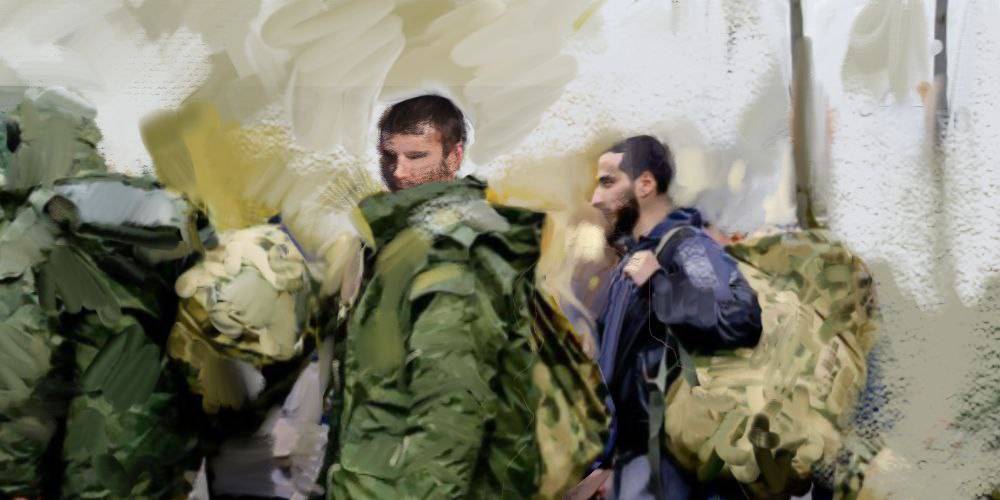
Russia’s ongoing “special military operation” in Ukraine has increased the demand for additional forces, and, in response, Russia is increasingly viewing the use of migrants as a good solution to the situation. As of September 1, 2024, official figures state that 3,985,000 citizens of Central Asian countries lived in Russia. Uzbekistan leads the way with over 1,792,000 migrants, followed by Tajikistan with more than 1,231,000, Kazakhstan with 606,900, Kyrgyzstan with 262,800, and Turkmenistan with 92,000. Some Central Asian migrants have signed contracts with the Russian Ministry of Defense to participate in the war, motivated mainly by financial incentives. However, economic reasons are not the only factor driving them to war. People from Central Asian countries who have received citizenship are also being threatened with imprisonment for failing to join the war effort. TCA has previously reported on efforts by officials to recruit young men detained at the Sakharovo immigration processing center to join the Russian army and fight in Ukraine. In addition, a decree issued by Vladimir Putin has simplified the process for foreigners who join the military to gain Russian citizenship. In contrast, Central Asian governments have looked to discourage their citizens from engaging in the conflict. For example, Uzbekistan has warned that any citizen involved in the Russia-Ukraine war will face legal consequences. In October 2023, an Uzbek citizen who fought in Ukraine for financial reasons was sentenced to three years in prison by a Uzbek court. The defendant had returned to Uzbekistan after being wounded in the conflict, and authorities discovered military documents and proof of his Russian citizenship during their investigation. By September 2024, a growing number of Central Asians had perished in the war, including 47 Uzbeks, 51 Tajiks, and 26 Kyrgyz nationals. In Kazakhstan, since 2014, following the start of the war in the Donetsk and Luhansk regions, criminal liability was been introduced for citizens who participate in armed conflicts abroad. A person who commits such an offense can be punished with imprisonment for up to 12 years, face the confiscation of property, and be deprived of their citizenship. For example, in November of last year, a 34-year-old man from Kazakhstan was imprisoned for six years and eight months for participating in the war in Ukraine. Kyrgyzstan and Tajikistan have also applied measures involving the deprivation of liberty their citizens who participate in the war. Tajikistan’s economy significantly depends on remittances from labor migrants in Russia, which account for approximately one-third of its GDP. Despite the war in Ukraine, over 1.7 million Tajik citizens sought work in Russia in the first half of 2022. However, reports indicate that many Tajik migrants are being sent to Ukraine against their will, raising concerns. The situation further deteriorated after a terrorist attack at Crocus City Hall in February 2024. Tajik nationals were among the primary suspects, leading to a shift in Russia’s attitude towards Central Asian migrants. Tajikistan’s Foreign Minister, Sirojiddin Muhriddin, expressed concerns over the violations of Tajik citizens’ rights in some CIS countries, calling for a...

1 year ago

Tajik Opposition Calls for Global Action Against Rahmon Regime’s Human Rights Violations

According to Azda TV, the Tajik opposition movement “Reform and Development of Tajikistan” has appealed to the governments of the USA, Canada, the United Kingdom, Norway, and countries of the EU, to support efforts for peaceful and constructive dialogue between the Tajik opposition and President Emomali Rahmon’s government. The movement called the global community to help resolve the crisis in Tajikistan, where Rahmon’s regime targets political opposition, civil society, and independent media. They highlighted human rights violations, including extrajudicial killings, arbitrary arrests, and the persecution of journalists, activists, and lawyers. Sharofiddin Gadoev, the movement’s leader, called for key goals, such as freeing political prisoners, ending the repression of journalists and activists, ensuring free speech, and having an independent press. He also called for laws in Tajikistan to meet international human rights standards and for free, fair elections involving all political groups. In this regard, the movement “Reform and Development of Tajikistan” called on the international community for “coordinated actions to protect human rights and support democratic processes in Tajikistan, as well as to strengthen political pressure on Emomali Rahmon.” The movement has said: “Tajikistan is a country with a young population. For this generation, the absence of democratic alternatives and opportunities leads to the risk of radicalization. This vacuum of democratic choice can be used by extremist groups, which threatens not only Tajikistan but all of Central Asia. The country may be on the verge of destabilization in the ongoing crisis and the lack of effective reforms. This will create a stream of refugees and strengthen extremist movements, which will become a serious challenge in the field of security.” The movement is calling on the International Criminal Court to investigate Rahmon’s regime of serious crimes like torture and disappearances. They have asked for help before, urging the release of political prisoners and an end to repression, but so far, the Tajik government has ignored these calls, and human rights abuses continue.

1 year ago

Uzbekistan Rejects Military Alliances and Maintains Observer Role in EAEU

At the opening of the Week of International Partnership Initiatives in Tashkent, the first deputy speaker of the Legislative Chamber of the Oliy Majlis, Akmal Saidov, stated that Uzbekistan will not join any military formations and will remain an observer state in the Eurasian Economic Union (EAEU). Responding to a question on whether Uzbekistan would compromise its sovereignty to cooperate more closely with other countries, Saidov announced: “The first article of our constitution states that Uzbekistan is a sovereign state. If we are talking about joining any paramilitary defense structures and organizations, then no, we will not allow it. We will never send our men [overseas] on military missions, including peacekeeping missions. There will be no foreign military bases in our territory." Saidov also emphasized that Uzbekistan’s current status as an observer in the EAEU is the most appropriate for the country. As head of the parliamentary commission tasked with studying Uzbekistan’s potential accession to the EAEU, Saidov asserted that, after reviewing over a thousand documents, observer status better aligns with Uzbekistan’s interests. He further explained that Kazakhstan had gained minimal benefit from joining the EAEU and that the new Constitution strengthens and strictly follows the main principles of Uzbekistan’s foreign policy. Uzbekistan received observer status in the EAEU on December 11, 2020, during an online summit of the High Eurasian Economic Council, attended by President Shavkat Mirziyoyev.

1 year ago

Uzbekistan Hosts IV Tashkent Anti-Corruption Forum

On October 17, 2024, Uzbekistan hosted the IV Tashkent Anti-Corruption Forum, gathering over 250 participants, including officials, international experts, and representatives from civil society. The event was organized by Uzbekistan's Anti-Corruption Agency and partners including the European Union, GIZ (German International Cooperation), and the United Nations Development Programme (UNDP). The forum highlighted Uzbekistan’s progress in fighting corruption and improving its position in key international rankings, such as Transparency International’s Corruption Perceptions Index. Uzbekistan’s successful completion of the OECD’s 2023 anti-corruption evaluation, scoring over 86 points, making it the highest ranked country in Central Asia, was also praised. Key achievements include implementing a national anti-corruption program, creating a long-term strategy for 2030, and actively involving civil society in the fight against corruption. At the forum, a major milestone was the signing of an agreement between Uzbekistan’s Anti-Corruption Agency and the World Bank’s Integrity Vice Presidency to work together on training, projects, and research to combat corruption. The forum also featured discussions on using new technologies to prevent corruption, building a culture to resolve social conflicts, and addressing conflicts of interest through compliance systems.

1 year ago

Decrease Expected in Central Asia’s Economic Growth

According to the World Bank, economic growth in Europe and Central Asia (ECA) is expected to slow to 3.3% this year, down from 3.5% in 2023. This is much lower than the average growth of 4.1% seen between 2000 and 2019, and is not enough for many of the region's middle-income countries to become high-income. Growth in the region has mainly been driven by an increase in people's spending, rising wages, and government policies, while demand from outside the area, especially from the EU, remains weak. Although the average yearly inflation rate had dropped to 3.6% by August 2024, from 4.6% at the end of last year, it is still higher than the 2.7% average seen in 2018-2019. Prices of goods have grown more slowly in most countries, but prices for services remain high because of rising labor costs. Some central banks have lowered interest rates as inflation has slowed, but are cautious. Government spending has not been reduced in most of the region's countries and indeed, has dramatically increased, especially on public wages, pensions, social benefits, and defense. The economies of Central Asia are expected to grow by 4.3% in 2024; slower than the 5.6% growth seen last year. In Kazakhstan, growth is predicted to slow to 3.4%, down from 5.1% in 2023, mainly because the expansion of the Tengiz oil field is taking longer, and the government is spending less. For other Central Asian countries, growth estimates have been raised by an average of nearly one percentage due to increased consumer spending, more government spending, and ongoing support from money sent home by workers in Russia and trade with Russia. However, despite these improvements, the growth per capita GDP (the average income per person) in Central Asia is only expected to be 2.7% this year, making it the slowest in the region, apart fromTurkey. The Central Asian sub region, with growth expected at 5%, will outpace all other sub regions in 2025. This is driven primarily by renewed strong growth in Kazakhstan amid rising oil production. However, growth in the rest of Central Asia is projected to slow as trading and remittance flows from Russia normalize. The lowest median consumer price growth rate was recorded in the South Caucasus, at 1.5% year-on-year in August 2024. In contrast, Central Asia had the highest median consumer price inflation rate, at 6.1%. This rate reflects 10% inflation in Uzbekistan, driven by removing energy subsidies in May 2024.

1 year ago