• KGS/USD = 0.01144 0%
  • KZT/USD = 0.00216 0%
  • TJS/USD = 0.10718 0.28%
  • UZS/USD = 0.00008 0%
  • TMT/USD = 0.28530 0%
  • KGS/USD = 0.01144 0%
  • KZT/USD = 0.00216 0%
  • TJS/USD = 0.10718 0.28%
  • UZS/USD = 0.00008 0%
  • TMT/USD = 0.28530 0%
  • KGS/USD = 0.01144 0%
  • KZT/USD = 0.00216 0%
  • TJS/USD = 0.10718 0.28%
  • UZS/USD = 0.00008 0%
  • TMT/USD = 0.28530 0%
  • KGS/USD = 0.01144 0%
  • KZT/USD = 0.00216 0%
  • TJS/USD = 0.10718 0.28%
  • UZS/USD = 0.00008 0%
  • TMT/USD = 0.28530 0%
  • KGS/USD = 0.01144 0%
  • KZT/USD = 0.00216 0%
  • TJS/USD = 0.10718 0.28%
  • UZS/USD = 0.00008 0%
  • TMT/USD = 0.28530 0%
  • KGS/USD = 0.01144 0%
  • KZT/USD = 0.00216 0%
  • TJS/USD = 0.10718 0.28%
  • UZS/USD = 0.00008 0%
  • TMT/USD = 0.28530 0%
  • KGS/USD = 0.01144 0%
  • KZT/USD = 0.00216 0%
  • TJS/USD = 0.10718 0.28%
  • UZS/USD = 0.00008 0%
  • TMT/USD = 0.28530 0%
  • KGS/USD = 0.01144 0%
  • KZT/USD = 0.00216 0%
  • TJS/USD = 0.10718 0.28%
  • UZS/USD = 0.00008 0%
  • TMT/USD = 0.28530 0%

Our People > Sadokat Jalolova

Sadokat Jalolova's Avatar

Sadokat Jalolova

Journalist

Jalolova has worked as a reporter for some time in local newspapers and websites in Uzbekistan, and has enriched her knowledge in the field of journalism through courses at the University of Michigan, Johns Hopkins University, and the University of Amsterdam on the Coursera platform.

Articles

Five Uzbeks and One Tajik Escape Russian Penal Colony

On the morning of October 26, news broke that six prisoners had escaped from a penal colony in Russia’s Lipetsk region. The escapees—five from Uzbekistan and one from Tajikistan—had been planning their escape for over six months. They stole tools seven months prior and used them to dig two tunnels. The Lipetsk prison is where the infamous Aleksey Sherstobitov is serving a 23-year sentence. Sherstobitov, known as 'Lyosha the Soldier', was a notorious hitman in the 1990s, working for the infamous Orekhovskaya crime group. Law enforcement has detained five of the six prisoners, who escaped through a dug tunnel. The prisoners, all convicted of rape and drug trafficking, had planned to reach the Kazakhstan border but only managed to travel a few dozen kilometers toward Tambov and Moscow. The search for the remaining escapee is ongoing. A criminal case has been opened for negligence against the colony officials who allowed the prisoners to escape. If found guilty they could face up to seven years in prison under Article 293 of the Russian Criminal Code.

2 years ago

Uzbekistan President’s Party Wins Landmark Election Held Under New Voting System

On October 27, Uzbekistan held elections for deputies of the Legislative Chamber of the Oliy Majlis (Lower House of Parliament) and local councils. This marks the first time these elections were conducted using a mixed (majority-proportional) system and featured electronic voting. For over a month, parties actively promoted their election programs to the public, with televised debates and messages on public transport urging citizens to participate in the elections and shape the country’s future. As required by law, all campaign activities were halted one day before the election. The electoral platforms of the five parties registered in Uzbekistan saw The Liberal Democratic Party of Uzbekistan (UzLiDeP) emphasize poverty reduction and promoting internal labor migration over the next five years. The party also campaigned on expanding public-private partnerships in water management, ecology, and energy to increase the private sector's share in the economy to 85%. Additionally, UzLiDeP pledged to improve education, healthcare, and social services, focusing on providing clean drinking water and sewage systems in schools. The party pledged to double the annual budget for healthcare to $6 billion, and advocated to enhance healthcare and social support for citizens over the age of 70. The People’s Democratic Party (PDP) focused on accessibility and social support, including assistive technologies at public transportation points for people with disabilities. They proposed adopting a “Social Housing” law, requiring luxury housing developers to allocate funds for social housing. This would benefit vulnerable groups, such as the homeless, people with disabilities, and those coming through the orphanage system. The party’s environmental initiatives included the Water Code and creating “Health Parks” for seniors near apartment complexes. The Milli Tiklanish (National Revival) Party’s platform spanned various topics, including youth development, cultural enrichment, family support, economic growth, and tourism. One key pledge emphasized Uzbekistan’s international relations, focusing on friendly ties with neighboring countries, cooperation, and maintaining peace - this despite party leader, Alisher Qodirov's anti-Russian rhetoric, including recent comments that “it would be better for [Russia] to deal with their own affairs [which are] full of problems than to deal with our internal issues." Qodirov has been actively responding to international discussions about Uzbekistan, reinforcing the party’s commitment to advancing national interests and strengthening Uzbekistan’s presence on the world stage. The Adolat (Justice) Social Democratic Party ran on a platform of advocating for media freedom, proposing reforms to safeguard journalists’ rights and prevent interference. Adolat pledged to introduce a “Presumption of Property Rights” to protect ownership and put forward affordable energy and price stability initiatives. The Ecology Party’s motto, “We are responsible for the future!” set out to drive home its focus on environmental and social issues. The party promoted government, business, and civil society efforts to address environmental challenges, whilst seeking to improve environmental legislation and education, and transitioning Uzbekistan toward a green economy. [caption id="attachment_24929" align="aligncenter" width="2560"] @TCA[/caption] According to Uzbek legislation, the election would be deemed valid once 33% of voters participated, and by 1pm local time 47.62% of voters had cast their ballots. President Shavkat Mirziyoyev and...

2 years ago

Two Lost Silk Road Cities Unearthed in Uzbekistan

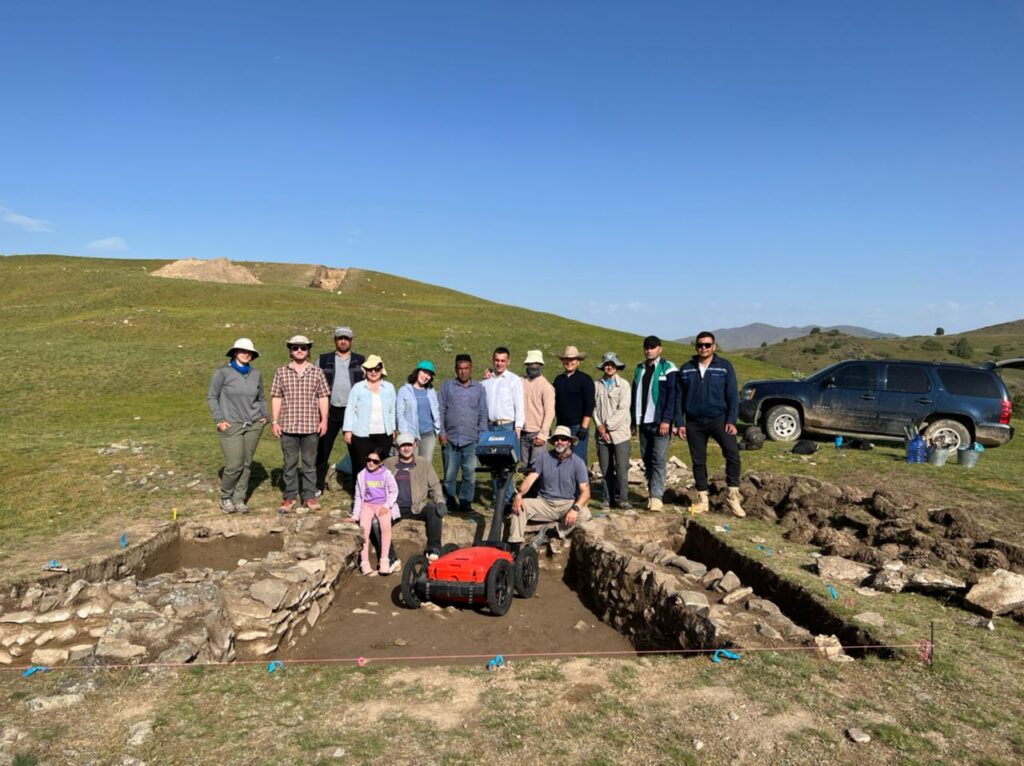
Aided by laser-based technology, archaeologists in south-east Uzbekistan, have discovered two lost cities that once thrived along the Silk Road from the 6th to 11th centuries AD. As reported  by Reuters, one was a center for the metal industry, and the other, indicates early Islamic influence. Located some five kilometers apart, these early fortified outposts are among the largest found on the mountainous sections of the Silk Road. “These cities were completely unknown. We are now working through historical sources to find possible undiscovered places that match our findings,” said archaeologist and lead author of the report, Michael Frachetti of Washington University in Saint Louis. The researchers state that the most expansive of the two, Tugunbulak, covered about 300 acres (120 hectares) and in existence from around 550 to 1000 AD, boasted a population of tens of thousands. As such, it was one of the largest cities of its time in Central Asia, rivaling even the famed trade hub Samarkand, situated about 110 km away, and according to Frachetti,  many times larger and more enigmatic than other highland castles or settlements that have been documented in high-elevation Central Asia." The other city, Tashbulak, inhabited from around 730-750 to 1030-1050 AD, was only a tenth the size of its neighbor, with a population perhaps in the thousands. After discovering the first signs of the cities' existence, archaeologists employed drone-based lidar -  a technology that floods the landscape with lasers to measure the topography - to map and establish the size and layout of the sites. Findings revealed highly defined structures, plazas, fortifications, roads, homes, and other urban features. An initial dig at one of Tugunbulak’s buildings, fortified with thick earthen walls, uncovered kilns and furnaces, suggesting it was a factory wherein, metalsmiths turned local iron ore into steel. During the 9th and 10th centuries, the region was known for its steel production and researchers are now analyzing slag found on-site to confirm their hypothesis that in addition to trade in livestock and related products such as wool, the metal industry may have been a central feature of Tugunbulak’s economy. According to Franchetti, “Tugunbulak, in particular, complicates much of the historical understanding of the early medieval political economy of the Silk Routes, placing both political power and industrial production far outside the regional ‘breadbaskets’ such as Samarkand." As stated in the report, Tashbulak lacked the industrial scale of Tugunbulak but boasted an interesting cultural feature: a large cemetery that reflects the early spread of Islam in the region. Its 400 graves—for men, women, and children—include some of the oldest Muslim burials documented in the area.“The cemetery is mismatched to the small size of the town," said Frachetti. "There's definitely something ideologically oriented around Tashbulak that has people being buried there." Tugunbulak and Tashbulak are especially remarkable given their altitude, which is roughly comparable to that of the later Inca citadel of Machu Picchu in Peru, and as noted by Frachetti, “The key finding of this study is the existence of large, fortified, and...

2 years ago

Afghanistan to Boost Oil Production in the Amu Darya Basin

Afghanistan plans to launch 25 new oil wells in the Amu Darya basin, increasing daily oil production to 3,000 tons. Hamdullah Fitrat, the deputy spokesman of the Islamic Emirate of Afghanistan, shared that there are currently 24 active wells in this field, from which 1,300 tons of oil are extracted daily. According to Fitrat: "The Ministry of Mines and Petroleum plans to activate 25 more wells by the end of this year, of which 18 will be newly drilled, two will be exploratory wells, and five will be rehabilitated.” Economic experts stress that officials should carefully plan new well drilling and attract investors to process the extracted oil. Economic expert Abdul Zahoor Madaber stated that Afghanistan has abundant natural resources but lacks modern machinery to process them, and cooperation with other countries is needed to import this equipment. Mohammad Asif Stanekzai, another economic expert, added: “The production and processing of natural resources can create job opportunities and have a positive impact on reducing inflation in Afghanistan.” According to the Ministry of Mines and Petroleum, only 10% of Afghanistan’s oil needs are currently met from domestic production. The Amu Darya is a vital river for Central Asian countries. While 72-73% of its water originates in Tajikistan, the majority is used by neighboring countries. In April of this year, the countries of Central Asia distributed Amu Darya and Syrdarya water for the summer of 2024. Under the agreed quota, the draw on water from the Amu Darya watershed will be 56 billion cubic meters for the year, with about 40 billion cubic meters used in the April-to-October growing season. As stated in the Interstate Commission for Water Coordination (ICWC) agreement, Uzbekistan will receive 16 billion cubic meters, Turkmenistan will receive 15.5 billion cubic meters, and Tajikistan will receive 6.9 billion cubic meters. The ICWC claims that the total number of irrigated lands in Central Asian countries is 4.3 million hectares in Uzbekistan, 2.5 million hectares in Kazakhstan, 1.9 million hectares in Turkmenistan, 1 million hectares in Kyrgyzstan, and 680,000 hectares in Tajikistan.

2 years ago

Rogun HPP Faces Criticism for Violating World Bank Standards

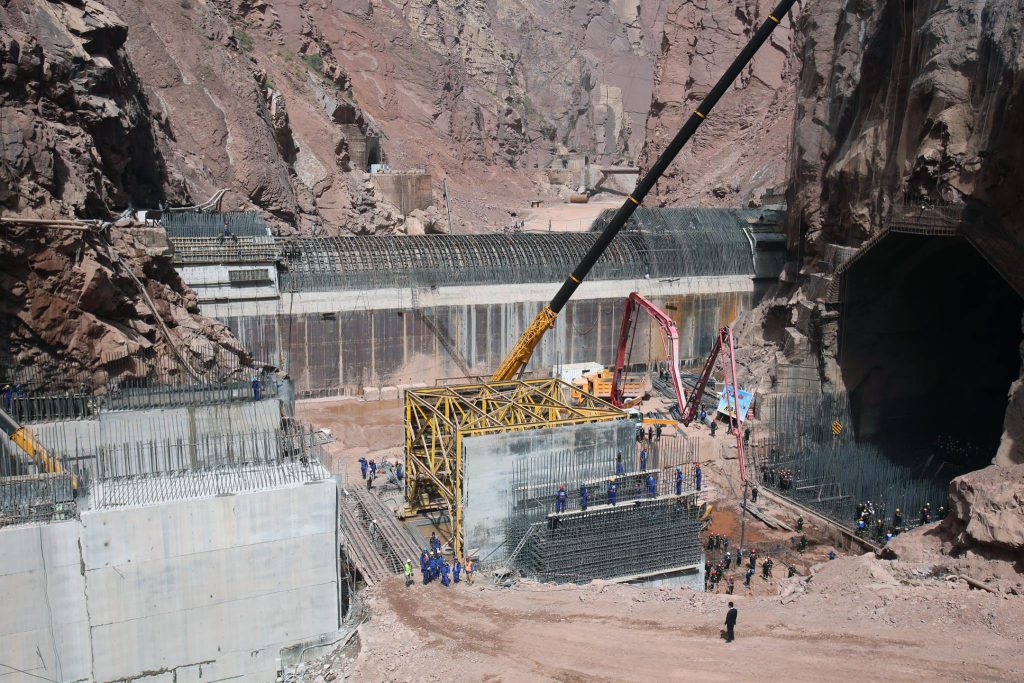
The international environmental coalition Rivers without Boundaries has released a report titled “Rogun Hydroelectric Power Plant Project: Non-Compliance Report with World Bank Requirements.” Outlining how the Rogun HPP in Tajikistan fails to meet the World Bank’s environmental and social standards, the report highlights violations in six key areas: environmental assessment, biodiversity protection, resource efficiency, dam safety, public participation, and forced displacement. It also highlights non-compliance with the bank’s policies on financing investment projects. The report’s authors point out that the situation worsened as a result of the World Bank taking responsibility for developing environmental and social safeguards for the Rogun HPP project on behalf of all financiers, including major banks like the AIIB, ADB, and EIB. In accepting this move, these institutions have effectively treated the World Bank's standards as their own. Therefore, if these standards are violated, the standards of other financial institutions are also breached. “We are convinced that the presented version of the Rogun HPP project does not comply with the social and environmental principles of the World Bank and should not be financed by international development banks in its current form,” said Evgeny Simonov, coordinator of the international environmental coalition 'Rivers Without Borders.' “Due to non-compliance with banking standards and procedures, the project includes many ineffective and risky elements that could lead to serious environmental and social damage during its implementation.” The report was created under the international Rogun Alert initiative, which represents environmental organizations worldwide. Last week, it was sent to all international development banks involved in the Rogun project. On October 23, an open letter signed by 124 public organizations, including Rivers Without Borders, highlighting the risks of financing large dam projects, including Rogun, will be presented to the World Bank management. According to the source, urgent international public consultations on the environmental and social impact of the construction of the Rogun HPP on the basin countries are planned for October 28 of this year.

2 years ago