• KGS/USD = 0.01144 0%
  • KZT/USD = 0.00208 0%
  • TJS/USD = 0.10442 0.19%
  • UZS/USD = 0.00008 0%
  • TMT/USD = 0.28490 -0.14%
  • KGS/USD = 0.01144 0%
  • KZT/USD = 0.00208 0%
  • TJS/USD = 0.10442 0.19%
  • UZS/USD = 0.00008 0%
  • TMT/USD = 0.28490 -0.14%
  • KGS/USD = 0.01144 0%
  • KZT/USD = 0.00208 0%
  • TJS/USD = 0.10442 0.19%
  • UZS/USD = 0.00008 0%
  • TMT/USD = 0.28490 -0.14%
  • KGS/USD = 0.01144 0%
  • KZT/USD = 0.00208 0%
  • TJS/USD = 0.10442 0.19%
  • UZS/USD = 0.00008 0%
  • TMT/USD = 0.28490 -0.14%
  • KGS/USD = 0.01144 0%
  • KZT/USD = 0.00208 0%
  • TJS/USD = 0.10442 0.19%
  • UZS/USD = 0.00008 0%
  • TMT/USD = 0.28490 -0.14%
  • KGS/USD = 0.01144 0%
  • KZT/USD = 0.00208 0%
  • TJS/USD = 0.10442 0.19%
  • UZS/USD = 0.00008 0%
  • TMT/USD = 0.28490 -0.14%
  • KGS/USD = 0.01144 0%
  • KZT/USD = 0.00208 0%
  • TJS/USD = 0.10442 0.19%
  • UZS/USD = 0.00008 0%
  • TMT/USD = 0.28490 -0.14%
  • KGS/USD = 0.01144 0%
  • KZT/USD = 0.00208 0%
  • TJS/USD = 0.10442 0.19%
  • UZS/USD = 0.00008 0%
  • TMT/USD = 0.28490 -0.14%

Our People > Stephen M. Bland

Stephen M. Bland's Avatar

Stephen M. Bland

Managing Editor and Head of Investigations

Stephen M. Bland is a journalist, author, editor, commentator, and researcher specializing in Central Asia and the Caucasus. Prior to joining The Times of Central Asia, he worked for NGOs, think tanks, as the Central Asia expert on a forthcoming documentary series, for the BBC, The Diplomat, EurasiaNet, and numerous other publications.

His award-winning book on Central Asia was published in 2016, and he is currently putting the finishing touches to a book about the Caucasus.

Articles

Melting Mountains, Drying Futures: Central Asia Confronts Water Emergency

Central Asian countries are mobilizing against an emerging water crisis as a United Nations report highlights the vulnerability of mountain water systems to climate change. Identifying ranges like the Tien Shan and the Pamirs, the UN World Water Development Report 2025 – Mountains and Glaciers: Water Towers – warns that rapid glacier melt and erratic snowfall are threatening vital freshwater supplies worldwide. According to the report, mountains provide up to 60% of the world’s annual freshwater flows, with over two billion people depending directly on water from mountain sources. This risk is particularly acute in Central Asia: a UN drought outlook noted that rising temperatures and shrinking snowpack in the high mountains of Tajikistan and Kyrgyzstan are accelerating glacier retreat, posing a “long-term threat to the region’s water security.” Half of rural mountain communities in developing countries already face food insecurity, and receding glaciers could impact two-thirds of all irrigated agriculture globally – a dire scenario for Central Asia’s irrigation-dependent economies. Rivers like the Amu Darya and Syr Darya are fed by glacier runoff and support downstream agriculture, hydropower, and municipal needs in Uzbekistan, Kazakhstan, and Turkmenistan. But climate-driven glacial retreat, inefficient irrigation, and aging infrastructure have already pushed the region toward a breaking point. [caption id="attachment_33952" align="aligncenter" width="2560"] Lake Karakul in Tajikistan is expanding due to melting glaciers; image: TCA, Stephen M. Bland[/caption] Kazakhstan Steps Up Leading the regional response, Kazakhstan has launched sweeping reforms to modernize its water infrastructure and governance. The country has committed to building 42 new reservoirs, refurbishing 14,000 kilometers of irrigation canals, and investing heavily in digital water monitoring and conservation. Established in September 2023, the Ministry of Water Resources and Irrigation is coordinating the overhaul under an updated national Water Code. The government has also launched an integrated water portal, hydro.gov.kz, and pledged to digitize more than 3,500 kilometers of canals for precise flow tracking. In an address at the Astana International Forum, Deputy Prime Minister Kanat Bozumbayev framed water as a “powerful driver of cooperation, sustainable development and regional stability,” urging closer regional coordination. Kazakhstan is also leading environmental restoration efforts. As the current chair of the International Fund for Saving the Aral Sea (IFAS), it is overseeing projects to rehabilitate the North Aral Sea, including raising the Kokaral Dam to restore water levels and fisheries. In 2024 alone, local irrigation reforms in Kyzylorda saved 200 million cubic meters of water, which was redirected toward the shrinking sea. [caption id="attachment_12017" align="aligncenter" width="2560"] The Kokaral Dam in Kazakhstan; image: TCA, Stephen M. Bland[/caption] International Support and Financing Kazakhstan’s strategy has been backed by a plethora of international partners. The European Bank for Reconstruction and Development (EBRD) has financed over €255 million in water and wastewater projects in Kazakhstan, including a €96.4 million sovereign loan for a new treatment plant in Aktobe. Meanwhile, the Eurasian Development Bank (EDB) and UNDP have launched a regional partnership to expand access to modern irrigation, digitize water flows, and establish training centers. “We must act very quickly and...

8 months ago

Khiva Readies for Melon Festival: A Celebration of Heritage and Harvest

Khiva, the ancient Silk Road city in Uzbekistan’s Khorezm region, will host the traditional Melon Festival, or “Qovun sayli,” from August 8–10. The celebration will be held across the historic Itchan-Kala complex and the Arda Khiva cultural space. Organized by the State Tourism Committee and the Khorezm khokimiyat (local government), the festival promotes regional identity and agritourism by highlighting Khorezm’s famed melons. Farmers from across the region will exhibit scores of different melon varieties — around 125 types were showcased last year — in pavilions decorated with traditional designs. More than a fruit fair, the festival offers puppet shows, folk music, national costume displays, and culinary exhibitions, including Khorezm bread and other regional dishes. Artisans will host workshops on handicrafts such as silk weaving and pottery, giving visitors hands-on exposure to Uzbek heritage and traditions. Evening gala concerts featuring local and international performers will take place on August 8–9 in the Itchan-Kala and conclude on August 10 in Arda Khiva. [caption id="attachment_33945" align="aligncenter" width="2224"] Image: TCA, Stephen M. Bland[/caption] Qovun sayli will also have a competitive edge, with awards sponsored by the regional khokimiyat and private sponsors recognizing standout agronomists, artisans, and performers. [caption id="attachment_33947" align="aligncenter" width="2560"] Image: TCA, Stephen M. Bland[/caption] Melons occupy a special place in Uzbek tradition. Over 150 varieties are grown nationwide, many prized for their sweetness and storied past. In Khorezm, melons are more than food — they are cultural icons. Ancient Uzbek kingdoms would send the fruit as gifts by camel caravan to Baghdad, and to the Russian tsars and Mughal emperors. Writing in 1876, British colonel and explorer Frederick Burnaby noted that the “taste was so delicious that anyone only accustomed to this fruit in Europe would scarcely recognize its relationship with the delicate and highly perfumed melons of Khiva.” The festival has become a cornerstone of Khiva’s cultural calendar, attracting approximately 30,000 foreign and 400,000 domestic visitors in 2024 alone. Tourism officials view Qovun sayli as essential to boosting regional visibility and economic growth, with Khiva’s festivals, including the Lazgi International Dance Festival, a key part of Uzbekistan’s broader push to spotlight cultural tourism.

8 months ago

Kyrgyzstan Shutters April TV as President Signs New Media Law

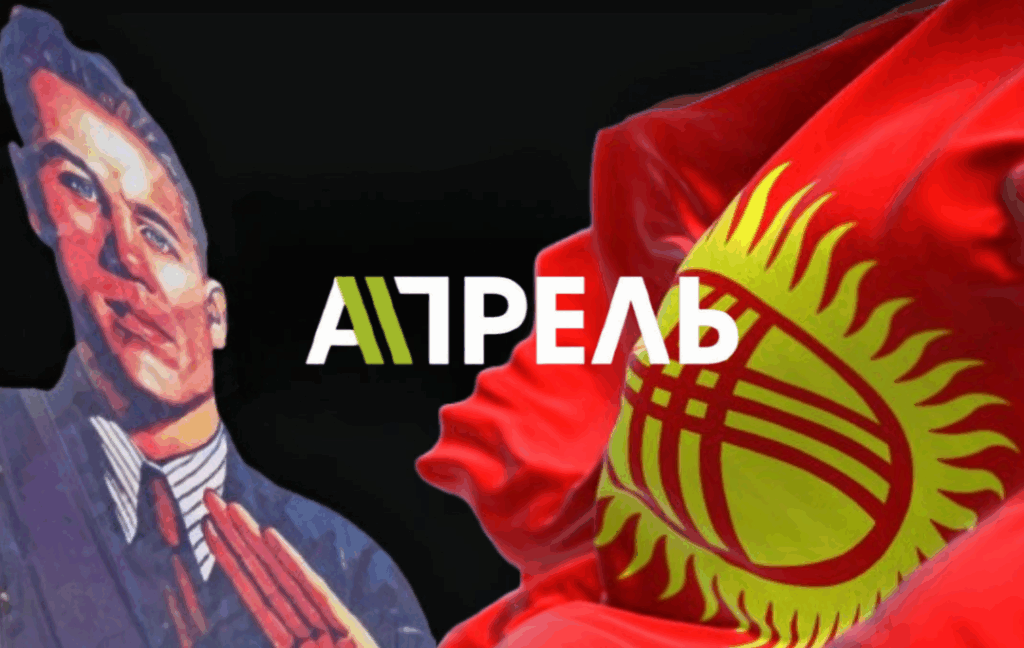
A district court in Bishkek has ordered the liquidation of April TV, one of Kyrgyzstan’s few remaining independent broadcasters, intensifying what some observers are calling an ongoing campaign to silence dissenting voices in the country’s media landscape. The decision, handed down by the Oktyabr District Court on July 9, followed a lawsuit brought by state prosecutors who alleged that the broadcaster's content was “biased, one-sided, destructive and manipulative,” and posed a threat to the constitutional order. In a related development, on July 11, President Sadyr Japarov signed a new law clamping down on media freedom into force. In the district court, prosecutors argued that April TV’s content risked inciting mass unrest and undermining the authority of the state. The court’s ruling cited assessments conducted by the State Committee for National Security (GKNB), which claimed that the broadcaster’s video reports negatively influenced public opinion, insulted government officials, and could provoke calls for the seizure of power. Over the past two years, President Japarov's administration claims to have successfully thwarted several attempted coups and assassination plots targeting high-ranking officials. These incidents, according to the government, highlight ongoing challenges to political stability in Kyrgyzstan, which has framed its efforts as critical to ensuring the country’s continued progress amidst a complex regional and domestic landscape. In addition to terminating April TV’s legal status, the court also authorized the blocking of its online platforms and affiliated channels, including the popular YouTube-based partner channel Next TV. Editor-in-chief of April TV, Dmitriy Lozhnikov, rejected the government’s claims, defending the station’s critical tone and stating that “criticizing the government isn’t a crime, but one of the core functions of the press.” In a final message before going offline, the outlet declared it was taking “a vacation from which [we] might never return.” At least ten current and former staff members of April TV were summoned for questioning by the GKNB as part of a broader criminal probe. No specific charges have been disclosed. The closure of April TV mirrors actions taken against other prominent independent outlets in Kyrgyzstan over the past two years. In February 2024, a Bishkek court approved the liquidation of Kloop, a media organization known for its investigative reporting on corruption – a ruling later upheld by the Supreme Court. The authorities claimed that its charter did not permit Kloop to engage in journalism, and objected to what they described as the “negative tone” of its reporting. In late May, the security forces conducted coordinated raids on the homes of eight current and former Kloop employees in Bishkek and Osh — detaining two on charges of “public calls for mass unrest” and compelling the others to sign non-disclosure agreements. Kloop has relocated its operations abroad, maintaining access to its content in Kyrgyzstan through mirror sites and launching a new podcast studio in Georgia. Despite mounting pressure, the outlet’s leadership remains defiant, vowing to continue producing the “most incisive investigations, the most objective news, and the boldest commentary.” In a similar vein, the investigative media outlet Temirov...

8 months ago

Kazakh Foreign Minister Visits Kabul, Signs $500M Railway Deal as Mining Push Gathers Momentum

In a major step toward deepening regional engagement, Kazakhstan’s Foreign Minister Murat Nurtleu arrived in Kabul this week, signaling a continuing shift towards pragmatic engagement in Astana’s policy towards Afghanistan. The visit resulted in significant diplomatic and economic developments, including the signing of a $500 million agreement on the Herat-Torghundi railway. During his visit, Nurtleu met with Afghanistan’s acting Foreign Minister Amir Khan Muttaqi and other senior officials in the Taliban-led government. In a joint statement, the two sides emphasized their commitment to expanding bilateral ties in transit, trade, education, and regional security. Nurtleu pledged Kazakhstan’s support for Afghanistan’s stabilization, food security, and comprehensive development, stating that Astana is seeking to expand its partnership with Kabul based on shared regional interests. A highlight of the visit was the signing of a memorandum of understanding for the construction of the Torghundi–Herat railway. The 115-kilometer line will link western Afghanistan to Turkmenistan, and is expected to extend connectivity into Iran and further south to the Arabian Sea. Afghanistan’s Deputy Prime Minister Abdul Ghani Baradar welcomed the agreement, stating that the deal will lay the foundation for establishing a logistics hub in Herat. As reported by Baradar’s office, discussions also covered the possibility of relaxing visa regulations for Afghan traders, resuming direct flights between Kabul and Astana, and increasing bilateral trade volumes. The two sides emphasized expanding economic collaboration through joint initiatives in key industries, including mining, transportation, communications, energy, and infrastructure. They also considered formalizing accords on agricultural product safety, cross-border logistics, and reduced transit costs — steps aimed at potentially raising trade between the countries to $3 billion. In parallel to these diplomatic overtures, Kazakhstan’s mining giant Kazakhmys Barlau is exploring Afghanistan’s untapped mineral resources. CEO Galym Nurzhanov confirmed that his team has already begun reconnaissance operations in the mineral-rich Nuristan Province. Nurzhanov described the terrain as a geological time capsule, stating that “For our geologists and miners, it’s like stepping into the 19th century. We looked at lead-zinc deposits, grades of nearly 39%, with concentrates reaching 41%. That’s ready ore, you can crush it and send it straight to the plant.” As previously reported by The Times of Central Asia, despite lingering tensions over issues such as Afghanistan’s controversial Qosh Tepa Canal project, Kazakhstan has emphasized an approach to relations with Kabul based on “practicality, not ideology,” highlighting the shared need for regional security, trade corridors, and energy development.

8 months ago

ALTAÏ: A Documentary Exploring Central Asia’s Water Lifelines to Start Filming

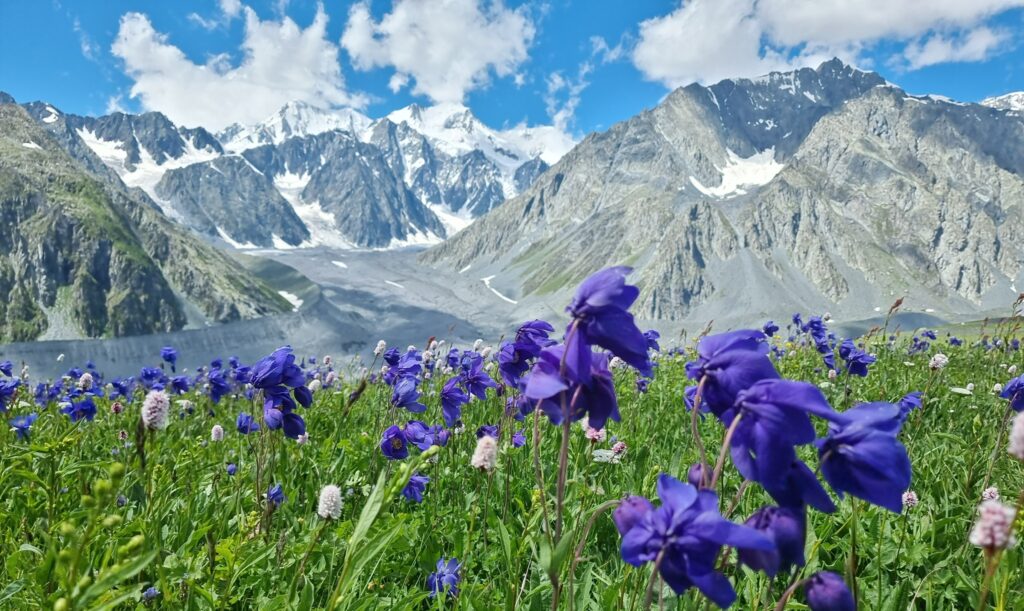
A new documentary, ALTAÏ, by acclaimed writer Cédric Gras and director Bertrand Delapierre, is set to bring global attention to the fragile ecosystems of Central Asia and the critical water issues tied to its majestic Altai Mountains. Slated for release on Ushuaïa TV in 2026, the documentary promises an in-depth exploration of the vital role these mountains play in sustaining life across the arid steppes of Kazakhstan, while addressing ecological challenges, geopolitical tensions, and the impact of climate change. A Journey Through Kazakhstan’s Heart [caption id="attachment_33183" align="aligncenter" width="2560"] Image: TCA, Ilyas Otan[/caption] The documentary follows the film crew’s expedition through Kazakhstan’s varied landscapes, beginning in its modern capital, Astana, and culminating in an ascent of Mount Belukha, the tallest peak in the Altai range. Along the way, the team will investigate how Kazakhstan is grappling with increasing water scarcity while striving to balance modernization with environmental conservation. Central to the film’s narrative is the Irtysh River, born from the Altai glaciers, which flows through Russia, China, Mongolia, and Kazakhstan. This river has long delivered life-sustaining water to Kazakhstan’s steppes, irrigating farmlands and powering industries. Yet, as the documentary reveals, upstream diversions and glacial retreat now threaten the river's future. Central Asia’s Water Crisis [caption id="attachment_33184" align="aligncenter" width="1536"] Image: TCA, Ilyas Otan[/caption] With Central Asia among the regions most threatened by water shortages, ALTAÏ examines the severe consequences of dwindling resources. Astana, once a Soviet outpost named Tselinograd, has been transformed into a futuristic capital fueled by the nation’s oil and gas wealth. However, this rapid expansion has brought a pressing water deficit. The Ishim River, which runs through the city, can no longer suffice, prompting the construction of the new Astana-Irtysh canal to draw water from the distant Altai region. The documentary highlights alarming findings from hydrologists about the ecological and political pressures weighing on water management in the region. Viewers will see the extensive canal network left by the Soviet Union, such as the Irtysh-Karaganda Canal, and the vital role it continues to play in supporting industrial cities, agriculture, and the survival of the steppes. Exploring the Altai Mountains [caption id="attachment_33185" align="aligncenter" width="2048"] Image: TCA, Ilyas Otan[/caption] At the heart of the documentary will be an expedition into the Altai Mountains, a remote massif spanning Kazakhstan, China, and Russia. The mountain range is revered as the “water tower” of the region, yet its glaciers are melting at an alarming rate due to climate change. Guided by Kazakh mountaineers, the crew will travel across high valleys and visit traditional nomadic settlements that depend on the rivers fed by these glaciers. Finally, the team will ascend Mount Belukha, the Altai’s highest peak, to examine the glacial sources of the Irtysh River, capturing breathtaking footage of this territory where the borders of Kazakhstan, China, and Russia converge. Along the way, they will discuss with locals and scientists the geopolitical tensions over water resources, as Chinese development upstream increasingly diverts flow from the Irtysh to fuel its arid regions. Environmental and Geopolitical Themes...

9 months ago