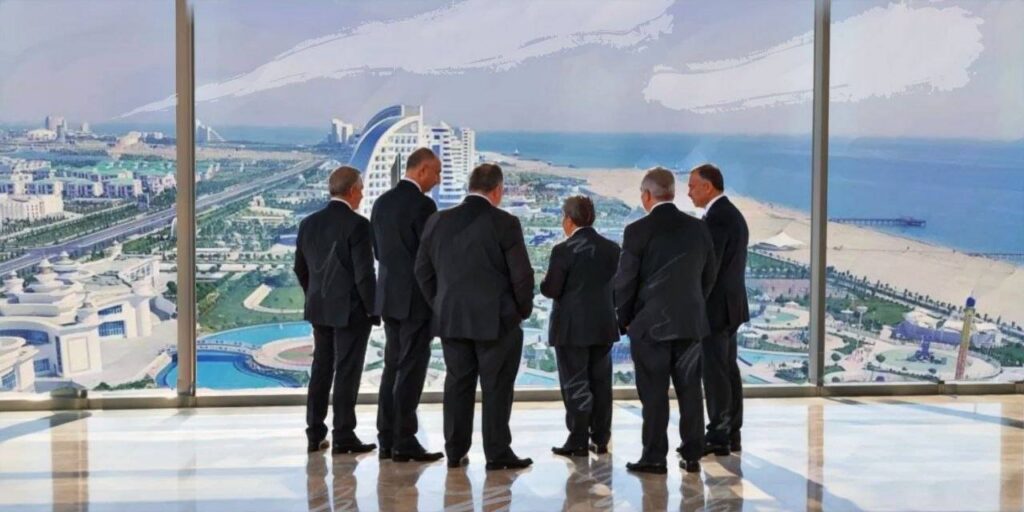
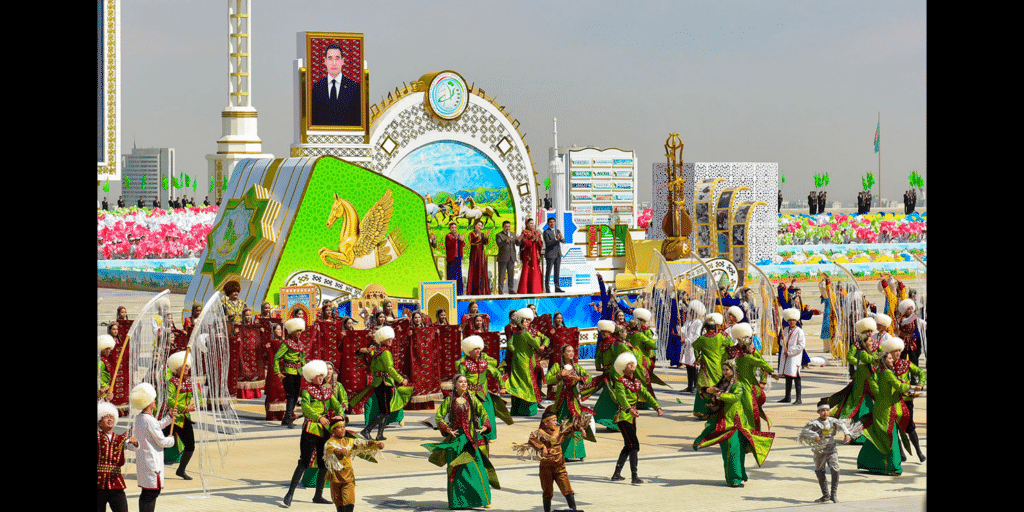
On Thursday, Turkmen President Serdar Berdimuhamedov is due to receive Kassym-Jomart Tokayev, Sadyr Japarov, Emomali Rahmon, Shavkat Mirziyoyev, and Ilham Aliyev in a place built to impress visitors. Thursday’s meeting will be the first formal consultative summit since Azerbaijan joined the format as a full participant in November 2025. The six presidents have already met once in the new configuration, at an informal gathering in Cholpon Ata on July 31, where they signed a declaration covering closer cooperation on transport, energy, trade, and security. Construction of Avaza began in late 2007, as Turkmenistan sought to create a national showcase on its Caspian coast. The resort’s hotels and sanatoria sit among parks and entertainment complexes, while eleven road and foot bridges span a seven-kilometer artificial canal. According to official figures, its hotels and recreation facilities can accommodate more than 10,000 vacationers. State institutions send employees there for summer holidays, echoing the Soviet tradition of workplace-organized vacations. These holidays help fill a resort where the seasonal rhythms differ sharply from everyday life in neighboring Turkmenbashi. Officially, Avaza is a district of Turkmenbashi, a city of around 90,000 residents located 580 kilometers west of Ashgabat across the Karakum Desert. The working city's economy is built around oil refining, the port, and transport. The Turkmenbashi International Seaport traces its history to 1896 and was rebuilt on a large scale before reopening in its current form in 2018. The Turkmenbashi refinery complex was founded in 1943 and remains one of the country's main oil-processing centers. The city itself was known as Krasnovodsk until 1993, when it was renamed Turkmenbashi after the title used by then-President Saparmurat Niyazov. The sea that was supposed to be Avaza's main attraction is now retreating from it. In 2024, one visitor told RFE/RL that the shoreline was 25-30 meters farther away than when his family had swum there three years earlier. A correspondent found hotels creating new beach areas farther out, while dredging was underway near the port. By September 2026, shallower water was forcing some ferries to carry lighter loads and pushing ports around the sea into costly dredging and berth work. The effects are already visible along the coast where the leaders will meet. [caption id="attachment_57713" align="aligncenter" width="1774"] The Avaza resort on Turkmenistan’s Caspian coast, where the five Central Asian presidents and Azerbaijan’s Ilham Aliyev are due to meet on October 8.[/caption] Turkmenistan is also hosting Caspian-focused meetings around the leaders' gathering, while the October 8 agenda includes climate, water, trade, energy, transport, and regional security. At the November 2025 summit in Tashkent, the five Central Asian presidents unanimously approved Azerbaijan’s admission as a full participant, extending the grouping across the Caspian into the South Caucasus. Aliyev has been careful to mark the change. At the informal meeting in Cholpon Ata on July 31, he said: "I previously participated as a guest of honor, but today I am taking part as a full member of the team." The format dates to 2018 and was deliberately light on bureaucracy....
2 weeks ago