• KGS/USD = 0.01144 0%
  • KZT/USD = 0.00212 0%
  • TJS/USD = 0.10549 -0.28%
  • UZS/USD = 0.00008 0%
  • TMT/USD = 0.28530 0%
  • KGS/USD = 0.01144 0%
  • KZT/USD = 0.00212 0%
  • TJS/USD = 0.10549 -0.28%
  • UZS/USD = 0.00008 0%
  • TMT/USD = 0.28530 0%
  • KGS/USD = 0.01144 0%
  • KZT/USD = 0.00212 0%
  • TJS/USD = 0.10549 -0.28%
  • UZS/USD = 0.00008 0%
  • TMT/USD = 0.28530 0%
  • KGS/USD = 0.01144 0%
  • KZT/USD = 0.00212 0%
  • TJS/USD = 0.10549 -0.28%
  • UZS/USD = 0.00008 0%
  • TMT/USD = 0.28530 0%
  • KGS/USD = 0.01144 0%
  • KZT/USD = 0.00212 0%
  • TJS/USD = 0.10549 -0.28%
  • UZS/USD = 0.00008 0%
  • TMT/USD = 0.28530 0%
  • KGS/USD = 0.01144 0%
  • KZT/USD = 0.00212 0%
  • TJS/USD = 0.10549 -0.28%
  • UZS/USD = 0.00008 0%
  • TMT/USD = 0.28530 0%
  • KGS/USD = 0.01144 0%
  • KZT/USD = 0.00212 0%
  • TJS/USD = 0.10549 -0.28%
  • UZS/USD = 0.00008 0%
  • TMT/USD = 0.28530 0%
  • KGS/USD = 0.01144 0%
  • KZT/USD = 0.00212 0%
  • TJS/USD = 0.10549 -0.28%
  • UZS/USD = 0.00008 0%
  • TMT/USD = 0.28530 0%

Our People > Vagit Ismailov

Vagit Ismailov's Avatar

Vagit Ismailov

Journalist

Vagit Ismailov is a Kazakhstani journalist. He has worked in leading regional and national publications.

Articles

Central Asian Leaders Arrive in Azerbaijan for UN COP29 Climate Summit

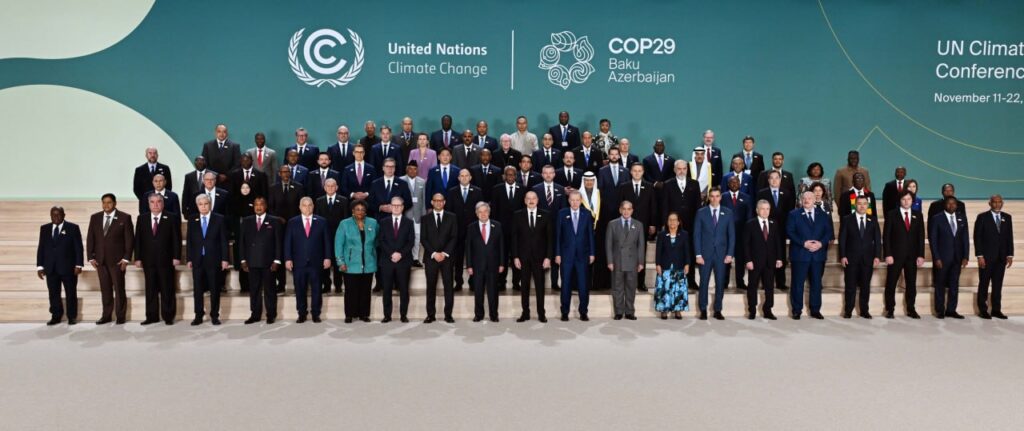
The 29th session of the Conference of the Parties to the UN Framework Convention on Climate Change (COP29) opened in Azerbaijan's capital Baku on November 11, drawing approximately 50,000 participants, including government representatives, politicians, investors, and environmentalists from 198 countries. Kazakh President Kassym-Jomart Tokayev attended the Summit, where he was welcomed by Azerbaijani President Ilham Aliyev and UN Secretary-General António Guterres. Tokayev will open the plenary session and hold talks with various heads of state, as well as representatives of international organizations and businesses. Kyrgyz President Sadyr Japarov has also arrived at the conference and is scheduled to address the opening session on November 12. He will participate in the special session “High-Level Dialogue: Advancing the Mountain Agenda and Mainstreaming Mountains and Climate Change,” organized by Kyrgyzstan with the support of Azerbaijan and Mongolia. This discussion will also feature Mongolian President Ukhnaagiin Khurelsukh, Nepali President Ram Chandra Poudel, and representatives of international organizations. Russia is represented at the summit by its Prime Minister Mikhail Mishustin. Additionally, representatives of the Taliban, which the UN does not recognize as the legitimate government of Afghanistan, have been included in the delegation for the first time. Armenia, however, has not yet confirmed its participation due to ongoing territorial disputes with Azerbaijan. The Summit is being held at the Baku Olympic Stadium, with sessions set to conclude on November 22. COP29 has been termed a “finance summit” due to its primary focus on financing developing nations in the fight against climate change. Delegates are also working to establish a framework to improve national emissions reduction programs.

1 year ago

85-Million-Year-Old Dinosaur Fossils Discovered in Tajikistan’s Sughd Region

Dinosaur fossils estimated to be 85 million years old have been discovered in Tajikistan's Sughd region. The excavation took place in the village of Kansai, a renowned paleontological site known for its rich array of prehistoric animals, including ancient lizards, turtles, crocodiles, amphibians, and fish from the Cretaceous period. The expedition, organized by Russian and Tajik scientists, builds on Kansai’s long-standing significance in paleontology. In the 1960s, Soviet scientist Anatoly Rozhdestvensky and his team uncovered numerous dinosaur remains, including a therizinosaur femur. In the 1980s, Lev Nesov identified traces of mammals from the Cretaceous period. This year, a team led by Associate Professor Pavel Skuchas from St. Petersburg State University has expanded research in Kansai, focusing on smaller vertebrates. Tajik researchers, including Umed Nabiev, a master’s student in paleontology, and ecologist Gafurjon Karimov, joined the excavation. The fossils were excavated from the walls of a large canyon containing Upper Cretaceous sediment layers, where the team found remains of lizards, salamanders, frogs, and fish. “We used a washing technique to carefully extract even the smallest bones and teeth,” Nabiev explained, noting that a special adhesive was applied to the rock to protect these fragile finds. Among the larger discoveries were crocodile and turtle shells, as well as the bones of an 85 million-year-old dinosaur. Further research will determine which parts of the dinosaur’s body these bones belonged to. The excavation is set to resume next May, and scientists plan to explore new canyon sections previously mined for cement production. “Previously, the remains of large animals have been studied quite well, while the remains of smaller animals, such as amphibians and reptiles, have been neglected. In our next expedition, we will also search for small vertebrates,” Nabiev added. Tajikistan has seen several significant archaeological discoveries in recent years. In 2023, artifacts unearthed at the Oshkhon site in the Eastern Pamirs indicated human presence dating back about 14,000 years. In 2021, a joint Tajik-German expedition in the village of Khushdilon (Torbulak) near Danghara district uncovered the remains of a Hellenistic sanctuary dating from the 3rd to 1st centuries B.C. These findings continue to expand the historical and cultural understanding of the region.

1 year ago

Deported Tajik Opposition Activist Ikromov Sentenced to 23 Years in Prison

Tajik opposition activist Farrukh Ikromov, who had sought asylum in Europe, was deported from Poland to Tajikistan in April and subsequently sentenced to 23 years in prison in Dushanbe. Opposition sources have now informed Radio Ozodi of Ikromov's sentencing, though the Tajik authorities have not issued any official statement on the matter. According to Abdusattor Boboev, head of the Polish-based Citizens' Committee for the Rescue of Political Prisoners in Tajikistan, Ikromov was transferred from a Dushanbe pre-trial detention center to prison in October. Another activist, Saidiskhok Boboev, corroborated this information, stating that a recently released prisoner saw Ikromov and confirmed his 23-year sentence. Ikromov’s relatives, who reside abroad, lack detailed information about his sentencing. A close family member explained that they receive occasional updates about his status through a relative in Tajikistan. Ikromov’s deportation followed the denial of his asylum request in Poland. After this initial denial, He sought protection in Germany, but he was returned to Poland, where he was placed in a migrant detention center before being deported to Tajikistan. According to Abdusattor Boboev, shortly before his deportation, he reported being unexpectedly photographed, after which all contact with him ceased. Ikromov also participated in protests against Tajik President Emomali Rahmon's visit to Germany in September 2023. Opposition activists had expressed concern that if deported to Tajikistan, Ikromov would face mistreatment and a lengthy prison term. In recent years, several EU countries, including Germany, have complied with Tajikistan’s requests to extradite political activists, many of whom have subsequently received lengthy prison sentences. International human rights organizations have sharply criticized these actions. The Times of Central Asia previously reported on another Tajik activist, Dilmurod Ergashev, whose deportation from Germany was ordered by the Kleve administrative court on October 28, shortly after he was detained. The court ruled that Ergashev should be deported despite his pending application for political asylum before another court. Prior to his anticipated deportation, Ergashev attempted suicide. Ergashev, a member of the opposition Group of 24, has opposed the regime of Rahmon and joined the Reform and Development of Tajikistan movement in 2024. He has resided in Germany for 13 years.

1 year ago

Uzbekistan Bans the Use of Animals in Circus Performances

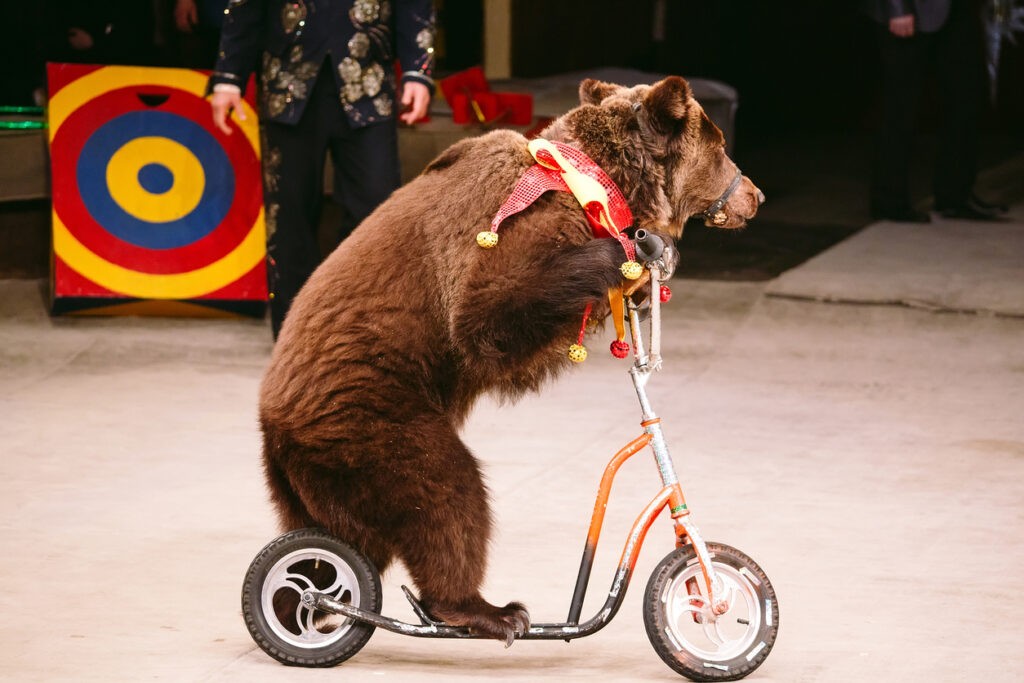
From January 1, 2025, Uzbekistan will ban the use of wild animals in circus performances. This law will affect all circuses, including traveling ones. The ban also restricts individuals' right to keep wild animals at home. The list of animals who must not be allowed to perform in circuses was published on the UzA's Telegram feed. These animals can be kept only in specialized institutions such as zoos, terrariums, and oceanariums established by legal entities with a permit from the Ministry of Ecology. Several countries have laws prohibiting the use of wild animals in circus performances. Corresponding bans are adopted in most European countries, Cyprus, Malta, Hungary, Croatia, Germany, Estonia, Latvia, Finland, Denmark, Ireland, Greece, Croatia, Bosnia and Herzegovina, as in many states of the USA and Canada, in Israel, China, Singapore, Bolivia, Argentina, Brazil, Panama, Paraguay, Peru, Iran, Chile, El Salvador, Ecuador, Australia, India, Taiwan, and many other countries. Kazakhstan will ban petting zoos and dolphinariums from January 1, 2025. In Russia, a bill to restrict the use of animals in circuses was discussed in 2023, but the final decision has yet to be made.

1 year ago

Organization of Turkic States Changes Its Flag

At the 11th summit of the heads of state of the Organization of Turkic States (OTS) in Bishkek, a new flag to represent the organization was adopted. The leaders of Azerbaijan, Kazakhstan, Kyrgyzstan, Turkey, and Uzbekistan—Ilham Aliyev, Kassym-Jomart Tokayev, Sadyr Japarov, Recep Tayyip Erdogan, and Shavkat Mirziyoyev—unanimously approved it as a symbol reflecting the Turkic world's shared values and cultural identity. The flag is designed on a turquoise background, symbolizing a clear sky, peace, and prosperity. In the center are a crescent moon, a star, and a sun with forty equal rays. These elements represent Turkic statehood, vitality, and aspiration for the future. The octagon, symbolizing centuries-old Turkic statehood and stability, expresses the participating countries' common cultural roots and interconnectedness. The sun's rays symbolize light and openness, and the crescent moon and star, well-known symbols of the Turkic world, emphasize the desire for development and progress based on a rich historical heritage. The Organization of Turkic States covers several countries in Eurasia and plays a vital role in their political and economic interaction. Its member countries are Azerbaijan, Kazakhstan, Kyrgyzstan, Turkey, and Uzbekistan, and its observer countries are Turkmenistan and Hungary. The OTS's headquarters are in Istanbul. Adopting the new flag was also a landmark step in strengthening the organization's international status. The first flag of the Organization of Turkic States was adopted in 2012. Earlier, Tokayev summarized the results of Kazakhstan's chairmanship of the Organization of Turkic States. The countries' leaders adopted the Charter of the Turkic World, while central banks of the OTS will create a new Council to strengthen financial cooperation.

1 year ago