• KGS/USD = 0.01144 0%
  • KZT/USD = 0.00208 0%
  • TJS/USD = 0.10482 0.48%
  • UZS/USD = 0.00008 0%
  • TMT/USD = 0.28490 0%
  • KGS/USD = 0.01144 0%
  • KZT/USD = 0.00208 0%
  • TJS/USD = 0.10482 0.48%
  • UZS/USD = 0.00008 0%
  • TMT/USD = 0.28490 0%
  • KGS/USD = 0.01144 0%
  • KZT/USD = 0.00208 0%
  • TJS/USD = 0.10482 0.48%
  • UZS/USD = 0.00008 0%
  • TMT/USD = 0.28490 0%
  • KGS/USD = 0.01144 0%
  • KZT/USD = 0.00208 0%
  • TJS/USD = 0.10482 0.48%
  • UZS/USD = 0.00008 0%
  • TMT/USD = 0.28490 0%
  • KGS/USD = 0.01144 0%
  • KZT/USD = 0.00208 0%
  • TJS/USD = 0.10482 0.48%
  • UZS/USD = 0.00008 0%
  • TMT/USD = 0.28490 0%
  • KGS/USD = 0.01144 0%
  • KZT/USD = 0.00208 0%
  • TJS/USD = 0.10482 0.48%
  • UZS/USD = 0.00008 0%
  • TMT/USD = 0.28490 0%
  • KGS/USD = 0.01144 0%
  • KZT/USD = 0.00208 0%
  • TJS/USD = 0.10482 0.48%
  • UZS/USD = 0.00008 0%
  • TMT/USD = 0.28490 0%
  • KGS/USD = 0.01144 0%
  • KZT/USD = 0.00208 0%
  • TJS/USD = 0.10482 0.48%
  • UZS/USD = 0.00008 0%
  • TMT/USD = 0.28490 0%

Our People > Vagit Ismailov

Vagit Ismailov's Avatar

Vagit Ismailov

Journalist

Vagit Ismailov is a Kazakhstani journalist. He has worked in leading regional and national publications.

Articles

Kazakhstan Decides to Abstain from Applying for BRICS Membership

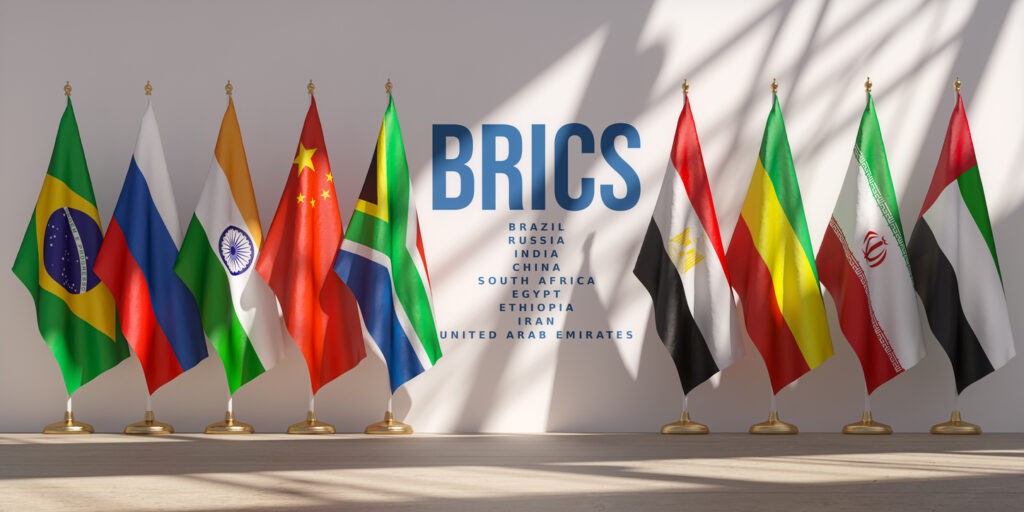
Kazakhstan's presidential spokesman, Berik Uali, announced that Kazakhstan plans to refrain from applying for membership in the international association BRICS. According to him, despite Kazakhstan's proposals, the decision to join BRICS remains under consideration. Specialists are analyzing prospects with a focus on the country's national interests. Uali also noted that President Tokayev will participate as a guest in the BRICS Summit, scheduled to take place October 23-24 in Kazan. He will speak at the organization's extended outreach meeting on October 24. At the same time, Kazakhstan will refrain from applying for BRICS membership. This is due to the multi-stage process of accepting new members and other aspects of the association's development. When asked about the priorities of Kazakhstan's diplomacy, Berik Uali noted that Tokayev emphasized the importance of the UN as a universal and irreplaceable international institution. Despite its shortcomings, he emphasized that the UN remains the sole platform for addressing crucial global issues. Tokayev also expressed the view that the UN Security Council should be reformed to consider the interests of the middle powers and to hold broad consultations among the organization's members. Established in June 2006, BRICS (Brazil, Russia, India, China, South Africa, UAE, Iran, Egypt, Ethiopia) aims to promote a multipolar world order. Azerbaijan and Belarus have already applied to join.

1 year ago

Middle Powers Rising: Shaping a Balanced Global Order at the Astana Think Tank Forum

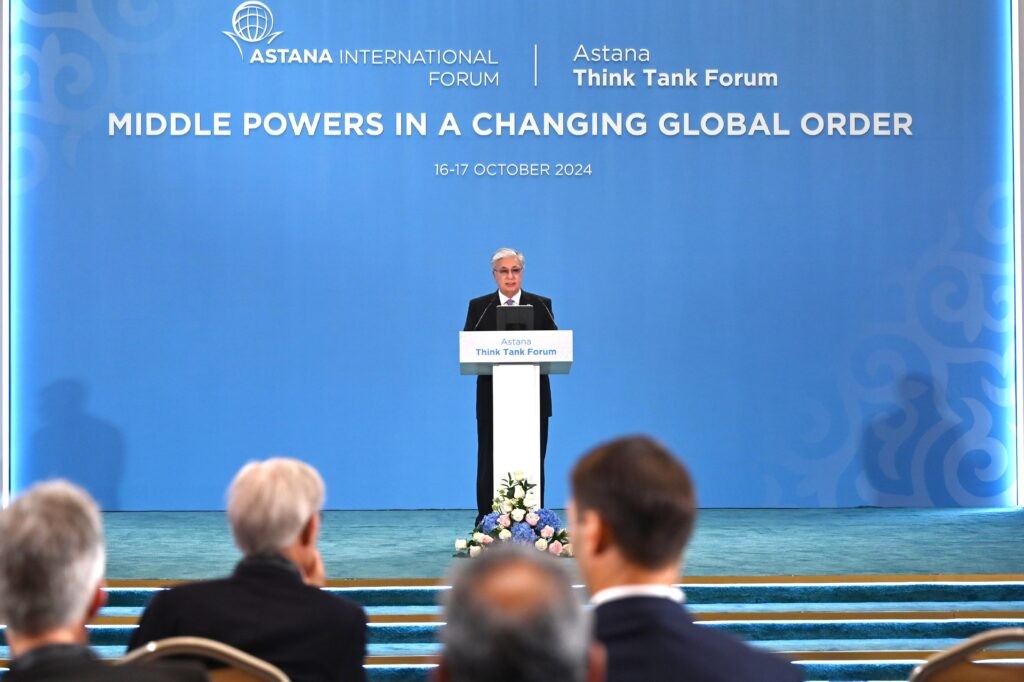
On October 16-17, the capital of Kazakhstan hosted the Astana Think Tank International Forum. The theme of the two-day meeting was “Middle Powers in the Changing Global Order: Strengthening Security, Stability and Sustainable Development.” Experts from 22 countries — heads of leading think tanks, politicians and diplomats — participated and spoke at the event. Kazakhstan's President Kassym-Jomart Tokayev addressed the forum. The two-day event focused on geopolitical, economic and strategic issues, including the role of mediating countries in resolving global conflicts. One of the main topics was determining the potential of intermediate states in forming a new world system under conditions of geopolitical tension. The experts tried to define the term "middle power" and what countries can be classified as middle powers. The moderator of the key session, Charles McLean, Managing Director of Borderless Consulting Group, invited the participants to answer several questions about the criteria, characteristics, and influence of middle powers in the modern geopolitical context. Dino Patti Djalal, Chair of the Foreign Policy Community of Indonesia (FPCI), suggested categorizing all the of the world's states using analogies to boxing weight classes: heavyweights, middleweights, and lightweights. According to Djalal, middle powers have great potential to create a new world order. “There are several dimensions of middle powers. The first is potential, encompassing territorial and demographic size factors, political and economic weight, and a state's foreign policy ambitions. The second dimension is a moderate stance on major global issues,” Djalal said. Citing Kazakhstan as an example of a middle power, Djalal stated that Kazakhstan has achieved this status due to its balanced position, which allows it to exert some influence on the formation of the world order. Djalal emphasized that, even today, middle states (the bulk of which are concentrated in the Global South) can solve regional issues without the participation of so-called 'world powers'. “Look at Southeast Asia. Indonesia and Singapore solve their issues directly, without external influence. Naturally, this situation is developing in the conditions of weakening U.S. influence. Middle powers are dictating new rules,” Djalal noted, and should voice their positions on the global agenda, so their “voice” will be heard and become more “powerful.” Michel Duclos, Special Advisor on Geopolitics, suggested that regional powers whose activities have a global impact should be considered middle powers. “The great challenge for middle powers is establishing peace and stabilizing the situation. However, a common platform for all middle powers must be formed. This applies to the Global South and the Global North. France and others are reforming the UN Security Council,” Duclos stated. Joshua Lincoln from the Center for International Law and Governance at the Fletcher School (Tufts University), meanwhile, believes that increasing competition between great powers opens a “window of opportunity” for medium-sized states. “Geopolitical rivalries, the fragmentation of the world order, and the disillusionment of many with existing international institutions offer middle powers an opportunity to bring order to today's chaos. Their stance can enormously contribute to the world's security, stability, and sustainability. However, no country, even...

1 year ago

New Requirements for Citizenship Approved in Kazakhstan

Updated requirements for obtaining citizenship in Kazakhstan, approved by the  Minister of Science and Higher Education of Kazakhstan, came into force on October 8. According to the new legislation, applicants for citizenship or persons restoring it must demonstrate a basic knowledge of the state language, the basics of the Constitution, and an understanding of the country's history. The minimum thresholds are 36 points in the Kazakh language, 9 points in the basics of the Constitution, and 15 points in the history of Kazakhstan. The exam, conducted on a quarterly basis by National Testing Center (NTC), takes two hours and ten minutes with an additional 30 minutes for people with special needs. Of the 100 tests set under three categories,  60 questions relating to the Kazakh language, include 20 listening and 40 reading tasks; the Constitution section covers 15 issues, and the history of Kazakhstan, 25. Applicants must achieve a score of at least 60 points to pass the exam, and if successful, will be issued with an electronic certificate valid for two years. The prerequisites for new requirements for knowledge of the state language and the history of Kazakhstan for obtaining citizenship relate to the government's efforts to strengthen national identity, dictated by the need to integrate new citizens into society and the growing public demand for support of the Kazakh language. The amendments are based on the practices of other countries, including Germany, Canada, and Turkey. For example, Germany requires applicants for citizenship to have a high level of German language proficiency and respect for German cultural traditions. In Canada, applicants must understand the history and responsibilities of citizenship and take an English or French language test, depending on the province. Similarly, Turkey requires applicants to demonstrate a knowledge of  the Turkish language.

1 year ago

Tajikistan to Strengthen Protection of Mulberry Trees

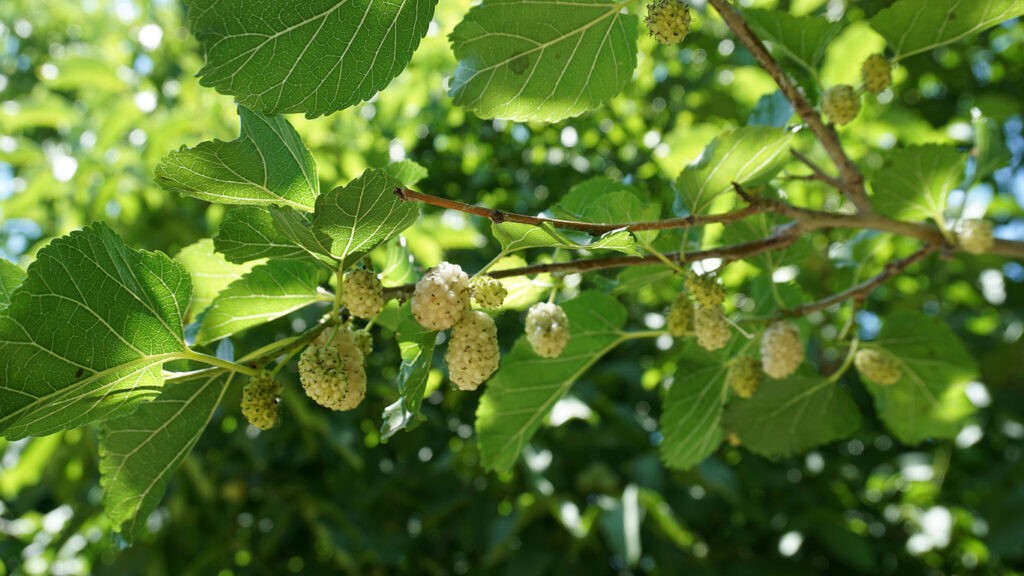
In a move to strengthen its silk industry, Tajikistan's parliament has approved amendments to the Code of Administrative Offences, increasing fines for damaging mulberry trees. Bakhodur Sheralizoda, Chairman of the Environmental Protection Committee, who forwarded initiative, emphasized that the new measures will help protect the environment and restore mulberry plantations, which are vital for silkworms. Under the new rules, individuals damaging mulberry or other crops will face a fine of three to five calculation indexes. In comparison, officials can be fined seven to ten indexes (for 2024, 1 calculation index is 84 somoni, equivalent to $7.50). The final amounts will be approved following the adoption of amendments to the Code. Because the leaves of the trees  are the main food base for mulberry silk worms, their preservation is critical for the restoration of an industry which has suffered a sharp decline over the last 30 years. In 1991, the country produced 4,528 tons of silk cocoons but by 2024, this figure had fallen to 361 tons. According to experts, the reason for the decline is a reduction of mulberry plantations, especially on private land  on which  trees have been felled and sold as firewood. Back in 2021, in an address to parliament , Tajik President Emomali Rahmon, called for special attention to be paid to the development of silk farming, emphasizing its importance in creating jobs, especially for women and girls. To encourage cocoon processing, he also waived land tax for a period of ten years on areas where mulberry trees are grown. Despite such measures, the situation barely improved. In response and to achieve its aim of increasing silk production to 1,867 tons by 2027, the Tajik government has introduced a program to plant over 4.3 million mulberry trees across the country. The total area covered by mulberry trees in Tajikistan is currently about 5,500 hectares. In addition to their economic importance, mulberries play an essential role in environmental conservation. Mulberry trees prevent soil erosion and the spread of dust storms. Also of note, is that rich in vitamins C, K, iron, and potassium, the berries provide an important food source and are widely used in traditional medicines. Additional measures to protect mulberry trees include strengthening local authorities' control over land allocation for new plantations and preventing the felling of existing trees. A comprehensive approach, including economic incentives and administrative measures, is expected to help Tajikistan bring silk production back to its previous level and make it one of the country's leading agricultural sectors.  

1 year ago

Updated Entrepreneurship Education Program Introduced in Turkmenistan with Assistance from USAID

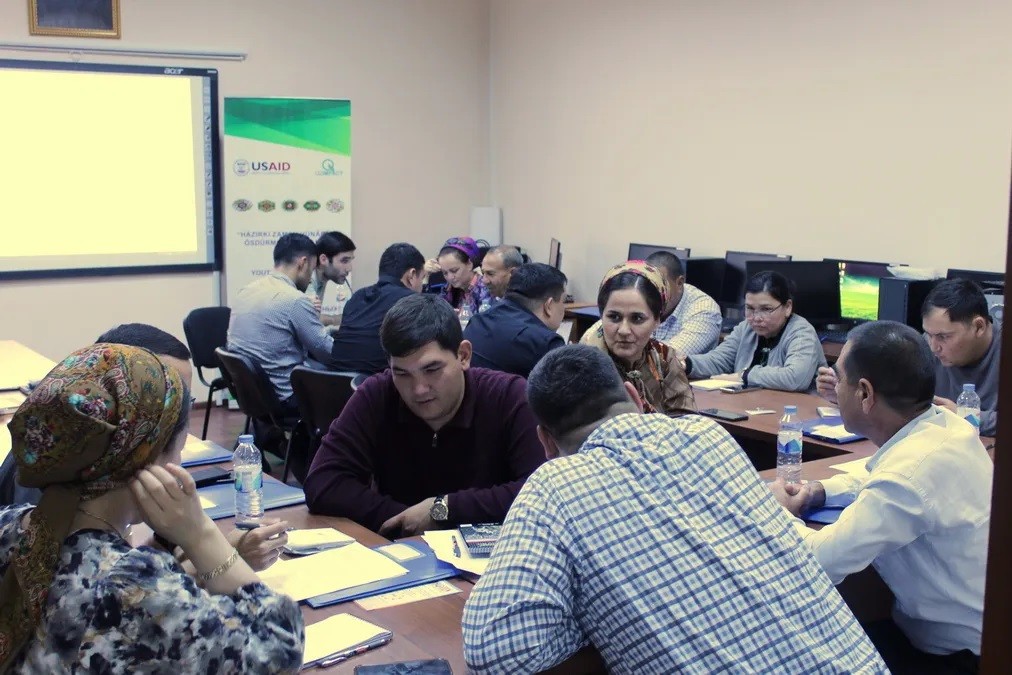
Turkmenistan has modernized its entrepreneurial education program. This was made possible through a partnership between the United States Agency for International Development's (USAID) Modern Skills Development Project (YDA) and the School of Entrepreneurs of the Union of Industrialists and Entrepreneurs of Turkmenistan. The updated program integrates modern teaching methods for practical learning and developing creative thinking and problem-solving skills - critical competencies for future entrepreneurs. From September 30 to October 4, 2024, the program held a training session for teachers, including representatives of regional branches. Participants learned new approaches to teaching through case studies, group work, and interactive methods. These innovations are expected to be introduced into the teaching process. The program aims to support young people with innovative business ideas by providing an opportunity to develop projects based on the Entrepreneurs' School branches. The final stage will be a business project competition, the winners of which will receive mentoring and access to investment to realize their ideas. This project is designed to foster a new generation of entrepreneurs and strengthen Turkmenistan's economy. USAID actively promotes youth development in Turkmenistan through various educational programs and initiatives. One of the main projects is the Youth Development Activity, a program to improve youth entrepreneurial competencies and professions. USAID also conducts training, seminars, and competitions for young people with promising business ideas, supporting their aspirations to become part of the country's economy.

1 year ago