India launches new trade route to Afghanistan via Iran, reaching out to Central Asia
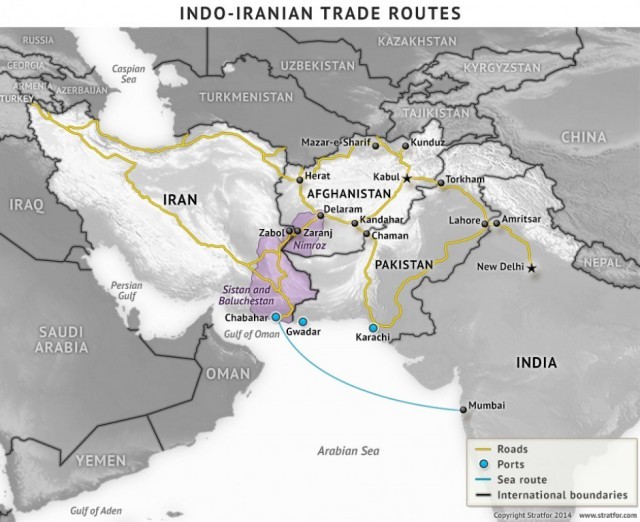
BISHKEK (TCA) — India has launched a new trade route to landlocked Afghanistan by sea through Iran’s strategic Chabahar port, bypassing Pakistan, RFE/RL reports.
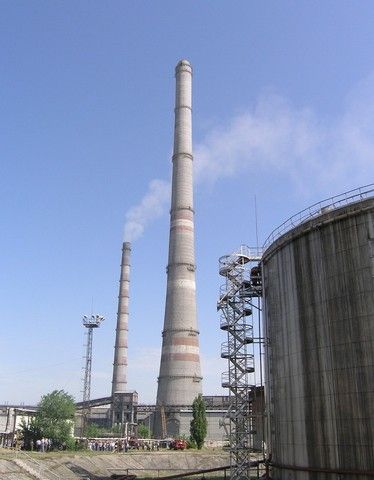
BISHKEK (TCA) — More than 200,000 people in Kyrgyzstan will benefit from the improved efficiency and quality of heating during cold winter months, thanks to the Heat Supply Improvement Project, approved on October 27 by the World Bank’s Board of Executive Directors. The project will be financed by the combination of a US $23 million credit and a US $23 million grant.
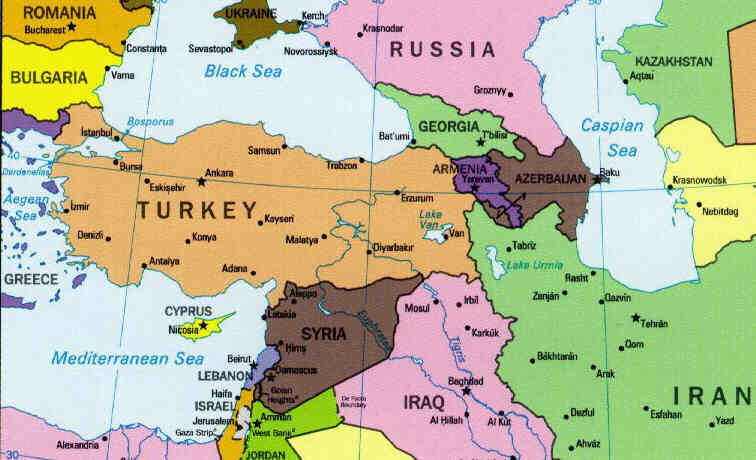
TASHKENT (TCA) — Uzbekistan has taken efforts to mend its relations with Turkey, a move analysts say is part of President Mirziyoyev’s plan to attract much-needed investments in the Uzbek economy. We are republishing this article on the issue, originally published by EurasiaNet.org:
The just-concluded Uzbek-Turkish summit meeting in Ankara was like a meeting of long-lost friends.
“You could tell from our eyes how we had missed one another over these 20 years,” Uzbekistan’s President Shavkat Mirziyoyev said, standing near his Turkish counterpart, Recep Tayyip Erdogan, during a joint briefing. “We understood one another without saying even half a word, even without words, just by looking at one another.”
When Mirziyoyev flew into Ankara for a two-day visit on October 25 – trip made at Erdogan’s initiative – it marked the first state visit by an Uzbek president to Turkey in 18 years. Both the Uzbek and Turkish leaders were in a buoyant mood during the joint briefing. “We are happy with the initiative being undertaken by Uzbekistan. And we are instructing all ministries and [nongovernmental] organizations to develop full-fledged cooperation with Uzbekistan,” Erdogan said.
Companies from the two countries struck 30 agreements worth $3.5 billion during Mirziyoyev’s visit. The deals covered a wide array of sectors, including energy, transportation, textiles, electronics, construction and agriculture. The goal, the governments said, is to see annual bilateral trade turnover increase to $3-4 billion in the coming years – up from $1.2 billion in 2016.
Mirziyoyev set the tone for things before flying out of Tashkent, signing a decree ordering the simplification of the visa regime for Turkish citizens. Now entrepreneurs from Turkey will be able to apply for one-year visas without requiring an invitation, and receiving the travel permit will take only three days. Tourists will be eligible for a 30-day visa. This point had served as perhaps the main stumbling block in developing better relations, not least since Uzbek citizens are able to visit Turkey without a visa.
“The day is coming when our friendly, brother nations will not need visas at all. We are absolutely working toward this,” Mirziyoyev told reporters in Ankara.
Bringing down the veil of distrust was only made possible by the passing of Uzbekistan’s late president, Islam Karimov, who died last September. In a notable gesture of goodwill, Erdogan traveled to Samarkand on November 18 to visit Karimov’s grave, but not before announcing publicly that he wanted to turn a page with Uzbekistan.
The story of Uzbek-Turkish relations started well. Turkey was the first out of the gate to recognize Uzbekistan’s declaration of independence in the dying days of 1991. Four days after that, Karimov returned the favor by visiting Ankara, becoming the first among the Central Asian presidents to do so. “My country will go forward by the Turkish route,” Karimov told his hosts, appearing to confirm widespread suspicions that the newly independent southern states of the collapsed Soviet Union would automatically be drawn into Ankara’s orbit by their shared Turkic cultural legacy.
The appeal of Turkey for Karimov lay in its strict adherence to secular governance and the prospect of financial assistance. Before the first year of independence was out, Ankara had supplied Uzbekistan with 2 million tons of grain and a $590-million loan, to be repaid in three years.
But the euphoria did not last long. When a Karimov opponent and a 1991 presidential election candidate, Muhammad Solih, finally fled Uzbekistan, he first secured asylum in Norway, but later took up residence in Istanbul, where he evaded criminal prosecution. Ankara signally refused to entertain deportation requests from Tashkent, igniting Uzbek suspicions that Turkey secretly preferred this avowedly pan-Turkic politician to Karimov, a communist apparatchik by disposition.
The last time Karimov would visit Turkey was in 1999. Erdogan, who at the time was the prime minister, made a return trip in 2003.
Things went truly sour around 2011, when Uzbek authorities started hounding Turkish companies, such as the Turkuaz hypermarket and Demir Holdings’ chain of supermarkets, out of the country. The following year, Uzbek state television aired an exposé alleging that Turkish entrepreneurs were dodging taxes and running illegal sweatshops. Even Turkish soap operas started being pulled from the Uzbek airwaves. When a Russian broadcaster, Domashny, began showing the popular Turkish shows, it was removed from local cable packages.
“Turkey was a major disappointment for Karimov. Even the switchover to the Latin alphabet was slowed down because of the souring of relations with Turkey,” said political analyst Rafael Sattarov. “What is more, the security elite [in Uzbekistan], which engaged in squeezing out Turkish investors, added fuel to the fire. They presented developments as a struggle between various powers seeking to destabilize Uzbekistan. Turkey took this as a real slap in the face.”
Mirziyoyev’s rise to power had an almost instantaneous effect on thawing relations. Trade with Turkey increased by almost one-third during the first nine months of 2017, year on year. Turkish enterprises registered 20 companies in Uzbekistan, and another 53 have obtained permits to set up local representative offices. Meanwhile, Mirziyoyev has made some tentative moves toward making reparations to Turkuaz and Demir Holdings. A contract to build the showcase Tashkent City business complex has been awarded to Turkey’s Tabanlıoğlu Architects. Uzbek media has once again begun to talk regularly about Turkey. One local television station has even begun broadcasting a popular Turkish soap opera, Black Love.
Uzbek media outlets have given the state visit to Turkey abundant coverage. As Mirziyoyev was inspecting the military parade traditionally organized for state visits, he saluted the soldiers with the Turkish words “merhaba asker” – or “my greeting to the soldiers.” Footage of the remarks, which were interpreted widely as yet another declaration of hostilities being over, became a sensation on Uzbek social media.
Some analysts are a little wary about the thaw, especially about the fact that in recent years Ankara has slowly divested itself of its fierce secular identity and embraced more of a Muslim identity. “I am personally nervous about the way in which relations with Erdogan are developing, since he will use this as an opportunity to advance his religious and political agenda in Uzbekistan. This could lead to the strengthening of political Islam in Uzbekistan,” said foreign-based Uzbek political analyst Pulat Ahunov.
But Sattarov said he believes Mirziyoyev has little choice but to attract willing investors wherever he can find them. “Mirziyoyev needs big economic growth to secure the stability of his regime. He makes no secret of the fact that he wants to go down in history as a reformer and the creator of good standards of life for Uzbeks,” Sattarov said.
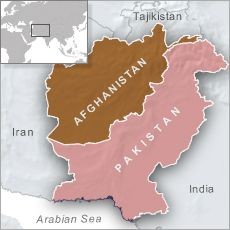
NEW DELHI (TCA) — This week US Secretary of State Rex Tillerson paid a visit to South Asia. He visited both Islamabad and New Delhi, and made a sudden, secret visit to Afghanistan, too. So tight was the security that there is confusion over where exactly he had his meeting with Afghan President Ashraf Ghani – in Kabul or at the Bagram Air base, which he visited.
This was the first visit by Tillerson to the region since President Donald Trump unveiled his administration’s policy on South Asia and Afghanistan in August. A key component of this new Afghan policy is that he has changed the rules of military engagement. “A core pillar of our new strategy is a shift from a time-based approach to one based on conditions,” the President had announced. He has allowed the “integration of all diplomatic, economic, and military means” to target the enemy, without “micro-management from Washington”.
Trump has also called out Pakistan for its support in providing “safe-havens for terrorist organizations, the Taliban and other groups that pose a threat to the region and beyond.” This effectively means that US and NATO troops will be at liberty to pursue any action to target the Taliban, ISIS and any other terror group in Afghanistan.
Significantly, it has been reported that following his visit to Afghanistan, Tillerson has said there is a place for moderate elements of the Taliban in Afghanistan’s government as long as they renounce violence and terrorism. This is not a new approach. Successive Afghan governments have tried to reach out to the Afghan Taliban. In an interview to this author, soon after a bloodbath by the Taliban on the streets of Kabul last year Afghan Ambassador to India Dr. Shaida Abdali had said “We do not see the ‘good’ or ‘bad’ Taliban. What we do see is the reconcilable and the irreconcilable Taliban.”
However, the Taliban insists on the departure of all foreign troops from Afghan soil before they agree to sit at the negotiating table, in spite of invitations to talks by powers like Russia and China. No doubt they feel emboldened to thus precondition talks, because of Pakistani support. Besides, the fractiousness of the coalition government in Kabul has contributed to the local support that the Taliban have managed to reclaim in many places because of abuses by representatives of the Afghan state or by those under its protection, like the local war lords. The Taliban today control almost forty per cent of Afghan territory.
This has made other regional players, including Russia and China, also reach out and open channels of communication with them. The Times earlier this month reported that it had learnt from members of the Taliban and Afghan officials that Russia is funding Taliban military operations against NATO in Afghanistan. The Russian Foreign Ministry has strongly repudiated that article saying “We believe that this fake, just as the other items containing false information, are aimed at drawing international attention away from the failure of NATO’s military policy in Afghanistan and are evidence of a resentful attitude to the stabilization efforts by Moscow and its regional partners … in Afghanistan.”
The ministry instead alleges that there are “…continued flights by unmarked helicopters to the Afghan regions controlled by extremists, whom British intelligence services are supporting.”
It is evident that Islamic State of Iraq and Syria militants have found a foothold in Afghanistan and there have been reports of Taliban and other militants moving over to their ranks. There is also worry in the region that with the current defeat of the ISIS in Iraq and Syria, its fighters may flock to Afghanistan where the country’s ungoverned tracts can offer them safe havens. To that end, Iran, whose longtime foe the Taliban has been, to also reach out to it, as it sees it as a lesser evil than ISIS and useful to counter the growth of ISIS there.
The Taliban has different factions and as the US steps up its military operations in Afghanistan, including with greater airpower, with no set deadline, even while the capability of the Afghan National Army is shored up, it is expected that the Taliban’s endurance will be tested and the more amenable factions may come forward to the negotiating table and eschew violence. Under sustained pressure from the US, Pakistan may not be able to keep up its support for the Afghan Taliban.
Pakistani analysts have decried Trump’s new Afghan policy as one which is bound to fail. Pakistan would like to have leverage over Kabul to maintain strategic depth against its arch-rival India on its eastern borders. However, Pakistan’s strategic location, for the movement of US troops and supplies into Afghanistan may not make it easy for the US to assert the kind of pressure it is threatening to. On the other hand, Pakistan’s close links with China can allow it to disdain US warnings.
Meanwhile, Iran, Russia, Pakistan would like to see US and NATO troops leave the region, even as the US becomes embroiled in this ‘new cold war’ with Russia while also alienating Iran with President Trump’s recent decertification of the Iran nuclear deal. It is a terribly complicated situation in which the worst brunt is borne by the Afghan people. It therefore becomes imperative for the government of President Ghani and CEO Abdullah to undertake reforms to provide better governance to the Afghan people. Afghans need to forge a national consciousness. Afghanistan is surviving on foreign aid today and in his speech formulating his Afghan policy, President Trump has also sent a veiled warning to the Afghan government, saying that “America will work with the Afghan government as long as we see determination and progress” and that American “commitment is not unlimited and our support is not a blank check”.
In spite of differences that persist within different stakeholders in Afghanistan and the different regional players, one thing is sure – an unstable Afghanistan is in no one’s interest. It is not only the neighboring and regional states, Pakistan included which embroiled in a war with its own local Pakistani Taliban, that are threatened by Afghan instability, as 9/11 has proved. It is time for all stakeholders to set aside their differences and work to find common ground there.
* Aditi Bhaduri is an independent journalist and political analyst specializing in international affairs and foreign policy. She writes for many national and international publications
BISHKEK (TCA) — The Publisher’s note: Central Asia is an important geopolitical area between Europe, Russia and China. It is in Central Asia that world powers have confronted each other for centuries; it is here that China needs to succeed with its new Silk Road Belt for direct access to the Western markets; and it is here that a large wealth of raw materials has its origin. Every week thousands of news appears all over the world in printed and online media and it is quite understandable that many of them may escape the attention of busy readers. At The Times of Central Asia, we strongly believe that more information can better contribute to peaceful development and better knowledge of the region, and for this reason we are presenting this Weekly Digest of Central Asia which compiles what other media have reported during the past week.
BISHKEK (TCA) — Kyrgyzstan President Almazbek Atambayev has leveled indirect but harsh criticism against his Kazakhstan counterpart, the latest salvo in a dispute between the two Central Asian neighbors, RFE/RL’s Kyrgyz Service reported.