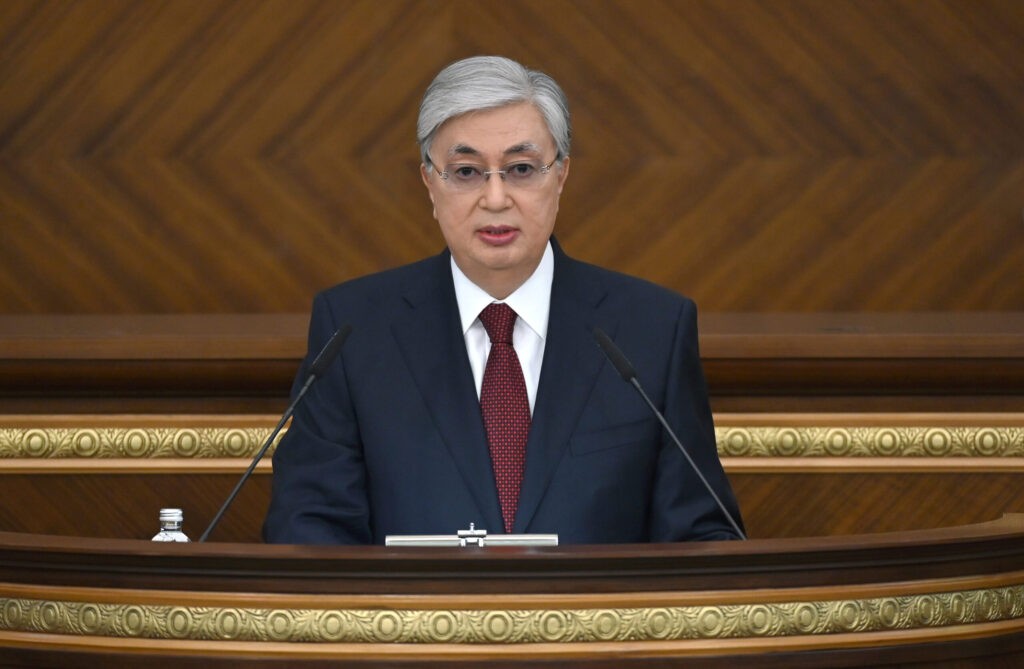
Kazakhstan to End “Super-Presidential” Model of Government

Earlier today, March 16, 2022, historical new reforms were introduced in Kazakhstan. After 30 years of independence from the Soviet Union, its progress towards democracy went dormant. The reforms announced today, if implemented, will bring Kazakhstan’s democracy standards on par and in some cases above those of the European Union.
Tokayev has served as president of Kazakhstan for 2 years. After protests and the attempted coup in January 2022, it became clear that the country needed to introduce fundamental reforms aimed at human rights, openness, welfare and the fight against corruption.
Moreover, the tragic events in January were seen in part as a consequence of political “stagnation” which required fundamental changes to resolve. The monopoly in the political sphere led to various social issues and the overall degradation of the state under the increased influence of individuals close to the center of power and oligarchic groups.
In today’s message to the people of Kazakhstan, Tokayev announced reforms impacting almost all the country’s political institutions. The key powers of the main governmental bodies, such as the presidential office, parliament, local administrations, as well as the judicial and law enforcement systems will be revised. Laws regarding political parties and the electoral process will also be revised.
At the same time, President Tokayev emphasized that reforms in Kazakhstan should not be in name only. He declared: “Reforms for the sake of reforms are not needed. The time when we were content with achievements only on paper has passed. It is necessary to eradicate the monopoly in the economy and politics, to move from a super-presidential to a presidential model of government.”
According to Tokayev, there will be a significant limitation applied to presidential powers in Kazakhstan. This will entail, the parliament’s authorities will be strengthened. A mixed proportional representation voting system will be introduced amidst a broader plan to reform the parliamentarian system.
The entry of new political parties into Kazakhstan’s democratic contest can be expected. Barriers to forming new political parties will be removed. The number of signatures required will be decreased. The registration process will be streamlined.
Tokayev also called for a strong parliament that has checks and balances over the authority over the presidency. He lessened the president’s influence over the parliament by reducing the number of appointed senators from 15 to 10. Of the 10 appointees, half will be recommended by the Assembly of the People of Kazakhstan, a consultative body that develops the policy of friendship and unity between the various nationalities that make up the Kazakh people.
The judicial system of Kazakhstan will also be changed, and a Constitutional Court created. Under the new initiative, the president’s appointment of the chairman of the Constitutional Court, and the chairman of the Supreme Judicial Council, will require the consent of the Senate, a move which is aimed at strengthening the independence and transparency of the judiciary.
In addition, according to new legislation, the president will be required to terminate any membership in a political party during their term in office. President Tokayev also announced the end of “institutionalized nepotism” which in his words “becomes fertile ground for the flourishing of corruption”. Close relatives of the president will be barred from holding senior positions in government and the quasi-public sector. These measures further will prevent not only corruption but the concentration of power of current and future presidents.
The implementation of these reforms decentralizes the state’s power in Kazakhstan. This will affect not only the powers of the president, but also the activities of akims (governors) of the districts, cities, rural districts. Moving forward, their work will be evaluated for the most part by the people, not the president.
Importantly, before the adoption of such a large-scale package of reforms, the authorities of Kazakhstan undertook significant work, heard public opinion and consulted with public associations, scientists, experts, political parties and more. These discussions were held openly and publicly.
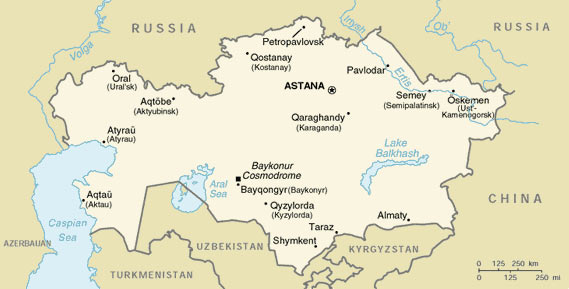
President Tokayev’s program of political reforms may mark the beginning of a new era Kazakhstan’s democratic transformation. Due to its geographical proximity to Russia and China, these reforms are particularly significant. A successful reformation will bring stability to the state and the broader region. However, the biggest winner of the reforms would be the Kazakh people. Improved human rights, press freedoms, governance, and a level economic playing field would make the country a better place for today’s Kazakhs and future generations to come.