• KGS/USD = 0.01144 0%
  • KZT/USD = 0.00201 0%
  • TJS/USD = 0.10563 -0.09%
  • UZS/USD = 0.00008 0%
  • TMT/USD = 0.28490 0%
  • KGS/USD = 0.01144 0%
  • KZT/USD = 0.00201 0%
  • TJS/USD = 0.10563 -0.09%
  • UZS/USD = 0.00008 0%
  • TMT/USD = 0.28490 0%
  • KGS/USD = 0.01144 0%
  • KZT/USD = 0.00201 0%
  • TJS/USD = 0.10563 -0.09%
  • UZS/USD = 0.00008 0%
  • TMT/USD = 0.28490 0%
  • KGS/USD = 0.01144 0%
  • KZT/USD = 0.00201 0%
  • TJS/USD = 0.10563 -0.09%
  • UZS/USD = 0.00008 0%
  • TMT/USD = 0.28490 0%
  • KGS/USD = 0.01144 0%
  • KZT/USD = 0.00201 0%
  • TJS/USD = 0.10563 -0.09%
  • UZS/USD = 0.00008 0%
  • TMT/USD = 0.28490 0%
  • KGS/USD = 0.01144 0%
  • KZT/USD = 0.00201 0%
  • TJS/USD = 0.10563 -0.09%
  • UZS/USD = 0.00008 0%
  • TMT/USD = 0.28490 0%
  • KGS/USD = 0.01144 0%
  • KZT/USD = 0.00201 0%
  • TJS/USD = 0.10563 -0.09%
  • UZS/USD = 0.00008 0%
  • TMT/USD = 0.28490 0%
  • KGS/USD = 0.01144 0%
  • KZT/USD = 0.00201 0%
  • TJS/USD = 0.10563 -0.09%
  • UZS/USD = 0.00008 0%
  • TMT/USD = 0.28490 0%
20 February 2026

Viewing results 1 - 6 of 1131

From Security Threat to Economic Partner: Central Asia’s New ‘View’ of Afghanistan

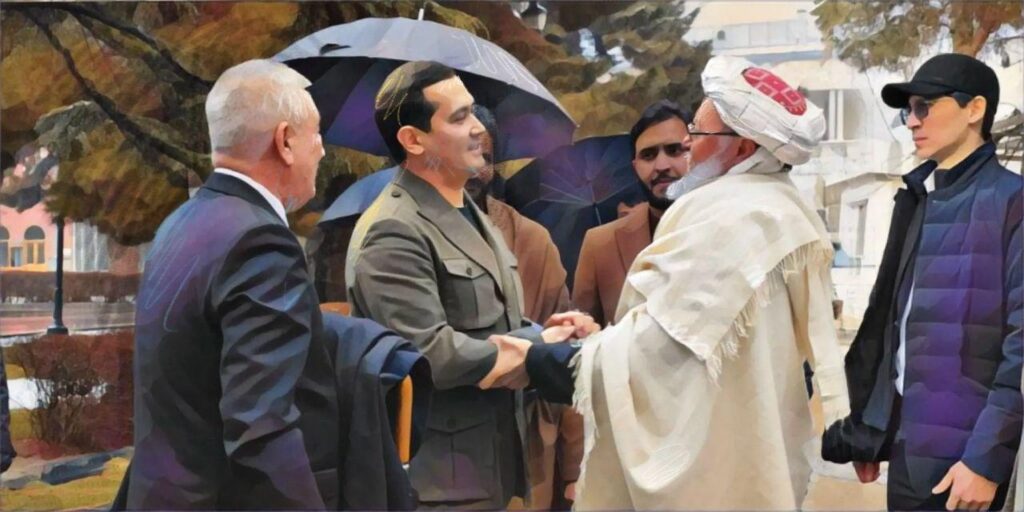
Afghanistan is quickly becoming more important to Central Asia, and the third week of February was filled with meetings that underscored the changing relationship. There was an “extraordinary” meeting of the Regional Contact Group of Special Representatives of Central Asian countries on Afghanistan in the Kazakh capital Astana. Also, a delegation from Uzbekistan’s Syrdarya Province visited Kabul, and separately, Uzbekistan’s Chamber of Commerce organized a business forum in the northern Afghan city of Mazar-i-Sharif. A Peaceful and Stable Future for Afghanistan The meeting in Astana brought together the special representatives of Kazakhstan, Kyrgyzstan, Tajikistan, and Uzbekistan for Afghanistan. The group was formed in August 2025. There was no explanation for why the fifth Central Asian country, Turkmenistan, chose not to participate. The purpose of the Astana meeting was to coordinate a regional approach to Afghanistan. Comments made by the representatives showed Central Asia’s changing assessment of its southern neighbor. Kazakhstan’s special representative, Yerkin Tokumov, said, “In the past [Kazakhstan] viewed Afghanistan solely through the lens of security threats… Today,” Tokumov added, “we also see economic opportunities.” Business is the basis of Central Asia’s relationship with the Taliban authorities. Representatives noted several times that none of the Central Asian states officially recognizes the Taliban government (only Russia officially recognizes that government). But that has not stopped Kazakhstan and Uzbekistan, in particular, from finding a new market for their exports in Afghanistan. Uzbekistan’s special representative, Ismatulla Ergashev, pointed out that his country’s trade with Afghanistan in 2025 amounted to nearly $1.7 billion. Figures for Kazakh-Afghan trade for all of 2025 have not been released, but during the first eight months of that year, trade totaled some $335.9 million, and in 2024, amounted to $545.2 million. In 2022, Kazakh-Afghan trade reached nearly $1 billion ($987.9 million). About 90% of trade with Afghanistan is exports from Kazakhstan and Uzbekistan. For example, Kazakhstan is the major supplier of wheat and other grains to Afghanistan, and Uzbekistan is the biggest exporter of electricity to Afghanistan. Kyrgyzstan’s trade with Afghanistan is significantly less, but from March 2024 to March 2025, it came to some $66 million. To put that into perspective, as a bloc, the Central Asian states are now Afghanistan’s leading trade partner, with more volume than Pakistan, India, or China. Kazakhstan’s representative, Tokumov, highlighted Afghanistan’s strategic value as a transit corridor that could open trade routes between Central Asia and the Indian Ocean. Kyrgyzstan’s representative, Turdakun Sydykov, said the trade, economic, and transport projects the Central Asian countries are implementing or planning are a “key condition for a peaceful and stable future for Afghanistan and the region as a whole.” The group also discussed humanitarian aid for Afghanistan. All four of these Central Asian states have provided humanitarian aid to their neighbor since the Taliban returned to power in August 2021. Regional security was also included on the agenda in Astana, but reports offered little information about these discussions. A few days before the opening of the meeting in Astana, Russian Ambassador to Kyrgyzstan Sergei...
Coordination Instead of Declarations: Astana Hosts Meeting of Regional Contact Group on Afghanistan

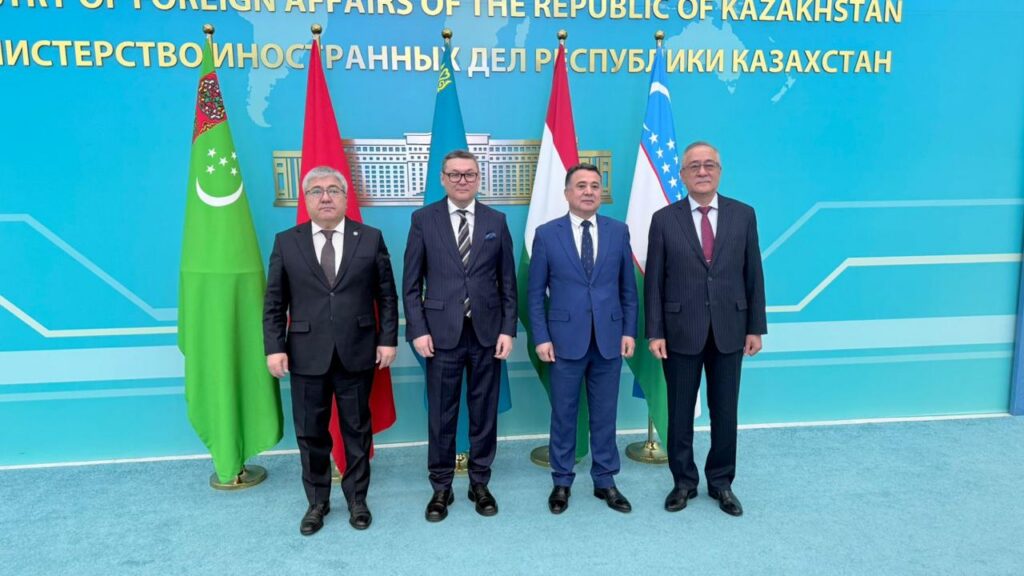
On Monday, Astana hosted an extraordinary meeting of the Regional Contact Group of Special Representatives of Central Asian Countries on Afghanistan, with delegations from Kazakhstan, Kyrgyzstan, Tajikistan, and Uzbekistan in attendance. The agenda focused on trade and economic cooperation with Afghanistan, including joint projects, investment protection, transit tariff policy, and the development of transport corridors through Afghan territory. The establishment of the group represents the practical implementation of agreements reached at the Sixth Consultative Meeting of the Heads of State of Central Asia, held in Astana in August 2024, and reflected in the Roadmap for Regional Cooperation for 2025-2027. The first meeting of the Contact Group took place on August 26 last year in Tashkent. As noted by Erkin Tukumov, Special Representative of the President of Kazakhstan for Afghanistan, Astana is interested in a constructive exchange of views and in identifying practical solutions to pressing issues of cooperation with Afghanistan. In recent years, Kazakhstan has consistently kept Afghanistan among its foreign policy priorities, avoiding rhetorical declarations in favor of a measured and systematic approach. President Kassym-Jomart Tokayev has paid particular attention to Afghanistan since the change of power in Kabul in 2021. In the first weeks after the Taliban assumed control, Astana began articulating its position on international platforms. One of the key statements was Tokayev’s address at the Shanghai Cooperation Organisation summit in Dushanbe on September 17, 2021. He advanced a thesis that has since been reiterated in various formats: Afghanistan should be viewed not only as a source of risk but also as a potential driver of regional development, provided that stability and economic recovery are achieved. This position was further elaborated days later at the United Nations General Assembly. At that time, Kazakhstan was among the first to emphasize the need for inclusiveness in Afghanistan’s future political system, not as an abstract requirement, but as a practical condition for stability. Another significant step was the creation last year of the post of Special Representative of the President for Afghanistan, to which Tukumov was appointed. This role goes beyond that of an interdepartmental coordinator: as a direct representative of the head of state, it elevates the Afghan portfolio to the level of strategic priority. The establishment of such a position signals a transition from a situational response to a more systematic policy. The Astana meeting confirmed the intention of regional countries to deepen cooperation through a regular platform capable of coordinating actions and presenting them externally in a consolidated manner. Some external observers suggest that Central Asian countries are only now beginning to develop a common position on Afghanistan. However, that position has largely taken shape in recent years. The current task is not to formulate it, but to coordinate it more precisely. The meeting in Astana demonstrated that, for Central Asian countries, the primary concern is not the nature of the regime in Kabul, but Afghanistan’s capacity to function as a predictable economic partner and responsible participant in international relations. For the region, it is essential that...

Opinion – The “Board of Peace” and Afghan Diplomacy: A View from Kabul

A new trend is becoming increasingly apparent in global politics: key decisions are being discussed not only within traditional international institutions but also through more flexible political and diplomatic formats. One such initiative is the announcement of the creation of the “Board of Peace” by U.S. President Donald Trump, a structure that, according to its authors, is intended to provide an alternative mechanism for conflict resolution. Reactions have been mixed. Some states view the new platform as an opportunity to enhance the effectiveness of peace efforts; others warn that it could weaken existing institutions, particularly the United Nations, and contribute to a gradual shift toward closed political groupings in which participants' strategic interests outweigh universal rules. At its core, this debate reflects the possibility of a deeper transformation of the international order. Whereas global security architecture was once built primarily around multilateral mechanisms, flexible coalitions and ad hoc alliances are becoming more prominent. In such a system, the role of states capable not only of adapting to change but also of offering independent diplomatic initiatives is growing. It is in this context that Afghanistan is increasingly asking what role it can occupy in a new international configuration. One of the key questions raised in Kabul’s expert community is straightforward: Will the current Afghan authorities be considered in emerging international mechanisms, including the Board of Peace? There is no clear answer. Despite ongoing global discussions on security and economic cooperation, concrete decisions regarding Afghanistan remain limited. Frozen financial assets, sanctions, and uncertainty over the country’s international status continue to impede economic recovery and complicate integration into regional processes. Against this backdrop, Afghan experts argue that the country should avoid remaining on the periphery of the evolving order and instead seek integration through sustained diplomatic engagement and regional cooperation. Central Asia could play a particularly significant role in this process. The states of the region are potentially capable of mediating to reduce tensions between Afghanistan and Pakistan and of facilitating the resolution of a conflict that directly affects broader regional security. Such a role appears logical for several reasons. Many Central Asian countries traditionally pursue pragmatic foreign policies, maintaining working relations with multiple centers of power while avoiding rigid geopolitical alignments. This approach has gradually shaped their reputation as relatively neutral and predictable partners. The element of self-interest is equally important. Stability to the south is directly linked to border security, the development of transport corridors, energy projects, and trade. In this context, mediation is not merely a diplomatic gesture but an element of a long-term regional strategy. Moreover, neutrality may prove to be Central Asia’s principal political asset. The region is not generally perceived as a direct party to the conflict and is therefore potentially well placed to offer a platform for dialogue. At the same time, assuming such a role would require readiness to accept greater responsibility. Effective mediation presupposes regional coordination, institutional maturity, and the political will to engage more actively in security matters. The emergence of initiatives such...

Uzbekistan Approves Feasibility Study for Trans-Afghan Railway

President Shavkat Mirziyoyev has approved an intergovernmental agreement on the joint development of a feasibility study for the construction of the Trans-Afghan railway, which will link Uzbekistan, Afghanistan, and Pakistan. According to the presidential resolution, the agreement between Uzbekistan’s Ministry of Transport, Afghanistan’s Ministry of Public Works, and Pakistan’s Ministry of Railways provides for the preparation of technical and economic documentation for a new railway line from Naibabad to Kharlachi. The document formalizes cooperation on the next stage of the long-discussed regional transport corridor. Under the resolution, Uzbekistan’s Ministry of Foreign Affairs has been instructed to notify the Afghan and Pakistani sides that all necessary domestic procedures required for the agreement’s entry into force have been completed. The Trans-Afghan railway project was first proposed by Tashkent in December 2018 as a strategic initiative to provide Central Asia with direct access to Pakistani seaports. The original concept envisaged extending Afghanistan’s rail network from Mazar-i-Sharif through Kabul and Logar province before crossing into Pakistan. An earlier proposed route was expected to pass through Nangarhar province and the Torkham border crossing into Peshawar. In July 2023, however, Uzbekistan, Pakistan, and Afghanistan agreed on a revised alignment. The updated route will run from Termez to Naibabad, then through Maidan Shahr and Logar to Kharlachi, excluding the previously discussed Torkham crossing. Once connected to Pakistan’s railway network, cargo will be able to reach the Pakistani ports of Karachi, Gwadar, and Qasim. The railway is expected to stretch approximately 647 kilometers. According to recent statements by Uzbek officials, the estimated construction cost is $6.9 billion, although earlier projections ranged from $4.6 billion to $7 billion. The project is regarded by the participating countries as a key component of efforts to strengthen regional connectivity and expand trade routes between Central and South Asia.

Opinion: Afghanistan and Central Asia – Security Without Illusions

Over the past year, Afghanistan has become neither markedly more stable nor dramatically more dangerous, despite how it is often portrayed in public discourse. There has been neither the collapse that many feared, nor the breakthrough that some had hoped for. Instead, a relatively unchanged but fragile status quo has persisted, one that Central Asian countries confront daily. For the C5 countries, Afghanistan is increasingly less a topic of speculative discussion and more a persistent factor in their immediate reality. It is no longer just an object of foreign policy, but a constant variable impacting security, trade, humanitarian issues, and regional stability. As such, many of last year’s forecasts have become outdated, based as they were on assumptions of dramatic change, whereas the reality has proven far more inertial. Illusion #1: Afghanistan Can Be Ignored The belief that Afghanistan can be temporarily “put on the back burner” is rooted in the assumption that a lack of public dialogue or political statements equates to a lack of interaction. But the actions of Central Asian states show that ignoring Afghanistan is not a viable option, even when countries intentionally avoid politicizing relations. Turkmenistan offers a clear example. Ashgabat has maintained stable trade, economic, and infrastructure ties with Afghanistan for years, all with minimal foreign policy rhetoric. Energy supplies, cross-border trade, and logistical cooperation have continued despite political and financial constraints, and regardless of international debates over the legitimacy of the Afghan authorities. This quiet pragmatism stands in contrast to both isolationist strategies and symbolic or ideological engagement. Turkmenistan may avoid making public declarations about its relationship with Afghanistan, but it nonetheless maintains robust cooperation. This calculated calmness reduces risks without signaling disengagement. Importantly, this approach does not eliminate structural asymmetries or deeper vulnerabilities. But it dispels the illusion that distancing reduces risk. On the contrary, sustained economic and logistical ties foster predictability, without which attempts to “ignore” a neighboring country become a form of strategic blindness. In this sense, Turkmenistan’s experience affirms a broader regional truth: Afghanistan cannot be removed from Central Asia’s geopolitical equation by simply looking away. It must be engaged pragmatically or dealt with later, in potentially more destabilizing forms. Illusion #2: Security Is Achieved Through Isolation Closely related to the first is the illusion that security can be ensured by building walls. Security in Afghanistan, and in the broader Afghan-Pakistani zone, is often seen as an external issue, something that can be kept out by sealing borders or minimizing engagement. Yet in practice, security is determined less by geography and more by the nature of involvement. This is reflected in the recent decision by Uzbekistan and Kazakhstan to participate in U.S. President Donald Trump's “Board of Peace” initiative. While the initiative focuses on resolving crises outside Central Asia, both countries have framed their participation as essential to their own national and regional security interests. As Abdulaziz Kamilov, advisor to the President of Uzbekistan, explained, Tashkent’s involvement stems from three factors: its own security needs, its foreign policy principles,...

The “Central Asia 2030” Roundtable in Astana: From External Interest to Regional Choice

Discussions about Central Asia’s long-term strategic future are increasingly shifting from a focus on external attention to one of growing regional agency. On Monday, Astana International University hosted the first roundtable in the series Central Asia 2030: Strategic Horizons and Regional Choices. Speakers included Andrew D’Anieri, Deputy Director of the Atlantic Council’s Eurasia Center; Yerkin Tukumov, Special Representative of the President of Kazakhstan; Ambassador-at-Large Zulfiya Suleimenova; and Dauren Aben, Deputy Director of the Kazakhstan Institute for Strategic Studies under the President of Kazakhstan. Pragmatism, Regional Choice, and the Logic of the “Grand Bargain” In his remarks, Andrew D’Anieri emphasized that Central Asia is increasingly viewed in the U.S. not as a peripheral zone but as an independent strategic partner. He noted that “environmental, water, and climate issues considered within a regional framework are fully supported by the U.S.” However, he added that “long-term commercial and investment projects are impossible without long-term stability, which in turn requires coordination between neighbors, engagement on sensitive issues, and pragmatic regional cooperation.” D’Anieri also pointed to Afghanistan as “an integral part of regional logic,” and described formats such as C5+1 as evidence of Central Asia’s growing subjectivity. He highlighted the first-ever C5+1 summit at the presidential level in Washington as a landmark event, especially under the administration of Donald Trump, known for its preference for bilateral over multilateral formats. Trump and the Possibility of a Visit: Only with a “Big Deal” When asked whether a visit by President Trump to Central Asia is realistic, D’Anieri offered a candid assessment: “Such a visit is only possible if there is a large, symbolically and economically significant deal.” Whether in aviation, technology, or infrastructure, these high-visibility projects are typically what draw Trump’s engagement. He added that “the region has work to do in developing a package of initiatives that could interest the U.S. president and justify a high-level visit.” Potential areas include mining, transport, and logistics. Reframing Afghanistan’s Role in the Region Special Representative Yerkin Tukumov focused on the importance of reframing the region’s relationship with Afghanistan. For too long, he said, Afghanistan has been viewed primarily “through the prism of security threats,” resulting in a narrow and often misleading approach. Tukumov argued for a broader, more pragmatic view that considers economic, humanitarian, and cross-border dimensions. He described the C5+1 format not as a replacement for bilateral diplomacy, but as “an additional level of coordination where Central Asia can speak with a more consolidated voice without losing national autonomy in foreign policy.” He stressed the need to move beyond “ideological and declarative approaches,” toward practical, interest-based mechanisms of cooperation. Ecology, Water, and the Case for a Global Water Agency Ambassador-at-Large Zulfiya Suleimenova addressed the strategic urgency of regional coordination on water and climate. She emphasized that “water issues are transboundary in nature,” and that efforts to resolve them solely within national frameworks are bound to fall short. “Regional coordination in Central Asia is not a political slogan, but a functional necessity,” she said. Suleimenova argued that jointly promoting...