• KGS/USD = 0.01144 0%
  • KZT/USD = 0.00216 0%
  • TJS/USD = 0.10562 0%
  • UZS/USD = 0.00008 0%
  • TMT/USD = 0.28530 0%
  • KGS/USD = 0.01144 0%
  • KZT/USD = 0.00216 0%
  • TJS/USD = 0.10562 0%
  • UZS/USD = 0.00008 0%
  • TMT/USD = 0.28530 0%
  • KGS/USD = 0.01144 0%
  • KZT/USD = 0.00216 0%
  • TJS/USD = 0.10562 0%
  • UZS/USD = 0.00008 0%
  • TMT/USD = 0.28530 0%
  • KGS/USD = 0.01144 0%
  • KZT/USD = 0.00216 0%
  • TJS/USD = 0.10562 0%
  • UZS/USD = 0.00008 0%
  • TMT/USD = 0.28530 0%
  • KGS/USD = 0.01144 0%
  • KZT/USD = 0.00216 0%
  • TJS/USD = 0.10562 0%
  • UZS/USD = 0.00008 0%
  • TMT/USD = 0.28530 0%
  • KGS/USD = 0.01144 0%
  • KZT/USD = 0.00216 0%
  • TJS/USD = 0.10562 0%
  • UZS/USD = 0.00008 0%
  • TMT/USD = 0.28530 0%
  • KGS/USD = 0.01144 0%
  • KZT/USD = 0.00216 0%
  • TJS/USD = 0.10562 0%
  • UZS/USD = 0.00008 0%
  • TMT/USD = 0.28530 0%
  • KGS/USD = 0.01144 0%
  • KZT/USD = 0.00216 0%
  • TJS/USD = 0.10562 0%
  • UZS/USD = 0.00008 0%
  • TMT/USD = 0.28530 0%

Viewing results 1 - 6 of 1170

Uzbekistan to Extend Electricity Supplies to Afghanistan Through 2026

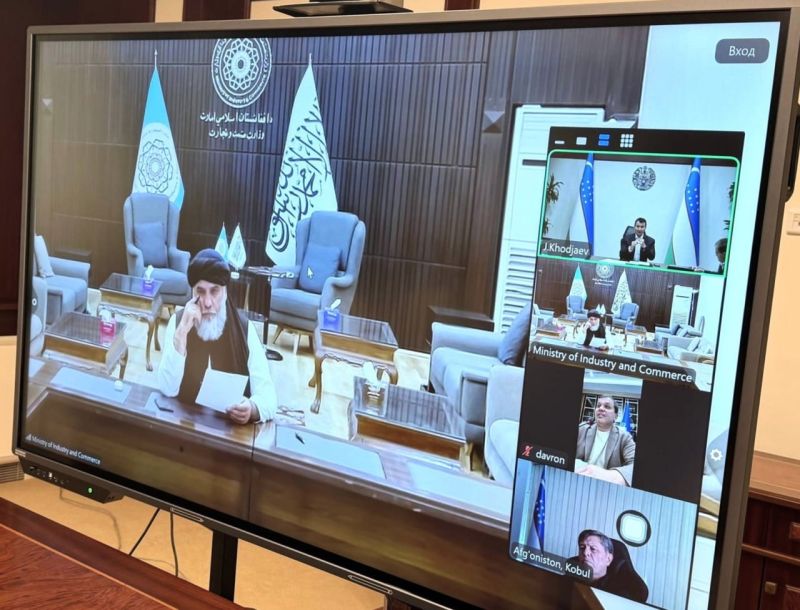
Uzbekistan will continue supplying electricity to Afghanistan in 2026, the Ministry of Energy announced following a bilateral meeting in Tashkent between Uzbek Energy Minister Jorabek Mirzamahmudov and Abdul Bori Umar, Chief Executive of Afghanistan’s state-owned power company Da Afghanistan Breshna Sherkat (DABS). Senior officials from Uzbekistan’s energy sector also participated in the talks. The two sides referenced recent statements by President Shavkat Mirziyoyev at the 80th session of the UN General Assembly and during the Central Asia summit held in Tashkent, where he underscored the importance of supporting the Afghan people and fostering the country’s economic development. Officials said these efforts are helping to reinforce energy cooperation between the neighboring countries. The meeting also covered progress on joint energy infrastructure projects, including the construction of high-voltage transmission lines and substations within Afghanistan. Both sides agreed to accelerate implementation of these facilities. The session concluded with the signing of a new contract extending Uzbekistan’s electricity supply to Afghanistan through 2026. According to the Ministry of Energy, the agreement demonstrates the shared interest of both countries in ensuring stable power delivery and strengthening Afghanistan’s energy infrastructure. Earlier this year, DABS reported that it had signed four contracts worth $243 million with Uzbekistan’s Ministry of Energy, along with partners Nego Energy and Uz Energy. These projects include the extension of the 500-kilovolt Surkhan-Dasht Alwan transmission line, capable of transmitting up to 1,000 megawatts; expansion of the Arghandeh substation to 800 MVA; construction of a new Sheikh Mesri substation in Nangarhar Province; and the extension of the 220-kilovolt Kabul-Nangarhar (Sheikh Mesri) line.

Central Asian Leaders Welcome Azerbaijan’s Accession at Tashkent Summit

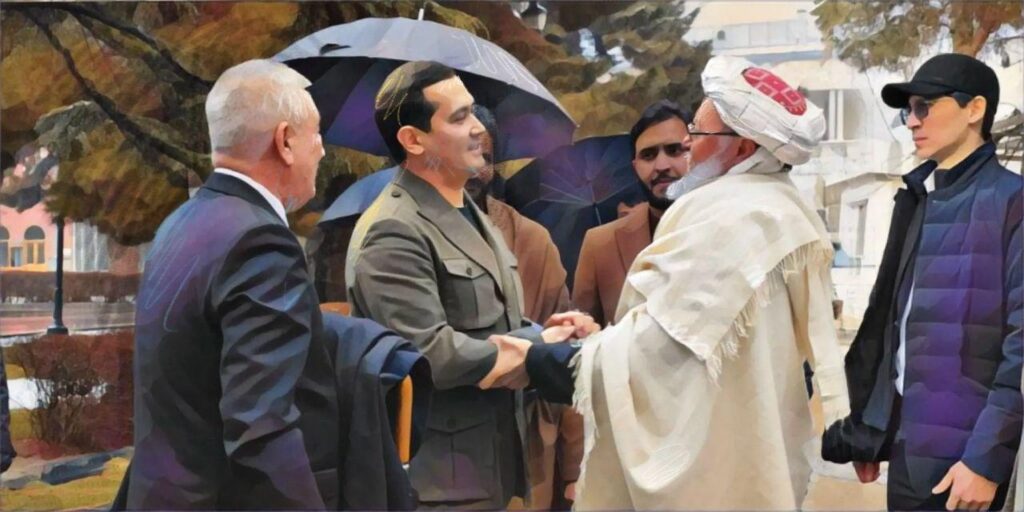
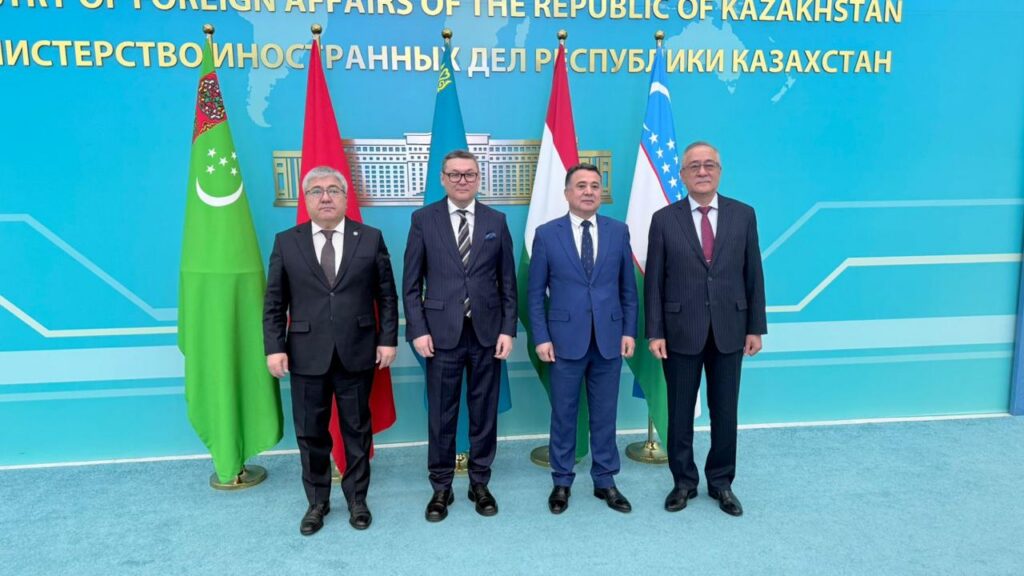
The leaders of Central Asia convened in Tashkent on November 16 for a high-level Consultative Meeting, marking a significant step toward deeper regional integration. The summit welcomed Azerbaijan as a full participant and endorsed a roadmap to formalize cooperation in trade, infrastructure, security, and water management. Hosted by Uzbekistan’s President Shavkat Mirziyoyev, the summit brought together the presidents of Kazakhstan, Kyrgyzstan, Tajikistan, Turkmenistan, and Azerbaijan, alongside a United Nations representative. Ahead of the meeting, Tashkent’s central streets were adorned with national flags and floral installations, underscoring the political and symbolic significance the Uzbek government placed on the event. Mirziyoyev hailed Azerbaijan’s accession as “a truly historic day,” as the country became a full member of the Consultative Meeting of the Heads of State of Central Asia. He proposed forming a “Community of Central Asia,” establishing a rotating Secretariat, appointing special presidential envoys for coordination, and creating a Council of Elders to promote cultural and humanitarian dialogue. [caption id="attachment_39410" align="aligncenter" width="1280"] Image: president.uz[/caption] Regional Economic and Connectivity Agenda Economic cooperation dominated the multilateral agenda. Leaders agreed to develop a Comprehensive Regional Program for Trade and Economic Cooperation through 2035 and to draft a Declaration on a Common Investment Space. “In essence, we will build a strong bridge between Central Asia and the South Caucasus and pave the way for the formation of a single space of cooperation, which will undoubtedly strengthen the strategic interconnectedness and stability of both regions,” said Mirziyoyev. Kazakhstan’s President Kassym-Jomart Tokayev also highlighted deepening bilateral ties with Uzbekistan. Trade between the two countries has reached $4 billion in 2025, with plans to increase it to $10 billion through expanded industrial cooperation and import substitution. Over 6,500 joint enterprises now operate between the two countries, with new projects worth more than $8 billion under development. Several initiatives, such as the Silkway Central Asia logistics center, new industrial facilities, and cultural programs, were launched in Tashkent during the visit. [caption id="attachment_39411" align="aligncenter" width="1280"] Image: president.uz[/caption] Tajikistan’s President Emomali Rahmon met with Mirziyoyev on the sidelines of the summit. The two leaders noted the steady growth in political dialogue and agreed to expand cooperation in energy, industry, agriculture, and innovation. Bilateral trade surpassed $440 million in the first nine months of 2025. They also discussed regional security, including collaboration against terrorism, extremism, cybercrime, and drug trafficking. Security, Water, and Cultural Cooperation To advance regional integration, Tashkent also hosted the first meeting of the Council of Ministers of Trade and Investment of Central Asian countries and Azerbaijan on November 13. Ministers discussed boosting trade, investment, and industrial cooperation, with the goal of increasing regional trade turnover to $20 billion. Plans were also made to develop joint production platforms under a “Made in Central Asia” label. Uzbekistan’s trade with Central Asian partners rose from $3.2 billion in 2017 to $6.9 billion in 2024, while trade with Azerbaijan has grown by 13% this year. Connectivity remained a focal point. Participants reaffirmed their commitment to the China-Kyrgyzstan-Uzbekistan railway and the Trans-Afghan corridor. Azerbaijan’s President...

Opinion: The Integration of Afghanistan into Central Asia

Shared rivers and joint water management can shape a new regional partnership Central Asia and Afghanistan sit on the same rivers, yet often behave as if they belong to different regions. Water ties them together more firmly than any border, but the politics of the past have kept Afghanistan outside the regional system. Today, as climate pressures intensify and development accelerates on both sides of the Amu Darya, the case for integrating Afghanistan into Central Asia has never been stronger. And the path to that integration begins with water. The debate around the Qosh Tepa Canal makes this evident. Afghanistan was never part of the agreements that govern the Amu Darya River (Protocol 566 of the Soviet Union and the Almaty 1992 agreement). It did not sign allocation protocols and never joined regional basin institutions. Still, it was expected to follow rules it had no hand in shaping. Now, that old arrangement has reached its limit. The canal will bring new agriculture to the north of Afghanistan, but downstream states depend on the same river. The real question is not whether Afghanistan should develop, but how to shape that development jointly so the river can sustain all sides. Central Asia already has cooperative models that Afghanistan could join. Uzbekistan and Tajikistan have shown how two neighbors can jointly manage a transboundary river through their collaboration in hydropower on the Zarafshan. Kyrgyzstan, Uzbekistan, and Kazakhstan have signed a similar mechanism with the KambarAta-1 project, which will generate energy and regulate seasonal flows for downstream agriculture. These experiences show that once countries share responsibility for a river, trust can grow and benefits expand. Afghanistan can become part of this regional architecture. The 161-meter-high planned dam on the Kokcha River, set to generate 445 megawatts of electricity, offers a clear entry point. A jointly governed dam on this river would give Afghanistan energy, while downstream states would benefit from its flow in terms of agriculture. When operations are transparent and agreed upon, water becomes a field of cooperation rather than tension. Energy trade adds another layer of opportunity. Central Asia has a long record of exchanging electricity and gas in return for upstream releases. Uzbekistan and Kazakhstan have done this with Kyrgyzstan for many years through a joint water and energy agreement. The same model can work with Afghanistan. The country needs power, and it can offer coordinated water management in return. A structured energy for water arrangement would give Afghanistan an incentive to cooperate and offer Central Asia predictability. Agriculture is another arena where cooperation promises immediate gains. Uzbekistan’s policies on water-saving technologies offer a strong example. They subsidize drip, sprinkler systems, canal improvement, land levelling, efficient pumps, and even solar-powered irrigation. These investments reduce water losses while increasing yields only if their rebound effect, such as further expansion of agriculture, is controlled. The same approach could be applied in the northern provinces of Afghanistan, including in the area under the Qosh Tepa Canal. With similar financial support and technical guidance, Afghan...

Kazakhstan Sends Aid After Another Quake in Afghanistan

Kazakhstan has sent 18 tons of humanitarian aid to Afghanistan after a deadly earthquake near the northern Afghan city of Mazar-i-Sharif earlier this month. The aid from Kazakhstan includes medicine, medical instruments, bedding, tents and other essentials, and the Ministry of Health has also sent a team of medical workers to help affected communities in Afghanistan, the Kazakh government said on Thursday. It released photographs that show military personnel loading boxes of aid onto a military transport plane. A 6.3 magnitude earthquake hit near Mazar-i-Sharif around 1.a.m. local time on November 3, killing more than two dozen people, injuring more than 1,000 and damaging the city’s centuries-old Blue Mosque. Mazar-i-Sharif is near the border with Uzbekistan, which exports electricity to Afghanistan. The earthquake temporarily knocked out that power supply. Countries in Central Asia and elsewhere also responded with aid deliveries after a far more devastating earthquake in eastern Afghanistan on August 31. That disaster killed at least 2,200 people.    

Afghanistan Seeks Alternatives to Pakistan Trade; Fallout Likely for Central Asia

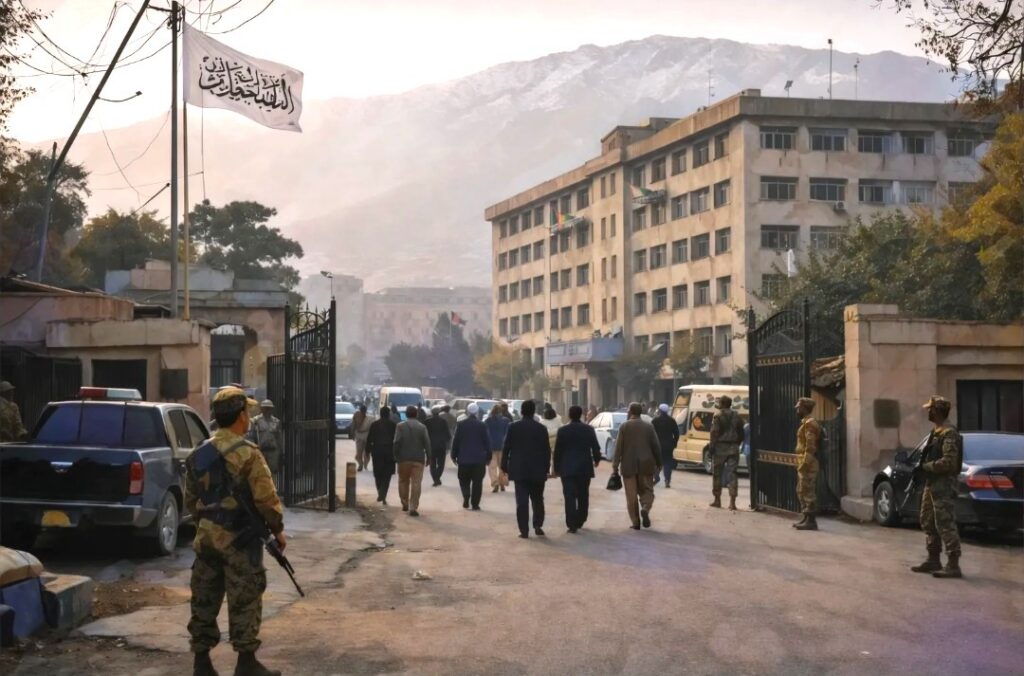
Afghanistan must look for “alternative trade routes” that bypass neighboring Pakistan, a senior Afghan official said Wednesday. The remarks reflect deepening tension after border clashes between the two countries and are a blow to some ambitious trade projects that would link South Asia and Central Asia. At the same time, the development could mean that Afghanistan will increasingly look to Central Asia for trade links as it cuts off business with Pakistan. “All Afghan traders and industrialists should turn to alternative trade routes instead of Pakistan,” said Abdul Ghani Baradar, Afghanistan’s deputy prime minister for economic affairs. “These routes have not only harmed our traders but have also caused difficulties for markets and the general public. I strongly urge all traders to implement alternative options for imports and exports as soon as possible.” Baradar also criticized what he called the poor quality of medicine being imported from Pakistan and said medicine importers have three months to close accounts there. He said that if Pakistan wants to reopen trade routes with Afghanistan, it must provide solid guarantees that they won’t be closed again. Pakistan has said it needs security guarantees to normalize trade. The minister’s comments were reported by TOLOnews, a Kabul-based outlet, as well as other regional media organizations. Afghanistan and Pakistan share a 2,600-kilometer border and trade was severely disrupted after clashes between the two sides last month. Pakistan accuses Afghanistan of providing sanctuary to militants who carry out attacks against Pakistani security forces, an allegation that the ruling Taliban in Afghanistan denies. Several big Central Asia-South Asia projects would require close collaboration between Afghanistan and Pakistan. They are the Trans-Afghan Railway, the TAPI natural gas pipeline and the CASA-1000 electricity project. Three Central Asian countries – Uzbekistan, Turkmenistan and Tajikistan – have borders with Afghanistan and share ethnic ties with minority populations there. In late October, the city of Shymkent in southern Kazakhstan, near the border with Uzbekistan, hosted a forum during which Afghan and Kazakh officials and business leaders discussed expanding trade. Deals worth several hundred million dollars were announced.

Tensions Simmer Between Pakistan and Afghanistan, in Setback for Central Asian Trade Hopes

A round of peace talks between Pakistan and Afghanistan in Istanbul came under strain after another clash between the two countries along their border. A resolution to the conflict is important to Central Asian countries that want to trade south through Afghanistan and onward to Pakistani seaports that open the way to the Indian Ocean. Pakistan’s government and the ruling Taliban in Afghanistan accused each other of instigating the latest confrontation on Thursday, though they still expressed commitment to a delicate ceasefire that was agreed to last month. Dozens of people were killed and cross-border trade was suspended during the fighting in October.   According to the Taliban’s account, Pakistani forces fired on the Afghan border town of Spin Boldak as the talks in Turkey began on Thursday.   Afghan forces, “out of respect for the negotiation team and to prevent civilian casualties, have so far shown no reaction. It is worth noting that in the previous round of negotiations, both sides had agreed to extend the ceasefire and prevent any acts of aggression,” Taliban spokesman Zabihullah Mujahid said on X.  Pakistan’s Ministry of Information and Broadcasting, however, said firing started from the Afghan side and that Pakistan forces responded.  “The situation was brought under control due to responsible action by Pakistani forces and the ceasefire remains intact. Pakistan remains committed to ongoing dialogue and expects reciprocity from Afghan authorities,” the ministry said. Turkey, which along with Qatar is mediating, said ahead of the talks this week that the two sides had agreed to continue the ceasefire and establish “a monitoring and verification mechanism” to ensure peace and impose penalties for any violations. But Pakistani Information Minister Attaullah Tarar, while thanking the mediators, said late Friday that Afghanistan had failed to control terrorism, indicating that the talks in Istanbul had not overcome major sticking points.   A key dispute is over Pakistani allegations that militants have used Afghan territory as a sanctuary while carrying out attacks against targets in Pakistan. The Taliban in Afghanistan denies those allegations. Additionally, Afghanistan doesn’t recognize its porous, 2,600-kilometer border with Pakistan, saying it’s a British colonial-era construct that divided the ethnic Pashtun populations that have traditionally dominated Afghanistan.  These complexities pose a challenge for landlocked countries in Central Asia that are looking to diversity their trade routes. Several Central Asia-South Asia projects in the works – the Trans-Afghan Railway, the TAPI natural gas pipeline and the CASA-1000 electricity project - have a long way to go before completion.  Meanwhile, the post-Soviet states of Kazakhstan, Kyrgyzstan, Uzbekistan, Turkmenistan and Tajikistan are working on other trade and investment opportunities. Their leaders held a summit with U.S. President Donald Trump in Washington on Thursday, building ties with the West even as they nurture more established contacts with Russia and China.