• KGS/USD = 0.01144 0%
  • KZT/USD = 0.00205 0%
  • TJS/USD = 0.10731 0%
  • UZS/USD = 0.00008 0%
  • TMT/USD = 0.28490 0%
  • KGS/USD = 0.01144 0%
  • KZT/USD = 0.00205 0%
  • TJS/USD = 0.10731 0%
  • UZS/USD = 0.00008 0%
  • TMT/USD = 0.28490 0%
  • KGS/USD = 0.01144 0%
  • KZT/USD = 0.00205 0%
  • TJS/USD = 0.10731 0%
  • UZS/USD = 0.00008 0%
  • TMT/USD = 0.28490 0%
  • KGS/USD = 0.01144 0%
  • KZT/USD = 0.00205 0%
  • TJS/USD = 0.10731 0%
  • UZS/USD = 0.00008 0%
  • TMT/USD = 0.28490 0%
  • KGS/USD = 0.01144 0%
  • KZT/USD = 0.00205 0%
  • TJS/USD = 0.10731 0%
  • UZS/USD = 0.00008 0%
  • TMT/USD = 0.28490 0%
  • KGS/USD = 0.01144 0%
  • KZT/USD = 0.00205 0%
  • TJS/USD = 0.10731 0%
  • UZS/USD = 0.00008 0%
  • TMT/USD = 0.28490 0%
  • KGS/USD = 0.01144 0%
  • KZT/USD = 0.00205 0%
  • TJS/USD = 0.10731 0%
  • UZS/USD = 0.00008 0%
  • TMT/USD = 0.28490 0%
  • KGS/USD = 0.01144 0%
  • KZT/USD = 0.00205 0%
  • TJS/USD = 0.10731 0%
  • UZS/USD = 0.00008 0%
  • TMT/USD = 0.28490 0%

Viewing results 1 - 6 of 770

Uzbekistan to Import 300,000 Animals, Launch $367 Million in Livestock Projects

Uzbekistan’s President Shavkat Mirziyoyev has announced a sweeping expansion of the country’s livestock sector as part of broader agricultural reforms. Speaking on December 10 at a meeting with industry specialists to mark Agriculture Workers’ Day, the president outlined key initiatives aimed at boosting domestic production of meat and dairy products. According to the president’s press secretary, the government will import 100,000 head of cattle and 200,000 sheep and goats in 2026. Farmers working within cotton and grain clusters will be permitted to construct lightweight livestock facilities of up to 20 sotok (approximately 0.2 hectares) on their existing plots, a move designed to better integrate crop and livestock operations. Uzbekistan will also extend its subsidy program for imported breeding cattle and day-old chicks for an additional five years. To support the livestock sector’s growth, the government plans to allocate $157 million from funding provided by the World Bank and the International Fund for Agricultural Development. These loans will be issued to farmers at an interest rate of 17% for a term of up to 10 years, including a three-year grace period. Additional financing will include $150 million from the Japan International Cooperation Agency (JICA) and $60 million from the Asian Development Bank. Authorities say the efficient use of these resources could support the launch of 1,000 projects valued at 5 trillion UZS, including the establishment of 340 small livestock farms across 167 districts, modeled after a French framework. Last year, the European Union Delegation to Uzbekistan and the French Development Agency (AFD) signed agreements to support sustainable livestock development. The EU committed €4.7 million in grants for technical assistance and an additional €7.9 million to support Uzbekistan’s drinking water program, helping lay the groundwork for these agricultural reforms.

South Kazakhstan Braces for Irrigation Water Shortages in 2026

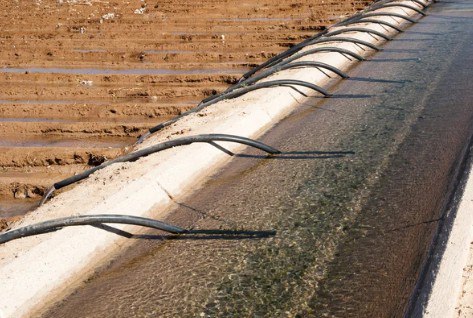
On December 4–5, Kazakhstan’s Deputy Prime Minister Kanat Bozumbayev, accompanied by Minister of Water Resources and Irrigation Nurzhan Nurzhigitov and Minister of Agriculture Aidarbek Saparov, visited the southern regions of Turkistan, Kyzylorda, and Zhambyl. The delegation met with local farmers to address the growing risks posed by declining transboundary water inflows and to discuss measures to ensure efficient water use during the 2026 irrigation season. Agriculture in these arid regions depends heavily on water from the Syr Darya River, which originates in Kyrgyzstan. According to the Ministry of Water Resources and Irrigation, Kazakhstan’s agricultural sector consumed 11.01 billion cubic meters of water during the 2025 irrigation season, with 98% used in the south. The Zhambyl region irrigated 79,000 hectares using 1 billion m³ of water and remains largely reliant on upstream supplies from Kyrgyzstan. This past season, Kyrgyzstan committed to providing more than 600 million m³ of water to Kazakhstan via the transboundary Chu and Talas rivers. The Kyzylorda and Turkistan regions were the largest consumers of irrigation water, drawing 3.5 billion m³ and 3.4 billion m³, respectively, to irrigate 125,000 and 400,000 hectares. Officials presented water inflow forecasts for 2026 and outlined measures to improve efficiency amid declining water availability. The Syr Darya basin continues to experience low-flow conditions, with reduced inflows into the Naryn-Syr Darya system threatening irrigation supplies for the upcoming growing season. Farmers were urged to adopt water-saving technologies, limit the cultivation of water-intensive crops, diversify planting, and transition to drought-resistant varieties. Bozumbayev noted that during the recent session of the Interstate Water Coordination Commission in Ashgabat, participating countries projected a further decline in water inflows for 2026. He warned that the Toktogul Reservoir in Kyrgyzstan, located on the Naryn River, a key tributary of the Syr Darya, may reach record-low levels, putting irrigation supplies at serious risk. “Given the continued decline in available water resources, there is a real risk of shortages during the next growing season. This is a natural challenge faced by all Central Asian countries. To minimize the impact, we must accelerate crop diversification and the introduction of water-saving irrigation technologies. The state has created all the necessary conditions for this. This is not simply about conserving water; the country’s water and food security depend on it,” Bozumbayev said. To support adoption of efficient irrigation systems such as drip and sprinkler technologies, the government has increased reimbursement for farmers' costs from 50% to 80%, on drilling wells and installing irrigation equipment. A differentiated irrigation tariff has also been introduced: for farmers using water-saving technologies, the subsidy on irrigation water has been raised from 60% to 85%. These measures have helped expand the area under modern irrigation systems from 312,200 hectares in 2023 to 580,000 hectares in 2025, representing 30% of all irrigated farmland. The government aims to increase this figure to 1.3 million hectares, or 70% of total irrigated land, by 2030. In Kyzylorda, the country’s main rice-producing region, the Ministry of Agriculture has announced that rice cultivation in 2026 must not...

Kazakhstan-China Agricultural Research Center to Open in Key Grain-Producing Region

A Kazakhstan-China Agricultural Research Center will be established in the North Kazakhstan region, one of the country's top three grain-producing areas. The initiative was announced by region's governor Gauez Nurmukhambetov following a business delegation’s visit to China. “Last week, a business delegation from our region visited the People’s Republic of China and held meetings with leading Chinese investors. As a result, seven strategic memoranda were signed, opening new economic opportunities for our region. These agreements include the construction of new factories and the creation of a Kazakh-Chinese agricultural research center,” Nurmukhambetov said at a press conference. The region continues to post record harvests. In 2025 it harvested 6.5 million tons of grain, nearly a quarter of Kazakhstan’s total gross harvest of 27.1 million tons. Nevertheless, the region is actively diversifying its agricultural profile. Sugar beet cultivation is expanding, with experimental plots from Asyl Farms showing strong crop adaptation. Based on this success, plans are underway to build a processing facility capable of handling 1 million tons of raw material annually, producing up to 200,000 tons of sugar. In the Kyzylzhar district, Salar Farm is building a plant for processing granulated alfalfa with an annual capacity of 60,000 tons. The main export markets include China and other Central Asian countries. The facility is scheduled to open in 2026. The region is also home to Maslo-Del, an oil extraction plant with an annual processing capacity of 370,000 tons of oilseeds and a production output of 120,000 tons, much of which is exported. Alongside its growth in crop production, the region is making notable progress in livestock farming. “SK Agro will construct the largest cattle farm in Central Asia, with a herd of 10,000 and a state-of-the-art Carousel milking system,” said Nurmukhambetov. “The farm is expected to increase milk production by 68 million tons annually. This will raise the share of milk produced by agricultural enterprises in Kazakhstan to 70%.” He noted that in Belarus, modern farms account for 77% of milk production, in China around 70%, and in European countries more than 93%. North Kazakhstan region aims to boost its share of the country’s total milk output to 20%. Meanwhile, 17 projects valued at $555.6 million are underway in the Qyzyljar special economic zone. Agricultural cooperation with China continues to grow. Kazakhstan views China as a key export destination for its processed agricultural products. In November, QazTrade signed a partnership agreement with Optimize Integration Group, one of China’s largest food importers, responsible for 18% of the country's frozen meat imports. In a related development, a joint Kazakh-Chinese veterinary laboratory was opened in East Kazakhstan region in October 2025. The facility is designed to streamline and accelerate export procedures for agricultural goods.

Turkish Cengiz Holding Plans $500 Million Investment in Kazakhstan’s Sugar Industry

Turkish industrial conglomerate Cengiz Holding has announced plans to invest $500 million in the construction of two sugar processing plants in Kazakhstan, according to the Ministry of Agriculture. The announcement followed a meeting between Agriculture Minister Aidarbek Saparov and Cengiz Holding board member Jengiz Shaban. The proposed facilities would have a combined annual capacity of up to 300,000 tons of sugar. North Kazakhstan and Pavlodar regions are under consideration as potential locations for the new factories. The project has a 10-year investment horizon. Construction is expected to begin in 2026, with production to commence within two years. According to Shaban, the initiative aims to boost domestic sugar supply while also supporting the development of by-products such as animal feed, food ingredients, and industrial alcohol. Saparov described the proposal as “strategically important” for Kazakhstan’s food security. “The creation of new processing capacities and the formation of a sustainable raw material base are key priorities for the state,” he said. The Ministry of Agriculture reports that Kazakhstan currently operates four sugar factories, three of which process domestically grown sugar beets. Despite this, annual consumption stands at approximately 500,000 tons, with local production meeting only 14% of national demand. Earlier, another Turkish conglomerate, Safi Holding, also expressed interest in establishing a sugar processing facility in Kazakhstan. The existing sugar factories include Aksu-Kant (Taldykorgan district), Koksu Sugar Factory (Almaty region), and the Merken and Taraz plants in Zhambyl region. Three of these process local sugar beets, while the Taraz facility relies on imported cane sugar. In 2024, Kazakhstan recorded a bumper sugar beet harvest of 1.2 million tons, yet only about 700,000 tons were processed, once again exposing deep-rooted inefficiencies in the sector.

Kazakhstan Launches Michurin Orchard to Advance High-Tech Horticulture

Kazakhstan has taken a significant step in modernizing its agricultural sector with the inauguration of the Michurin Orchard, a collaborative venture between the National Academy of Sciences of Kazakhstan and the Russian Academy of Sciences. The orchard, launched on December 1 in the village of Almalyk, Almaty region, will serve as a flagship platform for developing intensive horticulture and integrating science with high-value agricultural production. The initiative is part of the Kazakh-Russian Center for Advanced Technologies in the Agro-Industrial Sector, established in April 2025. Named after Ivan Michurin (1855-1935), a renowned Russian pioneer in plant selection, the orchard will operate as an open-air research and production site. Its core objectives include testing promising fruit and berry varieties, applying intensive horticultural techniques, and deploying water-, energy-, and resource-saving technologies. Initial plantings will focus on high-yield Russian apple cultivars adapted to Kazakhstan’s climate, along with pear, cherry, sweet cherry, plum, and a broad range of berries such as raspberry, honeysuckle, currants, sea buckthorn, and rose hips. Akhylbek Kurishbayev, President of the National Academy of Sciences of Kazakhstan, described the orchard as “a long-term investment in the development of Kazakhstan’s fruit growing industry.” He emphasized that the initial three-hectare planting represents the foundation of a new generation of resilient, high-productivity varieties capable of withstanding climatic stress. Kurishbayev noted that the Michurin Orchard will contribute to national breeding programs, build a sustainable raw material base for food processing industries, ranging from juices and concentrates to functional foods and help shift Kazakhstan’s agro-industrial model from raw-materials dependence to knowledge-intensive production. The orchard will also function as a live testing ground for horticultural technologies, from the selection of planting material to the delivery of premium fruit to consumers. Horticulture is emerging as a strategic growth sector within Kazakhstan’s agro-industrial complex. According to Deputy Minister of Agriculture Yerbol Taszhurekov, Kazakhstan’s apple orchards now span nearly 29,000 hectares, predominantly located in the southern regions of Almaty, Turkestan, Zhambyl, and Zhetisu. In Almaty and Zhetisu regions alone, apple orchards cover more than 2,400 hectares and include over 416,000 trees. In parallel, Kazakhstan is working to revive the iconic aport apple, a variety deeply intertwined with the country's botanical heritage and the city of Almaty, widely regarded as the ancestral home of the apple. Under a targeted 2024-2028 program involving private investors and specialized nurseries, the government aims to produce certified saplings and scale commercial aport cultivation. By 2027, Kazakhstan plans to plant 110 hectares of aport orchards.

New FAO Report Ranks Tajikistan Among World’s Most At-Risk Countries for Land Degradation

Tajikistan is among the countries most vulnerable to land degradation, according to a new report from the Food and Agriculture Organization of the United Nations (FAO). The findings point to alarming environmental and socio-economic risks for a country where agriculture remains the primary source of employment. The FAO attributes Tajikistan's vulnerability to a combination of small landholdings and intense pressure on soil resources. The country has more than 1 million rural households, including approximately 181,000 dekhkan farms. The average landholding is just 0.2 hectares, with a median size of 0.1 hectares, meaning half of all farmers operate on micro-plots. Challenges to Sustainable Agricultural Growth Under these conditions, expanding agricultural production is not feasible through increased acreage. Instead, growth depends on improving soil quality, upgrading irrigation systems, ensuring stable water access, and adopting modern technologies. These factors now define the boundaries of Tajikistan's agricultural development. According to the FAO, land degradation has affected 3.2 billion people globally, nearly 40% of the world's population. In some regions, agricultural yields have already declined by at least 10%. In Tajikistan, the stakes are especially high. The country has limited arable land, and its farming sector relies heavily on glacial meltwater and consistent irrigation. Climate risks are intensifying faster here than in many neighboring states. Extent and Impact of Land Degradation International experts estimate that nearly 70% of Tajikistan’s arable land is already degraded, with 10% of the population living in affected areas. The main drivers are erosion, salinization, and nutrient depletion, which collectively undermine soil productivity. These environmental pressures reduce rural incomes, increase reliance on external resources such as fertilizers, and contribute to forced migration, exacerbating social and economic vulnerabilities across the country.