• KGS/USD = 0.01144 0%
  • KZT/USD = 0.00206 0%
  • TJS/USD = 0.10736 -0.19%
  • UZS/USD = 0.00008 0%
  • TMT/USD = 0.28490 -0.28%
  • KGS/USD = 0.01144 0%
  • KZT/USD = 0.00206 0%
  • TJS/USD = 0.10736 -0.19%
  • UZS/USD = 0.00008 0%
  • TMT/USD = 0.28490 -0.28%
  • KGS/USD = 0.01144 0%
  • KZT/USD = 0.00206 0%
  • TJS/USD = 0.10736 -0.19%
  • UZS/USD = 0.00008 0%
  • TMT/USD = 0.28490 -0.28%
  • KGS/USD = 0.01144 0%
  • KZT/USD = 0.00206 0%
  • TJS/USD = 0.10736 -0.19%
  • UZS/USD = 0.00008 0%
  • TMT/USD = 0.28490 -0.28%
  • KGS/USD = 0.01144 0%
  • KZT/USD = 0.00206 0%
  • TJS/USD = 0.10736 -0.19%
  • UZS/USD = 0.00008 0%
  • TMT/USD = 0.28490 -0.28%
  • KGS/USD = 0.01144 0%
  • KZT/USD = 0.00206 0%
  • TJS/USD = 0.10736 -0.19%
  • UZS/USD = 0.00008 0%
  • TMT/USD = 0.28490 -0.28%
  • KGS/USD = 0.01144 0%
  • KZT/USD = 0.00206 0%
  • TJS/USD = 0.10736 -0.19%
  • UZS/USD = 0.00008 0%
  • TMT/USD = 0.28490 -0.28%
  • KGS/USD = 0.01144 0%
  • KZT/USD = 0.00206 0%
  • TJS/USD = 0.10736 -0.19%
  • UZS/USD = 0.00008 0%
  • TMT/USD = 0.28490 -0.28%

Viewing results 1 - 6 of 124

Multimodal Transport: What Makes Modern Logistics Flexible and Efficient?

Kazakhstan has set itself the task of developing the country's transport and transit potential. The national railway network operator, as well as the country’s main freight and passenger rail carrier, is now engaged in organizing multimodal transportation that combines rail, maritime, air, and road transport, along with providing logistics services at international cargo hubs. In August, it was announced that KTZ Express JSC, a subsidiary of KTZ JSC, had been established as Kazakhstan's first national air freight carrier, and that modern sea vessels were being built to develop the domestic fleet. We spoke with Damir Kozhakhmetov, CEO of JSC “KTZ Express,” about the prospects for developing aviation and maritime competencies within the framework of a multimodal operator. - Mr. Kozhakhmetov, could you tell us about your company’s plans for creating a national cargo airline under JSC “KTZ Express”? - First, I would note that establishing a national cargo airline means building a modern, competitive freight carrier. The project is coordinated by the Samruk-Kazyna Sovereign Wealth Fund, while our company is designated as the lead implementer. This effort will allow Kazakhstan to strengthen its position as a key transit hub of Eurasia and deepen integration into global transport chains. In terms of goals, the priority is to ensure Kazakhstan has stable access to international markets. The new carrier will not only handle transit cargo but also open new opportunities for businesses, especially where delivery speed is critical. Aviation, in particular, offers capabilities that no other mode of transport can match. As you know, the global air cargo market is growing rapidly. On the one hand, this is driven by the expansion of e-commerce; on the other, by rising transit flows between China and Europe. Kazakhstan’s unique geographic location gives us an advantage, and our task is to turn that into concrete, competitive services. The process of building the airline is structured in stages, and we have already started practical implementation. Research results confirm strong potential on routes between China and Europe, the Middle East and Central Asia, and in transit shipments via Kazakhstan. These routes will form the backbone of a sustainable network and the company’s long-term growth, aligned with current market trends, competition, and projected demand. In parallel, we have begun organizational structuring, regulatory compliance, and the development of manuals and documentation required to obtain an Air Operator Certificate (AOC). These documents are essential for launching any airline, as they confirm that the carrier has the necessary structure, staff, aircraft, and procedures that meet aviation law and safety standards. To ensure the project is built on solid ground and delivers real impact, we are engaging international consultants and leading industry experts. At the first stage, we plan to launch regular flights and establish a reliable route network. Priority will, of course, be given to the China-Europe corridor, which is one of the fastest-growing segments with strong and stable demand. At the next stage, the fleet will expand, and operations will extend to Southeast Asia, North America, the Middle East, and Africa. We...

Almaty to Issyk-Kul Flights Open Scenic Cross-Border Gateway

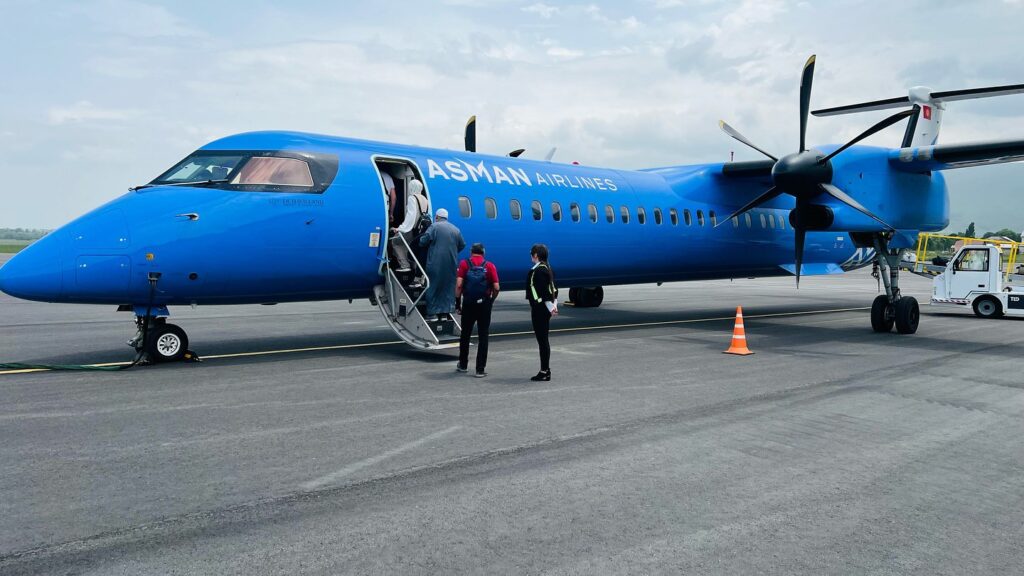
Regular passenger flights now link Almaty, Kazakhstan’s largest city, to Lake Issyk-Kul, Kyrgyzstan’s premier tourist destination. The new air service was launched by Kyrgyzstan’s Asman Airlines on June 27, according to Kazakhstan’s Ministry of Transport. The airline will operate two weekly flights, on Mondays and Fridays, between Almaty and Tamchy airport, located on the lake’s northern shore. Kazakhstan's low-cost carrier Fly Arystan is also set to launch direct flights between Almaty and Issyk-Kul, beginning July 3. These flights will run twice a week, on Thursdays and Sundays. Lake Issyk-Kul remains a favored summer destination for tourists across the region, particularly among Almaty residents seeking weekend getaways. The new air routes are expected to improve access for travelers from southern Kazakhstan, significantly reducing travel time and simplifying logistics during the peak tourist season. The Asman Airlines flight between Almaty and Issyk-Kul takes approximately one hour and 20 minutes. Previously, travelers had to drive over 460 kilometers via Bishkek, a journey that typically took about eight hours.  Efforts to shorten this overland route continue. The Times of Central Asia recently reported on the advancement of a long-discussed highway project aimed at directly linking Almaty to Issyk-Kul. Although the two locations are only 80 kilometers apart in a straight line, mountain ranges force travelers to detour through the Kyrgyz capital. The lake has also become more accessible to tourists from Uzbekistan. On June 22, Uzbek budget airline Fly Khiva launched regular flights from Tashkent to Tamchy. These flights will operate every Sunday through August 10, 2025.

Uzbekistan Approves Regular Flights from Malaysia, South Korea, and Egypt

Uzbekistan has approved regular flights for airlines from Malaysia, South Korea, and Egypt, the Civil Aviation Agency under the Ministry of Transport of Uzbekistan announced. Under an intergovernmental air services agreement between Uzbekistan and Malaysia, AirAsia X Berhad received approval on February 3, 2025, to operate regular flights between Kuala Lumpur and Tashkent. On the same day, South Korea’s T’way Air was also granted permission to launch regular flights on the Seoul-Tashkent-Seoul route under the Uzbekistan-South Korea air services agreement. Both AirAsia X Berhad and T’way Air will operate these flights using Airbus A330 aircraft. On February 4, Egypt’s Red Sea Airlines received approval to operate regular flights between Sharm el-Sheikh and Tashkent. This decision follows the Uzbekistan-Egypt air services agreement, and the airline will use Boeing 737 aircraft for these flights. Previously, The Times of Central Asia reported that Uzbekistan Airways altered its flight routes to Europe starting in January, bypassing Russian and Belarusian airspace. The airline’s press service stated that the decision was based on recommendations from the European Union Aviation Safety Agency (EASA), and was not related to the recent Azerbaijan Airlines crash.

Unmanned ‘Aero Taxi’ Planned to Launch in Kazakhstan Next Year

Kazakhstan plans to introduce an unmanned aero taxi service by 2026, following the example of South Korea, Minister of Transportation Marat Karabayev has announced. He outlined the project's timeline and potential routes. First Route and Project Details According to Karabayev, there are currently no legal restrictions preventing the launch of aeromobile services in Kazakhstan. "The first stage will involve a route from Almaty to the town of Alatau. We are in discussions with Kazakh entrepreneurs, and a pilot launch is planned for 2026. These will be silent, hydrogen-fueled helicopters capable of carrying five passengers. One Kazakhstani company has already expressed interest in developing the aeromobility sector," he said. He noted that similar technologies are being actively developed in South Korea and the United States, and Kazakhstan is studying their potential implementation. "We are currently assessing how this technology can be adapted for our country," Karabayev added. Regulatory Framework and International Experience The minister also mentioned that the Ministry of Digital Development, Innovation, and Aerospace Industry has proposed studying international regulatory practices for such vehicles. "We will review this proposal. As unmanned vehicles become more common in Kazakhstan, we will develop the necessary legislative framework," he assured. However, Karabayev clarified that no amendments are currently being considered regarding liability for accidents involving unmanned vehicles. Global Developments in Aero Taxi Technology Unmanned aero taxis are already being tested and partially deployed in several countries. In the UAE, the Chinese company EHang has conducted pilot flights in Dubai, while in China, EHang has obtained certification for commercial operations. Meanwhile, South Korea is also conducting trials of air taxi services.

Turkmenistan Airlines Extends Suspension of Moscow Flights Until March

Turkmenistan Airlines has extended the suspension of its Ashgabat-Moscow-Ashgabat flights until at least March, the airline confirmed on January 31, according to Interfax. No official reason was provided for the extension. Flights on this route were initially halted at the end of December 2024. At the time, the airline announced that there would be no flights between December 30, 2024, and January 31, 2025, but did not explain their decision. The Russian News Agency TASS has noted that Turkmenistan Airlines previously halted flights to Moscow in August 2023 due to safety concerns. That suspension followed a report from the Russian Defense Ministry stating that a Ukrainian drone had been intercepted in the Moscow region. Interfax, meanwhile, reports that Russia’s S7 Airlines has received approval to operate up to 14 weekly flights between Moscow and Ashgabat. Daily flights began on January 15, making S7 the only airline currently serving this route. In related news, as previously reported by The Times of Central Asia, Uzbekistan Airways has adjusted its flight routes to Europe, avoiding Russian and Belarusian airspace. The airline’s press service stated that this decision was based on recommendations from the European Union Aviation Safety Agency (EASA) and was not connected to the recent Azerbaijan Airlines crash.

Uzbekistan Airways Reroutes Flights to Europe, Avoiding Russia and Belarus

Uzbekistan Airways has altered its flight routes to Europe, bypassing Russian and Belarusian airspace. The airline’s chairman, Shukhrat Khudoykulov, announced the decision at a press conference on January 28, according to local media reports. Flights are now taking a more southern route through Azerbaijan and Turkey. The change took effect on January 20, 2025. Reason for the Rerouting The airline’s press service told Kun.uz that the decision was made based on a recommendation from the European Union Aviation Safety Agency (EASA) and was not related to the recent Azerbaijan Airlines crash. “This is a recommendation from the European Aviation Safety Agency since we also serve European passengers,” the airline’s statement said. The change comes in the wake of the Azerbaijan Airlines crash on December 25, 2024. The aircraft, which was flying from Baku to the Russian city of Grozny, crashed near Aktau, Kazakhstan. Of the 67 people on board, 38 died, while 29 survived. Initial reports suggested that a Russian air defense system may have mistakenly shot down the plane during a Ukrainian drone attack on Grozny. A missile reportedly exploded near the aircraft, damaging its fuselage. Kazakhstan, which initially led the investigation, has transferred the case to Brazil’s aviation safety agency (CENIPA). The findings have been sent back to Kazakhstan and are expected to be released soon. Impact on Flight Times and Costs In response to Repost.uz, Uzbekistan Airways clarified that the change was made as a precautionary measure and also to helps optimize flight routes. The rerouting has increased travel distances. For example, the Tashkent-Munich flight, which previously covered 4,849 kilometers when flying through Russia, now spans 5,156 kilometers. This adds 30 to 40 minutes to flight times and raises operational costs for the airline.