• KZT/USD = 0.00220
  • TJS/USD = 0.10800
  • UZS/USD = 0.00009
  • TMT/USD = 0.29850
  • KZT/USD = 0.00220
  • TJS/USD = 0.10800
  • UZS/USD = 0.00009
  • TMT/USD = 0.29850
  • KZT/USD = 0.00220
  • TJS/USD = 0.10800
  • UZS/USD = 0.00009
  • TMT/USD = 0.29850
  • KZT/USD = 0.00220
  • TJS/USD = 0.10800
  • UZS/USD = 0.00009
  • TMT/USD = 0.29850
  • KZT/USD = 0.00220
  • TJS/USD = 0.10800
  • UZS/USD = 0.00009
  • TMT/USD = 0.29850
  • KZT/USD = 0.00220
  • TJS/USD = 0.10800
  • UZS/USD = 0.00009
  • TMT/USD = 0.29850
  • KZT/USD = 0.00220
  • TJS/USD = 0.10800
  • UZS/USD = 0.00009
  • TMT/USD = 0.29850
  • KZT/USD = 0.00220
  • TJS/USD = 0.10800
  • UZS/USD = 0.00009
  • TMT/USD = 0.29850
07 September 2026

Viewing results 1 - 6 of 103

Kyrgyzstan Opens Airport in Karakol – More New Routes Coming Soon

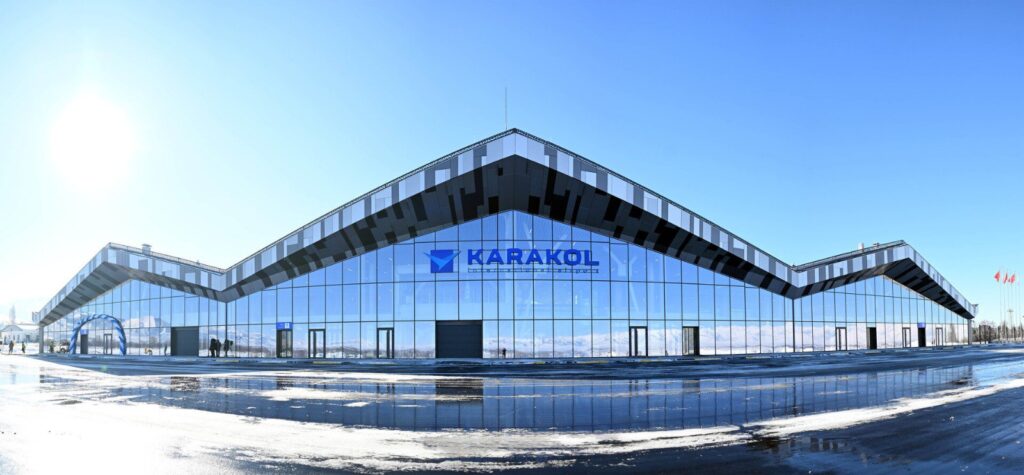
On December 11, Kyrgyzstan’s President Sadyr Japarov inaugurated the reconstructed international airport in Karakol, the main city of the Issyk-Kul region. Situated southeast of Lake Issyk-Kul, Karakol is Kyrgyzstan’s winter tourism hub and home to the nation’s largest and most popular mountain ski resort. President Japarov highlighted the reopening of the Karakol International Airport as a pivotal move toward strengthening regional connectivity, boosting tourism, and enhancing Kyrgyzstan’s international profile. “This is just the beginning,” Japarov remarked, announcing plans for a major new development: a “Kyrgyz Courchevel,” envisioned as Central Asia’s largest and most modern ski resort. Located 70 kilometers from the airport, the year-round facility is planned to accommodate up to a million tourists per season. Kyrgyzstan’s government is also prioritizing the modernization of regional airports to improve domestic air connectivity. Renovation projects are underway in Naryn, Kazarman, Kerben, and Batken, while construction of a new airport in the southern city of Jalal-Abad is set to begin soon. Starting in May, the government plans to launch domestic flights on routes including Kazarman-Bishkek, Naryn-Bishkek, Kerben-Bishkek, Karakol-Osh, and Talas-Osh. These flights will be operated by the state-owned Asman Airlines. This follows the reopening of the Talas airport in May, as previously reported by The Times of Central Asia, marking its return to operation after decades of inactivity since the Soviet-era. Originally built in 1979 to accommodate planes and helicopters, the airport had long been out of service until its recent renovation. To support the enhanced domestic air network, Kyrgyzstan’s Manas International Airport Open Joint Stock Company has procured two Bombardier Dash 8 Q400 aircraft for Asman Airlines. Manufactured in Canada, the Dash 8 Q400 is a short-haul plane capable of carrying up to 80 passengers over distances of up to 2,000 kilometers.

Kyrgyzstan’s Airlines Could Be Removed from EU Blacklist in 2025

Kyrgyzstan’s airlines may soon achieve a significant milestone by being removed from the European Union’s Air Safety List, which currently bans them from operating flights to Europe. Kyrgyz President Sadyr Japarov made this announcement on November 27 during a meeting in Berlin with Johan Pelissier, the head of Airbus Europe, where they discussed the future of Kyrgyzstan’s aviation sector. Japarov emphasized the government’s concerted efforts to enhance aviation safety, implement international standards, and modernize infrastructure. He expressed optimism that these measures have significantly improved the likelihood of lifting restrictions on Kyrgyz airlines. As part of these developments, Japarov highlighted the government’s support for the national carrier, Asman Airlines. Under an initial agreement with Airbus, the airline plans to lease two A320 or A321 aircraft to establish direct routes to Europe, including destinations such as Paris, Berlin, and London. This initiative marks a critical step toward integrating Kyrgyzstan into the global aviation network. Looking ahead, Kyrgyzstan aims to expand its fleet and deepen cooperation with Airbus, fostering stronger connections with the international aviation community. At the conclusion of the meeting, Japarov extended an invitation to Pelissier to visit Kyrgyzstan for further discussions with local aviation representatives. Background: A Longstanding Ban Kyrgyz airlines was added to the EU’s Air Safety List in 2006 after failing to meet international safety standards. This decision, based on assessments that the country’s legal framework did not adequately ensure flight safety, has prohibited Kyrgyz airlines from flying to EU destinations for over 18 years. The ban has had a profound impact on the aviation sector, limiting its operational scope and market reach. Efforts to address these shortcomings represent a turning point, with the potential removal from the blacklist signaling a new chapter for Kyrgyz aviation. If successful, this move could open up significant opportunities for growth and international collaboration.

Regional Civil Aviation Organization Established for the First Time in Central Asia

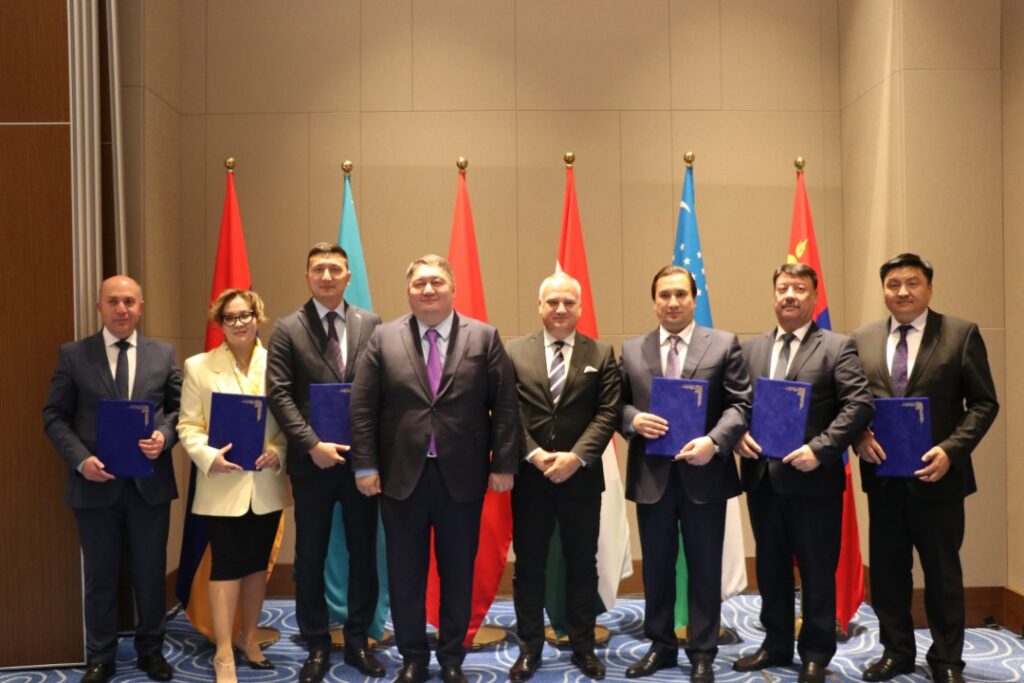
The Eurasian Civil Aviation Conference (EACAC) has held its first meeting in Almaty, with the participation of the aviation authorities from participating countries. The meeting included participants from Armenia, Kazakhstan, Kyrgyzstan, Tajikistan and Uzbekistan, who discussed joint initiatives to strengthen cooperation in flight safety and sustainable aviation development. Representatives from Mongolia also participated as observers. Opening the event, Vice Minister of Transport of Kazakhstan, Talgat Lastayev, noted that EACAC will become a platform to share experiences and address issues related to future challenges in civil aviation. During the meeting, a declaration on the establishment of EACAC was signed, and the document was certified by the Chairman of the Civil Aviation Committee, Saltanat Tompieva, from Kazakhstan. EACAC will allow for the consolidated expression of positions within the framework of interactions with such institutions as the ICAO, the European Commission, IATA, and other international organizations. Katalin Radu, Director General of the Aviation Administration of Kazakhstan, stressed that the new organization would ensure unity in the positions of member countries in the international aviation arena and strengthen cooperation with such associations as ACAO, AFCAC, ECAC, and LACAC. Key tasks of EACAC include the coordination of regional efforts in aviation security, creating common standards, developing unmanned aviation, and training personnel. The initiative was first announced in May 2023 during Kazakhstan's first Aviation Dialogue, “Energy Transition for Sustainable Development and Realization of Central Asia's Transit Potential.” In April 2024, the project was presented during the Directors General of Civil Aviation meeting of the European and North Atlantic Bureau of ICAO (EURNAT-DGCA) in Toulouse, France.

Russia Floats Idea of Help from Kazakh Airlines

Russia is talking to Kazakhstan and other “friendly countries” about the possibility of foreign airlines flying domestic routes inside Russia, according to Russian state news agency Tass. The report comes as Russia’s civil aviation industry struggles under the impact of Western sanctions that were implemented after Russia’s full-scale invasion of Ukraine in early 2022. Russian Transport Minister Roman Starovoit did not mention the sanctions in comments that were reported by Tass this week, but he referred generally to a global shortage of aircraft. "We are negotiating with friendly countries,” Starovoit said to journalists at a forum in Yekaterinburg, Russia. “For example, we are negotiating with Kazakhstan.” The minister, who took office this year, said Kazakhstan had experienced a 35% increase in “aviation mobility” this year. “The fact is that there is currently a shortage of aircraft all over the world,” Sarovoit said, according to Tass. “And we see that against the backdrop of growth in transportation in foreign countries, the shortage of aircraft leads to a deficit of them, and it is difficult for other countries to solve these problems." He was referring to a process called cabotage, under which an aircraft registered in one country is used for transportation from one point to another within another country. It is unusual in the case of commercial aircraft because countries want to boost their domestic airlines and markets, though the rules can be more relaxed for some private or business aircraft. Russian airlines have traditionally relied on Western aircraft and were vulnerable to sanctions aimed at depriving them of spare parts and supplies. Western companies had demanded that Russia return hundreds of leased aircraft because of the war, but Russia refused. The industry is heavily reliant on state support to keep it going. “Russian aviation, disconnected from suppliers and from experience and knowledge transfer networks, will likely survive, but increasingly as a stand-alone operation,” Anastasia Dagaeva wrote in a March blog post for the Kennan Institute, a research center on Eurasia affiliated with the Washington-based Wilson Center. In contrast, civil aviation in Kazakhstan has been experiencing considerable growth and the Central Asian country is a more popular destination for transit flights because of restrictions affecting Russian airspace. Though the Kazakh industry faces its own challenges, including a shortage of staff.

Uzbekistan and South Korea Increase Flights Between Countries

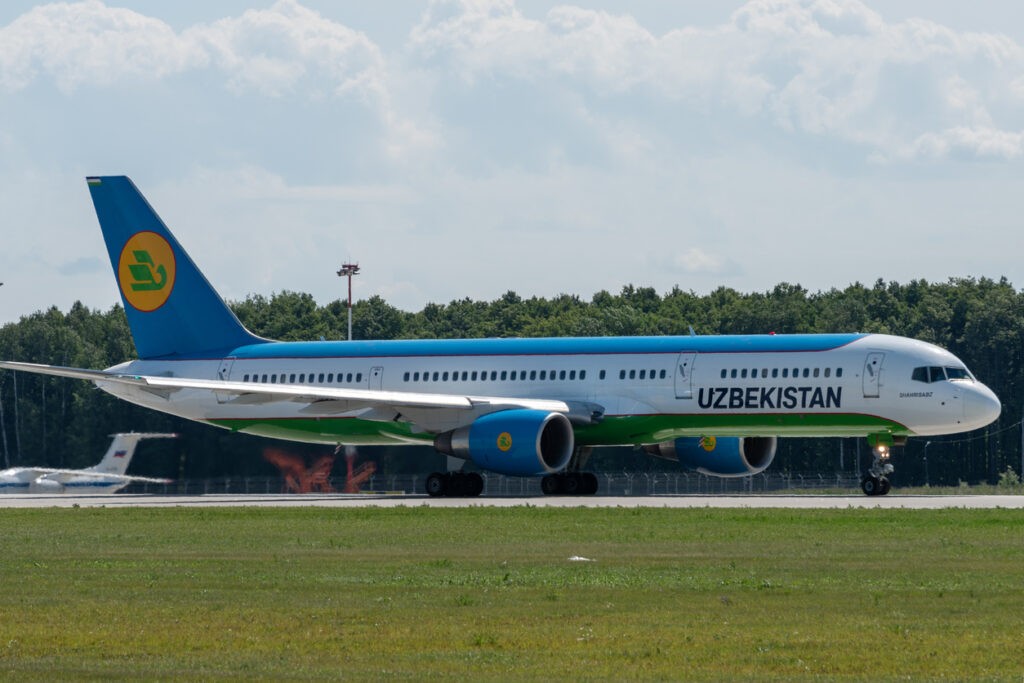
During talks in Seoul this week, Uzbekistan’s Ministry of Transport and South Korea’s civil aviation authority reached agreements to increase the number of regular flights between Uzbekistan and South Korea from the current 10 to 24 per week for airlines of each country, raising the total weekly number of flights to 48. According to the Uzbek ministry, airlines of both countries will operate up to 12 weekly flights between Tashkent and Seoul and up to four flights from South Korea’s regions to Tashkent. Up to four flights per week will be performed from Uzbekistan’s regions to Seoul, and there will be up to four weekly flights between Uzbekistan's regions and other South Korean cities. An agreement was also reached on the bilateral use of the Open Skies regime at the international airport of Jeju, the second-largest airport in South Korea, and Uzbekistan’s Samarkand airport for airlines of both countries. From the Uzbek side, flights between the two countries will be operated by the national air carrier, Uzbekistan Airways, and new airlines created by Uzbekistan — Qanot Sharq, My Freighter, and Air Samarkand. According to the Uzbek ministry, these agreements will help develop trade and economic relations between the two countries, increase bilateral passenger and cargo turnover, and attract Korean tourists to the historical cities of Uzbekistan. The Times of Central Asia earlier reported that South Korea is one of the most popular destinations for Uzbeks, both for work and studies. The Uzbeks occupy fifth place by size of the foreign diaspora in the country and number more than 69,000. In recent years, the government of Uzbekistan has established regulations for legal and safe labor migration to South Korea. At the start of 2024, the government announced its intention to attract 100,000 Uzbeks to work in South Korea.

Kazakhstan to Build Airports in Katon-Karagay and Zaysan Resort Areas

Kazakhstan’s Ministry of Transport has chosen sites to construct new airports in the resort areas of Katon-Karagay and Zaysan in the country’s east. Katon-Karagay is Kazakhstan's largest national park, located in the picturesque region of Southern Altai, near the borders with Russia and China. One new airport will be built in the Katon-Karagay National Park near the village of Soldatovo, 38 kilometers from the village of Katon-Karagay. Another airport will be constructed at a former military airfield 25 kilometers from the town of Zaysan. One of the most beautiful lakes in Kazakhstan, Zaysan is a vast freshwater lake with lots of aquatic diversity. It is about 100 kilometers long, 30 kilometers wide, and 8 meters deep. Lake Zaysan is 239 kilometers from Ust-Kamenogorsk, the largest city in eastern Kazakhstan, which is currently home to the closest airport for both resort areas. The new airports will have 2,200-meter-long runways for short-haul planes, providing air service from the capital, Astana, and Almaty. Plans are in place to extend the runways in the future, which will allow the reception of large aircraft such as Airbus A320 and Boeing 737. According to Transport Minister Marat Karabayev, construction of the airports will begin in 2025.