
• KGS/USD = 0.01144 0%
  • KZT/USD = 0.00212 0%
  • TJS/USD = 0.10768 0.47%
  • UZS/USD = 0.00008 0%
  • TMT/USD = 0.28490 0%
  • KGS/USD = 0.01144 0%
  • KZT/USD = 0.00212 0%
  • TJS/USD = 0.10768 0.47%
  • UZS/USD = 0.00008 0%
  • TMT/USD = 0.28490 0%
  • KGS/USD = 0.01144 0%
  • KZT/USD = 0.00212 0%
  • TJS/USD = 0.10768 0.47%
  • UZS/USD = 0.00008 0%
  • TMT/USD = 0.28490 0%
  • KGS/USD = 0.01144 0%
  • KZT/USD = 0.00212 0%
  • TJS/USD = 0.10768 0.47%
  • UZS/USD = 0.00008 0%
  • TMT/USD = 0.28490 0%
  • KGS/USD = 0.01144 0%
  • KZT/USD = 0.00212 0%
  • TJS/USD = 0.10768 0.47%
  • UZS/USD = 0.00008 0%
  • TMT/USD = 0.28490 0%
  • KGS/USD = 0.01144 0%
  • KZT/USD = 0.00212 0%
  • TJS/USD = 0.10768 0.47%
  • UZS/USD = 0.00008 0%
  • TMT/USD = 0.28490 0%
  • KGS/USD = 0.01144 0%
  • KZT/USD = 0.00212 0%
  • TJS/USD = 0.10768 0.47%
  • UZS/USD = 0.00008 0%
  • TMT/USD = 0.28490 0%
  • KGS/USD = 0.01144 0%
  • KZT/USD = 0.00212 0%
  • TJS/USD = 0.10768 0.47%
  • UZS/USD = 0.00008 0%
  • TMT/USD = 0.28490 0%

Viewing results 1 - 6 of 6

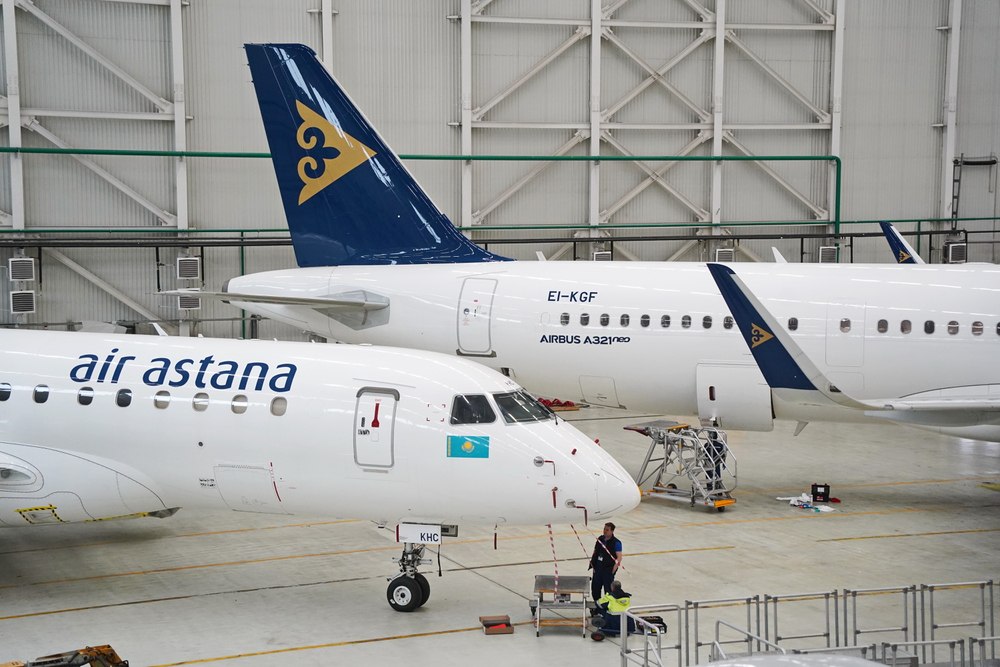
Kazakhstan to Launch Direct Flights to Tokyo and New York Within Next 12 Months

Kazakhstan plans to launch direct flights from Astana to Tokyo and New York within the next 12 months, Transport Minister Nurlan Sauranbayev said during a government meeting on Tuesday. Prime Minister Olzhas Bektenov reminded officials that the Ministry of Transport had previously pledged to open direct air links to Tokyo and New York but had yet to announce concrete results. “In the case of Tokyo, flights will begin in the fourth quarter of 2026, and flights to the United States will begin in the second quarter of 2027,” Sauranbayev said. He added that Astana currently operates 34 international routes. According to the minister, Kazakhstan has already opened four new international routes since the beginning of the year: Almaty-Shanghai, Astana-Yerevan, Atyrau-Tashkent, and Aktau-Yerevan. By the end of 2026, Kazakhstan's aviation authorities plan to open or resume 11 additional international routes, including Astana-Ulaanbaatar, Astana-Guangzhou, Astana-Issyk-Kul, Astana-Larnaca, Astana-Kashgar, Almaty-Tokyo, Almaty-Larnaca, Hanoi-Almaty-Prague, Almaty-Izmir, Almaty-Warsaw, and Kostanay-Tashkent. Meanwhile, Michael Daniel, CEO of the Aviation Administration of Kazakhstan (AAK), said work is ongoing to secure Category 1 status from the U.S. Federal Aviation Administration (FAA) under the International Aviation Safety Assessment (IASA) program, a prerequisite for launching direct flights to the U.S. Daniel said Kazakhstan has been addressing shortcomings identified during an FAA technical assessment conducted in August 2024. “We plan to invite the FAA IASA team to conduct an evaluation in September 2026. The FAA will assess Kazakhstan’s political commitment to complying with international aviation safety standards, including legislation, regulatory oversight, and practical implementation,” he said. “Our primary goal is to obtain FAA Category 1 status in November 2026,” Daniel added. Kazakhstan’s airline fleet is also expected to expand, with six additional aircraft scheduled to enter service by the end of this year. As previously reported by The Times of Central Asia, Kazakhstan’s civil aviation fleet consisted of 104 aircraft last year, with authorities aiming to increase that number to 216 by 2030. The government is also planning a major modernization of airport infrastructure over the next three years. “In accordance with the president’s instructions, work is underway on the construction of airports in the tourist zones of Katon-Karagay, Zaysan, and Kenderli, as well as the restoration of Arkalyk Airport,” Sauranbayev said. He added that aviation hub development is continuing at six major airports: Almaty, Astana, Aktau, Aktobe, Karaganda, and Shymkent. According to the minister, most airport modernization projects are being financed through private investment. As previously reported by The Times of Central Asia, Kazakhstan’s SCAT Airlines, in partnership with Boeing, has begun construction of a major aircraft maintenance, repair, and overhaul center in Shymkent.

Kyrgyzstan’s Kazarman Airport Reopens After 20-Year Hiatus

Kazarman Airport in Kyrgyzstan’s southern Jalal-Abad region has reopened after more than 20 years, following a major reconstruction project by JSC Airports of Kyrgyzstan. Located near the village of Kazarman, the airport is now ready to receive flights once again. The renovation included repairs to the 1,840 meter runway, taxiways, aircraft parking areas, and the passenger terminal. The facility can accommodate aircraft weighing up to 22 tons and currently operates during daylight hours. Built in 1985, Kazarman Airport previously served flights to Bishkek, Osh, and Jalal-Abad. On August 12, state-owned Asman Airlines made its first flight to the renovated airport, and regular flights to Bishkek are scheduled to begin in early September. “The return of Kazarman Airport to operation is an important step for the development of the country’s transport network. Now residents and visitors of the Jalal-Abad region will be able to get to Bishkek faster and more conveniently,” said Manasbek Samidinov, Chairman of the Board of JSC Airports of Kyrgyzstan. The reopening comes as Kyrgyzstan continues to expand its aviation infrastructure. In May 2025, construction began on a new international airport in Jalal-Abad, the country’s third-largest city, designed to handle passenger and cargo aircraft including Boeing 737s and Airbus A320/A321s. At the groundbreaking, President Sadyr Japarov highlighted rising demand for both domestic and international flights. Since 2021, passenger traffic has grown by 46% and the number of flights by 31%, he said. Asman Airlines has restored all domestic routes linking Bishkek with Talas, Karakol, and Kerben, and in 2024 added two Bombardier Dash 8 Q400 short-haul aircraft to its fleet. The Kazarman and Jalal-Abad projects are part of a broader strategy to modernize Kyrgyzstan’s airports. Work began in February 2025 on a new complex at Osh International Airport, and Karakol International Airport and Talas Airport have already opened. Renovations are also underway at Issyk-Kul International Airport and Naryn Airport.

South Korean Firm to Oversee Modernization of Uzbekistan’s Urgench Airport

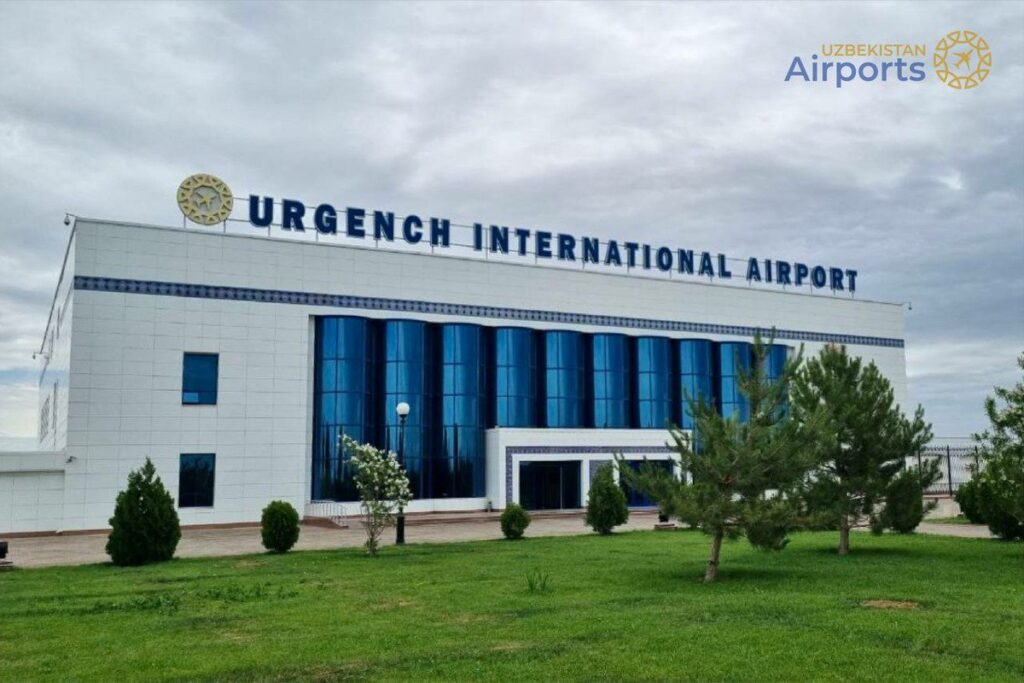
South Korea’s Incheon International Airport Corporation has secured the contract to manage and modernize Urgench Airport in Uzbekistan’s Khorezm region, following a competitive international tender. The open tender, announced in August 2024, attracted bids from eight companies across France, South Korea, Turkey, Qatar, and other countries. The selection of the Korean corporation underscores growing economic cooperation between Uzbekistan and South Korea. On May 1, during a visit to Khorezm, Uzbek President Shavkat Mirziyoyev met with representatives from Incheon International Airport Corporation to discuss the details of the modernization project. Valued at $223 million, the project includes the construction of a new runway, state-of-the-art passenger and cargo terminals, and the installation of modern lighting and signaling systems in line with International Civil Aviation Organization (ICAO) standards. Construction and renovation are scheduled for completion by 2027. Once modernized, Urgench Airport will be capable of handling large aircraft such as the Boeing 747 and Airbus A350. The redesigned passenger terminal will accommodate 1,300 passengers per hour, more than triple its current capacity of 400. The initiative aims to transform Urgench Airport into a regional aviation hub, enhancing access to Khorezm, a region celebrated for its rich cultural and historical heritage. Officials hope the improved infrastructure will further boost tourism. “Khorezm is seeing a construction boom, with new hotels, recreation zones, and shopping centers,” said Mirziyoyev. “Our goal is to increase tourist arrivals to five million people. If the airport infrastructure rises to meet this scale, it will generate mutual benefit and revenue growth.” During his visit, the president reviewed design concepts for the future terminal and emphasized the importance of incorporating traditional Uzbek cultural motifs in both the exterior and interior design.

Osh Airport to Undergo Modernization

On February 14, Kyrgyzstan’s President Sadyr Japarov laid the foundation stone for the construction of a new airport complex at Osh International Airport, the country’s second-largest city. Expanded Facilities and Increased Capacity According to the presidential press service, the new terminal will offer modernized passenger facilities, including: A spacious hall with improved check-in areas; A food court and recreation areas; A 650-car parking lot. The terminal will have the capacity to serve over 5 million passengers per year. Additionally, the number of aircraft parking spaces will increase by 25, and a runway extension is planned for 2026. A Key Hub for the Fergana Valley Japarov emphasized that Osh International Airport is Kyrgyzstan’s second-busiest airport and a strategic transportation hub for the entire Fergana Valley. It connects southern Kyrgyzstan with Central Asia, the Commonwealth of Independent States (CIS), and the Middle East. Currently, the airport is capable of handling Airbus A320 and Boeing 737 aircraft. However, built in 1974, the facility is now outdated and unable to fully meet the growing demands of passenger and cargo traffic. "The construction of a new airport complex is just the beginning of our large-scale plans," Japarov stated. "We aim to expand the airport’s route network, attract new airlines, and boost cargo transportation." Kyrgyzstan’s Broader Airport Modernization Efforts Japarov highlighted Kyrgyzstan’s ongoing efforts to modernize regional airports, noting recent developments: Karakol International Airport and Talas Airport have been put into operation. Runway renovations were completed at Jalal-Abad, Kazarman, and Batken airports. Reconstruction is underway at Issyk-Kul International Airport and Naryn Airport. Construction of a new airport in Jalal-Abad is set to begin soon. In 2024, Kyrgyzstan purchased two Canada-manufactured Bombardier Dash 8 Q400 short-haul aircraft for domestic routes. Two more are expected to be acquired later this year.
