
• KGS/USD = 0.01143 0%
  • KZT/USD = 0.00208 0%
  • TJS/USD = 0.10438 -0.1%
  • UZS/USD = 0.00008 0%
  • TMT/USD = 0.28579 0%
  • KGS/USD = 0.01143 0%
  • KZT/USD = 0.00208 0%
  • TJS/USD = 0.10438 -0.1%
  • UZS/USD = 0.00008 0%
  • TMT/USD = 0.28579 0%
  • KGS/USD = 0.01143 0%
  • KZT/USD = 0.00208 0%
  • TJS/USD = 0.10438 -0.1%
  • UZS/USD = 0.00008 0%
  • TMT/USD = 0.28579 0%
  • KGS/USD = 0.01143 0%
  • KZT/USD = 0.00208 0%
  • TJS/USD = 0.10438 -0.1%
  • UZS/USD = 0.00008 0%
  • TMT/USD = 0.28579 0%
  • KGS/USD = 0.01143 0%
  • KZT/USD = 0.00208 0%
  • TJS/USD = 0.10438 -0.1%
  • UZS/USD = 0.00008 0%
  • TMT/USD = 0.28579 0%
  • KGS/USD = 0.01143 0%
  • KZT/USD = 0.00208 0%
  • TJS/USD = 0.10438 -0.1%
  • UZS/USD = 0.00008 0%
  • TMT/USD = 0.28579 0%
  • KGS/USD = 0.01143 0%
  • KZT/USD = 0.00208 0%
  • TJS/USD = 0.10438 -0.1%
  • UZS/USD = 0.00008 0%
  • TMT/USD = 0.28579 0%
  • KGS/USD = 0.01143 0%
  • KZT/USD = 0.00208 0%
  • TJS/USD = 0.10438 -0.1%
  • UZS/USD = 0.00008 0%
  • TMT/USD = 0.28579 0%

Viewing results 1 - 6 of 5

New Port in Mangystau: Strategic Asset or Risk of Overcapacity?

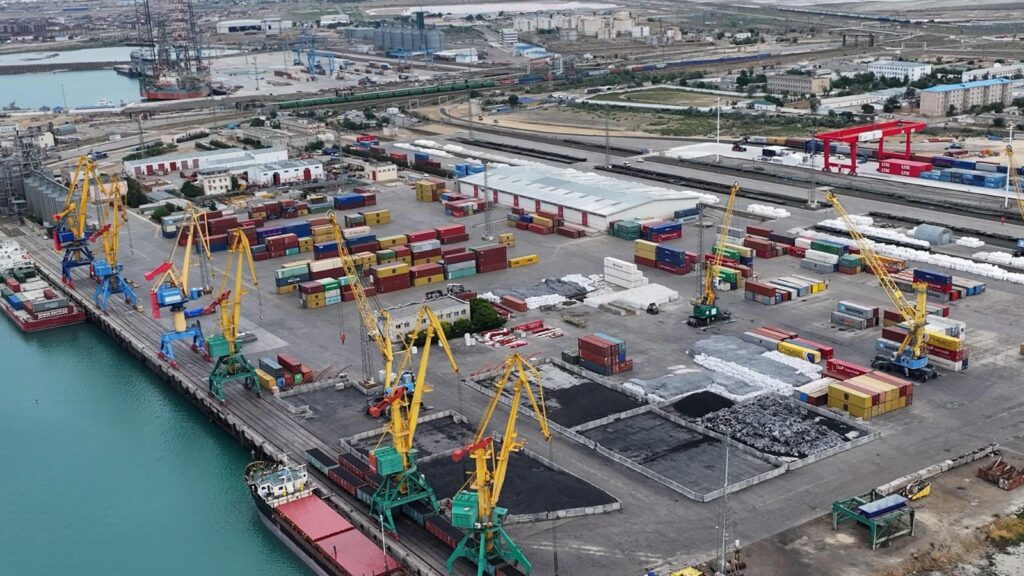
Kazakhstan has announced plans to build a new seaport in the Mangystau region, presenting the initiative as a strategic move to strengthen the country's role in the East-West transit corridor. However, with existing Caspian ports in Aktau and Kuryk operating at less than one-third of their capacity, questions are being asked about whether the project addresses actual logistical needs or merely redistributes existing cargo flows. Kazakhstan’s current maritime infrastructure on the Caspian Sea includes the ports of Aktau and Kuryk, which together have a combined throughput capacity of over 27 million tons per year. Yet, in the first nine months of 2025, transshipment volume stood at only 6 million tons, despite a 9% year-on-year increase, placing current utilization at roughly 30%. Despite this, authorities in the Mangystau region argue that the proposed port in Karakiya district will boost national transit capacity, shorten delivery times on the China-Europe route by 7-15 days, and reduce logistics costs by 18-25%. The port’s design capacity is projected at 20 million tons annually. Proponents of the project cite periodic bottlenecks at Aktau and Kuryk, such as temporary loading restrictions and railcar congestion, as justification for new infrastructure. Still, forecasts from international institutions suggest that freight volume on the Trans-Caspian route could reach 10-11 million tons by 2030, while the eastern branch of the North-South corridor may handle up to 24.7 million tons. In light of these projections, some question whether expanding and modernizing existing facilities might be a more cost-effective solution. Indeed, upgrades are already underway. The container hub in Aktau is set to increase capacity to 250,000 TEU, while the multifunctional Sarzha terminal in Kuryk is expected to handle up to 12 million tons annually, developments that could significantly enhance throughput without requiring large-scale capital investment. Investment details are also attracting scrutiny. The new port’s estimated construction cost is $300 million, with several Chinese companies, owners of cargo bases and logistics assets, lined up as investors. Observers warn this could lead to a shift in transit flows in favor of the new facility, undermining existing ports in a scenario of economic “cannibalization.” There are also concerns about whether concession agreements might include compensation clauses for underutilized capacity, placing additional financial risk on the state. The project is slated to unfold in three phases: construction from 2025 to 2027; joint operation with Chinese partners from 2028 to 2037; and a phased transfer of management to the Kazakh side after 2038. The development is expected to create more than 2,000 jobs and will feature a railway connection and automated container terminal. In parallel, regional authorities are exploring maritime tourism as a complementary development strategy. Plans include launching Caspian Sea cruise routes and enhancing passenger facilities at the port of Kuryk, with a goal of attracting up to 625,000 tourists annually by 2028, envisioning a synergistic effect for the broader transport sector. While Mangystau has the potential to emerge as a key logistics hub in Central Asia, the success of the new port will hinge not on...
Kazakhstan Inaugurates Major Container Hub at Aktau Port

On June 9, Kazakhstan officially launched the largest container hub on the Caspian Sea, situated within its Aktau port.  The project, spearheaded by Kazakhstan’s national railway company, Kazakhstan Temir Zholy (KTZ), was implemented in collaboration with China's Lianyungang port and the Aktau International Sea Trade Port. China Communications Construction Company, a prominent Chinese state corporation specializing in transport infrastructure, served as the general contractor. During the opening ceremony, Nurlan Zhakupov, Chairman of the Board of the National Welfare Fund Samruk-Kazyna, highlighted the joint efforts of Samruk-Kazyna and KTZ in advancing Kazakhstan’s transit and transport potential, a key strategic objective for the nation. "Over the 10 years of KTZ's partnership with the port of Lianyungang, the Kazakh-Chinese terminal in Lianyungang, the Khorgos Gateway Dry Port, and now the container hub in Aktau have been opened. This project is an important step in the development of transport and logistics in Kazakhstan," he stated. The newly inaugurated hub is expected to significantly accelerate the processing of containerized cargo, enhance transit capabilities, and reinforce Kazakhstan's pivotal role as a strategic link on both the East-West and North-South transport routes. The operational launch of the hub was marked by the arrival of the 100,000th container from China, transported via the Trans-Caspian International Transport Route (TITR), a rapidly expanding trade corridor connecting China and Europe through Kazakhstan.

Kazakhstan Launches Dredging Project to Expand Aktau Port on Key Trans-Caspian Corridor

Kazakhstan’s Ministry of Transport has initiated dredging works at the Caspian Sea port of Aktau, aiming to enhance the capacity and navigational safety of a critical hub on the Trans-Caspian International Transport Route (TITR), also known as the Middle Corridor. The Aktau port, located in the Mangistau region, is being deepened by 1.5 to 2 meters using specialized dredging equipment supplied by European contractor Jan De Nul. Mobilization of the equipment is set to be completed in May, with full dredging operations scheduled for completion by the fourth quarter of 2025. The project is expected to significantly increase the port's terminal capacity. Currently, Aktau handles approximately 15 million tons of cargo annually, including up to 140,000 twenty-foot equivalent units (TEUs). This infrastructure enhancement forms part of Kazakhstan’s broader strategy to develop the TITR, a key transit corridor linking China to Europe through Central Asia and the Caucasus. According to the Ministry of Transport, container traffic via the TITR through Kazakhstan surged by 3.5 times in the first quarter of 2025, reaching 25,000 TEUs, up from 7,200 TEUs during the same period in 2024. In a related development, Kazakhstan completed dredging works at another major Caspian port, Kuryk, in November 2024. That project, also executed by Jan De Nul Kazakhstan LLP, was finished in just four months. The water depth at Kuryk was increased to 7-8 meters, substantially enhancing its handling capacity and reinforcing its strategic importance on the Trans-Caspian route.
