• KGS/USD = 0.01143 0%
  • KZT/USD = 0.00205 0%
  • TJS/USD = 0.10724 0.09%
  • UZS/USD = 0.00008 0%
  • TMT/USD = 0.28571 0%
  • KGS/USD = 0.01143 0%
  • KZT/USD = 0.00205 0%
  • TJS/USD = 0.10724 0.09%
  • UZS/USD = 0.00008 0%
  • TMT/USD = 0.28571 0%
  • KGS/USD = 0.01143 0%
  • KZT/USD = 0.00205 0%
  • TJS/USD = 0.10724 0.09%
  • UZS/USD = 0.00008 0%
  • TMT/USD = 0.28571 0%
  • KGS/USD = 0.01143 0%
  • KZT/USD = 0.00205 0%
  • TJS/USD = 0.10724 0.09%
  • UZS/USD = 0.00008 0%
  • TMT/USD = 0.28571 0%
  • KGS/USD = 0.01143 0%
  • KZT/USD = 0.00205 0%
  • TJS/USD = 0.10724 0.09%
  • UZS/USD = 0.00008 0%
  • TMT/USD = 0.28571 0%
  • KGS/USD = 0.01143 0%
  • KZT/USD = 0.00205 0%
  • TJS/USD = 0.10724 0.09%
  • UZS/USD = 0.00008 0%
  • TMT/USD = 0.28571 0%
  • KGS/USD = 0.01143 0%
  • KZT/USD = 0.00205 0%
  • TJS/USD = 0.10724 0.09%
  • UZS/USD = 0.00008 0%
  • TMT/USD = 0.28571 0%
  • KGS/USD = 0.01143 0%
  • KZT/USD = 0.00205 0%
  • TJS/USD = 0.10724 0.09%
  • UZS/USD = 0.00008 0%
  • TMT/USD = 0.28571 0%

Viewing results 1 - 6 of 72

New Kazakh Fish Processing Plant Exports Aral Fish to Europe

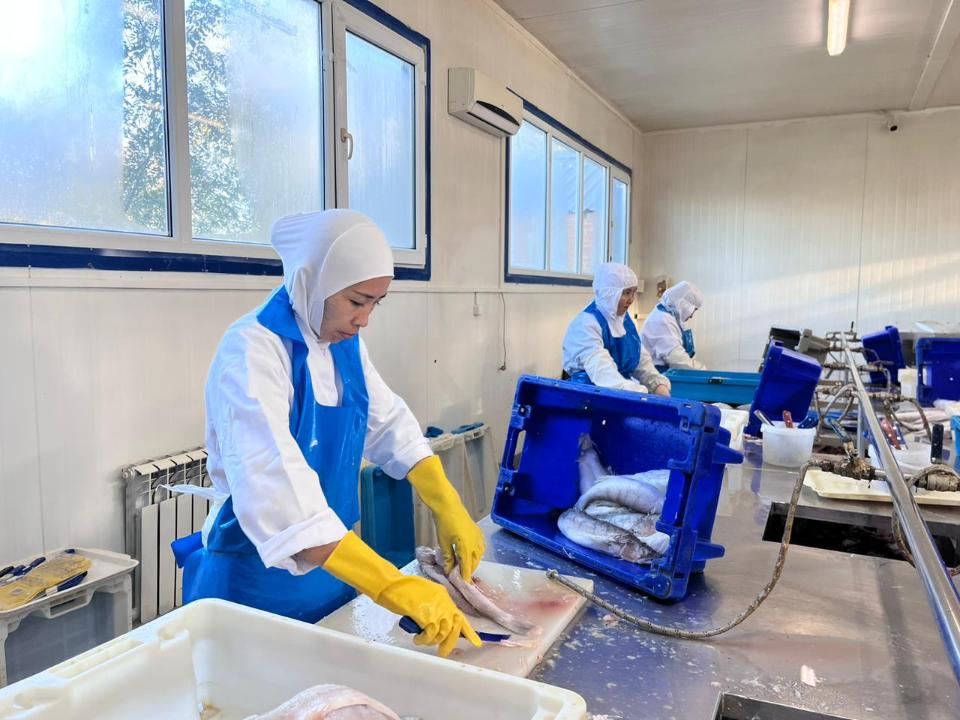
A new fish processing plant has opened in Kazakhstan’s Kyzylorda region, signaling continued progress in efforts to revive the fishing industry in the Aral Sea basin, once the site of one of the world’s most devastating environmental disasters. According to the Ministry of Agriculture, the facility, located in the Aral district, has the capacity to process up to 6,000 tons of fish annually. Outfitted with modern equipment, the plant focuses on producing environmentally sustainable fish products that comply with international quality and safety standards. Its primary export, pike perch fillets, is shipped to markets in Germany, Denmark, and Norway. Kazakhstan currently operates 72 fish processing plants, 20 of which are licensed to export to the European Union. The country’s fishing sector has been buoyed by ongoing efforts to restore the Northern Aral Sea. Formed in 1987 during the large-scale desiccation of the original Aral Sea, the northern section has been preserved and partially replenished following the construction of the Kokaral Dam. Earlier this year, The Times of Central Asia reported a record increase in the sea’s water volume. Rising water levels have expanded the surface area, reduced salinity, and facilitated the return of 22 fish species to the ecosystem. The annual catch in the Northern Aral now reaches approximately 8,000 tons, creating new economic opportunities for local communities. Kazakhstan’s fishing industry continues to show steady growth. In 2024, the country produced 94,600 tons of fish products, a 7% increase compared to 2023. Of this total, 45,200 tons came from natural water bodies, while 18,200 tons were farmed. In the same year, Kazakhstan exported 23,400 tons of fish products worth $74.7 million to 21 countries, reflecting rising global demand for sustainable fish from the Aral region.

Opinion: Turning Deserts Into Fields of Hope

Desertification is a global crisis threatening the livelihoods of 3.2 billion people worldwide. From China’s vast green belt along its largest desert to Central Asia’s unified efforts to halt land degradation on arid plains, the fight against encroaching sand continues. These initiatives offer hopeful examples of human endeavor in restoring degraded lands and safeguarding the future of our planet. In the heart of southern Xinjiang lies the Taklamakan Desert, a vast expanse known as the “sea of death” for its extreme arid and inhospitable conditions. Covering 330,000 square kilometers - an area almost the size of Finland - it is China’s largest desert and the world’s second-largest shifting desert. Here, dunes stretch endlessly, and sandstorm days comprise one-third of the year. For generations, the Taklamakan Desert has threatened surrounding villages, farmlands, and transportation routes, squeezing the living space of those who dwell on its edges. Nearly 80% of the desert sands are in constant motion, while seasonal floods from melting snow on the mountains add further instability, leaving homes and livelihoods at risk. The danger is long-term: at one point, the Taklamakan risked merging with the nearby Kumtag Desert, placing even greater pressure on human settlements. How To Contain The Sands Faced with the challenge, China launched an ambitious initiative: building a shield of vegetation to encircle the Taklamakan Desert, planting desert-tolerant species such as desert poplar, red willow, saxaul, and even roses. This massive project took more than 40 years to complete. By the end of 2023, 2,761 kilometers (about 1,716 miles) of the belt had been established. A year later, the final 285 kilometers - the most challenging section - was closed through the dedicated efforts of 600,000 people. On November 28, 2024, in Yutian County on the desert’s southern edge, the last seedlings were planted into the sands, completing a 3,046-kilometer green belt. This vast ecological barrier stabilizes the Taklamakan Desert’s edge, prevents sandstorms, and protects the fragile ecology. In addition, the green belt provides wild animals in the desert with safe conditions for survival, breeding, and migration. A Bold Green Strategy Against Desertification The Taklamakan Desert control project is a part of China's Three-North Shelterbelt Forest Program, or TSFP, the world's largest afforestation program aimed at curbing desertification. Launched in 1978, this ambitious program seeks to slow the progress of desertification and reduce the frequency of sandstorms by planting vast stretches of trees and resilient plant species across the arid and semi-arid regions in northern China, where sandstorms pose a constant threat to local farmlands and residents. Official data shows that forest coverage in areas covered by the TSFP has risen from 5% in 1977 to 13.8% today. More than 60% of regions prone to soil erosion have been effectively controlled, and roughly 30 million hectares of farmland have been safeguarded from desert expansion. Turning Lands of Despair into Fields of Hope: A Shared Mission The challenges faced in northern China echo across the globe. From the Sahel in Africa to the Middle East and Central...

Kazakhstan Sees Record Water Recovery in Northern Aral Sea

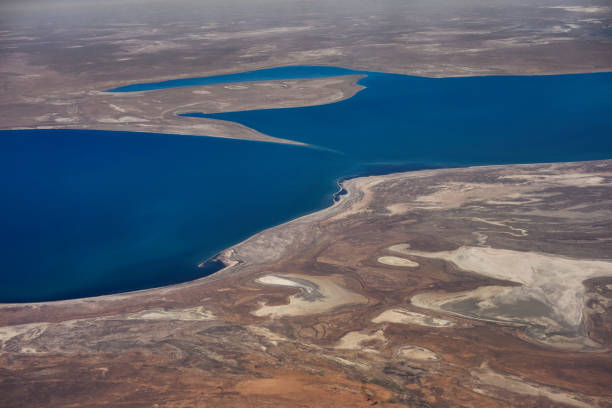
Kazakhstan’s Ministry of Water Resources and Irrigation has reported a record increase in the volume of water in the Northern Aral Sea, exceeding national and international expectations. Water Returns to the Sea Since 2023, approximately 5 billion cubic meters of water have flowed into the basin, bringing the total reserve to 24.1 billion cubic meters. This figure surpasses the target set under Kazakhstan’s Water Resources Management Concept, which had aimed for only 20.6 billion cubic meters by 2025. The current level was not expected to be reached before 2029. Minister of Water Resources and Irrigation Nurzhan Nurzhigitov said that with the support of a World Bank grant, a feasibility study is underway to raise the Kokaral Dam by two meters and construct a new hydraulic facility. The project is designed to stabilize water levels in the Akshatau and Kamystybas lake systems. “The project aims to increase both the volume and quality of water in the Northern Aral Sea, restore the Syr Darya delta, reduce salt dispersion from the exposed seabed, develop the fishing industry in the Kyzylorda region, and improve living conditions for local communities,” the minister stated. International Cooperation Deputy Minister Nurlan Aldamzharov has said the second phase of the initiative envisions raising the Northern Aral’s capacity to 35 cubic kilometers. He emphasized the critical role of regional cooperation, particularly with Kyrgyzstan, Tajikistan, and Uzbekistan, as the sea’s recovery depends on sustained inflows from the Syr Darya River. Ministry spokesperson Moldir Abdualyeva attributed the recent progress to “water diplomacy, effective resource allocation, and conservation efforts.” Environmental and Social Impact The increase in water volume has led to a corresponding expansion of the sea’s surface area. As of February 2025, the Northern Aral covered 3,065 square kilometers, an increase of 111 square kilometers over the past three years. This has reduced salinity levels and enabled the return of 22 fish species to the ecosystem. The annual fish catch now totals around 8,000 tons, offering renewed economic opportunities for local communities. To further support the region, Kazakhstan has raised subsidies for farmers implementing water-saving technologies, increasing compensation rates from 50% to 80%. Officials say the measure is intended to conserve water while promoting sustainable agriculture in surrounding areas. The Small Aral Sea, or Northern Aral, was formed in 1987 during the broader desiccation of the Aral Sea and preserved following the construction of the Kokaral Dam. In 2012, it was added, alongside the Syr Darya delta, to the Ramsar List of Wetlands of International Importance. Kazakhstan assumed the rotating chairmanship of the International Fund for Saving the Aral Sea (IFAS) in 2024, further strengthening its leadership role in regional water cooperation and ecosystem restoration.

The Forgotten Aral Sea That Holds the Key to Our Planet’s Future

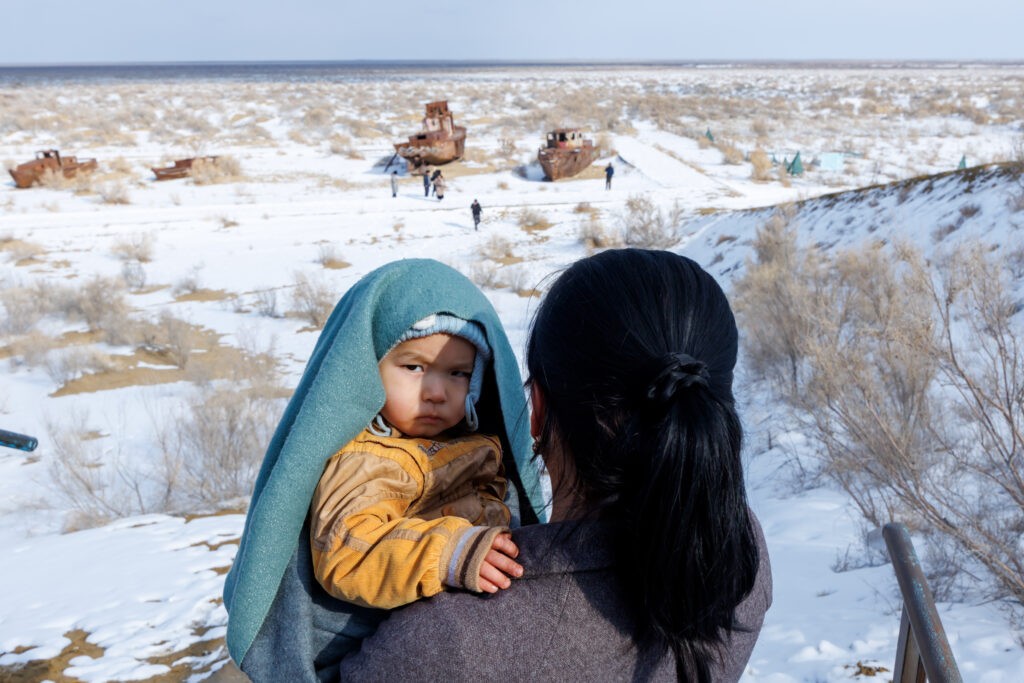
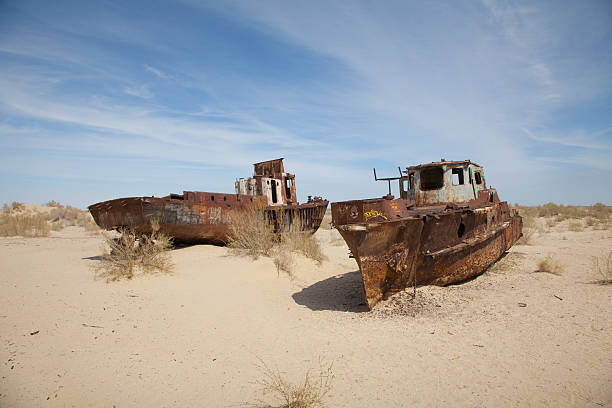
The drying of the Aral Sea is the worst environmental tragedy I have ever seen with my own eyes. Once a vast inland sea, shimmering and alive, it has now withered into patches of salt-crusted desert, where rusting ships lie stranded and winds carry toxic dust across the land. For me, the Aral’s decline is not just a local crisis but a mirror of our broader failures to protect nature. And as I look at the globe today, I see another unfolding catastrophe of equal or even greater scale: the rise of the seas, the surge in tsunamis and cyclones, and the slow drowning of coastal cities. What connects these tragedies is our failure to understand the balance of water on this planet, and our inability to act before the damage becomes irreversible. The Aral Sea was once the world’s fourth-largest inland lake, covering over 68,000 square kilometers. Situated between northern Uzbekistan and southern Kazakhstan, it supported millions of people with its fisheries, fertile lands, and unique ecosystem. The Amu Darya and Syr Darya rivers sustained it for centuries. But during the Soviet era, these rivers were diverted on a massive scale to irrigate cotton fields. At first, the shrinking of the Aral was gradual. Then, over the decades, it became catastrophic. More than 90% of the Aral Sea has disappeared. Today, the once-mighty expanse has been reduced to just 3,500 square kilometers, scattered into four smaller lakes. The consequences are heartbreaking. The fishing economy collapsed, agricultural land turned barren, and the rich biodiversity of the region has been pushed to the edge of extinction. The exposed seabed, laced with salt and pesticides, has become a toxic dust bowl, carried by winds across Central Asia, poisoning crops and human lungs alike. Villages that once lived by the water’s edge are now stranded dozens of kilometers from the shore. I have walked across that dead seabed and seen children playing where fishing boats once floated. It is a ghostly, painful reminder of how quickly human choices can destroy nature’s gifts. The Aral is often described as one of the world’s greatest environmental tragedies, yet so few people outside the region even know it happened. In the global imagination, it is almost forgotten, and that silence is itself a tragedy. For me, however, it has remained a wound, a constant reminder that ecological damage once done is almost impossible to undo. Restoration projects exist, but they move slowly, too slowly for a sea that once teemed with life. While I mourn the Aral, I cannot ignore the other side of the planet’s water crisis. Even as one great body of water has disappeared, the oceans are swelling. Sea levels are rising at an accelerating rate, fueling tsunamis and cyclones that now strike more often and with greater intensity. Where the Aral vanished through human mismanagement of rivers, the oceans rise because of another kind of mismanagement: decades of greenhouse gas emissions and our failure to protect glaciers and ice sheets. Throughout most...

Melting Mountains, Drying Futures: Central Asia Confronts Water Emergency

Central Asian countries are mobilizing against an emerging water crisis as a United Nations report highlights the vulnerability of mountain water systems to climate change. Identifying ranges like the Tien Shan and the Pamirs, the UN World Water Development Report 2025 – Mountains and Glaciers: Water Towers – warns that rapid glacier melt and erratic snowfall are threatening vital freshwater supplies worldwide. According to the report, mountains provide up to 60% of the world’s annual freshwater flows, with over two billion people depending directly on water from mountain sources. This risk is particularly acute in Central Asia: a UN drought outlook noted that rising temperatures and shrinking snowpack in the high mountains of Tajikistan and Kyrgyzstan are accelerating glacier retreat, posing a “long-term threat to the region’s water security.” Half of rural mountain communities in developing countries already face food insecurity, and receding glaciers could impact two-thirds of all irrigated agriculture globally – a dire scenario for Central Asia’s irrigation-dependent economies. Rivers like the Amu Darya and Syr Darya are fed by glacier runoff and support downstream agriculture, hydropower, and municipal needs in Uzbekistan, Kazakhstan, and Turkmenistan. But climate-driven glacial retreat, inefficient irrigation, and aging infrastructure have already pushed the region toward a breaking point. [caption id="attachment_33952" align="aligncenter" width="2560"] Lake Karakul in Tajikistan is expanding due to melting glaciers; image: TCA, Stephen M. Bland[/caption] Kazakhstan Steps Up Leading the regional response, Kazakhstan has launched sweeping reforms to modernize its water infrastructure and governance. The country has committed to building 42 new reservoirs, refurbishing 14,000 kilometers of irrigation canals, and investing heavily in digital water monitoring and conservation. Established in September 2023, the Ministry of Water Resources and Irrigation is coordinating the overhaul under an updated national Water Code. The government has also launched an integrated water portal, hydro.gov.kz, and pledged to digitize more than 3,500 kilometers of canals for precise flow tracking. In an address at the Astana International Forum, Deputy Prime Minister Kanat Bozumbayev framed water as a “powerful driver of cooperation, sustainable development and regional stability,” urging closer regional coordination. Kazakhstan is also leading environmental restoration efforts. As the current chair of the International Fund for Saving the Aral Sea (IFAS), it is overseeing projects to rehabilitate the North Aral Sea, including raising the Kokaral Dam to restore water levels and fisheries. In 2024 alone, local irrigation reforms in Kyzylorda saved 200 million cubic meters of water, which was redirected toward the shrinking sea. [caption id="attachment_12017" align="aligncenter" width="2560"] The Kokaral Dam in Kazakhstan; image: TCA, Stephen M. Bland[/caption] International Support and Financing Kazakhstan’s strategy has been backed by a plethora of international partners. The European Bank for Reconstruction and Development (EBRD) has financed over €255 million in water and wastewater projects in Kazakhstan, including a €96.4 million sovereign loan for a new treatment plant in Aktobe. Meanwhile, the Eurasian Development Bank (EDB) and UNDP have launched a regional partnership to expand access to modern irrigation, digitize water flows, and establish training centers. “We must act very quickly and...

Kazakhstan Builds Saxaul Nursery on Dried Aral Seabed

Kazakhstan is ramping up its ambitious afforestation efforts on the dried bed of the Aral Sea, with the establishment of a new saxaul nursery in the Kyzylorda region. Minister of Ecology and Natural Resources Yerlan Nyssanbayev recently visited the site to inspect progress on the project. Located directly on the former seabed, the nursery is designed to cultivate saxaul shrubs-hardy, drought-resistant plants well-adapted to the region’s arid conditions. Drilling work is currently underway to construct a well that will provide essential irrigation. Once operational, the 15-hectare facility is expected to produce 1.5 million saxaul saplings annually. Growing the saplings locally will help reduce transportation costs and improve survival rates by acclimating plants to local soil and climate conditions. Reclaiming a Devastated Landscape Kazakhstan’s large-scale planting initiative aims to restore parts of the Aral ecosystem, which was devastated by Soviet-era irrigation policies. Once the world’s fourth-largest inland sea, the Aral spanned 68,000 square kilometers and straddled the border between Kazakhstan and Uzbekistan. Starting in the 1960s, massive water diversion from the Amu Darya and Syr Darya rivers for cotton farming caused the sea to shrink dramatically. By 2007, the Aral had dwindled to just 10% of its original size. In addition to the new nursery, Nyssanbayev visited an existing saxaul facility in Kazalinsk, located in the Kyzylorda region. This nursery began operations in November 2024, initially sowing seeds across 10 hectares with a capacity to produce up to 3 million saplings. As of 2025, planting has expanded to 11,800 hectares of the dried seabed. According to the Ministry of Ecology and Natural Resources, Kazakhstan aims to afforest 1.1 million hectares of the dried Aral seabed with saxaul. From 2021 to 2024, 475,000 hectares were afforested, including 127,000 hectares in 2024 alone. In 2025, the government plans to plant saxaul on an additional 428,000 hectares. By the end of 2025, Kazakhstan expects saxaul forests to cover approximately 40% of its portion of the dried Aral seabed.