• KZT/USD = 0.00220
  • TJS/USD = 0.10840
  • UZS/USD = 0.00008
  • TMT/USD = 0.29850
  • KZT/USD = 0.00220
  • TJS/USD = 0.10840
  • UZS/USD = 0.00008
  • TMT/USD = 0.29850
  • KZT/USD = 0.00220
  • TJS/USD = 0.10840
  • UZS/USD = 0.00008
  • TMT/USD = 0.29850
  • KZT/USD = 0.00220
  • TJS/USD = 0.10840
  • UZS/USD = 0.00008
  • TMT/USD = 0.29850
  • KZT/USD = 0.00220
  • TJS/USD = 0.10840
  • UZS/USD = 0.00008
  • TMT/USD = 0.29850
  • KZT/USD = 0.00220
  • TJS/USD = 0.10840
  • UZS/USD = 0.00008
  • TMT/USD = 0.29850
  • KZT/USD = 0.00220
  • TJS/USD = 0.10840
  • UZS/USD = 0.00008
  • TMT/USD = 0.29850
  • KZT/USD = 0.00220
  • TJS/USD = 0.10840
  • UZS/USD = 0.00008
  • TMT/USD = 0.29850
27 October 2026

Viewing results 1 - 6 of 4

Azerbaijan–Kazakhstan Ties Could Reorient Central Asian Integration

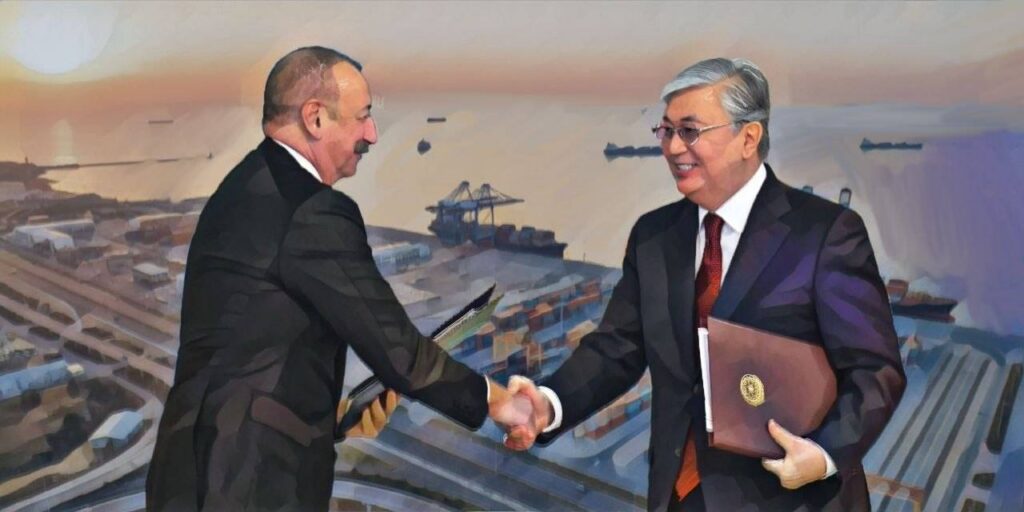
The five Central Asian presidents met with Azerbaijan’s Ilham Aliyev in Avaza on October 8 for the Consultative Meeting of the Heads of State of Central Asia and the Republic of Azerbaijan. Azerbaijan’s participation brings a principal outlet for Central Asian trade into the six governments’ economic deliberations. Within their consultative format, the states can coordinate industrial projects with the transport services through which regional producers reach foreign markets. If Azerbaijan and Kazakhstan connect cross-Caspian transport more closely to industrial cooperation, the corridor could become an organizing axis for regional integration. The Case for Trans-Caspian Integration Closer Azerbaijan–Kazakhstan cooperation would make cross-Caspian transport more dependable if trains reach Kazakhstani ports in time for Caspian sailings and cargo arriving at Azerbaijani terminals connects with onward services through Georgia. A 2023 assessment by the International Bank for Reconstruction and Development (IBRD), also called the World Bank, identified trade among Kazakhstan, Azerbaijan, Georgia, and Europe as a driver of corridor demand, giving regional exporters a place alongside China–Europe transit traffic. Onward connections from the China–Kyrgyzstan–Uzbekistan (CKU) railway now under construction could run through Turkmenistan and across the Caspian to Azerbaijan, providing an alternative to routes through Iran. Conflict involving Iran strengthens Azerbaijan’s position as the more dependable western outlet for Europe-bound exports. Greater predictability could offset the cost of a Caspian crossing by reducing the stocks firms must hold against delays and the losses caused by interrupted deliveries. Extending the operating coordination developed with Kazakhstan to these southern connections could make Azerbaijan commercially preferable for Central Asian exporters serving European markets. Kazakhstan and Azerbaijan occupy the principal positions in this prospective reorientation. Together, they represent approximately one-third of the six countries’ population but account for more than three-fifths of their nominal GDP. Yet bilateral merchandise trade amounted to only $470.7 million in 2025. Their combined economic weight is thus disproportionate to the commerce presently linking them. The infrastructure and institutions connecting industrial investment to markets across the Caspian could give the two countries a basis for organizing wider regional integration, provided firms sustain commercial relationships through those connections. The Bilateral Basis for Regional Integration Export commitments depend on the cost and timing of the complete transport service. At Avaza, Kazakhstan’s President Kassym-Jomart Tokayev attached “particular importance” to developing the Trans-Caspian International Transport Route (TITR), also known as the Middle Corridor. His Azerbaijani counterpart, Ilham Aliyev, advocated joint investment, manufacturing, and entry into foreign markets. For firms undertaking joint production, the commercial viability of Aliyev’s proposal would depend on transport coordinated from departure to delivery. Kazakhstan is developing the Middle Corridor along with the eastern branch of the International North–South Transport Corridor, which links Russia and Iran through Kazakhstan and Turkmenistan. At Avaza, Turkmenistan’s President Serdar Berdimuhamedov supported the development of North–South corridors in addition to East–West routes. Tokayev also highlighted the continuing importance to Kazakhstan of the North–South route in cooperation with Russia. Kazakhstan’s multi-vector approach thus extends to transport infrastructure: the Middle Corridor strengthens westward access without displacing the commercial connections maintained...
Avaza Summit Highlights East–West and North–South Trade Routes

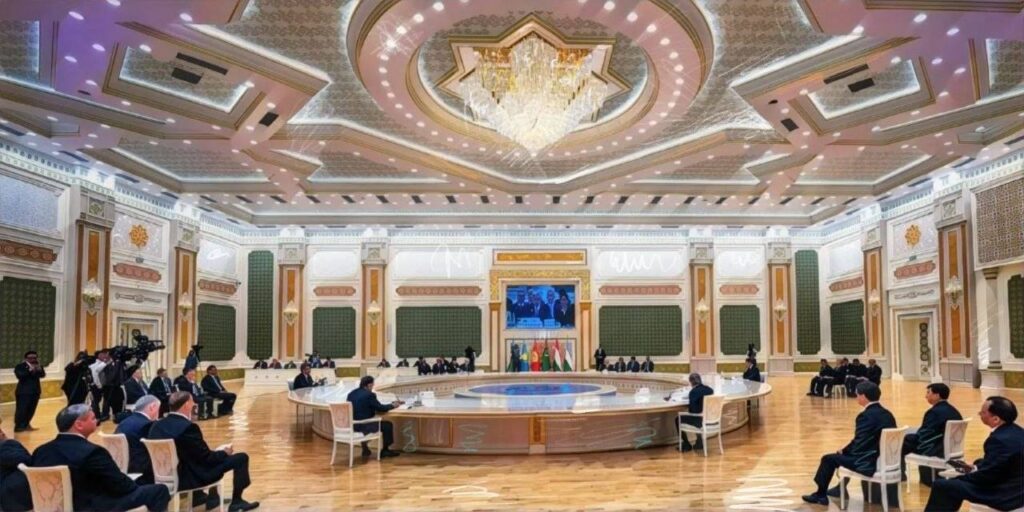
On October 8, the presidents of five Central Asian states and Azerbaijan gathered in Avaza, on Turkmenistan's Caspian coast, to discuss closer economic and political cooperation. Hosted by Turkmen President Serdar Berdimuhamedov, the annual Consultative Meeting included Azerbaijan as a full participant for the first time, extending the forum across the Caspian to the South Caucasus. The six leaders adopted a joint statement recognizing East–West and North–South transport corridors as priorities for regional development. The summit highlighted the region's growing importance in Eurasian trade and international supply chains. Beyond expanding transport networks, the leaders proposed closer industrial cooperation and cross-border investment, seeking to capitalize on their geographic advantages while preserving flexibility in their international economic relationships. Transport Corridors in Multiple Directions Turkmen President Serdar Berdimuhamedov said, "I believe it is now important to intensify negotiations and practical steps toward establishing transport and logistics connectivity along the East–West and North–South routes." He added, "The Central Asia–Caspian Sea–South Caucasus–Europe corridor should play a key role here." He also emphasized that cooperation among Turkmenistan, Azerbaijan and Kazakhstan as Caspian states could help integrate the wider Central Asian region and other countries into these transport networks. Turkmenistan remained prepared to make its Caspian infrastructure available for mutually beneficial projects. Its port at Turkmenbashi and rail connections toward Iran give it a practical role in both East–West and North–South trade. The Turkmen president's emphasis on North–South connectivity also reflects ongoing transport cooperation with Russia. In May 2026, Turkmenistan reported that Russia, Kazakhstan, Turkmenistan and Iran were working on an agreement to improve freight movement along the corridor's eastern branch. Turkmen officials also outlined preferential railway tariffs and container services linking Turkmenbashi with Russia's Olya port. Kazakh President Kassym-Jomart Tokayev also highlighted growing demand for the Middle Corridor, while emphasizing the continued importance of the North–South route. "For Kazakhstan, the North–South route in cooperation with Russia remains particularly relevant," Tokayev said. The statement is consistent with Kazakhstan's longstanding multivector foreign policy, which seeks to maintain established trade connections while expanding access to alternative transport routes. Kazakhstan, Central Asia's largest economy, occupies a strategic position at the intersection of major East–West and North–South transport routes. For the region’s landlocked economies, a wider choice of reliable routes can improve access to markets and reduce dependence on individual transit connections. Expanding the Middle Corridor Azerbaijani President Ilham Aliyev emphasized investments on both shores of the Caspian, noting that transit cargo volumes along the Middle Corridor increased by more than 10% in 2025 and by almost 20% during the first eight months of 2026. Azerbaijan has invested in ports, railways, highways and other infrastructure to facilitate trade between Central Asia and international markets. It also serves as a transit route for Kazakh and Turkmen oil exports, giving the country a growing role in connecting Central Asian producers with markets to the west. Tokayev proposed exploring the integration of the Middle Corridor with the Trump Route for International Peace and Prosperity (TRIPP), a planned transport link through Armenia connecting mainland Azerbaijan...

Central Asia Agrees New Water Limits, but National Quotas Remain Unclear

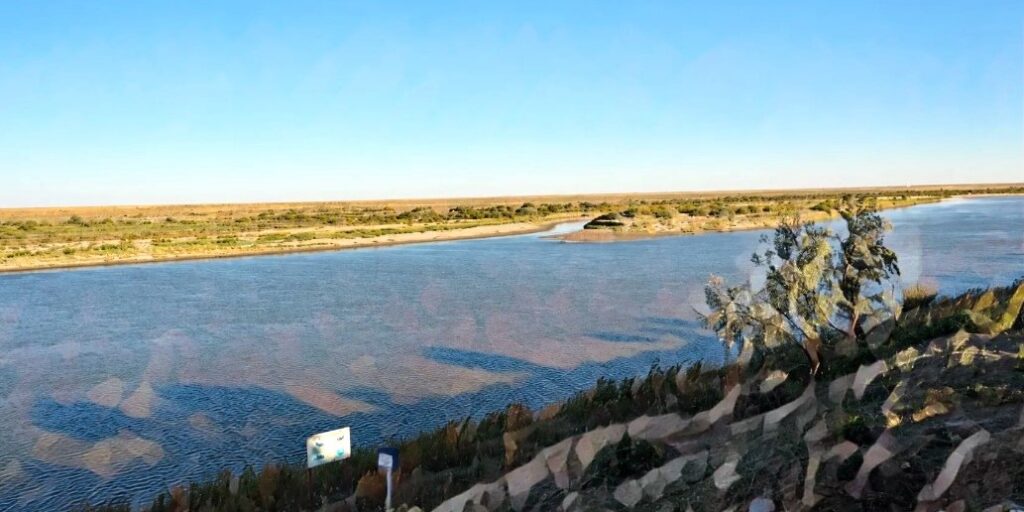
Water has repeatedly caused friction between Central Asian governments. Uncoordinated releases have flooded communities downstream, while disputes over access have contributed to deadly fighting along contested borders. On October 7, the region's countries agreed on water withdrawals from the Amu Darya and Syr Darya for fall and winter 2026–2027, though published results do not reveal how much water each country will receive. The agreements were reached at the 95th meeting of the Interstate Commission for Water Coordination (ICWC) in Avaza, on Turkmenistan's Caspian coast near Turkmenbashi. Participants agreed on national water withdrawal limits and projected reservoir operating schedules, but the figures remain in unpublished annexes to the meeting protocol. Regional cooperation has grown in recent years. In June, Kazakhstan, Kyrgyzstan, and Uzbekistan agreed on water releases and electricity supplies for the 2026 irrigation season, continuing efforts to coordinate reservoir operations across borders. Despite this progress, longstanding tensions remain. Kyrgyzstan and Tajikistan need water in the winter to generate electricity, while Kazakhstan, Uzbekistan, and Turkmenistan need it in the summer for irrigation. Bishkek has revived proposals for its neighbors to share the costs of maintaining reservoirs, while Afghanistan's Qosh Tepa Canal could put further pressure on the Amu Darya. Countries are also trying to resolve discrepancies in river-flow measurements. [caption id="attachment_58085" align="aligncenter" width="1774"] Officials from Central Asian countries attend talks on cross-border cooperation and sustainable development in the Amu Darya basin in Turkmenistan. Image: State News Agency of Turkmenistan[/caption] From Flooded Villages to Border Clashes The competing demands of electricity generation and agriculture are particularly evident in the Syr Darya basin. Kyrgyzstan's Toktogul Reservoir sits on the Naryn River, the Syr Darya's main tributary. In winter, Kyrgyzstan releases water to generate electricity, months before downstream farmers need it for irrigation. When these releases exceed the capacity of reservoirs and canals, the excess water can cause flooding. In February 2004, residents of Kazakhstan's Kyzylorda region experienced the consequences of uncoordinated water releases. The Syr Darya overflowed its banks, forcing the evacuation of at least 200 families. Ice had already restricted the river's flow, worsening the flooding. According to NASA, Kyrgyzstan was releasing more water from its hydropower system than the agreements allowed, with the excess flow entering the Shardara Reservoir. Uzbekistan agreed to divert some of the water into the Arnasay lake system, but it was not possible to divert the entire volume needed. As a result, the river flooded areas farther downstream. In the Amu Darya basin, disagreements developed differently. In 2012, then-Uzbek President Islam Karimov warned that disputes over water resources could lead to war. The source of tension was the construction of the Rogun Hydropower Plant in Tajikistan. Tashkent feared that a large dam on the Vakhsh River, a tributary of the Amu Darya, would allow Dushanbe to influence the volume of water reaching Uzbekistan's agricultural regions. The confrontation was accompanied by interruptions in gas supplies to Tajikistan, transport restrictions, and mutual accusations. Dushanbe linked Tashkent's actions to pressure over the Rogun project, although the Uzbek side disputed that...

Central Asia and Azerbaijan Head to Avaza for First Formal Summit

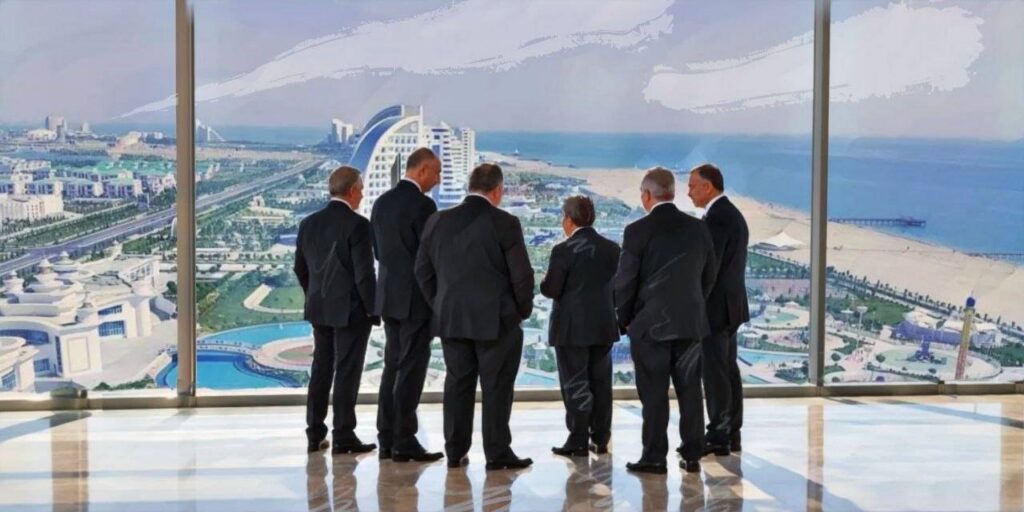
On Thursday, Turkmen President Serdar Berdimuhamedov is due to receive Kassym-Jomart Tokayev, Sadyr Japarov, Emomali Rahmon, Shavkat Mirziyoyev, and Ilham Aliyev in a place built to impress visitors. Thursday’s meeting will be the first formal consultative summit since Azerbaijan joined the format as a full participant in November 2025. The six presidents have already met once in the new configuration, at an informal gathering in Cholpon Ata on July 31, where they signed a declaration covering closer cooperation on transport, energy, trade, and security. Construction of Avaza began in late 2007, as Turkmenistan sought to create a national showcase on its Caspian coast. The resort’s hotels and sanatoria sit among parks and entertainment complexes, while eleven road and foot bridges span a seven-kilometer artificial canal. According to official figures, its hotels and recreation facilities can accommodate more than 10,000 vacationers. State institutions send employees there for summer holidays, echoing the Soviet tradition of workplace-organized vacations. These holidays help fill a resort where the seasonal rhythms differ sharply from everyday life in neighboring Turkmenbashi. Officially, Avaza is a district of Turkmenbashi, a city of around 90,000 residents located 580 kilometers west of Ashgabat across the Karakum Desert. The working city's economy is built around oil refining, the port, and transport. The Turkmenbashi International Seaport traces its history to 1896 and was rebuilt on a large scale before reopening in its current form in 2018. The Turkmenbashi refinery complex was founded in 1943 and remains one of the country's main oil-processing centers. The city itself was known as Krasnovodsk until 1993, when it was renamed Turkmenbashi after the title used by then-President Saparmurat Niyazov. The sea that was supposed to be Avaza's main attraction is now retreating from it. In 2024, one visitor told RFE/RL that the shoreline was 25-30 meters farther away than when his family had swum there three years earlier. A correspondent found hotels creating new beach areas farther out, while dredging was underway near the port. By September 2026, shallower water was forcing some ferries to carry lighter loads and pushing ports around the sea into costly dredging and berth work. The effects are already visible along the coast where the leaders will meet. [caption id="attachment_57713" align="aligncenter" width="1774"] The Avaza resort on Turkmenistan’s Caspian coast, where the five Central Asian presidents and Azerbaijan’s Ilham Aliyev are due to meet on October 8.[/caption] Turkmenistan is also hosting Caspian-focused meetings around the leaders' gathering, while the October 8 agenda includes climate, water, trade, energy, transport, and regional security. At the November 2025 summit in Tashkent, the five Central Asian presidents unanimously approved Azerbaijan’s admission as a full participant, extending the grouping across the Caspian into the South Caucasus. Aliyev has been careful to mark the change. At the informal meeting in Cholpon Ata on July 31, he said: "I previously participated as a guest of honor, but today I am taking part as a full member of the team." The format dates to 2018 and was deliberately light on bureaucracy....